

TL;DR:
- Melasma is a persistent pigmentation disorder driven by overactive melanocytes, often worsened by sunlight and hormones. It is not contagious, dangerous, or easily cured, requiring long-term management through photoprotection, topical treatments, and lifestyle adjustments. Ongoing maintenance and realistic expectations are essential for controlling and reducing its visible effects effectively.
Melasma is far more than a cosmetic nuisance. It’s a stubborn pigmentation disorder that affects millions of people worldwide, particularly those with medium to darker skin tones, and it refuses to respond to the kind of simple fixes that work for ordinary dark spots. If you’ve been trying to manage patches on your cheeks, forehead, or upper lip without much success, you’re likely dealing with something that requires a deeper understanding than most skincare articles offer. This guide breaks down the real science behind melasma, explains what drives it, and walks you through the treatment strategies that dermatologists actually recommend.
Table of Contents
- What is melasma? Understanding the basics
- What causes melasma? Light, hormones, and other triggers
- Living with melasma: Is there a cure?
- Treatment options: Topicals, procedures, and what to expect
- A dermatologist’s perspective: What most melasma advice misses
- Products and guidance for melasma management
- Frequently asked questions
Key Takeaways
| Point | Details |
|---|---|
| Melasma is persistent | This common pigment disorder is chronic and often requires ongoing management, not a cure. |
| Sunlight is a central trigger | UV and even visible light exposure are the most consistent causes for melasma flare-ups. |
| No quick cures | Effective management relies on daily protection, trigger avoidance, and realistic expectations about recurrence. |
| Topicals and routines matter | Topical treatments and maintenance routines are the mainstays, with professional procedures as adjuncts. |
| Personalized skincare helps | Tailored routines and sun protection can prevent worsening and support even, healthy-looking skin. |
What is melasma? Understanding the basics
Melasma is not a rash, a scar, or a sign of aging in the traditional sense. It’s a specific pigmentation disorder where certain skin cells, called melanocytes, become overactive and produce excess melanin in defined patterns. What you see on the surface are flat, brown or blue-gray patches that typically appear symmetrically on the face, often mirroring each other across both cheeks or along the forehead.
According to the Cleveland Clinic, melasma is a common acquired hyperpigmentation disorder that causes flat brown or blue-gray patches on sun-exposed skin, most often on the face. The word “acquired” is important here. You are not born with melasma. It develops over time in response to specific triggers, which makes it both preventable in some cases and controllable in most.
One of the clearest things the British Skin Foundation confirms is that melasma is not contagious or cancerous and typically causes no itch or pain, functioning primarily as a cosmetic concern that tends to vary over time, often worsening with summer sun and visible light and improving in winter. This seasonality is actually a clue into how melasma works: light drives it.
Common presentation of melasma
| Location | Color range | Typical pattern |
|---|---|---|
| Cheeks | Light to dark brown | Symmetrical, bilateral patches |
| Forehead | Brown or gray-brown | Band-like or irregular |
| Upper lip | Dark brown | Mustache-like stripe |
| Nose bridge | Brown | Central patch |
| Chin | Gray-brown | Diffuse or patchy |
| Forearms (less common) | Brown | Irregular, smaller patches |
Melasma myths you can stop believing:
- Melasma is not contagious. You cannot catch it from another person.
- It is not a type of sunspot or age spot, even though they can look similar.
- It is not caused by an allergy or skin infection.
- It is not dangerous or a precursor to cancer.
- It will not go away permanently just by using a brightening cream once or twice.
“Melasma doesn’t hurt, but it has real psychological weight. For many people, the visible patches affect confidence, especially in professional or social settings. That emotional reality matters and should not be dismissed.”
Understanding the causes of sun damage is a useful starting point because light exposure is one of the central reasons melasma forms and persists.
What causes melasma? Light, hormones, and other triggers
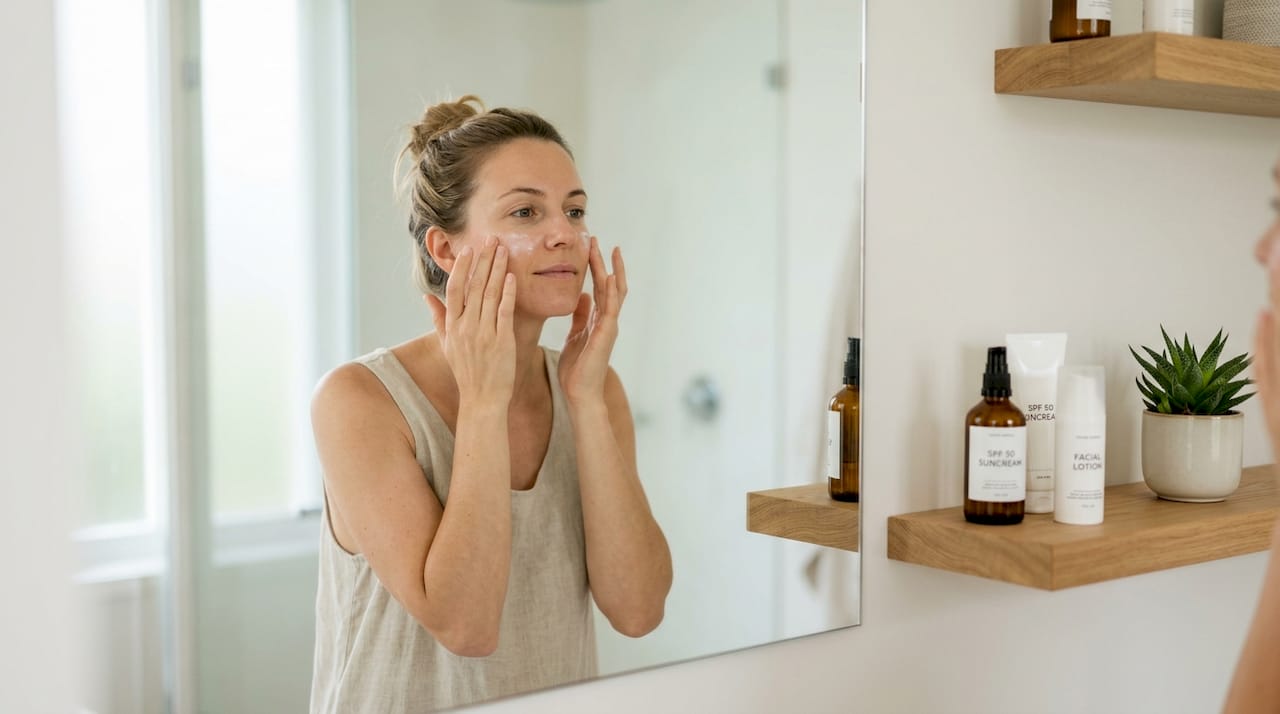
Now that you know what melasma looks like, let’s look closely at what causes it and why it can be so stubborn to manage. The short answer is: multiple things working together. The long answer involves your hormones, your genetics, your daily environment, and even your screen time.
Research published in StatPearls confirms that melasma has a multifactorial cause involving overactive pigment production driven by light exposure and hormonal influences, with UV and visible light acting as consistent triggers for both onset and relapse. This is a critical point most people miss: it is not just sunlight. Visible light, including the blue light emitted by phone and computer screens, can stimulate pigment production, particularly in people with darker skin tones.
Internal vs. external triggers
| Trigger type | Examples | Mechanism |
|---|---|---|
| UV light | Sun exposure, tanning beds | Activates melanocytes directly |
| Visible and blue light | Screens, indoor lighting | Triggers melanin in darker phototypes |
| Estrogen/progesterone | Pregnancy, birth control pills, HRT | Sensitizes melanocytes to light |
| Genetics | Family history, Fitzpatrick skin type III-VI | Predisposition to overactive pigment cells |
| Thyroid dysfunction | Hypothyroidism | Hormonal imbalance affecting melanogenesis |
| Certain medications | Photosensitizing drugs | Increase skin’s light sensitivity |
Common melasma aggravators:
- Unprotected sun exposure, even brief daily exposure
- Hormonal contraceptives (pills, patches, IUDs with hormones)
- Pregnancy (commonly called “the mask of pregnancy”)
- Hot climates and heat exposure
- Infrared radiation from heat sources
- Blue light from digital screens
- Cosmetics or skincare products that cause irritation
Pro Tip: Even if you work indoors all day, sun and visible light risks from windows and screens can quietly worsen melasma. A broad-spectrum SPF worn daily indoors is not overkill. It is essential.
The hormonal connection is especially strong in women. Studies consistently show that melasma is roughly nine times more common in women than men, largely because estrogen influences melanocyte sensitivity. During pregnancy, the dramatic hormonal shift can trigger melasma that fades postpartum but may return with hormonal contraception or future pregnancies. Men are not immune, but their melasma is typically related to chronic sun exposure rather than hormonal fluctuation.
Living with melasma: Is there a cure?
Understanding the triggers helps set the foundation for how melasma is managed. But is there a true cure? This is where a lot of frustration begins.
The honest answer is no. There is no permanent cure for melasma. Researchers from StatPearls frame melasma management as chronic disease control rather than a permanent cure, combining trigger reduction, especially photoprotection, with pigment-lightening induction therapy and long-term maintenance to reduce relapse. This framing is genuinely helpful. Think of it like managing high blood pressure or asthma. You control it, you maintain it, and you prevent flares. You don’t simply treat it once and forget about it.
“Even when treatments successfully clear melasma pigment, the condition frequently recurs. Ongoing light exposure and hormonal susceptibility continue to drive melanogenesis, which is why strict photoprotection and a maintenance plan are central to real-world outcomes.” — Cleveland Clinic
Steps to controlling melasma long-term
- Reduce and manage your triggers. Start by identifying what’s driving your melasma. Is it sun exposure? Hormonal contraception? Daily screen time? Reducing or modifying those triggers is the foundation of any effective plan.
- Begin a lightening or induction phase. Work with a dermatologist to begin a topical regimen designed to actively reduce existing pigmentation. This phase typically uses ingredients like hydroquinone, retinoids, or azelaic acid.
- Protect consistently during treatment. Photoprotection must be non-negotiable. No treatment will hold if you’re repeatedly exposing your skin to the triggers that caused the pigmentation in the first place.
- Transition to maintenance. Once pigmentation is controlled, switch to a gentler maintenance routine that supports the results without long-term reliance on stronger actives.
- Monitor for relapse. Melasma can return, especially after sun exposure, hormonal changes, or stress. Catching early signs and adjusting your routine is far easier than starting the treatment process over.
Developing a thoughtful approach to your uneven skin tone is a core part of managing melasma, and understanding the role of sunscreen in protection is equally critical for long-term maintenance.
The psychological aspect of melasma also deserves acknowledgment. Studies show that melasma significantly impacts quality of life, self-esteem, and emotional wellbeing. Setting realistic goals, celebrating gradual improvement, and approaching treatment as a long-term lifestyle commitment rather than a race to perfection will serve you far better than chasing miracle solutions.
Treatment options: Topicals, procedures, and what to expect
With expectations set for disease control, here’s how treatments work, what to choose, and what each option truly offers. Melasma treatment is not one-size-fits-all, and understanding the layers of your options will help you make better decisions with your dermatologist.
First-line treatments: Topicals
Topical therapy is the cornerstone of melasma treatment. According to StatPearls, hydroquinone-based regimens are commonly used in supervised induction phases, then transitioned to other maintenance strategies to reduce relapse and minimize side effects like irritant dermatitis.
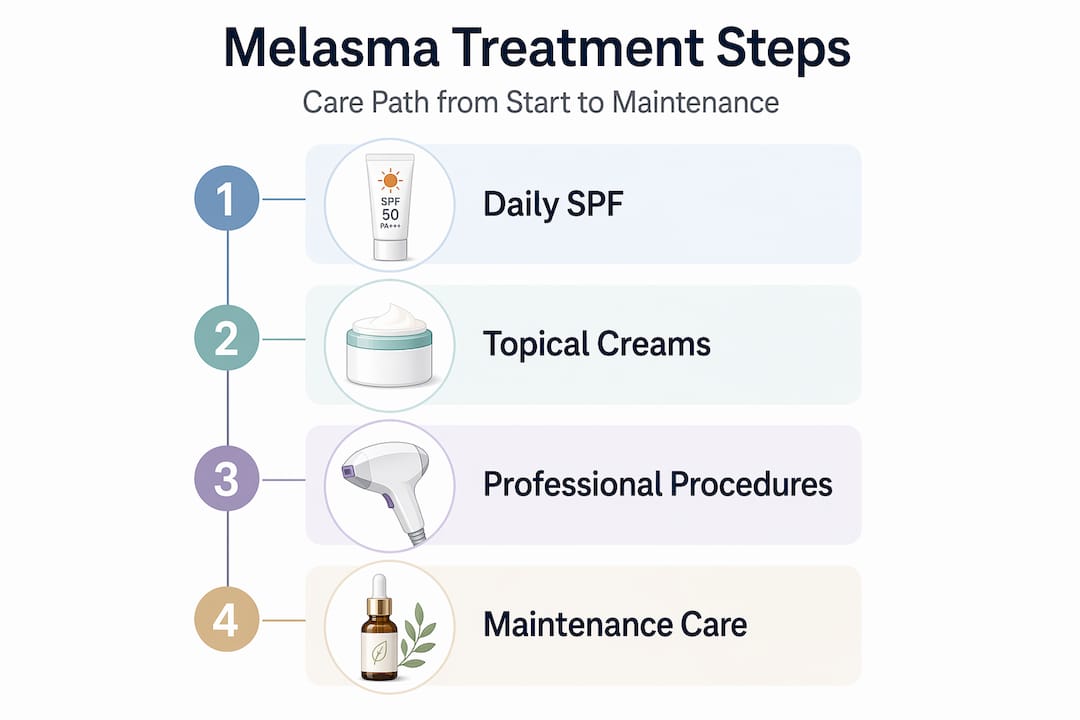
Triple combination creams, which typically blend hydroquinone, a retinoid, and a corticosteroid, are considered among the most effective topical options currently available. However, they are intended for short-term induction use, not indefinite application.
Maintenance alternatives
Once the active phase of treatment is complete, maintenance products without hydroquinone help sustain results. Ingredients like azelaic acid, kojic acid, tranexamic acid (oral or topical), niacinamide, and vitamin C are frequently used in these maintenance phases because they are gentler on the skin barrier over long periods.
Procedures: A careful conversation
Chemical peels and energy-based devices like lasers or intense pulsed light have a role, but it’s a limited and carefully selected one. Research published by MDPI notes that melasma subtypes, which include epidermal, dermal, and mixed types, affect treatment responsiveness and procedure selection, with photoprotection and post-inflammatory hyperpigmentation (PIH) risk especially important for people with darker skin tones.
PIH is a real and significant risk. Aggressive procedures on melanin-rich skin can actually worsen pigmentation rather than improve it. This is why more aggressive is not always better, and why selecting a provider experienced in treating skin of color is critical.
Common melasma treatment options:
- Topical hydroquinone (prescription, short-term induction)
- Triple combination creams (hydroquinone, tretinoin, corticosteroid)
- Azelaic acid (maintenance and mild induction)
- Tranexamic acid (oral or topical, emerging evidence)
- Chemical peels (glycolic, salicylic; selected cases only)
- Laser and light-based treatments (adjunctive, high relapse risk)
- Oral antioxidants (supportive role)
- Broad-spectrum SPF 50+ with visible light protection (non-negotiable at every stage)
Exploring global skincare routines can also help you build a consistent, effective daily protocol that supports your treatment plan from start to maintenance.
Pro Tip: More aggressive isn’t always better with melasma. A consistent, gentle routine built around daily SPF and evidence-based actives almost always outperforms harsh treatments followed by inconsistent protection. Patience and consistency are your most effective tools.
A dermatologist’s perspective: What most melasma advice misses
Here is the uncomfortable truth that most melasma content skips. The skincare industry loves selling hope in a bottle. Melasma content online tends to focus heavily on dramatic before-and-after photos, miracle creams, and expensive procedures. What gets quietly ignored is that none of those results hold without committed, ongoing daily photoprotection and maintenance.
The Cleveland Clinic emphasizes that melasma frequently recurs because ongoing light exposure and hormonal susceptibility continue to drive melanogenesis, making strict photoprotection and a maintenance plan central to real-world outcomes. The treatment is not the hard part. Maintaining the result is.
What most people miss when managing melasma:
- SPF alone is not always enough. You need broad-spectrum protection that also blocks visible and blue light, often achieved through tinted formulas containing iron oxides.
- “Miracle cure” products that promise to clear melasma in weeks rarely work long-term and can cause irritation that triggers more pigment production.
- Pigment at the dermal level (the deeper layer of skin) responds far more slowly to treatment than surface-level epidermal pigment. Understanding your melasma subtype matters for setting realistic timelines.
- People with darker skin tones face a double challenge: higher risk of PIH from procedures, and greater sensitivity to visible light. Treatment must be tailored accordingly.
- Stopping treatment entirely after clearing is the most common reason melasma returns. Maintenance is permanent, not optional.
The shift in mindset that makes the biggest real-world difference is moving away from “I need to cure this” toward “I’m managing this confidently.” Addressing uneven skin tone as a long-term practice rather than a short-term project leads to far better outcomes and far less disappointment.
Products and guidance for melasma management
Equipped with nuanced understanding and practical steps, you’re ready to explore tailored solutions for real-life melasma management.
Managing melasma effectively means building a product routine that supports every stage: induction, protection, and maintenance. At Skin Styles, you can browse a curated selection of melasma-friendly facial creams and treatment gels designed to complement dermatologist-recommended protocols. These formulas range from brightening actives to barrier-supporting hydrators that keep skin resilient during treatment.

For those focused on aging and pigmentation together, our anti-aging treatments collection features products that address both concerns in one streamlined routine. When you’re ready to go deeper, Skin Styles offers guides, product filters by skin concern, and a full range of curated skincare solutions built around real-world skin health. Your maintenance plan starts here.
Frequently asked questions
Can melasma go away on its own?
Melasma often fades in winter or when sun exposure decreases, but it usually returns without consistent protection and a maintenance routine in place.
Is melasma harmful to my health?
No. The British Skin Foundation confirms that melasma is not an infection, not caused by an allergy, and is not cancer. It affects appearance only.
What triggers melasma to worsen?
UV, visible light, and hormonal influences are the primary triggers, with sun exposure and hormonal changes like pregnancy or birth control being the most common causes of flares.
Can men get melasma?
Yes, men can develop melasma, though it is far more common in women due to the hormonal factors that sensitize melanocytes. In men, chronic sun exposure is the more typical driver.
Are there treatments that work quickly for melasma?
Most treatments require weeks to months of consistent use before visible improvement appears. Since melasma frequently recurs when photoprotection lapses, quick fixes rarely hold without an ongoing maintenance commitment.