

Finding the perfect balance between beauty and health can be challenging when harmful sunlight threatens to accelerate skin aging. For women dedicated to maintaining youthful, radiant skin, understanding the impact of ultraviolet radiation and blue light is crucial. Broad-spectrum sunscreen acts as a daily shield, defending against photoaging and protecting your complexion from gradual damage. This article reveals how smart sun protection helps prevent premature aging, wrinkles, and pigmentation, empowering you to keep your skin glowing and resilient.
Table of Contents
- What Sunscreen Does for Skin Aging
- Understanding UVA, UVB, and Blue Light Damage
- Types of Sunscreen and Ingredient Impact
- How Daily Sunscreen Prevents Fine Lines
- Common Sunscreen Mistakes to Avoid
Key Takeaways
| Point | Details |
|---|---|
| Daily Sunscreen Use is Essential | Regular application of broad-spectrum sunscreen prevents premature skin aging by shielding skin from UVA and UVB rays. |
| Understanding Radiation Effects | Different types of radiation, including blue light, cause varied skin damage, necessitating comprehensive protection. |
| Application Techniques Matter | Using the correct amount and applying sunscreen properly is crucial for effectiveness; reapply every two hours, especially after swimming or sweating. |
| Modern Formulations for Enhanced Protection | Choose sunscreens with multiple active ingredients to ensure broad-spectrum defense and consider protection against blue light. |
What Sunscreen Does for Skin Aging
Daily sunscreen use is a powerful defense against premature skin aging, protecting your complexion from harmful ultraviolet radiation (UVR). Photoaging, the technical term for sun-induced skin damage, occurs when UV rays penetrate deep into skin layers, causing molecular changes that accelerate the aging process.
Scientific research reveals multiple ways sunscreen combats skin aging:
- Prevents DNA damage from UV exposure
- Reduces oxidative stress in skin cells
- Blocks inflammatory responses triggered by radiation
- Maintains collagen and elastin structural integrity
UVA and UVB rays work differently but both contribute to aging. Sunscreen protects against harmful radiation by creating a protective barrier that minimizes cellular damage. UVB rays cause surface-level burns, while UVA rays penetrate deeper, causing more insidious long-term damage like wrinkles and uneven pigmentation.
The cumulative effect of sun exposure is significant. Dermatologists estimate that up to 90% of visible skin aging results directly from UV radiation, making daily sunscreen application crucial for maintaining youthful skin appearance. Broad-spectrum protection ensures defense against both UVA and UVB wavelengths, helping preserve skin’s natural resilience and preventing premature aging signs.
Pro tip: Apply sunscreen as the final step in your morning skincare routine, using at least a nickel-sized amount to cover your face and neck completely.
Understanding UVA, UVB, and Blue Light Damage
Skin damage from solar radiation is more complex than most people realize. Ultraviolet radiation encompasses different wavelengths that impact skin health in unique and profound ways, with UVA, UVB, and blue light each causing distinct types of cellular damage.
Solar radiation wavelengths cause varied skin damage by targeting different skin layers and molecular structures. Here’s a breakdown of how each type of radiation affects your skin:
-
UVB Rays:
- Cause direct surface-level damage
- Primarily responsible for sunburns
- Directly damage DNA in skin cells
- Most intense during midday hours
-
UVA Rays:
- Penetrate deeper into skin layers
- Contribute to long-term aging effects
- Create oxidative stress in skin cells
- Present during all daylight hours
-
Blue Light:
- Emitted by digital screens and artificial lighting
- Causes subtle but cumulative skin damage
- Potentially accelerates pigmentation and skin aging
- Can disrupt natural skin repair mechanisms
Understanding these radiation types is crucial for comprehensive skin protection. Blue light, often overlooked, can be particularly insidious. While less intense than UV rays, it penetrates skin deeply and may contribute to premature aging through persistent oxidative stress and inflammation.

Modern photoprotection strategies must account for multiple types of radiation. Traditional sunscreens focused solely on UV protection are no longer sufficient. Broad-spectrum protection that guards against UVA, UVB, and blue light wavelengths represents the new standard in skin defense.
Summary of radiation types and their skin impact:
| Radiation Type | Depth of Penetration | Aging Risk Level | Additional Sources |
|---|---|---|---|
| UVA | Deep (dermis layer) | High | Sunlight only |
| UVB | Surface (epidermis) | Moderate | Sunlight only |
| Blue Light | Deep (dermis & beyond) | Emerging concern | Phones, computers, LEDs |
Pro tip: Choose sunscreens labeled “broad spectrum” and consider additional blue light protection from specialized skincare products or screen filters.
Types of Sunscreen and Ingredient Impact
Sunscreen technologies have evolved significantly, offering multiple protection strategies against harmful solar radiation. Sunscreen formulations incorporate complex UV filters designed to defend skin from potentially damaging wavelengths through different molecular mechanisms.
Two primary sunscreen categories exist, each with unique characteristics:
Organic (Chemical) Sunscreens:
- Absorb UV radiation
- Convert solar energy into minimal heat
- Penetrate skin more deeply
- Typically lighter in texture
- Often require 15-30 minutes before sun exposure
Inorganic (Mineral) Sunscreens:
- Physically block and reflect UV rays
- Sit on top of skin surface
- Provide immediate protection
- Less likely to cause skin irritation
- Typically use zinc oxide or titanium dioxide
Active Ingredients play a critical role in determining sunscreen effectiveness. Chemical filters like avobenzone, octinoxate, and oxybenzone work by absorbing different UV wavelengths, while mineral ingredients like zinc oxide create a protective barrier that reflects radiation.
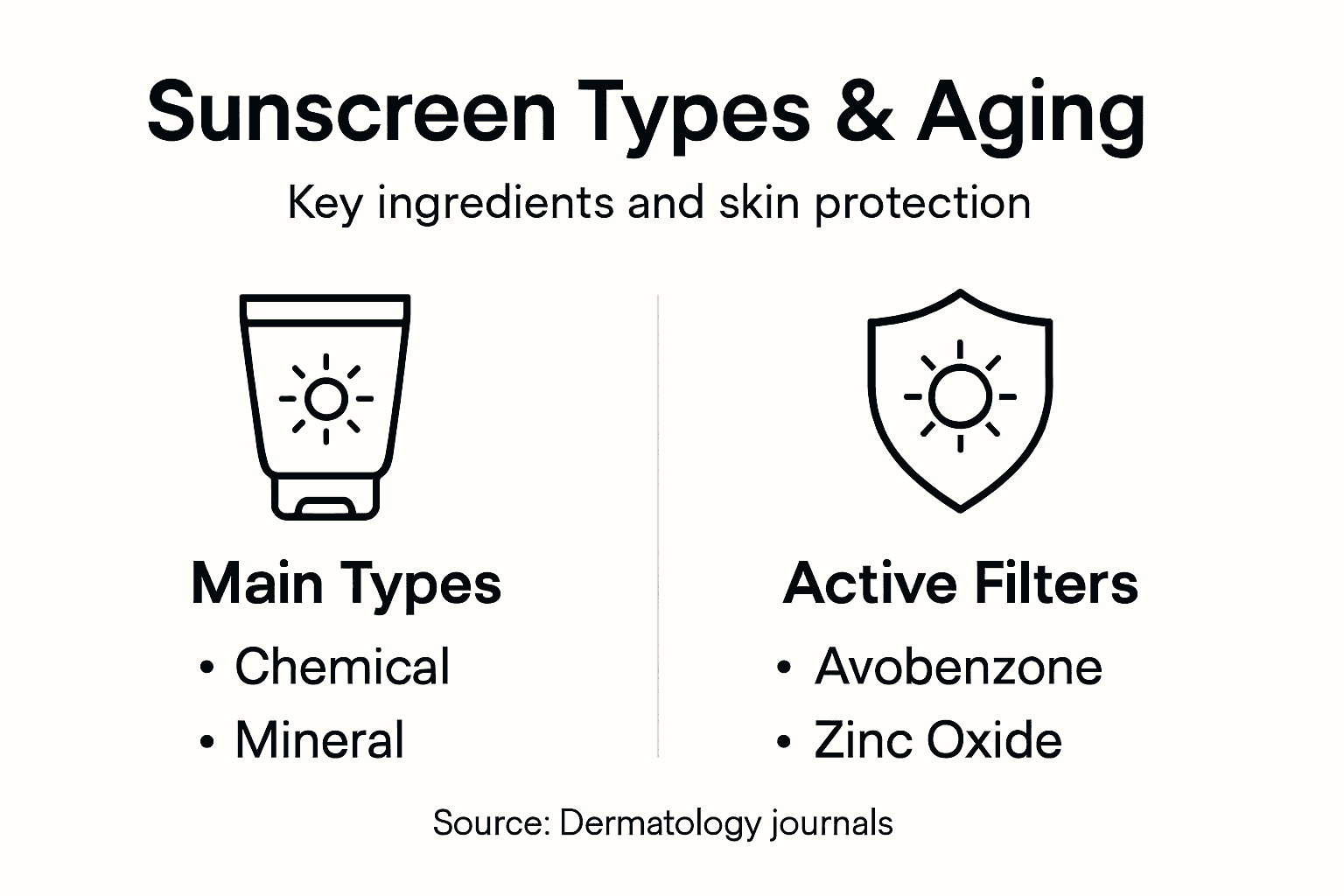
Modern sunscreen development focuses on balancing three key factors: comprehensive protection, skin compatibility, and environmental sustainability. Researchers continually investigate new formulations that minimize potential hormone disruption while maximizing UV defense.
Here’s how the main sunscreen types compare:
| Sunscreen Type | How It Works | Application Timing | Skin Compatibility |
|---|---|---|---|
| Chemical | Absorbs UV rays, converts to heat | Needs time to absorb | Tends to feel lightweight |
| Mineral | Reflects UV rays at skin surface | Works immediately | Gentler on sensitive skin |
| Hybrid (Mixed) | Combines absorption and blocking | Variable, read label | Balances texture and coverage |
Pro tip: Select sunscreens with multiple active ingredients to ensure broader spectrum protection and check labels for broad-spectrum certification.
How Daily Sunscreen Prevents Fine Lines
The battle against skin aging is won daily, one sunscreen application at a time. Broad-spectrum sunscreen reduces extrinsic skin aging by creating a critical molecular defense against environmental damage.
Preventing fine lines involves understanding how UV radiation impacts skin structure:
Collagen and Elastin Protection:
- Shield protein structures from breakdown
- Maintain skin’s natural elasticity
- Prevent premature structural damage
- Reduce visible signs of aging
- Support natural skin regeneration
Oxidative Stress Mechanisms:
- Block free radical formation
- Interrupt inflammation cascades
- Minimize cellular damage
- Protect mitochondrial function
- Prevent DNA structural changes
Daily sunscreen application interrupts the photoaging process by blocking ultraviolet radiation’s destructive pathways. When UV rays penetrate unprotected skin, they trigger inflammatory responses that degrade collagen and elastin, the proteins responsible for maintaining skin’s smooth, youthful appearance.
Constant sun protection does more than prevent immediate damage. It represents a long-term investment in skin health, helping maintain cellular integrity and reducing the cumulative effects of environmental stress that contribute to premature aging.
Pro tip: Apply sunscreen as the final step in your morning skincare routine, using at least a nickel-sized amount to ensure complete face and neck coverage.
Common Sunscreen Mistakes to Avoid
Protecting your skin requires more than simply owning a sunscreen bottle. Common sunscreen mistakes compromise skin protection dramatically, reducing the effectiveness of your sun defense strategy.
Most frequent sunscreen application errors include:
Quantity Mistakes:
- Using less than recommended amount
- Forgetting to cover all exposed areas
- Neglecting often-missed zones like:
- Ears
- Back of neck
- Hands and feet
- Lips
Timing and Reapplication Errors:
- Not applying 15 minutes before sun exposure
- Skipping reapplication every two hours
- Forgetting to reapply after swimming or sweating
- Assuming one morning application provides all-day protection
The sunscreen effectiveness depends not just on the product, but on how meticulously you apply and maintain protection. Many people mistakenly believe expensive sunscreens automatically provide superior coverage, but proper application technique matters far more than price point.
Consistent, thorough sunscreen use requires developing a deliberate, systematic approach. Understanding these common mistakes can transform your sun protection from a casual habit to a comprehensive skincare strategy that genuinely defends against premature aging and potential skin damage.
Pro tip: Keep a travel-sized sunscreen in your bag for easy midday reapplication and ensure complete, consistent protection.
Protect Your Skin Every Day With Effective Sunscreen Solutions
The article highlights the crucial role daily sunscreen plays in preventing premature skin aging by shielding against UVA, UVB, and blue light damage. If you are concerned about maintaining youthful, radiant skin and avoiding common sunscreen mistakes like insufficient coverage or infrequent reapplication you are not alone. Protecting collagen and elastin structures while minimizing oxidative stress are key goals, and choosing the right sunscreen formulations can make all the difference.
Explore trusted skincare products for daily protection tailored to your needs and designed for comprehensive broad-spectrum defense.

Take control of your skin’s future today by browsing a carefully selected range of sunscreens and supporting skincare that help prevent fine lines and photoaging. Visit Skin-Styles.com now and build a simple yet powerful routine. Remember the best defense starts with consistent application and high-quality products that protect against every kind of light exposure.
Frequently Asked Questions
How does sunscreen prevent skin aging?
Daily sunscreen use protects your skin from harmful UV radiation, which can cause premature aging through processes like DNA damage, oxidative stress, and inflammation. It helps maintain collagen and elastin in the skin, reducing fine lines and wrinkles.
What is the difference between UVA and UVB rays in relation to skin aging?
UVA rays penetrate deeper into the skin and are primarily responsible for long-term aging effects like wrinkles and pigmentation. UVB rays cause surface damage, such as sunburn, but both contribute significantly to skin aging.
What types of sunscreen are available, and how do they work?
There are two main types of sunscreen: organic (chemical) and inorganic (mineral). Organic sunscreens absorb UV radiation and convert it into heat, while inorganic sunscreens physically block and reflect UV rays from the skin’s surface. Both types can be effective; choosing one depends on skin sensitivity and preferences.
How often should I reapply sunscreen for effective anti-aging protection?
For optimal protection, reapply sunscreen every two hours, or immediately after swimming or sweating. It’s essential to apply at least a nickel-sized amount as the final step of your morning skincare routine to ensure full coverage.