

Every year, nearly 5 million people are treated for skin cancer in the United States. With that in mind, understanding and practicing proper sun protection can make a huge difference for your health. Whether you spend hours at the beach or just catch a few rays walking the dog, knowing how to shield your skin goes beyond reaching for any sunscreen. You will learn how to create a sun safety routine that actually fits your lifestyle and protects your skin from real risks.
Table of Contents
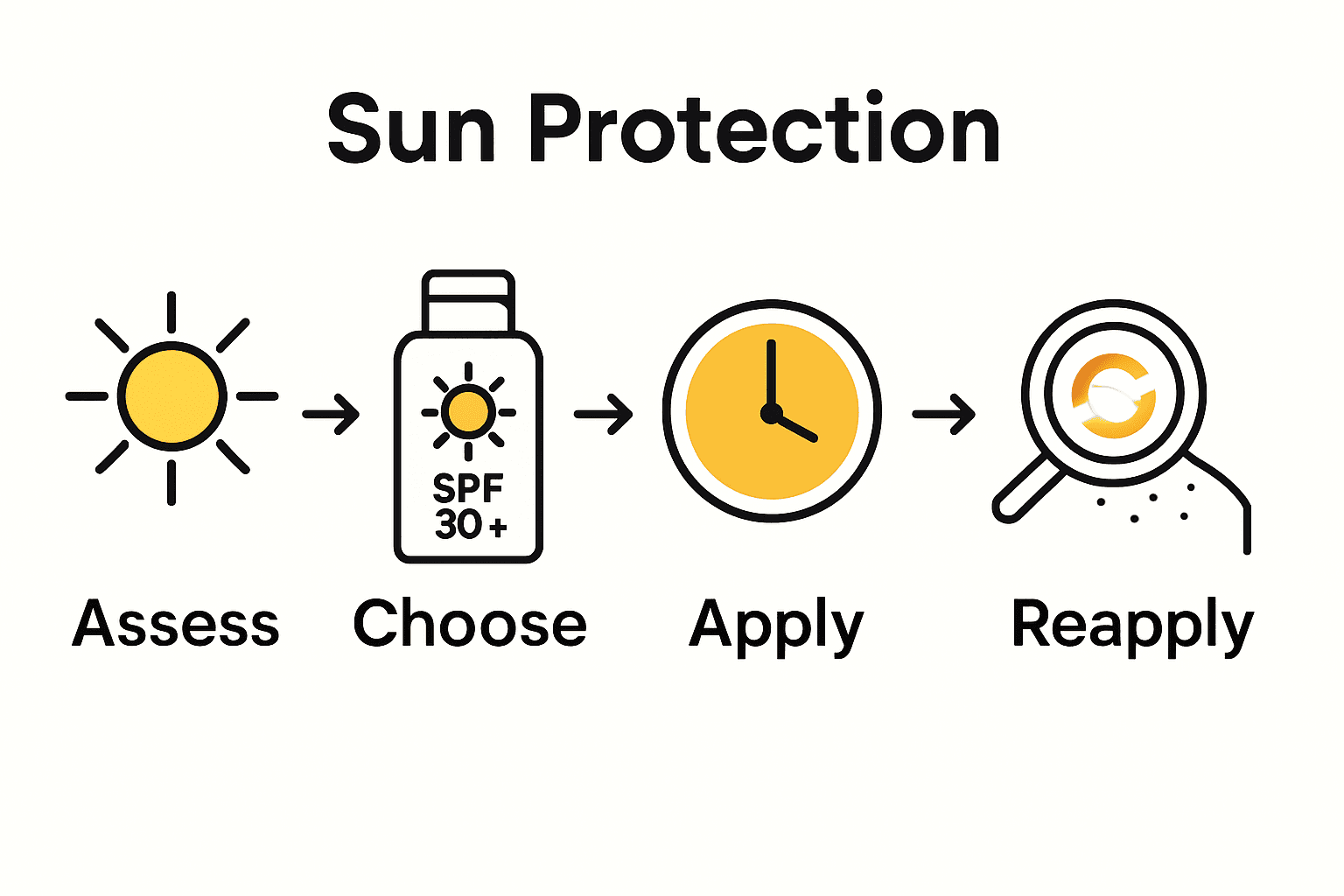
- Step 1: Assess Your Sun Exposure Needs
- Step 2: Select Suitable Sun Protection Products
- Step 3: Apply Sun Protection Correctly Each Morning
- Step 4: Reapply and Maintain Protection Throughout Day
- Step 5: Check Effectiveness and Adjust Your Routine
Quick Summary
| Key Point | Explanation |
|---|---|
| 1. Assess your sun exposure needs | Track your outdoor time and UV Index to understand sun intensity and tailor your protection approach. |
| 2. Choose broad-spectrum SPF 30+ products | Select sunscreens that protect against both UVA and UVB rays, ideally with water resistance for ongoing protection. |
| 3. Apply sunscreen properly every morning | Use about one ounce of sunscreen on all exposed skin at least 30 minutes before going outside and remember to reapply. |
| 4. Reapply sunscreen every two hours | Maintain sun protection throughout the day, especially during physical activities or after swimming, by reapplying every couple of hours. |
| 5. Monitor your skin and adjust routine | Regularly check for skin changes and find the best sunscreen for your skin type, adjusting based on this feedback. |
Step 1: Assess Your Sun Exposure Needs
Understanding your personal sun exposure needs is crucial for developing an effective protection strategy. This step helps you evaluate how UV rays impact your daily activities and determine the right level of sun defense.
According to the Environmental Protection Agency, assessing sun exposure involves several key considerations. Start by tracking the times you spend outdoors and noting when sunlight is most intense. The UV Index is an excellent tool for this assessment, providing real time information about potential radiation levels. Generally, UV rays are strongest between 10 am and 4 pm, so pay special attention during these hours.
The Centers for Disease Control and Prevention recommends evaluating your environment as part of your sun exposure assessment. Different surfaces reflect sunlight differently water can reflect up to 100% of UV rays, while sand reflects about 25%. Consider these reflective surfaces when planning outdoor activities and adjust your protection accordingly.
Quick evaluation tips include:
- Check daily UV Index before going outside
- Note time spent in direct sunlight
- Assess proximity to reflective surfaces like water or concrete
- Consider your skin type and natural sun sensitivity
By understanding your unique sun exposure profile, you can create a personalized protection plan that keeps your skin safe and healthy.
Step 2: Select Suitable Sun Protection Products
Choosing the right sun protection products is a critical step in safeguarding your skin from harmful UV radiation. This section will guide you through selecting effective sunscreen and protective gear that meets professional safety standards.
According to the American Academy of Dermatology, you should prioritize broad-spectrum sunscreens with a minimum SPF of 30. Broad-spectrum protection means the product shields your skin from both UVA and UVB rays. Look for water-resistant formulas if you will be swimming or sweating, which help maintain protection during physical activities.
The Skin Cancer Foundation recommends checking for their Seal of Recommendation when selecting sun protection products. This certification ensures the product meets rigorous safety and effectiveness standards. When shopping, consider these key factors:
- SPF 30 or higher
- Broad-spectrum protection
- Water-resistant formula
- Suitable for your skin type
- Comfortable application texture
By carefully selecting sun protection products that match your specific needs, you create a personalized defense against potential skin damage.
Step 3: Apply Sun Protection Correctly Each Morning
Mastering the art of daily sunscreen application is crucial for comprehensive skin protection. This step will help you develop a foolproof morning routine that shields your skin from harmful UV radiation.
According to Harvard Health, sunscreen should be applied generously to all exposed skin approximately 30 minutes before heading outdoors. The recommended amount is about one ounce roughly equivalent to a full shot glass which ensures complete skin coverage. Start by dispensing the sunscreen into your palm and systematically work it into your skin using gentle circular motions.
UCLA Health emphasizes the importance of covering often forgotten areas. Pay special attention to typically missed spots like your ears, back of the neck, tops of feet, and areas around clothing edges. Pro tip make sure to apply sunscreen before putting on clothing to guarantee full protection.
Quick application checklist:
- Apply 30 minutes before sun exposure
- Use one full ounce of sunscreen
- Cover all exposed skin thoroughly
- Reapply every two hours
- Reapply after swimming or excessive sweating
By developing a consistent morning sun protection routine, you create a powerful defense against potential skin damage and premature aging.
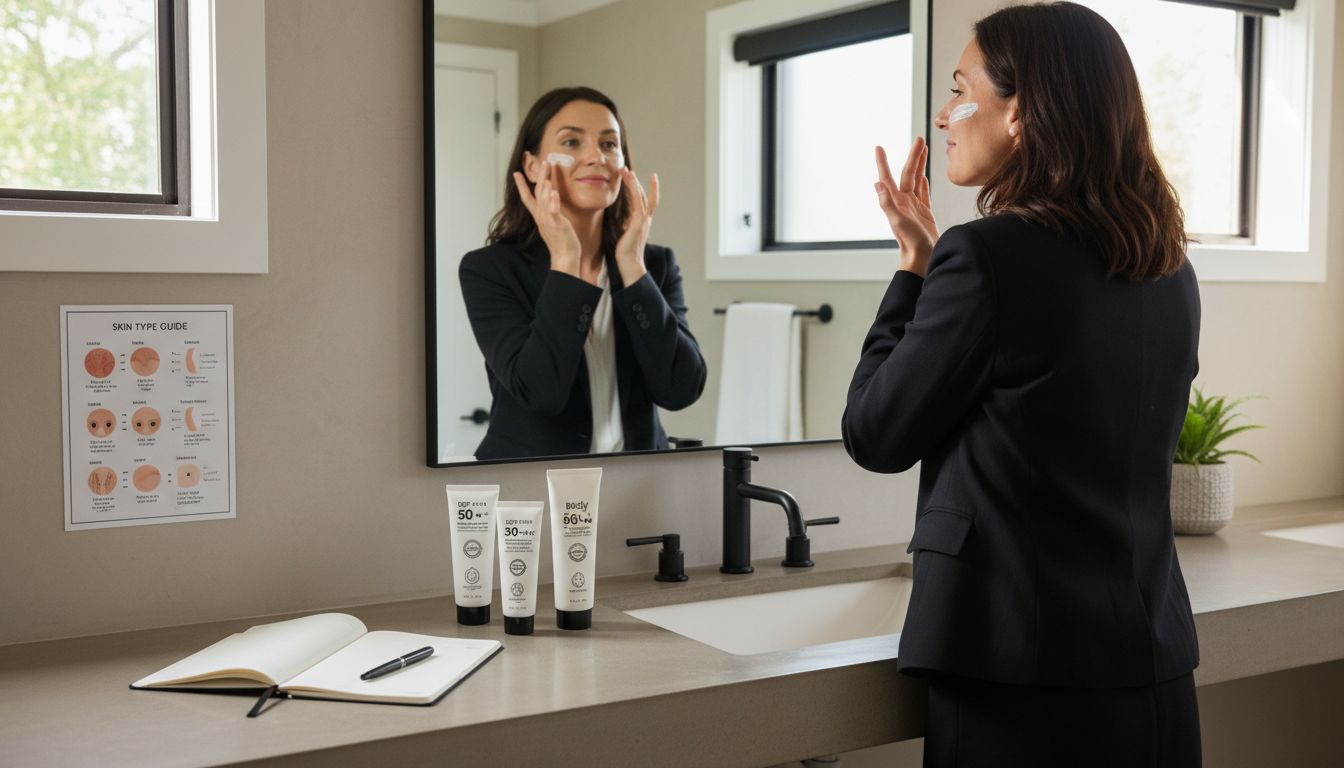
Step 4: Reapply and Maintain Protection Throughout Day
Maintaining consistent sun protection requires more than just a single morning application. This step will help you develop strategies for keeping your skin shielded from harmful UV rays throughout the entire day.
According to the American Academy of Dermatology, sunscreen should be reapplied every two hours to ensure continuous protection. This recommendation becomes even more critical during activities that cause sweating or swimming. Carry a travel sized sunscreen in your bag or car so you can easily reapply when needed.
The U.S. Environmental Protection Agency recommends supplementing sunscreen with additional protective measures. This means seeking shade during peak sunlight hours typically between 10 am and 4 pm and wearing protective clothing like wide brimmed hats and long sleeved shirts when possible.
Key strategies for all day protection:
- Reapply sunscreen every two hours
- Use additional protective clothing
- Seek shade during intense sunlight
- Keep a sunscreen with you for quick touch ups
- Check UV index throughout the day
By staying proactive and consistent with your sun protection routine, you create a comprehensive defense against potential skin damage.
Step 5: Check Effectiveness and Adjust Your Routine
Creating an effective sun protection strategy is an ongoing process that requires regular evaluation and adaptation. This final step will help you monitor your skin’s health and fine tune your sun protection approach.
Harvard Health recommends carefully monitoring your skin for signs of potential damage or changes. Pay close attention to any new freckles, moles, or variations in skin texture that might indicate sun sensitivity. Consider keeping a monthly skin journal where you document any noticeable changes and track how different sunscreen products and application techniques impact your skin.
The Skin Cancer Foundation suggests using their Seal of Recommendation as a key indicator of product quality and effectiveness. When evaluating your sun protection routine, look beyond just the SPF number and consider factors like broad spectrum protection, water resistance, and how well the product works with your specific skin type.
Key evaluation strategies:
- Perform monthly skin self examinations
- Track changes in skin appearance and texture
- Rotate sunscreen products to find your ideal match
- Consult a dermatologist annually
- Adjust SPF and application frequency based on your observations
By remaining proactive and attentive, you can develop a personalized sun protection strategy that evolves with your changing skin needs.
Protect Your Skin Every Day With Expert Sun Care Solutions
Sun protection is not just about avoiding sunburn. It is about preventing long-term skin damage, premature aging, and the risk of skin cancer. This guide highlights key challenges like choosing the right SPF, applying sunscreen properly, and reapplying throughout the day to stay safe under the sun. If you want a skincare routine that truly works, you need products designed for effective, comfortable daily use.
Experience the power of thoughtfully formulated products by exploring our Purito collection featuring clean, broad-spectrum options that meet high safety standards. Pair your sunscreen with nourishing treatments from our Facial Serums range to repair and protect your skin further. At Skin-Styles.com, find everything you need for a reliable sun protection regimen that fits your unique skin profile.

Take control of your daily sun defense today. Visit us now to build your personalized sun protection kit before the next sunny day arrives. Your skin will thank you for it.
Frequently Asked Questions
How do I assess my sun exposure needs?
Start by tracking the times you spend outdoors and noting when sunlight is most intense, especially between 10 am and 4 pm. Use a UV Index tool to get real-time information about radiation levels, and consider reflective surfaces in your environment when planning outdoor activities.
What are the key factors to look for in sun protection products?
Choose broad-spectrum sunscreens with at least SPF 30 and water-resistant formulas for extended outdoor activities. Always prioritize products that suit your skin type, and check for effectiveness certifications before purchase.
How can I make sure I’m applying sunscreen correctly?
Apply sunscreen generously to all exposed skin about 30 minutes before going outdoors, using approximately one ounce, which is roughly the size of a shot glass. Don’t forget to cover often-missed spots like ears and tops of feet, and ensure you do this daily for maximum protection.
How often should I reapply sunscreen throughout the day?
Reapply sunscreen every two hours, especially after swimming or sweating, to maintain effective protection. Keeping a travel-sized sunscreen handy can help you remember to touch up when needed.
What signs should I look for to check if my sun protection strategy is effective?
Monitor your skin for any new freckles, moles, or texture changes, which may indicate sun sensitivity or damage. Keep a monthly journal of any significant changes to help you adjust your sun protection routine as needed.
How can I refine my sun protection routine over time?
Regularly evaluate your sunscreen’s effectiveness and adjust your routine based on any changes in your skin or application technique. Consult a dermatologist at least once a year and try different sunscreens to find the best match for your skin type.