

TL;DR:
- Most sun damage occurs silently at the cellular level long before visible signs appear.
- UV rays cause DNA and collagen damage, leading to aging, hyperpigmentation, and cancer risks.
- Consistent daily protection and early prevention are essential to reduce long-term skin damage.
Most people think sun damage means a red, painful sunburn. The reality is far more unsettling. The most harmful effects of sun exposure happen silently, at the cellular level, long before your skin shows any visible sign of trouble. By the time wrinkles, dark spots, or rough patches appear, years of UV radiation have already been accumulating in your skin. This article breaks down exactly what sun damage is, how it happens, which skin types face the greatest risks, and what you can do right now to protect yourself and slow the process.
Table of Contents
- What exactly is sun damage?
- How UV rays cause skin damage
- Who is most at risk? Skin types and sun damage
- Prevention and repair: Practical steps for protecting your skin
- Our take: The truth about sun damage and skincare
- Protect your skin with Skin Styles solutions
- Frequently asked questions
Key Takeaways
| Point | Details |
|---|---|
| Sun damage is cumulative | Even short exposures add up over years, so daily protection is essential. |
| UV rays cause distinct harm | UVA ages skin from within; UVB burns and mutates DNA, both raise cancer risk. |
| Prevention beats repair | Cosmetic damage can sometimes be treated, but cancer risk is permanent—routine sun protection is key. |
| All skin types need care | Both light and dark skin face unique risks; personalized prevention makes a difference. |
| Simple steps are effective | Daily sunscreen, protective clothing, and shaded routines are proven, practical defenses. |
What exactly is sun damage?
Sun damage is not a single event. It is a slow, compounding process that builds over your entire lifetime. Every minute of unprotected exposure adds to a running total your skin never forgets.
Photoaging, the scientific term for sun-induced skin aging, is distinct from the natural aging your body goes through with time. Chronological aging is driven by genetics and internal biology. Photoaging is driven entirely by external UV exposure, and it is largely preventable. The two processes look similar on the surface, but their causes and solutions are very different.
The effects of UV radiation on skin include a wide range of changes that go far beyond cosmetic inconvenience:
- Wrinkles and fine lines that appear earlier than they should
- Hyperpigmentation, including age spots and uneven skin tone
- Loss of elasticity as collagen and elastin break down
- Rough or leathery texture from repeated surface damage
- Precancerous lesions and elevated skin cancer risk
Here is the part that surprises most people: millions of individuals accumulate significant sun damage throughout their teens and early twenties without any visible symptoms. The effects surface in their 30s and 40s, often mistaken for normal aging. By then, the underlying DNA changes have already been made.
A solid daily sun protection guide can help you understand how to interrupt this cycle before the damage becomes visible. Prevention at any age matters, but starting early makes an enormous difference.
How UV rays cause skin damage
Understanding sun damage means recognizing the mechanics of how UV rays interact with and damage your skin. Not all ultraviolet radiation is the same, and knowing the difference helps you protect yourself more effectively.

There are two main types of UV radiation that reach your skin: UVA and UVB. They behave differently and cause different types of harm.
| UV type | Penetration depth | Primary effects | Year-round risk |
|---|---|---|---|
| UVA | Deep (dermis) | Collagen breakdown, wrinkles, photoaging | High, even indoors |
| UVB | Surface (epidermis) | Sunburn, direct DNA damage | Highest in summer |
“UVA rays penetrate deeply, causing collagen and elastin breakdown, wrinkles, and photoaging; UVB rays damage the epidermis, cause sunburn, and directly harm DNA.”
Once UV radiation reaches your skin cells, a damaging sequence begins:
- Exposure: UV photons contact skin cells and are absorbed by DNA and other molecules.
- DNA and oxidative damage: UVB creates pyrimidine dimers and oxidative damage via reactive oxygen species, or ROS, which are unstable molecules that attack healthy cells. UVA primarily drives ROS production.
- Cellular response and photoaging: Your body attempts repair, but repeated damage overwhelms these systems. Mutations accumulate, inflammation sets in, and the immune system becomes suppressed in affected areas. Over time, this leads to visible aging and cancer risk.
The UV damage mechanics behind this process explain why a single bad sunburn is not the only concern. It is the daily, low-level exposure that quietly chips away at your skin’s structural integrity.
Pro Tip: Glass in your car or office windows blocks most UVB but lets UVA pass through freely. Deep photoaging damage can occur even when you never step outside. Daily broad-spectrum protection matters indoors too. Learn how sunscreen for anti-aging works and why it belongs in every morning routine.
Who is most at risk? Skin types and sun damage
Now that you know the science behind sun damage, let’s explore how your skin type changes your risk and needs. One of the most persistent myths in skincare is that darker skin does not need sun protection. This is dangerously wrong.
Dermatologists use the Fitzpatrick scale to classify skin types by their melanin content and UV response:
| Fitzpatrick type | Description | Natural SPF | Key risks |
|---|---|---|---|
| I | Very fair, always burns | ~3.3 | Severe burns, high cancer risk |
| II | Fair, usually burns | ~3.3 | Photoaging, freckling |
| III | Medium, sometimes burns | ~4 to 5 | Photoaging, some pigment changes |
| IV | Olive, rarely burns | ~8 | Post-inflammatory hyperpigmentation |
| V | Brown, very rarely burns | ~13.4 | Pigment changes, delayed cancer detection |
| VI | Deep brown/black, almost never burns | ~13.4 | Masking of lesions, late diagnosis |
Darker skin types have higher natural SPF from eumelanin, which reduces burn risk significantly. However, this protection is not absolute and comes with its own set of challenges.
Here is what each group needs to watch for:
- Light skin (Types I to III): High risk of burns, photoaging, and skin cancer. Visible damage often appears earlier.
- Medium skin (Type III to IV): Burns less but prone to uneven tone and dark spots after any inflammation.
- Darker skin (Types V to VI): Lower burn risk but significantly higher risk for post-inflammatory hyperpigmentation. Skin cancer is often caught later because lesions are harder to see against deeper skin tones.
Pro Tip: Skin cancer in darker skin tones is frequently diagnosed at a later, more dangerous stage because early warning signs are easier to miss. Annual full-body skin checks with a dermatologist are essential for every skin type, every year.
Choosing the right product matters too. A guide to picking sunscreen for your skin can help you find a formula that works with your specific tone and texture without leaving a white cast or causing breakouts.
Prevention and repair: Practical steps for protecting your skin
Knowing your risk and understanding the science sets the stage for practical action. This is your toolkit for protecting and repairing your skin, built on evidence-based strategies that dermatologists consistently recommend.
Daily prevention steps:
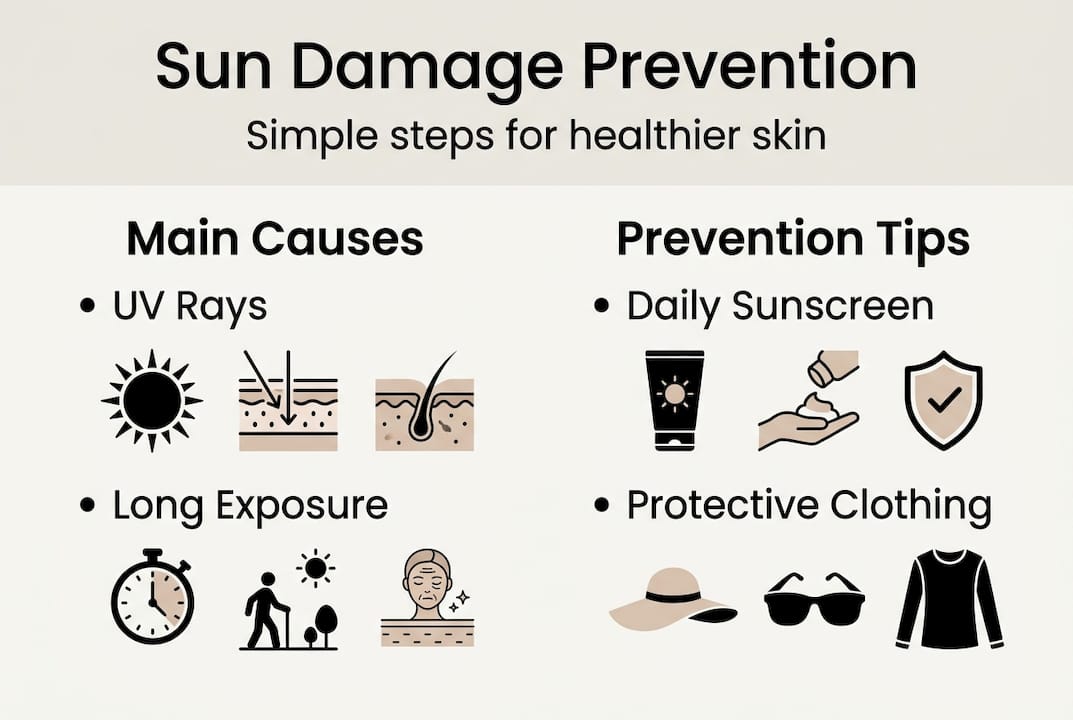
- Apply broad-spectrum SPF 30+ sunscreen every morning, rain or shine, indoors or out. Reapply every two hours when outdoors.
- Seek shade between 10am and 4pm, when UV intensity peaks. Even on cloudy days, up to 80% of UV rays pass through.
- Wear protective clothing, including wide-brim hats, UV-blocking sunglasses, and long sleeves when prolonged exposure is expected.
- Build a consistent skincare routine that includes antioxidants like vitamin C in the morning to neutralize free radicals before they cause damage.
Understanding the benefits of daily sunscreen goes beyond aesthetics. It is one of the most effective tools for reducing cancer risk over a lifetime.
Repair strategies for existing damage:
- Retinoids (prescription or over-the-counter) accelerate cell turnover and stimulate collagen production
- Vitamin C serums brighten hyperpigmentation and protect against further oxidative stress
- Chemical peels remove damaged surface layers to reveal fresher skin underneath
- Laser treatments target deeper pigmentation and stimulate collagen remodeling
These sun damage repair treatments can make a visible difference, but they work best when paired with ongoing prevention. Repair without protection is like patching a leak while the water keeps running.
Pro Tip: Sun damage is additive from birth. Starting preventive habits in childhood or early adulthood dramatically reduces the visible and invisible toll that shows up decades later. A complete anti-aging skincare routine can help you build those habits step by step.
Our take: The truth about sun damage and skincare
Now that you have seen the prevention and repair strategies, here is our unfiltered perspective on what actually matters and what most guides leave out.
Prevention is always cheaper, safer, and more effective than repair. DNA damage accumulates silently for years before you see a single wrinkle.
Most skincare content focuses heavily on fixing visible damage. That makes sense because visible results are motivating. But the uncomfortable truth is that cancer risk from DNA mutations is permanent and cumulative. You can improve the look of a dark spot or soften a wrinkle, but you cannot undo the cellular mutations that quietly raise your cancer risk over decades.
The skincare industry profits more from repair products than from sunscreen. That creates a subtle but real bias in how information gets presented. We think prevention deserves far more attention than it typically gets.
Our honest advice: build your protection routine first, then layer in repair. Annual skin checks are not optional, regardless of your skin tone, age, or how diligent you think you have been. Explore essential anti-aging tips that prioritize your long-term health, not just short-term cosmetic results.
Protect your skin with Skin Styles solutions
With the science and practical tips now in hand, the next step is putting them into action every single day. Building a consistent routine is easier when you have the right products and resources in one place.

At Skin Styles, you will find a curated selection of skincare solutions designed to support both protection and repair. From daily SPF essentials to targeted treatments for existing damage, the goal is to make healthy skin simple and accessible. Browse anti-aging skincare essentials and explore routines built around your skin type, lifestyle, and goals. Your skin is worth the investment.
Frequently asked questions
Can sun damage be reversed or treated?
Some cosmetic effects like wrinkles and discoloration may improve with treatments such as retinoids and laser therapy, but cancer risk from DNA mutations is permanent, which makes ongoing prevention the most important priority.
Do I need sunscreen if I have darker skin?
Yes, every skin type needs protection. Darker skin carries a lower burn risk but faces higher chances of pigment changes and delayed cancer detection, making consistent sun protection just as critical.
Are short exposures to the sun safe?
No. Damage is cumulative and even brief daily exposures add up over years, contributing to premature aging and elevated cancer risk long before any symptoms appear.
What steps should I take to prevent sun damage?
Use daily broad-spectrum SPF 30+ sunscreen every morning, seek shade during peak hours, wear protective clothing, and include repair ingredients like retinoids and vitamin C in your regular skincare routine.