

Over half of american adults report issues with dry or sensitive skin at some point in their lives, highlighting just how universal this struggle can be. Healthy skin is more than an aesthetic goal, since a well-moisturized complexion serves as your first line of defense against everyday irritants and environmental threats. By uncovering what moisturizing truly does for your skin, you can make better choices that support lasting comfort and resilience.
Table of Contents
- What Moisturizing Does for Your Skin
- Types of Moisturizers and Key Ingredients
- Major Benefits of Regular Moisturizing
- Risks of Neglecting Skin Hydration
- Expert Tips for Effective Moisturizing
Key Takeaways
| Point | Details |
|---|---|
| Moisturizing is Essential | It supports skin health by protecting the skin barrier and maintaining hydration. |
| Types of Ingredients Matter | Look for moisturizers with occlusives, humectants, and emollients to enhance skin barrier function. |
| Regular Moisturizing Benefits | Consistent use reduces signs of aging, protects against environmental stressors, and improves skin elasticity. |
| Neglecting Hydration Has Risks | Insufficient hydration can lead to sensitivity, accelerated aging, and compromised skin health. |
What Moisturizing Does for Your Skin
Moisturizing is far more than a simple beauty ritual—it’s a critical process of protecting and supporting your skin’s fundamental health. When you apply a moisturizer, you’re not just adding temporary hydration, but actively supporting your skin’s complex barrier functions that maintain its resilience and overall well-being.
Scientific research reveals that effective moisturizers target multiple layers of skin protection. By improving transepidermal water loss, these products help maintain optimal skin hydration and support critical physiological processes. Specialized skincare ingredients like ceramides play a significant role in reinforcing the skin’s protective mechanisms, helping to prevent moisture loss and maintain structural integrity.
The impact of moisturizing goes beyond surface-level hydration. At a microscopic level, quality moisturizers interact with the skin’s physical, chemical, microbiologic, and immunologic layers. This intricate interaction helps stabilize the skin barrier, reducing potential inflammation and supporting natural healing processes. Different moisturizer compositions can dramatically influence skin barrier function—some formulations enhance barrier integrity, while others might potentially compromise it.
Key benefits of consistent moisturizing include:
- Preventing dry, flaky skin
- Reducing appearance of fine lines and wrinkles
- Balancing natural oil production
- Protecting against environmental stressors
- Supporting skin’s natural regeneration processes
By understanding moisturizing as a sophisticated biological interaction rather than a simple cosmetic step, you can make more informed choices about supporting your skin’s long-term health and appearance.
Types of Moisturizers and Key Ingredients
Moisturizers are sophisticated skincare products with complex compositions designed to support skin health. Hydration science reveals three primary categories of moisturizing ingredients: occlusives, humectants, and emollients, each playing a unique role in maintaining skin barrier function and overall hydration.
Occlusives create a protective layer on the skin’s surface, preventing water loss and shielding against environmental stressors. Common occlusive ingredients include petroleum jelly, mineral oil, and silicone derivatives. Humectants, by contrast, are moisture-attracting ingredients that draw water into the skin, helping to keep it plump and hydrated. Hyaluronic acid represents a powerful example of an advanced humectant capable of holding up to 1000 times its weight in water.

Emollients work by filling spaces between skin cells, creating a smooth surface and improving overall skin texture. These ingredients, which include natural oils like jojoba and synthetic lipids, help repair the skin barrier and provide a soft, flexible feel. Research indicates that the specific combination of these ingredients can significantly impact skin health—some formulations enhance barrier integrity, while others might potentially compromise skin protection.
Key moisturizer ingredients to look for include:
- Ceramides: Lipids that help restore skin barrier
- Glycerin: Powerful humectant that attracts moisture
- Hyaluronic acid: Intense hydration molecule
- Niacinamide: Supports skin barrier and reduces inflammation
- Natural plant oils: Provide essential fatty acids and nutrients
Understanding the science behind these ingredients empowers you to choose moisturizers that genuinely support your skin’s unique needs and health.
Major Benefits of Regular Moisturizing
Regular moisturizing transforms skin health far beyond simple hydration, offering a comprehensive approach to protecting and rejuvenating your body’s largest organ. Consistent moisturizing can dramatically improve skin barrier function, reducing vulnerability to environmental stressors and supporting the skin’s natural defense mechanisms.
Scientific research demonstrates remarkable benefits of routine moisturization. Facial oils and targeted moisturizers can significantly reduce transepidermal water loss, which means keeping moisture locked within the skin’s layers. Particularly noteworthy is the impact on skin conditions like atopic dermatitis, where consistent moisturizing can potentially reduce the need for topical medications and support natural healing processes.
Beyond immediate hydration, regular moisturizing delivers long-term skin health advantages. By maintaining optimal skin hydration, you can prevent premature aging, minimize the appearance of fine lines, and create a protective shield against environmental damage. The skin’s microbiome and natural healing capabilities are directly supported by proper moisture maintenance, making moisturizing a critical component of proactive skincare.
Key benefits of consistent moisturizing include:
- Maintaining skin elasticity
- Protecting against environmental damage
- Reducing inflammation
- Supporting natural skin repair processes
- Preventing premature aging signs
- Balancing skin’s natural oil production
Understanding moisturizing as a holistic approach to skin health empowers you to make informed choices that support your skin’s long-term resilience and appearance.
Risks of Neglecting Skin Hydration
Neglecting skin hydration is far more than a cosmetic concern—it’s a serious health risk that can compromise your body’s primary protective barrier. A comprehensive skincare routine for mature skin becomes crucial as the consequences of dehydration extend far beyond surface-level dryness.
Scientific research reveals alarming risks associated with inadequate skin hydration. When the skin barrier becomes compromised, it opens the door to a cascade of potential health issues, including increased susceptibility to infections, chronic inflammation, and accelerated aging. Transepidermal water loss occurs more rapidly in dehydrated skin, breaking down the natural protective mechanisms that keep harmful external agents at bay.
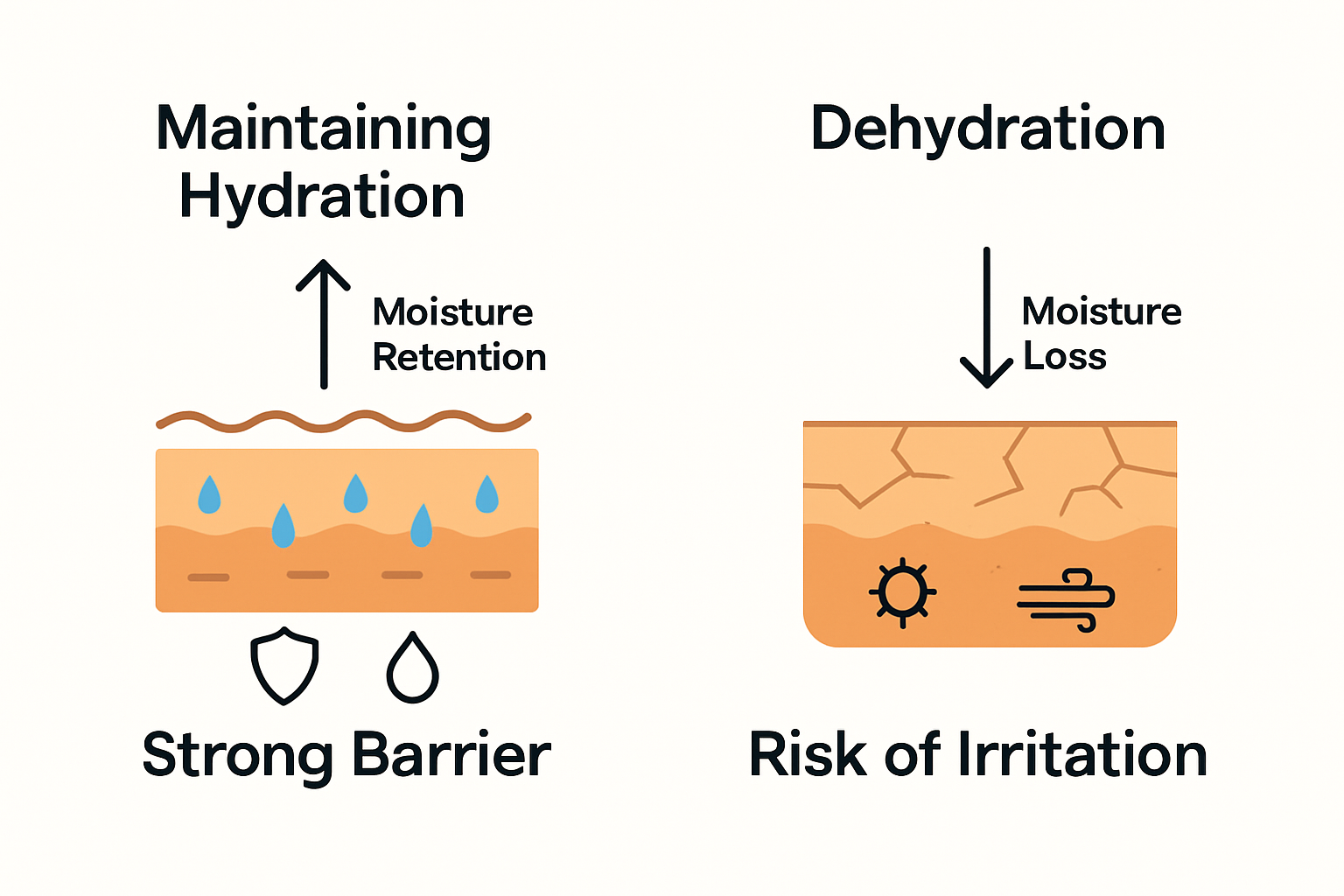
The long-term consequences of skin dehydration can be significant and multifaceted. Chronic dryness can trigger or exacerbate serious skin conditions such as eczema, psoriasis, and dermatitis. The skin’s ability to regenerate and protect itself diminishes, leading to a vicious cycle of increased vulnerability and reduced resilience. Moreover, dehydrated skin ages more quickly, showing more pronounced fine lines, uneven texture, and reduced elasticity.
Key risks of neglecting skin hydration include:
- Increased skin sensitivity
- Higher susceptibility to bacterial infections
- Accelerated signs of aging
- Compromised immune function of the skin
- Chronic inflammation
- Reduced natural healing capabilities
Understanding these risks underscores the critical importance of maintaining consistent skin hydration as a fundamental aspect of overall health and wellness.
Expert Tips for Effective Moisturizing
Effective moisturizing is a nuanced art that goes beyond simply applying a random cream to your skin. Crafting a personalized daily skincare routine requires understanding your skin’s unique needs and selecting the right combination of hydrating ingredients.
Experts recommend a strategic approach to moisturizing that involves layering different types of hydrating ingredients. Humectants, like hyaluronic acid, work by attracting moisture to the skin, while occlusives create a protective barrier that prevents water loss. Emollients help smooth and soften the skin, filling in microscopic cracks and creating a more uniform surface. The key is finding a balanced moisturizer that combines these elements to support your skin’s natural barrier function.
Application technique is just as crucial as product selection. Most dermatologists advise applying moisturizer to slightly damp skin, which helps lock in additional hydration. Gentle patting motions are preferred over rubbing, as they minimize skin stress and help the product absorb more effectively. For maximum benefit, moisturize immediately after cleansing, when your skin is most receptive to hydration.
Key expert moisturizing tips include:
- Apply moisturizer to damp skin
- Use products suited to your skin type
- Layer hydrating ingredients strategically
- Pay attention to skin texture and absorption
- Adjust moisturizing routine with seasonal changes
- Be consistent with application
Remember that effective moisturizing is a personalized journey of understanding and responding to your skin’s unique needs and changing conditions.
Unlock Lasting Hydration with the Right Skincare Solutions
Struggling with dry, flaky, or aging skin is more than a surface problem. The article highlights the critical need to support your skin’s barrier by using moisturizers that combine humectants, emollients, and occlusives. These ingredients not only hydrate but also protect and repair your skin’s natural defenses against environmental stress and premature aging. If your goal is to maintain skin elasticity and prevent moisture loss, you need products designed with these science-backed components.
Discover how the perfect moisturizing routine can transform your skin by exploring effective options at Facial Serums – Skin Styles.

Take control of your skin’s health today. Visit Skin-Styles.com for expertly curated Anti Wrinkles and Facial Cleansers – Skin Styles designed to enhance hydration and strengthen your skin barrier. Act now to lock in moisture, reduce fine lines, and protect your skin before dryness and damage take their toll.
Frequently Asked Questions
What are the main benefits of moisturizing my skin?
Moisturizing helps prevent dry, flaky skin, reduces the appearance of fine lines and wrinkles, balances natural oil production, protects against environmental stressors, and supports the skin’s natural regeneration processes.
How do different types of moisturizers work?
Moisturizers contain three primary categories of ingredients: occlusives, humectants, and emollients. Occlusives create a protective barrier, humectants attract moisture, and emollients fill in gaps between skin cells to improve texture and hydration.
Why should I moisturize my skin daily?
Daily moisturizing maintains skin elasticity, protects against environmental damage, reduces inflammation, supports natural skin repair processes, prevents premature aging, and balances the skin’s natural oil production.
What risks are associated with neglecting skin hydration?
Neglecting skin hydration can lead to increased sensitivity, higher susceptibility to infections, accelerated signs of aging, chronic inflammation, and reduced natural healing capabilities of the skin.