

Over 50 percent of people believe ceramides are just another moisture ingredient, yet these molecules are so much more than simple skin hydrators. Ceramides play a central role in keeping your skin resilient and protected, far beyond what most marketing claims suggest. Getting the facts straight about ceramides could be the missing key to healthy, strong skin. This guide breaks down what ceramides actually do and why common misconceptions might be holding your skincare routine back.
Table of Contents
- Ceramides Explained and Common Misconceptions
- Different Types of Ceramides in Skincare
- How Ceramides Support Skin Barrier Function
- Benefits and Uses of Ceramides in Products
- Risks, Side Effects, and Comparisons With Alternatives
Key Takeaways
| Point | Details |
|---|---|
| Ceramides’ Role | Ceramides are essential lipids that maintain the skin’s barrier and play a critical role in cellular processes such as regulation and inflammation. |
| Types of Ceramides | Different types of ceramides offer specialized functions, making them effective for targeting various skin issues, from hydration to elasticity. |
| Product Applications | Ceramides are versatile ingredients found in numerous skincare products, including moisturizers and serums, enhancing skin hydration and protection. |
| Caution with Use | While generally safe, individuals with specific skin conditions should consult professionals before using ceramide-containing products to avoid complications. |
Ceramides Explained and Common Misconceptions
Ceramides are complex lipid molecules that play a critical role in maintaining healthy skin. According to research from PubMed, these sphingolipids serve as fundamental components within our skin’s protective barrier, influencing numerous cellular processes beyond simple structural support.
At their core, ceramides act like microscopic guardians of cellular health. As detailed by Frontiers in Cell and Developmental Biology, these bioactive lipids are integral to cell membranes and function as sophisticated signaling molecules. Their primary responsibilities extend far beyond basic protection:
- Regulating cell proliferation
- Managing cellular differentiation
- Controlling inflammatory responses
- Triggering programmed cell death (apoptosis)
One of the most common misconceptions about ceramides is that they are simply a passive structural element. In reality, they are dynamic molecules actively participating in complex biological mechanisms. When ceramide profiles become disrupted, significant health implications emerge. Research indicates alterations can contribute to skin conditions like atopic dermatitis and psoriasis.
Understanding ceramides isn’t about viewing them as static components but recognizing their adaptive, responsive nature. They represent a sophisticated communication network within our cellular ecosystem, continuously monitoring and responding to environmental and internal signals. Think of them as intelligent biological switches that can trigger cascading cellular responses based on precise biochemical conditions.
Their structural diversity means ceramides aren’t a one-size-fits-all molecule. Different types perform specialized functions, which explains why they’re so crucial in maintaining skin health and overall cellular integrity. For individuals struggling with skin issues, understanding ceramides could be the first step toward more targeted, effective skincare strategies.
Different Types of Ceramides in Skincare
Ceramides are not a one-size-fits-all solution. In fact, there are multiple types of ceramides, each with unique characteristics and specific roles in maintaining skin health. While all ceramides share the fundamental mission of protecting and supporting our skin’s barrier, their subtle differences can significantly impact how they function.
The primary types of ceramides found in skincare can be categorized into several key groups:
- Ceramide 1 (EOS): Often called the “master ceramide”, this type is crucial for maintaining the skin’s moisture barrier
- Ceramide 3 (NP): Excellent for hydration and reducing inflammation
- Ceramide 6-II (AP): Supports skin elasticity and helps prevent moisture loss
- Ceramide 9: Known for its robust protective properties
Each ceramide type interacts differently with skin cells, creating a complex network of protection and repair. Some ceramides excel at locking in moisture, while others are more focused on reducing inflammation or supporting cellular communication. This diversity explains why multiple ceramide types are often combined in advanced skincare formulations.

Interestingly, our skin’s natural ceramide production declines with age, which is why topical ceramide products become increasingly important. As we get older, supplementing these critical lipids can help restore skin’s resilience, smooth fine lines, and improve overall texture. For those with sensitive or compromised skin barriers, understanding these different ceramide types can be a game-changer in developing an effective skincare strategy.
Choosing the right ceramide isn’t about finding a single miracle ingredient, but about understanding your skin’s unique needs. Whether you’re battling dryness, sensitivity, or signs of aging, there’s likely a ceramide type perfectly suited to your skin’s specific requirements. Learn more about Korean skincare routines for mature dry skin, which often leverage these powerful lipid molecules to restore skin health.
How Ceramides Support Skin Barrier Function
The skin barrier is our body’s first line of defense, and ceramides are its primary architectural materials. According to research from PubMed, ceramides are major lipid components of the stratum corneum, forming a critical epidermal permeability barrier that protects against environmental challenges and maintains essential skin hydration.
Think of ceramides like tiny molecular bricks that construct an impenetrable fortress for your skin. As detailed by Cosmoderma, these remarkable molecules do much more than just create a physical barrier. They actively regulate crucial skin processes:
- Reducing transepidermal water loss
- Controlling keratinocyte proliferation
- Modulating immune system responses
- Organizing the complex lamellar structure of skin layers
The structural integrity of our skin depends on the precise arrangement of these ceramide molecules. When ceramide levels become disrupted, the entire barrier can become compromised, leading to increased sensitivity, dryness, and potential inflammation. This delicate balance means that maintaining optimal ceramide levels isn’t just about appearance - it’s about protecting your body’s most important defensive shield.
Understanding ceramides reveals them as dynamic, intelligent molecules constantly working to keep our skin healthy. They’re not just passive components but active participants in maintaining skin resilience. For individuals struggling with skin conditions like eczema, psoriasis, or chronic dryness, supporting ceramide function could be a game-changing approach to long-term skin health. Explore our Korean skincare routine for mature dry skin, which emphasizes the critical role of ceramides in comprehensive skin protection.
Benefits and Uses of Ceramides in Products
Ceramides are transformative ingredients that have revolutionized skincare product formulations. According to Dermletter, these powerful lipids help restore the skin’s natural barrier, improve hydration, and provide robust protection against environmental damage - making them a versatile solution for virtually all skin types.
The applications of ceramides span multiple product categories, offering comprehensive skin support:
- Facial moisturizers
- Night creams and sleeping masks
- Serums and treatment oils
- Body lotions
- Specialized repair treatments
- Hair care products
As highlighted by UK Typology, these molecules are recognized for their exceptional safety profile and remarkable skin tolerance. This means they can benefit sensitive skin types without causing additional irritation or complications. Whether you’re dealing with dryness, aging, sensitivity, or environmental stress, ceramide-infused products offer a gentle yet effective approach to skin restoration.
Understanding the nuanced benefits of ceramides transforms how we approach skincare. They’re not just another trendy ingredient - they’re scientifically backed molecular defenders that work harmoniously with your skin’s natural processes. For those seeking comprehensive skin health, ceramide products represent a sophisticated strategy that addresses multiple concerns simultaneously. Explore our Korean skincare routine for mature dry skin, which expertly leverages ceramides to deliver transformative results.
Risks, Side Effects, and Comparisons With Alternatives
Ceramides are powerful skincare ingredients, but like any bioactive compound, they come with potential nuances that require careful understanding. According to research from PubMed, ceramides are complex bioactive lipid mediators involved in critical cellular processes like apoptosis, inflammation, and cellular regulation - which means their impact extends far beyond surface-level skincare.
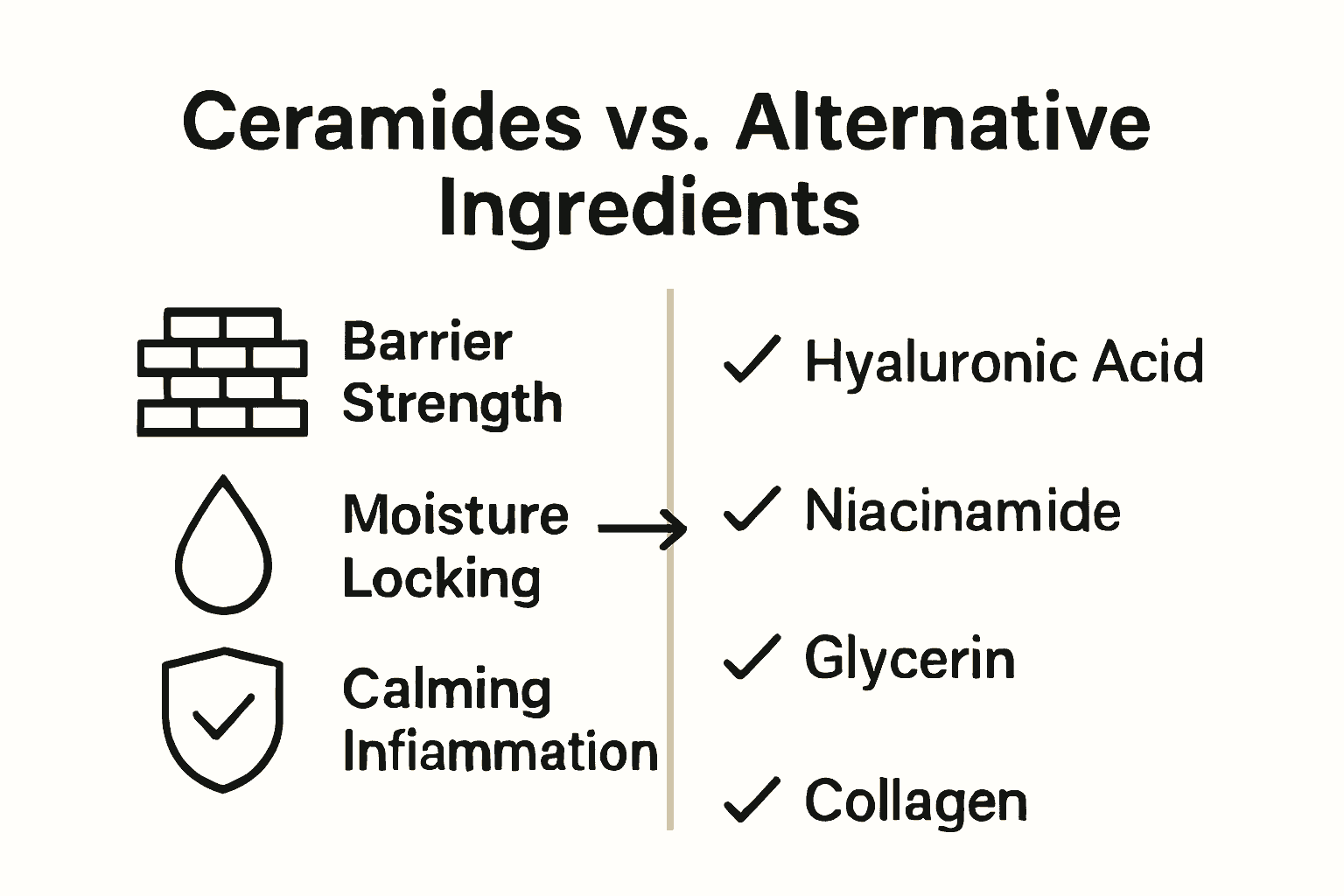
When comparing ceramides to alternative skincare ingredients, several key distinctions emerge:
- Hyaluronic Acid: Provides hydration, but lacks barrier-rebuilding properties
- Niacinamide: Supports skin health, but doesn’t replicate ceramides’ structural role
- Glycerin: Offers temporary moisture, without long-term barrier restoration
- Collagen: Supports skin elasticity, but doesn’t address barrier function directly
Research suggests potential risks associated with ceramide metabolism, particularly when biological systems become dysregulated.
 As highlighted by Frontiers in Neuroscience, imbalanced ceramide levels can contribute to pathological states, underscoring the importance of balanced, targeted usage.
For most individuals, topical ceramide products remain exceptionally safe and well-tolerated. However, those with specific skin conditions or sensitivities should consult healthcare professionals before incorporating new treatments. Explore our Korean skincare routine for mature dry skin, which provides expert guidance on integrating ceramides safely and effectively into your skincare regimen.
Unlock the Power of Ceramides for Lasting Skin Health
If you are struggling with dryness, sensitivity, or the visible signs of aging, understanding the vital role of ceramides can truly transform your skincare routine. The article revealed how these natural lipids rebuild the skin barrier, lock in moisture, and calm inflammation—key challenges that many face daily. Don’t let disrupted ceramide levels leave your skin vulnerable and tired.
Start restoring your skin’s natural resilience today by choosing from a curated selection of ceramide-rich products designed to nourish, protect, and revitalize.

Explore effective solutions that work in harmony with your skin’s biology at Skin-Styles.com. Discover how the right moisturizers and treatments can help replenish your ceramide levels and bring back that healthy, radiant glow. Don’t wait for skin issues to worsen take control now and embrace a skincare routine backed by science and tailored for your unique needs. Visit Skin-Styles.com to begin your journey to stronger, hydrated skin today.
Frequently Asked Questions
What are ceramides and why are they important for skin health?
Ceramides are complex lipids that play a vital role in maintaining the skin’s protective barrier, regulating hydration, and supporting overall cellular health. They help reduce water loss and protect against environmental stressors, making them crucial for healthy skin.
What types of ceramides are commonly used in skincare products?
Common types of ceramides in skincare include Ceramide 1 (EOS), Ceramide 3 (NP), Ceramide 6-II (AP), and Ceramide 9. Each type has different roles, such as enhancing moisture, reducing inflammation, and supporting skin elasticity.
How do ceramides support skin barrier function?
Ceramides act as structural components of the skin’s outer layer, forming a barrier that reduces transepidermal water loss and protects against harmful environmental factors. They help in regulating various skin processes that are essential for maintaining skin health.
Can ceramides be used by people with sensitive skin?
Yes, ceramides are known for their excellent safety profile and are well-tolerated by sensitive skin types. They help restore the skin barrier without causing irritation, making them suitable for a wide range of skin conditions.
Recommended
- A Korean Skincare Routine for Mature Dry Skin – Skin Styles
- A Korean Skincare Routine for Mature Dry Skin – Skin Styles
- PURITO Dermide Cica Barrier Sleeping Pack 80ml – Skin Styles
- medicube Deep Vitamin C Capsule Cream 55g + PDRN Pink Collagen Capsule – Skin Styles
- 7 Essential Curly Hair Routine Products for Healthy Curls | MyHair