

More than 60 percent of american skincare lovers have tried facial oils, yet myths still cloud their true benefits. The world of skincare can feel crowded and confusing, especially with so many products competing for attention. Facial oils stand out because they offer powerful, concentrated nutrition for the skin that goes beyond what most creams deliver. Understanding how these pure plant extracts work lets you nurture your skin with greater confidence and clarity.
Table of Contents
- What Are Facial Oils In Skincare?
- Types Of Facial Oils And Their Benefits
- How Facial Oils Nourish And Protect Skin
- Who Can Benefit From Facial Oils
- Common Misconceptions And Potential Risks
- Comparing Facial Oils To Other Moisturizers
Key Takeaways
| Point | Details |
|---|---|
| Facial Oils Nourish and Protect | Facial oils provide essential fatty acids and vitamins that nourish the skin while creating a protective barrier against environmental stressors. |
| Customization for Skin Types | Different facial oils are tailored for specific skin types, ensuring effective treatment for various concerns, from dryness to oil control. |
| Myths Debunked | Common misconceptions prevent people from using facial oils effectively; many oils are non-comedogenic and beneficial for oily skin. |
| Facial Oils vs. Traditional Moisturizers | Unlike traditional moisturizers, facial oils deliver concentrated nourishment without fillers, allowing for deeper penetration and more direct benefits. |
What Are Facial Oils in Skincare?
Facial oils are concentrated botanical extracts that serve as powerful skincare solutions designed to nourish, protect, and transform your skin. According to Hilaris Publisher, these plant-based liquids have been fundamental to beauty rituals throughout human history, offering natural pathways to achieving radiant, healthy skin.
At their core, facial oils are pure, potent liquids extracted from plants, packed with essential fatty acids, vitamins, and antioxidants. As Derm Blog explains, these concentrated formulations target multiple skin concerns simultaneously, providing hydration, fighting inflammation, and supporting the skin’s natural defense mechanisms. Unlike traditional moisturizers that contain water and additional fillers, facial oils deliver nutrients in their most direct and pure form.
The versatility of facial oils makes them suitable for almost every skin type. Whether you have dry, oily, combination, or sensitive skin, there’s a specific oil designed to address your unique needs. Key characteristics that make facial oils remarkable include:
- Lightweight molecular structure that penetrates deeply
- High concentration of nutrients and antioxidants
- Ability to balance natural skin oil production
- Protection against environmental stressors
- Support for skin’s natural healing processes
By understanding the fundamental nature of facial oils, you can unlock a transformative approach to skincare that goes beyond surface-level treatments. These botanical elixirs represent a holistic method of nurturing your skin from within, providing targeted nutrition and protection in every single drop.
Types of Facial Oils and Their Benefits
Facial oils are far from a one-size-fits-all solution, with each type offering unique properties tailored to specific skin needs. According to International Journal of Frontier Management Research, several carrier oils stand out for their remarkable skincare benefits, providing targeted solutions for different skin concerns.
Let’s explore the most popular facial oils and their specific advantages:
- Sweet Almond Oil: Highly moisturizing and universally suitable for all skin types. Its gentle nature makes it an excellent choice for those seeking balanced hydration.
- Jojoba Oil: Remarkable for mimicking the skin’s natural sebum, making it particularly effective for oily and acne-prone skin. It helps regulate oil production and provides non-comedogenic moisture.
- Coconut Oil: Known for its intense moisturizing properties and natural antimicrobial characteristics. Ideal for those seeking deep hydration and skin protection.
- Grapeseed Oil: A lightweight, non-greasy option perfect for individuals with oily or acne-prone skin. Its fast-absorbing formula ensures minimal residue while providing essential nutrients.
Beyond these primary options, facial oils can be categorized into essential categories based on skin type and specific concerns. For those with dry skin, heavier oils like marula or argan provide intense nourishment. Individuals with combination or oily skin might prefer lighter, balancing oils such as rosehip or squalane. How to choose an oil cleansing method can further help you understand which oil might work best for your unique skin profile.
The key to maximizing facial oil benefits lies in understanding your skin’s specific needs and selecting an oil that complements your natural skin chemistry.
 Whether you’re targeting hydration, fighting signs of aging, or balancing oil production, there’s a facial oil designed to support your skincare goals.
How Facial Oils Nourish and Protect Skin
Facial oils are powerful skincare allies that go far beyond simple moisturization. According to Hilaris Publisher, these remarkable substances provide essential fatty acids and vitamins that actively support overall skin health, offering a comprehensive approach to nourishment and protection.
The protective mechanisms of facial oils are multifaceted. Antioxidant properties play a crucial role in defending the skin against environmental stressors and free radicals. As Derm Blog explains, these oils create a protective barrier that not only locks in moisture but also shields the skin from external damage. This barrier function is particularly important in combating premature aging and maintaining skin resilience.
Key protective and nourishing mechanisms of facial oils include:
- Creating a protective moisture barrier
- Neutralizing harmful free radicals
- Reducing inflammation and skin irritation
- Supporting natural skin regeneration processes
- Delivering concentrated nutrients directly to skin cells
Understanding how to incorporate facial oils effectively is crucial. What is Oil Cleansing? can provide additional insights into maximizing the benefits of these powerful skincare ingredients. The key is finding the right oil that matches your specific skin type and concerns, allowing you to harness the full potential of these natural, nutrient-rich elixirs.
Ultimately, facial oils represent a holistic approach to skincare. They don’t just sit on the surface but penetrate deeply, providing nourishment from within. By supporting the skin’s natural defense mechanisms and delivering concentrated nutrients, these oils transform skincare from a surface-level treatment to a deeply restorative practice.
Who Can Benefit From Facial Oils
Contrary to popular belief, facial oils are not exclusively for one skin type or age group. According to International Journal of Frontier Management Research, different oils offer targeted benefits for various skin types, making them a versatile skincare solution for almost everyone.
Skin Type Compatibility is the cornerstone of facial oil effectiveness. For individuals with dry and sensitive skin, sweet almond oil provides gentle, comprehensive hydration. Those struggling with oily or acne-prone skin can benefit from jojoba oil, which remarkably mimics the skin’s natural sebum and helps balance oil production. Coconut oil emerges as an excellent option for those seeking intense moisture and antimicrobial protection.
Different skin profiles can leverage facial oils in unique ways:
- Dry Skin: Seek heavier, more nourishing oils like argan or marula
- Oily Skin: Choose lightweight, non-comedogenic oils such as grapeseed or rosehip
- Combination Skin: Use balancing oils like jojoba or squalane
- Sensitive Skin: Opt for gentle, hypoallergenic options like sweet almond
- Mature Skin: Look for oils rich in antioxidants like sea buckthorn or rosehip
Understanding your unique skin needs is crucial. 7 Benefits of Double Cleansing can provide additional context on how to integrate facial oils into your comprehensive skincare routine. Ultimately, facial oils are not about one-size-fits-all solutions but personalized skin nutrition that adapts to your individual requirements.
Common Misconceptions and Potential Risks
Facial oils often fall victim to widespread misunderstandings that can prevent people from experiencing their true potential. According to Derm Blog, one of the most persistent myths is that facial oils are unsuitable for oily or acne-prone skin, when in fact, certain oils can actually help regulate sebum production and provide significant skincare benefits.
Myth-Busting Insights reveal that not all facial oils are created equal. While some individuals worry about potential breakouts, oils like jojoba and grapeseed are non-comedogenic, meaning they won’t clog pores. As Nina Natural Cosmetics explains, high-quality, unrefined oils can be incredibly beneficial when used correctly.
Potential risks and important considerations include:
- Allergic reactions or skin sensitivity
- Potential for irritation if not patch-tested
- Risk of using low-quality or improperly processed oils
- Incorrect application or overuse
- Individual skin chemistry variations
To minimize risks and maximize benefits, follow these critical guidelines:
- Always perform a patch test before full application
- Start with small amounts and observe skin reaction
- Choose high-quality, cold-pressed, unrefined oils
- Consult with a dermatologist for personalized advice
- Monitor your skin’s response and adjust usage accordingly
For those interested in a comprehensive skincare approach, 7 Benefits of Double Cleansing can provide additional insights into creating a balanced skincare routine. Remember, the key to successful facial oil use is understanding your unique skin needs and approaching application with knowledge and care.
Comparing Facial Oils to Other Moisturizers
Traditional moisturizers and facial oils might seem similar, but they represent distinctly different approaches to skincare hydration. According to Hilaris Publisher, facial oils offer a more concentrated form of nourishment by delivering essential fatty acids and vitamins directly to the skin, forming a potent moisture barrier that traditional moisturizers cannot match.
Molecular Composition sets facial oils apart from conventional moisturizers. While standard moisturizers typically contain water, emulsifiers, and multiple ingredients, pure facial oils represent a minimalist approach to skincare. As Derm Blog explains, these oils provide intense hydration without unnecessary fillers, allowing for more direct nutrient delivery and skin absorption.
Key differences between facial oils and traditional moisturizers include:
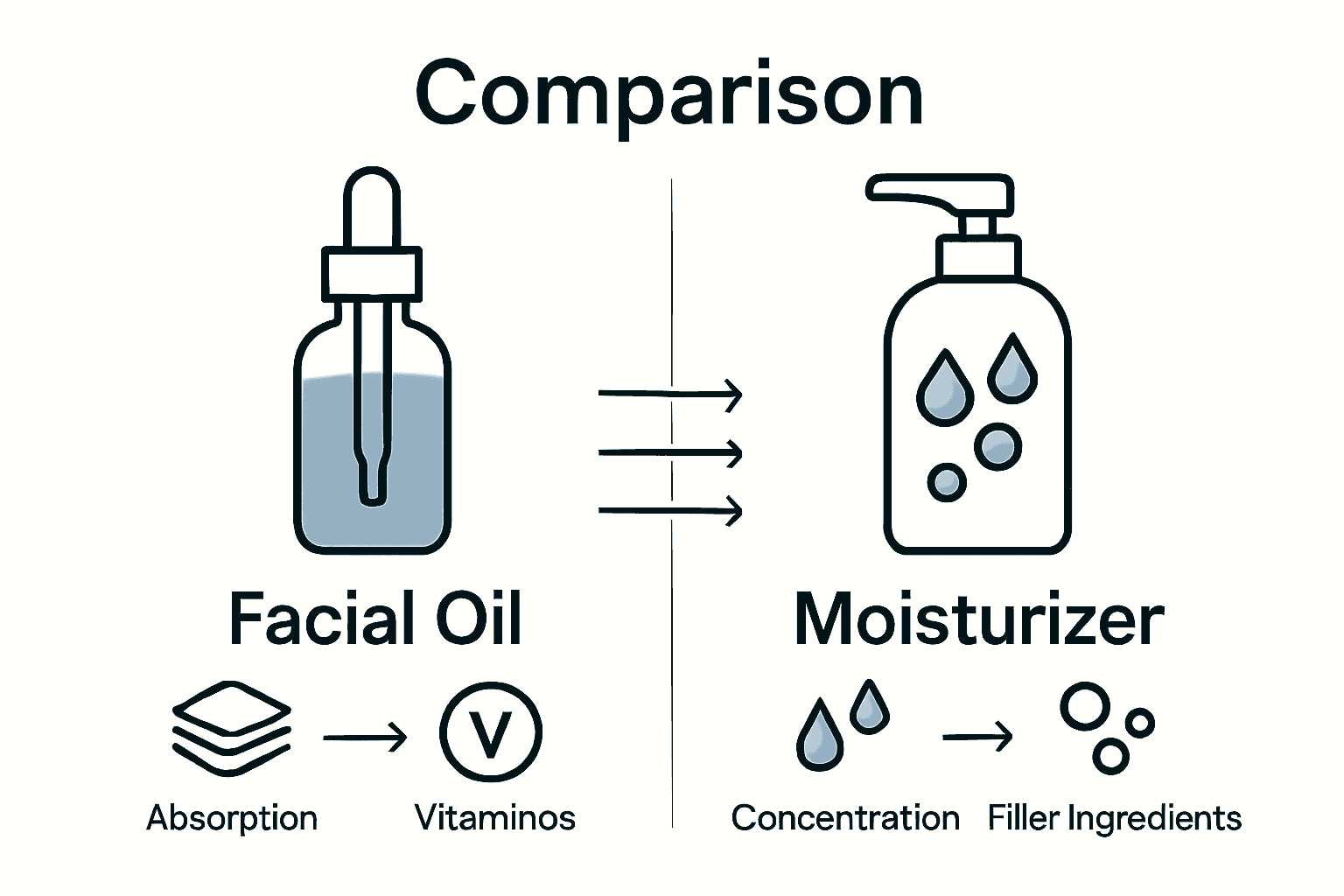
- Concentration: Facial oils are 100% pure botanical extracts
- Absorption: Oils penetrate deeper into skin layers
- Nutrient Density: Higher concentration of active ingredients
- Preservation: No added water means longer shelf life
- Customization: Easier to target specific skin concerns
For skincare enthusiasts seeking a more targeted approach, Expert Guide to Choosing Serum can provide additional insights into advanced skincare strategies. The fundamental takeaway is that facial oils offer a pure, concentrated alternative to traditional moisturizers, providing a more direct path to nourishing and protecting your skin.
Unlock the Full Potential of Facial Oils for Your Skin
Struggling to find facial oils that perfectly match your unique skin needs can feel overwhelming. This guide showed how specific oils nourish, protect, and transform your skin by providing deep hydration, oil balance, and antioxidant defense. If you want to truly embrace the benefits of natural facial oils and integrate them seamlessly into your daily routine, start by exploring quality products designed to deliver these key benefits.

Discover our curated selection of Facial Serums that include nourishing oils tailored for all skin types. Complement your routine with gentle cleansing essentials from Facial Cleansers to enhance absorption and skin vitality. Visit Skin-Styles.com today to find your perfect facial oil solution and enjoy the confidence that comes from radiant, balanced skin. Act now to unlock the transformative power of facial oils and elevate your skincare game.
Frequently Asked Questions
What are facial oils and how do they benefit the skin?
Facial oils are concentrated botanical extracts that nourish, protect, and transform the skin. They are rich in essential fatty acids, vitamins, and antioxidants, targeting multiple skin concerns such as hydration, inflammation, and overall skin health.
Can facial oils be used on oily or acne-prone skin?
Yes, certain facial oils, like jojoba and grapeseed oil, are non-comedogenic and can help regulate oil production, making them suitable for oily and acne-prone skin.
How do I incorporate facial oils into my skincare routine?
To incorporate facial oils, start with a few drops after cleansing and toning, but before moisturizing. You can also mix them with your moisturizer or apply them as the last step to lock in hydration.
Are there any risks associated with using facial oils?
Yes, potential risks include allergic reactions or skin sensitivity. It is important to patch-test oils before full application, choose high-quality products, and monitor your skin’s response.