

Nearly 60 percent of people are using harsh cleansers that can actually dry out and irritate their skin. Finding a method that cleans deeply without stripping away those natural oils is a challenge for many. Oil cleansing offers a gentle alternative that works with your skin’s own biology, providing hydration while dissolving stubborn buildup. You will discover how this simple shift in your skincare routine can make a real difference for healthier, more balanced skin.
Table of Contents
- Defining Oil Cleansing and Core Concepts
- Popular Oil Types and Their Benefits
- How Oil Cleansing Works Step-by-Step
- Skin Types Best Suited for Oil Cleansing
- Risks, Common Mistakes, and Alternatives
Key Takeaways
| Point | Details |
|---|---|
| Oil Cleansing Principle | Utilizes natural oils to dissolve impurities while maintaining skin’s natural barrier, following the principle that “like dissolves like.” |
| Customizable Oils | Different oils cater to various skin types; selecting the right oil blend is crucial for effective cleansing and nourishment. |
| Step-by-Step Process | Effective oil cleansing involves a methodical approach: massage oil into dry skin, apply steam, and gently remove with a warm cloth. |
| Potential Risks | Missteps in technique or oil selection can lead to skin irritation; always follow oil cleansing with moisturizer and consider skin type compatibility. |
Defining Oil Cleansing and Core Concepts
Oil cleansing is an innovative skincare technique that challenges traditional cleansing methods by using natural oils to deeply clean and nourish your skin. According to Healthline, this method involves applying clean, nourishing oils to lift excess sebum, clean out clogged pores, and remove dead skin cells, pollutants, and makeup.
At its core, oil cleansing operates on a simple yet powerful principle: like dissolves like. By using specific oils that match your skin type, you can effectively remove dirt, excess oil, and impurities without stripping away your skin’s natural protective barriers. As Wikipedia explains, the oil cleansing method (OCM) can involve various oils such as extra virgin olive oil and castor oil, which can be mixed in different ratios depending on individual skin characteristics.
The key benefits of oil cleansing include:
- Balanced skin hydration
- Deep pore cleansing
- Gentle removal of makeup and impurities
- Potential reduction in skin irritation
- Natural approach to skincare without harsh chemicals
While traditional cleansers often use harsh detergents that can disrupt your skin’s natural balance, oil cleansing works harmoniously with your skin’s natural processes. For those interested in understanding how different cleansing methods work, check out our guide on the role of cleansers to gain deeper insights into skincare techniques.
Popular Oil Types and Their Benefits
Oil cleansing is incredibly versatile, with a diverse range of oils offering unique benefits for different skin types. Healthline highlights several popular oils that are commonly used in this skincare method, each bringing distinct properties to help nourish and cleanse your skin effectively.
Oils for Different Skin Types
Some of the most renowned oils for oil cleansing include:
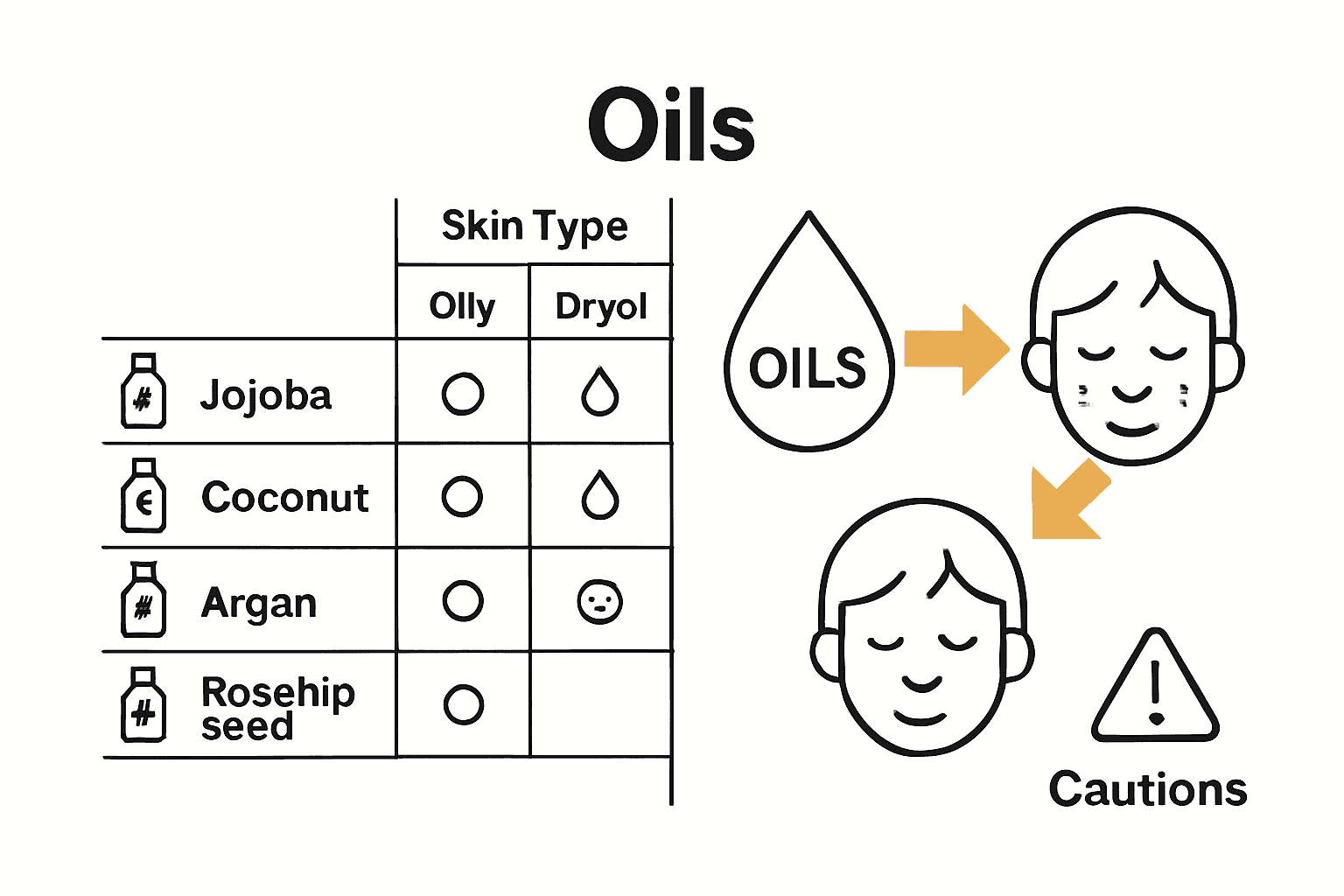
- Jojoba Oil: Closely mimics human sebum, making it excellent for balancing oil production
- Sweet Almond Oil: Rich in vitamin E, great for sensitive and dry skin
- Coconut Oil: Known for its antibacterial properties
- Argan Oil: Provides intense hydration and is packed with antioxidants
- Rosehip Seed Oil: Helps with skin regeneration and reducing hyperpigmentation
As Wikipedia explains, many practitioners combine oils like extra virgin olive oil and castor oil in specific ratios to customize their cleansing blend. Castor oil, for instance, is particularly effective for deep cleansing, while olive oil provides excellent moisturizing properties.
When selecting an oil, consider your specific skin concerns. Oily skin might benefit from lighter oils like grapeseed or safflower, while dry skin types could lean towards richer options like avocado or marula oil. Always patch test new oils and introduce them gradually to understand how your skin responds.
IMAGE:descriptive_key_1] For more detailed insights into choosing the right skincare products, explore our [guide on the role of cleansers.
How Oil Cleansing Works Step-by-Step
Oil cleansing is a carefully orchestrated process that transforms how you approach skin cleaning. Unlike traditional methods that strip away natural oils, this technique works by strategically using oils to dissolve impurities and nourish your skin simultaneously.
The Oil Cleansing Process
-
Preparation: Begin with dry, makeup-free skin. This allows the oils to penetrate more effectively and break down stubborn debris.
-
Oil Application: Select an oil matching your skin type and gently massage it into your face using circular motions. Take your time - this isn’t just cleaning, it’s a therapeutic skin treatment.
-
Steam and Dissolve: Place a warm, damp washcloth over your face for 20-30 seconds. The heat helps open pores and allows oils to dissolve makeup, excess sebum, and accumulated skin impurities.
-
Gentle Removal: Slowly wipe away the oil with the warm washcloth, using soft, downward strokes. The goal is to remove impurities without aggressive scrubbing.
-
Optional Second Cleanse: For those with oily or acne-prone skin, a light second cleanse with a gentle water-based cleanser can help remove any remaining oil residue.
Remember that everyone’s skin is unique. For more comprehensive insights into developing a personalized skincare routine, check out our guide on the role of cleansers to understand how different cleansing techniques can benefit your specific skin type.
Skin Types Best Suited for Oil Cleansing
Oil cleansing offers a versatile skincare approach that can be customized for multiple skin types. Healthline suggests that this method can be beneficial for various skin conditions, helping to balance the skin and lock in hydration, despite limited extensive research.
Matching Oils to Skin Types
According to Wikipedia, the oil cleansing method can be strategically tailored by adjusting oil blends to suit specific skin characteristics:
- Oily Skin: Use a higher ratio of castor oil to help control excess sebum
- Dry Skin: Incorporate more hydrating oils like sweet almond or jojoba
- Combination Skin: Blend lighter oils with small amounts of heavier moisturizing oils
- Sensitive Skin: Choose gentler, non-comedogenic oils and use a lower oil concentration
- Acne-Prone Skin: Select oils with antimicrobial properties like tea tree or grapeseed
The key is experimentation and finding the right balance for your unique skin profile. Everyone’s skin responds differently, so patience and careful observation are crucial. For those looking to develop a more comprehensive understanding of skincare routines, check out our guide on the role of cleansers to explore different cleansing techniques and their specific benefits.
Risks, Common Mistakes, and Alternatives
Healthline highlights an important caveat about oil cleansing: research exploring this method remains limited. While promising, this skincare approach isn’t a one-size-fits-all solution and requires careful implementation.
Common Pitfalls to Avoid
Most oil cleansing mistakes stem from improper technique or product selection:
- Over-Cleansing: Using too much oil or cleansing too frequently can disrupt your skin’s natural balance
- Wrong Oil Selection: Choosing oils incompatible with your skin type can cause breakouts or irritation
- Incomplete Removal: Failing to thoroughly remove oil can lead to clogged pores
- Skipping Moisturizer: Oil cleansing isn’t a complete skincare routine on its own
As Simple recommends, always follow oil cleansing with a moisturizer and consider incorporating it into a double-cleansing routine for optimal results. Alternative cleansing methods like micellar water, gel cleansers, or traditional foam cleansers can be used for those who find oil cleansing challenging.
For those seeking a comprehensive understanding of skincare routines, explore our guide on the role of cleansers to discover various cleansing techniques tailored to different skin needs.
Discover the Perfect Cleanser for Your Oil Cleansing Journey
Struggling to find a cleansing routine that truly respects your skin’s natural balance? Oil cleansing is all about harmony and nourishment, but selecting the right oils or products for your skin type can feel overwhelming. If you want to avoid common pitfalls like irritation or clogged pores and experience deeply clean, hydrated skin, it’s essential to choose the best facial cleansers that complement your oil cleansing method.

Explore our wide range of Facial Cleansers – Skin Styles designed to work gently yet effectively with your skin. Whether you need a lightweight option for oily skin or a rich moisturizer for dry skin, we have curated solutions to support your unique cleansing needs. Don’t wait to pamper your skin with the care it deserves. Visit Skin-Styles.com now and start building your personalized skincare routine today.
Frequently Asked Questions
What is oil cleansing?
Oil cleansing is a skincare method that uses natural oils to remove dirt, makeup, and impurities from the skin while nourishing it, based on the principle that ‘like dissolves like’.
How do you do oil cleansing step-by-step?
The oil cleansing process involves applying oil to dry, makeup-free skin, massaging it in, using a warm washcloth to steam and dissolve the oil, gently wiping it away, and optionally following with a second cleanse for oily skin types.
Which oils are best for oil cleansing?
Popular oils for oil cleansing include jojoba oil, sweet almond oil, coconut oil, argan oil, and rosehip seed oil. The best oil depends on your skin type and concerns, such as oily, dry, or sensitive skin.
Can oil cleansing cause breakouts?
Yes, oil cleansing can cause breakouts if you use oils incompatible with your skin type, over-cleanse, or fail to remove the oil thoroughly. It’s important to choose the right oil and follow up with a moisturizer.