

Most american skincare routines now feature hyaluronic acid as a star ingredient, yet few people realize it can hold up to 1,000 times its own weight in water. This remarkable molecule has become a favorite for its ability to deeply hydrate and plump skin, making it a staple in everything from serums to cosmetic procedures. By understanding where hyaluronic acid comes from and how it works, you can make smarter choices about healthy, radiant skin.
Table of Contents
- Defining Hyaluronic Acid And Its Origins
- Types Of Hyaluronic Acid In Skincare
- How Hyaluronic Acid Works In The Skin
- Primary Benefits And Cosmetic Uses Explained
- Potential Risks, Side Effects, And Precautions
- Tips For Choosing Hyaluronic Acid Products
Key Takeaways
| Point | Details |
|---|---|
| Origin and Role | Hyaluronic acid was discovered in 1934, and it serves critical functions in various tissues, including hydration and structural support. |
| Types in Skincare | Three primary types—Sodium Hyaluronate, Hydrolyzed Hyaluronic Acid, and High Molecular Weight Hyaluronic Acid—offer different benefits for skin hydration and texture improvement. |
| Mechanism of Action | Its exceptional water-binding capacity allows hyaluronic acid to enhance skin moisture, elasticity, and overall appearance, playing a vital role in combating signs of aging. |
| Safety and Selection | While generally safe, individuals should consult professionals before use, considering factors like molecular weight and skin compatibility when choosing products. |
Defining Hyaluronic Acid And Its Origins
Hyaluronic acid represents a fascinating molecular compound with remarkable properties found throughout biological systems. First isolated in 1934 by scientists Karl Meyer and John Palmer, this unique glycosaminoglycan derives its intriguing name from the Greek word ‘hyalos’ meaning glass, reflecting its transparent, gel-like characteristics Wikipedia.
At its core, hyaluronic acid is a naturally occurring substance distributed widely across various bodily tissues. Biochemically classified as an anionic, nonsulfated glycosaminoglycan, it plays critical roles in connective, epithelial, and neural tissues. Its presence can be detected in multiple locations including synovial fluid, cartilage, skin, and the vitreous body of the eye, highlighting its versatility and importance in biological systems Wikipedia.
The molecular structure of hyaluronic acid makes it uniquely suited for several biological functions. Its exceptional capacity to retain water molecules enables it to provide lubrication, cushioning, and structural support in different physiological contexts. This remarkable ability stems from its complex glycosaminoglycan composition, which allows it to create gel-like substances that can protect and support cellular environments.
What sets hyaluronic acid apart is its universal presence across different species and tissue types. From supporting joint mobility to maintaining skin hydration, this compound serves as a fundamental building block in numerous biological processes. Its discovery in 1934 marked a significant milestone in understanding the intricate molecular mechanisms that support life’s complex systems.
Types Of Hyaluronic Acid In Skincare
Skincare professionals recognize multiple types of hyaluronic acid, each with unique molecular characteristics and skin benefits. According to research, these variations primarily differ in molecular size and penetration capabilities Wikipedia. Understanding these distinctions is crucial for selecting the most effective hyaluronic acid product for specific skincare needs.
Three primary types dominate skincare formulations:
-
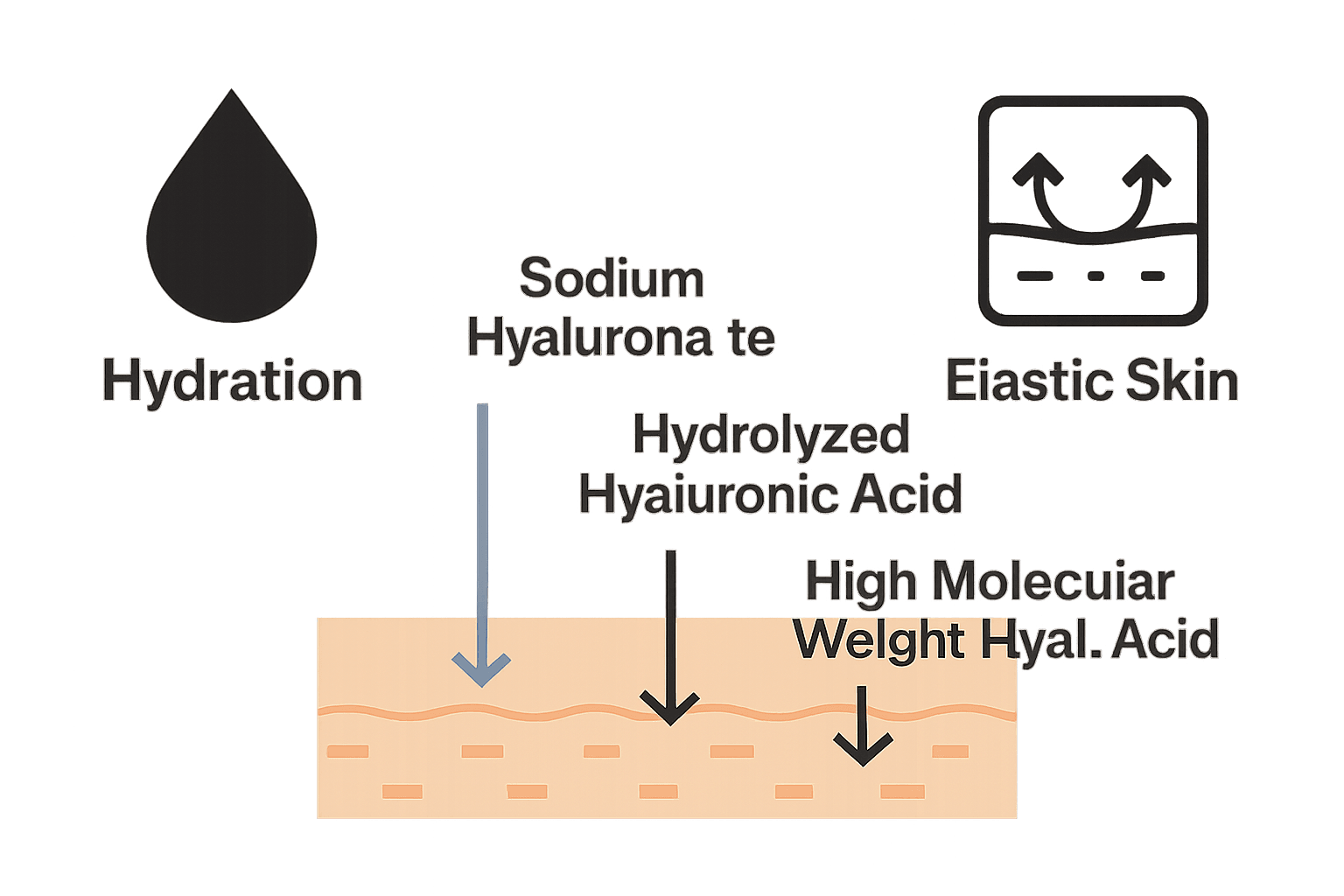
Sodium Hyaluronate: A salt form of hyaluronic acid with smaller molecular weight, allowing deeper skin penetration. This variant is particularly effective for intense hydration and can reach deeper skin layers.
-
Hydrolyzed Hyaluronic Acid: Broken down into even smaller fragments, enabling exceptional moisture retention and improved absorption. Its lightweight molecular structure makes it ideal for sensitive and acne-prone skin types.
-
High Molecular Weight Hyaluronic Acid: Creates a protective surface barrier, preventing moisture loss and providing immediate skin plumping effects. This type remains on the skin’s surface, creating a visible smoothing and hydrating effect.
Each hyaluronic acid type offers unique advantages, making them versatile ingredients in modern skincare.
 Whether you’re targeting deep hydration, surface-level moisture, or comprehensive skin rejuvenation, understanding these variations helps you make informed product selections.
For those seeking targeted hydration, consider exploring our Mixsoon Glacier Water Hyaluronic Acid Serum, which leverages these advanced hyaluronic acid formulations to deliver exceptional skin benefits.
How Hyaluronic Acid Works In The Skin
Hyaluronic acid functions as a powerful hydration mechanism within the skin’s complex biological ecosystem. As a major component of the extracellular matrix, it plays a critical role in cell proliferation, migration, and tissue maintenance Wikipedia. Its unique molecular structure allows it to perform multiple essential functions that keep skin healthy, resilient, and youthful.
At its core, hyaluronic acid operates through an extraordinary water-binding capacity. Each molecule can hold up to 1,000 times its weight in water, creating a remarkable hydration reservoir within skin tissues. This remarkable ability enables it to:
- Attract and retain moisture in skin layers
- Create a protective hydration barrier
- Support cellular communication and repair processes
- Enhance skin’s natural elasticity and plumpness
The mechanism of hyaluronic acid goes beyond simple surface-level hydration. It penetrates different skin layers, providing comprehensive moisture management. By binding water molecules and supporting the extracellular matrix, hyaluronic acid helps maintain tissue hydration and elasticity, contributing to a more supple and smooth skin appearance.
As we age, our natural hyaluronic acid production decreases, making topical application increasingly important. By supplementing skin’s inherent hydration mechanisms, hyaluronic acid helps counteract the visible signs of aging, reducing the appearance of fine lines and maintaining skin’s youthful resilience.
For those seeking targeted hydration, our ISNTRE Hyaluronic Acid Moist Cream offers an advanced solution that harnesses these remarkable molecular properties.
Primary Benefits And Cosmetic Uses Explained
Hyaluronic acid has emerged as a powerhouse ingredient in cosmetic treatments, offering multiple transformative benefits for skin health and appearance. According to research, it is widely used in dermal procedures to reduce wrinkles and fine lines, leveraging its remarkable ability to retain water and add volume Wikipedia. This versatile compound has revolutionized skincare approaches across multiple domains.
Cosmetic applications of hyaluronic acid span several critical areas:
- Anti-Aging Treatment: Reduces visible signs of aging by plumping skin and minimizing wrinkle depth
- Hydration Enhancement: Provides intense moisture retention for all skin types
- Wound Healing: Supports faster cellular repair and regeneration
- Skin Barrier Protection: Creates a protective moisture barrier
- Texture Improvement: Smooths and softens skin surface
Beyond surface-level cosmetic benefits, hyaluronic acid plays a profound role in supporting skin’s underlying structural integrity. Its molecular structure allows it to penetrate skin layers, delivering hydration where it’s most needed. Professional treatments often utilize concentrated hyaluronic acid formulations to achieve targeted skin rejuvenation, addressing concerns ranging from fine lines to uneven skin texture.
For individuals seeking comprehensive skincare solutions, understanding hyaluronic acid’s multifaceted benefits is crucial. Whether used in serums, creams, or professional treatments, this ingredient offers a scientifically backed approach to maintaining youthful, radiant skin.
For those interested in deeper skincare insights, our What Are Ceramides? Complete Skincare Guide provides additional context about complementary skincare ingredients and techniques.
Potential Risks, Side Effects, And Precautions
Hyaluronic acid, while generally considered safe, is not without potential risks and side effects. According to research, topical and injectable treatments can produce various adverse reactions that consumers and medical professionals must carefully consider Wikipedia. Understanding these potential complications is crucial for making informed skincare decisions.
Key potential risks associated with hyaluronic acid treatments include:
- Injection Site Reactions: Pain, redness, and localized swelling
- Allergic Responses: Potential hypersensitivity in individuals with specific sensitivities
- Inflammatory Reactions: Temporary skin irritation or immune system responses
- Rare Complications: Potential vessel embolisms with improper injection techniques
Professional medical interventions, particularly injectable treatments, require extreme caution. Injection-based procedures carry more significant risks compared to topical applications. Research highlights that cross-linked hyaluronic acid fillers demand precise administration by trained professionals to minimize potential complications Wikipedia.
Individuals considering hyaluronic acid treatments should prioritize consultation with qualified healthcare providers. A comprehensive medical history review, including potential allergies and skin sensitivities, can help mitigate risks and determine the most appropriate treatment approach. Topical products generally present fewer risks but still warrant careful patch testing and gradual introduction into skincare routines.
For those interested in exploring safe skincare practices, our 7 Key Benefits of Double Cleansing for Healthy Skin guide offers additional insights into maintaining skin health and minimizing potential adverse reactions.
Tips For Choosing Hyaluronic Acid Products
Selecting the right hyaluronic acid product requires careful consideration of multiple factors to ensure optimal skincare results. As recommended by research, consulting with a dermatologist can help determine the most suitable form and concentration for your specific skin needs Wikipedia. Understanding your unique skin profile is the first critical step in making an informed product selection.
Key criteria for choosing hyaluronic acid products include:
- Molecular Weight: Different weights penetrate skin layers differently
- Concentration Levels: Ranging from 0.1% to 2% for varying hydration intensity
- Additional Ingredients: Look for complementary hydrating and supporting compounds
- Skin Type Compatibility: Matching product to your specific skin characteristics
- Formulation Type: Serum, cream, or mask with different absorption rates
Professional skincare experts recommend evaluating product ingredients beyond hyaluronic acid. Seek formulations that combine multiple hydration strategies, such as ceramides or natural botanical extracts, to enhance overall skin performance. Consider your primary skin concerns - whether it’s fine lines, dryness, or uneven texture - when making your selection.
Testing products through small patch trials can help minimize potential adverse reactions and determine individual skin compatibility. Start with lower concentrations and gradually introduce hyaluronic acid products into your skincare routine, monitoring how your skin responds.
For those seeking expert guidance on navigating skincare product selection, our Expert Guide to Choosing Serum for Perfect Skin Results provides comprehensive insights into making informed skincare decisions.
Unlock Lasting Hydration And Youthful Skin With Hyaluronic Acid
If you have noticed dry skin, fine lines, or a dull complexion it could be because your skin is lacking the powerful moisture retention that hyaluronic acid naturally provides. This article highlights how hyaluronic acid supports skin hydration by holding up to 1,000 times its weight in water and boosts elasticity to help you look and feel younger. Don’t let age or environmental stress take away your skin’s natural glow.

Experience the deep hydration and rejuvenation your skin craves with expertly formulated products like those waiting for you at Skin-Styles.com. Whether you want a lightweight serum, a rich cream, or targeted moisture solutions discover quality options such as the Mixsoon Glacier Water Hyaluronic Acid Serum and ISNTRE Hyaluronic Acid Moist Cream designed to restore your skin’s vitality.
Don’t wait for dryness or aging signs to deepen. Visit Skin-Styles.com now to find the right hyaluronic acid product and start your journey to smoother, plumper, more radiant skin today.
Frequently Asked Questions
What is hyaluronic acid and what are its main functions in the skin?
Hyaluronic acid is a naturally occurring substance in the body, primarily found in connective, epithelial, and neural tissues. It serves essential functions such as retaining moisture, providing lubrication, and supporting cellular communication, ultimately helping to maintain skin hydration and elasticity.
What are the different types of hyaluronic acid used in skincare products?
There are three primary types of hyaluronic acid in skincare: Sodium Hyaluronate (smaller molecular weight for deeper penetration), Hydrolyzed Hyaluronic Acid (even smaller fragments for exceptional moisture retention), and High Molecular Weight Hyaluronic Acid (creates a barrier to prevent moisture loss and provides surface-level hydration).
How does hyaluronic acid improve skin hydration?
Hyaluronic acid can hold up to 1,000 times its weight in water, attracting and retaining moisture within skin layers. It also creates a protective barrier, supports cellular repair processes, and enhances skin elasticity, contributing to a more youthful appearance.
Are there any side effects associated with using hyaluronic acid in skincare?
While generally considered safe, some potential side effects may include injection site reactions, allergic responses, and temporary skin irritation. Individuals should conduct patch tests and consult with healthcare providers to minimize these risks and ensure compatibility with their skin type.