

Over 60 percent of people use skincare products not matched to their true skin type, often missing out on the best results. Figuring out the right serum starts with understanding your unique skin needs, because what works for someone else may not work for you. By learning how to assess your skin, identify the top ingredients, and pick the best formulation for your routine, you set yourself up for visible, lasting improvements.
Table of Contents
- Step 1: Assess Your Unique Skin Type And Concerns
- Step 2: Identify Ingredients Targeting Your Needs
- Step 3: Compare Serum Options By Texture And Formulation
- Step 4: Select Suitable Serums Based On Your Lifestyle
- Step 5: Test And Monitor For Visible Improvements
Quick Summary
| Key Point | Explanation |
|---|---|
| 1. Understand your skin type first | Knowing your skin type helps you choose serums that target your specific concerns effectively. |
| 2. Choose ingredients for your needs | Match serum ingredients to your skin concerns, like vitamin C for brightening or hyaluronic acid for hydration. |
| 3. Assess serum textures and formulations | Different textures suit various skin types; water-based for oily, oil-based for dry skin. |
| 4. Align serum choice with your lifestyle | Pick serums that fit your daily routine for better adherence and efficacy in your skincare efforts. |
| 5. Track results systematically | Document changes in your skin condition over time to gauge serum effectiveness and make adjustments as needed. |
Step 1: Assess your unique skin type and concerns
Before selecting the perfect serum for your skin, you must understand your unique skin profile. Understanding your skin type and specific concerns allows you to choose targeted solutions that deliver precise results. According to research from the Fitzpatrick Scale, skin types range across six distinct categories based on color and UV response, which significantly impacts how skincare products interact with your complexion.
To assess your skin type, examine these key characteristics: skin tone, sensitivity, oil production, hydration levels, and specific concerns like aging, hyperpigmentation, or acne. Start by observing your skin throughout the day. Does it feel tight and dry? Shiny and greasy? Prone to redness? Notice how your skin reacts to different environmental conditions and products. The goal is to create a comprehensive snapshot of your skin’s unique behavior.
A critical insight from skin research emphasizes the importance of considering diverse skin characteristics. As the CIRCLe study highlights, understanding skin variations is crucial for selecting appropriate skincare solutions. Pro tip: If you are uncertain about your precise skin type, consider consulting a professional dermatologist who can provide a detailed skin analysis. They can help you navigate complex skin profiles and recommend serums that match your specific needs perfectly.
Once you have identified your skin type, you are ready to explore targeted serum solutions that will address your unique concerns.
Step 2: Identify ingredients targeting your needs
Now that you understand your skin type, it is time to match specific ingredients to your unique skincare concerns. According to insights from 1mg, selecting the right skincare ingredients is crucial for addressing individual skin challenges effectively.
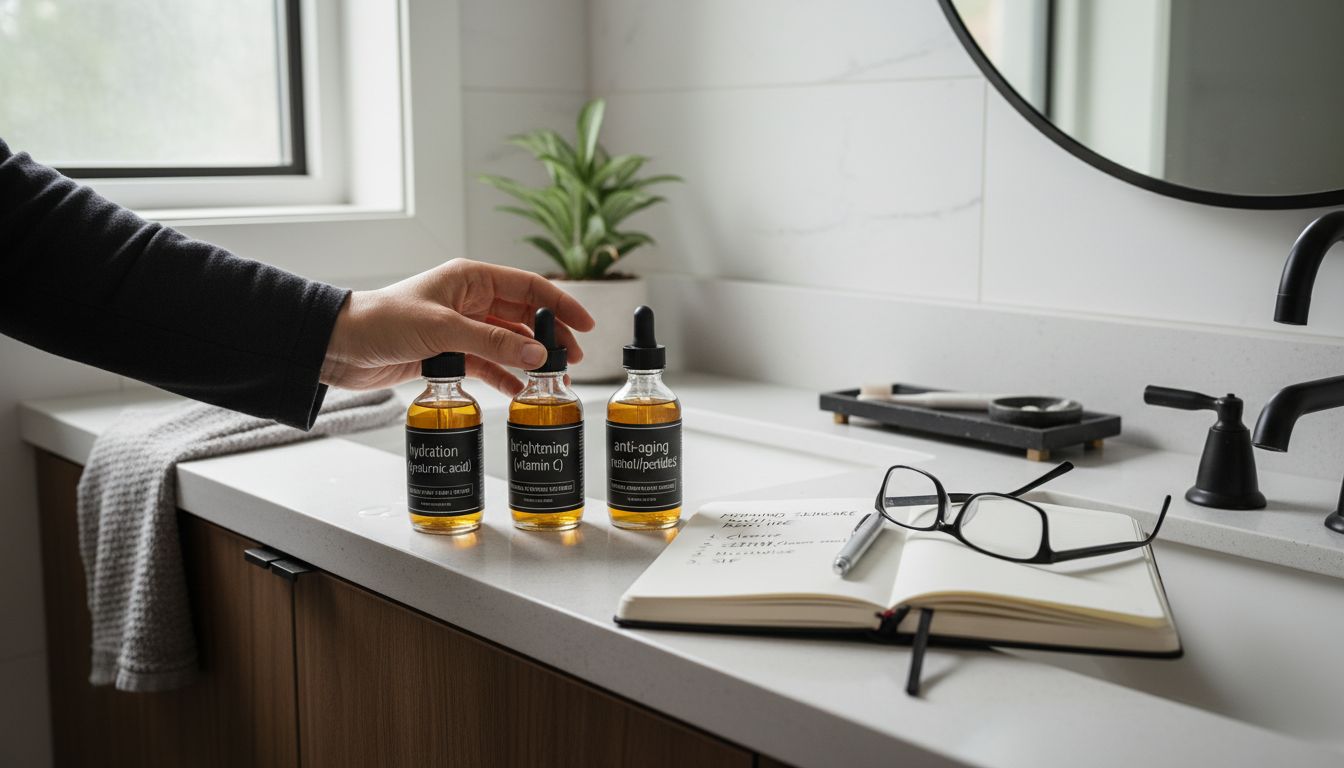
Different ingredients target specific skin needs. For brightening and evening skin tone, look for powerhouse components like vitamin C, retinoids, alpha arbutin, and kojic acid. As highlighted by Marie Claire, these ingredients work synergistically to combat hyperpigmentation and restore radiance. If you struggle with hydration, seek serums containing hyaluronic acid. For aging concerns, retinol and peptides can help improve skin texture and reduce fine lines.
Pro tip: Start with one targeted ingredient and introduce it gradually into your skincare routine. Not all ingredients play well together, so research compatibility and consider patch testing to ensure your skin responds positively. When in doubt, consult a dermatologist who can provide personalized guidance based on your specific skin profile and concerns.
By understanding and selecting ingredients that directly address your skin needs, you are one step closer to achieving your skincare goals.
Step 3: Compare serum options by texture and formulation
Understanding the nuanced world of serum textures and formulations can dramatically impact your skincare results. According to Marie Claire, the texture and composition of a serum play a critical role in its effectiveness and absorption into the skin.
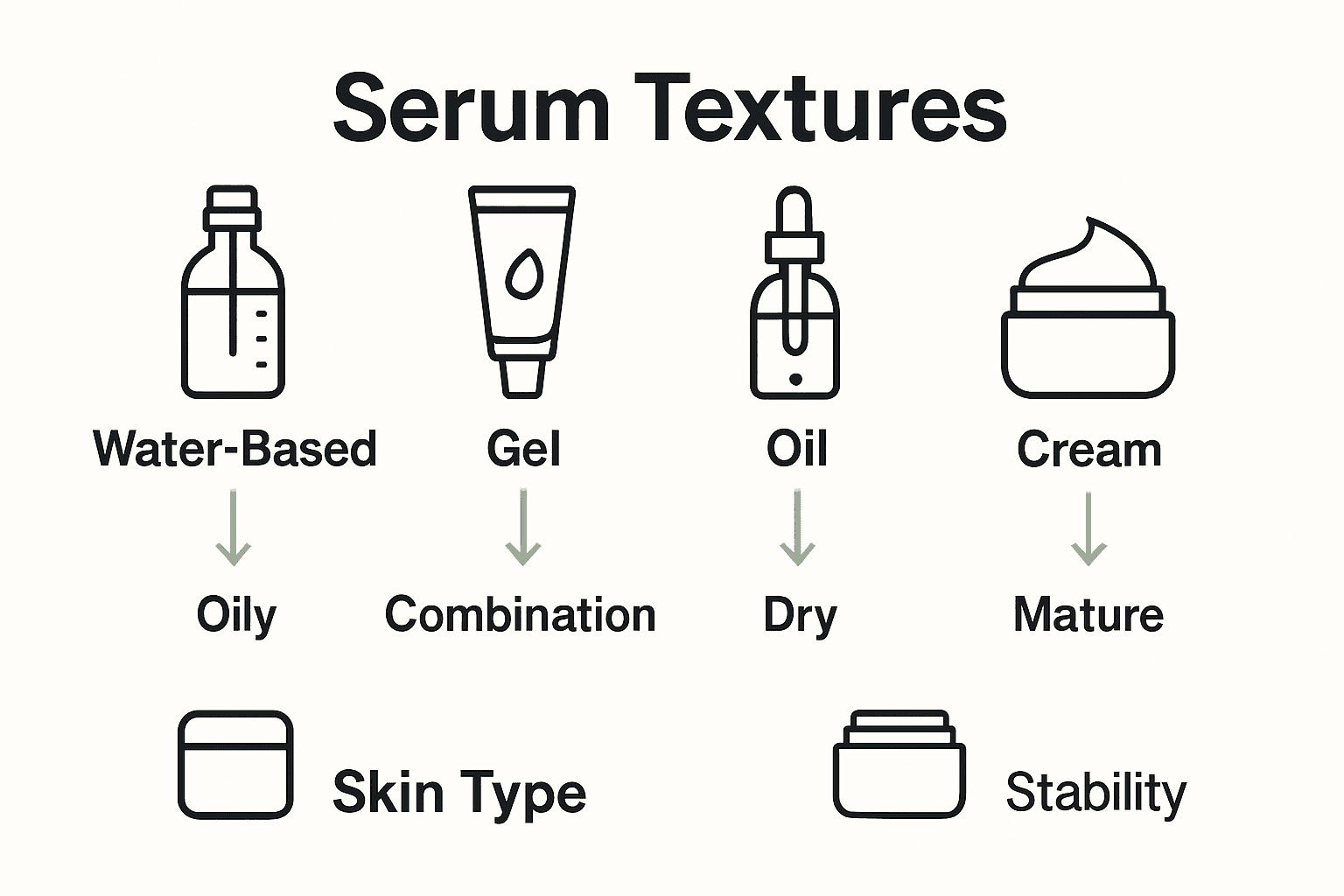
Serums typically come in four primary textures: water like, gel, oil based, and cream. Water based and gel serums work best for oily or combination skin, offering lightweight hydration without clogging pores. Oil based serums provide intense moisture and are ideal for dry or mature skin types. As explored by Who What Wear, the formulation of ingredients like L-ascorbic acid can significantly influence how the serum interacts with your skin. Look for concentrations that match your skin’s tolerance level and specific concerns.
Pro tip: Pay attention to ingredient stability and packaging. Some active ingredients degrade when exposed to light or air, so choose serums with airless pumps or opaque containers that protect the formula’s potency. Test the serum on a small patch of skin first to ensure compatibility and watch for any adverse reactions.
By carefully evaluating serum textures and formulations, you will be well equipped to select a product that delivers targeted skincare benefits.
Step 4: Select suitable serums based on your lifestyle
Choosing a serum is more than just understanding ingredients it is about finding a product that seamlessly integrates into your daily routine. Marie Claire emphasizes that the right serum should complement your lifestyle and skincare goals, not complicate them.
Consider your daily schedule and skincare commitment when selecting a serum. For busy professionals with limited time, opt for multipurpose serums that offer quick absorption and multiple benefits. If you travel frequently, look for compact packaging and stable formulations that can withstand temperature changes. Individuals with active lifestyles might prefer lightweight serums that absorb quickly and work well under sunscreen or makeup. Night owls or those with more time might choose richer serums that require longer application and absorption times.
Pro tip: Always factor in your morning and evening routines. A morning serum with antioxidants like vitamin C can protect your skin during the day, while a nighttime serum with regenerative ingredients can support skin repair while you sleep. Test your chosen serum for a few weeks to ensure it truly fits your lifestyle and delivers the promised results.
By aligning your serum selection with your personal routine and skincare goals, you will create a sustainable approach to maintaining healthy, radiant skin.
Step 5: Test and monitor for visible improvements
Selecting the right serum is only half the journey tracking its effectiveness is equally crucial. arXiv research presents an innovative approach to objectively monitoring skin texture changes, emphasizing the importance of systematic evaluation of skincare treatments.
Create a consistent documentation process to track your serum results. Take clear bare faced photographs under the same lighting conditions every two weeks. Pay attention to specific markers of skin health including texture smoothness, evenness of skin tone, reduced appearance of fine lines, and overall radiance. According to advanced tele-dermatology research from Dermacen Analytica, technological approaches now support precise skin condition monitoring, allowing individuals to scientifically assess their skincare progress.
Pro tip: Maintain a detailed skincare journal noting daily application, any skin reactions, and observable changes. Be patient and realistic most meaningful skin transformations require consistent use for 6 to 8 weeks. If you notice persistent irritation or zero improvement after two months, consult a dermatologist to reassess your skincare strategy.
By methodically tracking your skin’s response, you transform your skincare routine from guesswork into a data driven approach toward achieving your ideal skin health.
Discover Your Perfect Serum Match Today
Choosing the right serum is essential to transform your skin and address your unique concerns like hydration, aging, or uneven tone. If you have struggled to find a serum that fits your skin type and lifestyle, you are not alone. Many readers want targeted ingredients and effective formulations that integrate seamlessly into their daily routine for visible results.
At Skin-Styles.com, we understand these challenges and offer a curated selection of serums that meet diverse skin needs. Explore our comprehensive Facial Serums collection packed with products featuring powerful ingredients like vitamin C, retinol, and hyaluronic acid. For those seeking focused anti-aging benefits, check out our specialized Anti Wrinkles range designed to improve skin texture and reduce fine lines.

Take control of your skincare journey now by choosing serums tailored exactly to your skin concerns and lifestyle. Visit Skin-Styles.com to browse expert-recommended options and start seeing the skin improvements you deserve. Your perfect serum is waiting to make a difference.
Frequently Asked Questions
How do I determine my skin type for choosing the right serum?
To determine your skin type, observe characteristics such as oil production, sensitivity, and hydration levels throughout the day. Take note of whether your skin feels dry, oily, or irritated in different conditions to create a comprehensive skin profile.
What ingredients should I look for in a serum for hydration?
For hydration, seek serums that contain hyaluronic acid, as it effectively attracts moisture to the skin. Incorporate a hydrating serum into your routine to enhance skin moisture levels, aiming for noticeable hydration improvements within a few weeks.
What is the best way to test a new serum before full application?
To test a new serum, perform a patch test by applying a small amount on an inconspicuous area of your skin, such as behind your ear or on your wrist. Wait for 24 hours to check for any adverse reactions before applying it fully to your face.
How long should I use a serum before expecting visible results?
Most serums require consistent use for 6 to 8 weeks to see meaningful improvements in skin texture and tone. Track your skin’s response over this period to assess the effectiveness of the serum on your specific concerns.
Can I layer multiple serums in my skincare routine?
Yes, you can layer multiple serums, but start by introducing one targeted ingredient at a time. Monitor your skin’s reaction and ensure the serums are compatible to avoid irritation; a good rule is to wait a few minutes between applications.
How do I select a serum that fits my busy lifestyle?
Choose a serum that offers quick absorption and multiple benefits, such as a multitasking product that combines brightening, anti-aging, and hydration. Opt for lightweight formulas that suit your morning and evening routines for a seamless skincare regimen.