

TL;DR:
- Many modern families find that choosing fewer, purpose-driven baby items reduces stress and creates calmer environments.
- Thoughtfully selected minimalistic babyware, focusing on safety and multi-functionality, better supports a child’s development and well-being.
Most parents assume that more baby gear means better care. More gadgets, more toys, more specialized products stacked in every corner of the nursery. But a growing number of families are discovering the opposite: carefully choosing fewer, better items actually reduces daily stress, creates calmer environments, and makes parenting feel far more manageable. This guide breaks down what minimalistic babyware really means, how it supports your child’s health and development, where to draw the line, and how to start building a streamlined approach that works for your actual family.
Table of Contents
- What is minimalistic babyware and why are parents choosing it?
- How minimalistic babyware supports your child’s well-being
- Finding the right balance: when less isn’t always best
- Minimalistic babyware in daily life: Practical tips for getting started
- Why intentional minimalism works better than a numbers game
- Explore curated minimalistic babyware for modern parenting
- Frequently asked questions
Key Takeaways
| Point | Details |
|---|---|
| Intentional selection | Choose fewer, multi-functional baby items that directly address your family’s daily needs. |
| Safety first | Always prioritize items backed by safety and developmental research, not just trends. |
| Flexible minimalism | Adapt your choices as your child grows and your family’s routines change. |
| Mental clarity | A streamlined approach reduces parental stress and makes daily routines easier. |
| Start small | Begin with essentials like feeding, sleeping, and transport, expanding only when necessary. |
What is minimalistic babyware and why are parents choosing it?
Minimalistic babyware means choosing fewer, purpose-driven products that genuinely serve your child’s essential needs, rather than filling a nursery with every trending item on the market. It’s not about going without or making parenting harder. It’s about being intentional with every purchase so that what you do have truly earns its place.
Parents choose minimalistic baby gear primarily to reduce clutter and the mental load of managing too many items at once. When every surface is clear and every product has a job, daily routines become faster and less stressful. You spend less time hunting for the right spoon, washing five versions of the same item, or making decisions about which product to use next.
Here’s why so many modern families are making the switch:
- Reduced clutter means a calmer home environment for both parents and babies
- Simpler routines free up mental energy for what actually matters
- Eco-friendly consumption reduces waste and supports more sustainable buying habits
- Less decision fatigue (when you own fewer items, choosing is faster and easier)
- Better quality focus because you spend more per item, you prioritize things that last
One big misconception is that minimalism means deprivation. It doesn’t. A minimalistic nursery can still have everything a baby needs. The difference is that every item was chosen with care, not impulse. The same thoughtful approach applies when considering baby skincare choices, where fewer, well-formulated products often work better than a cabinet full of options.
“Minimalism in babyware isn’t about owning less for the sake of it. It’s about owning exactly what you need, nothing more, nothing less.”
This philosophy reduces cognitive overload for parents, especially in those early months when sleep deprivation is real and decision-making is genuinely harder. When your baby’s environment is streamlined, managing it becomes instinctive rather than exhausting.
How minimalistic babyware supports your child’s well-being
Understanding the basic appeal of minimalism is one thing. Seeing how it connects to real outcomes for your child is another level entirely. And here’s where it gets genuinely interesting: removing items doesn’t automatically mean reduced risk. The specific product mechanics and usage context matter just as much as the quantity of things you own.
This is a key insight that separates thoughtful minimalism from just owning less. A child using one unsafe or poorly designed product is worse off than a child with three well-researched, appropriate ones. So the standard for selection becomes higher, not lower, when you go minimal.
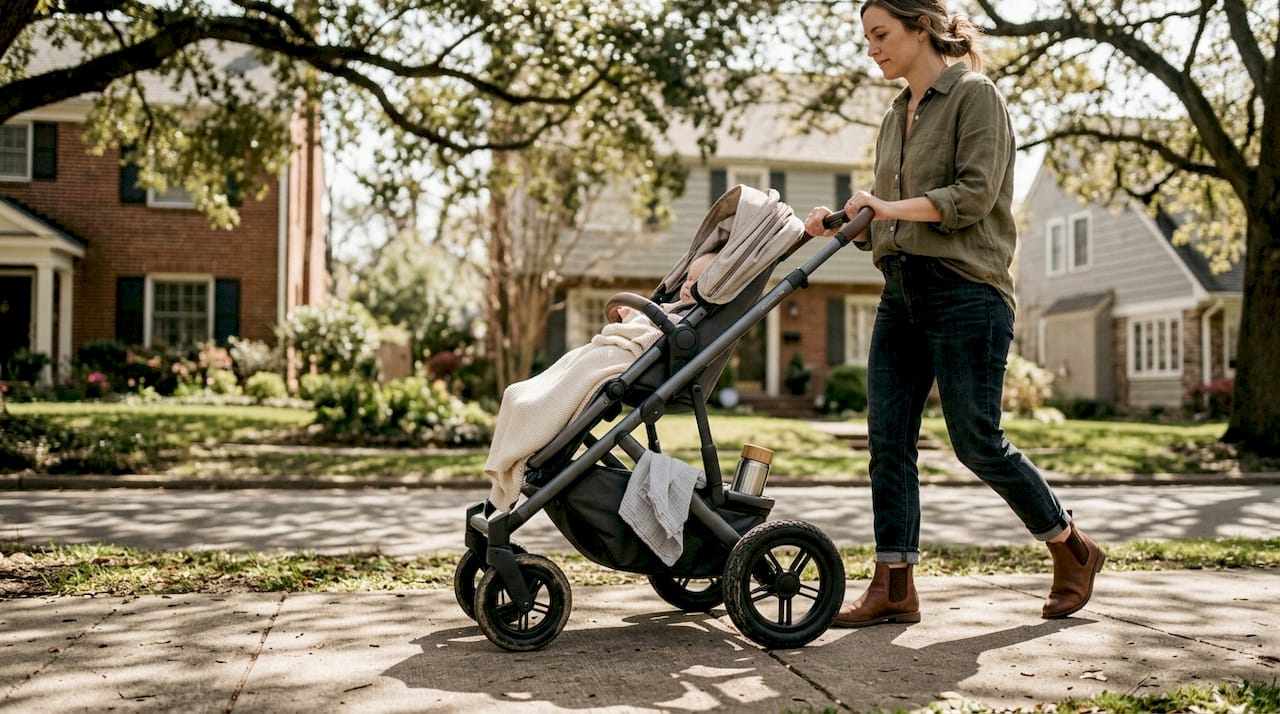
Consider strollers and sleep products as prime examples. A well-engineered stroller that provides appropriate head and spinal support, limits vibration transmission, and meets current safety standards does far more for your baby than a budget option you bought just to fill the “transport” box on your checklist. The same logic applies to sleep surfaces, feeding tools, and carrying devices.
| Item type | Conventional approach | Minimalistic approach |
|---|---|---|
| Feeding tools | Multiple sets, various materials | One quality, multi-use set |
| Sleep gear | Several sleep aids and accessories | One safe, certified sleep surface |
| Transport | Stroller plus carrier plus travel system | One system that meets all three needs |
| Toys | Age-sorted bins of plastic toys | A few open-ended, developmental toys |
| Skincare | Full product line for every purpose | Two or three gentle, tested products |
Research supports the idea that fewer, well-chosen items that are multi-functional and mechanically appropriate serve children’s development better than a large volume of single-purpose products. Multi-use items also mean your child interacts with fewer transitions during the day, which can actually support focus and engagement.
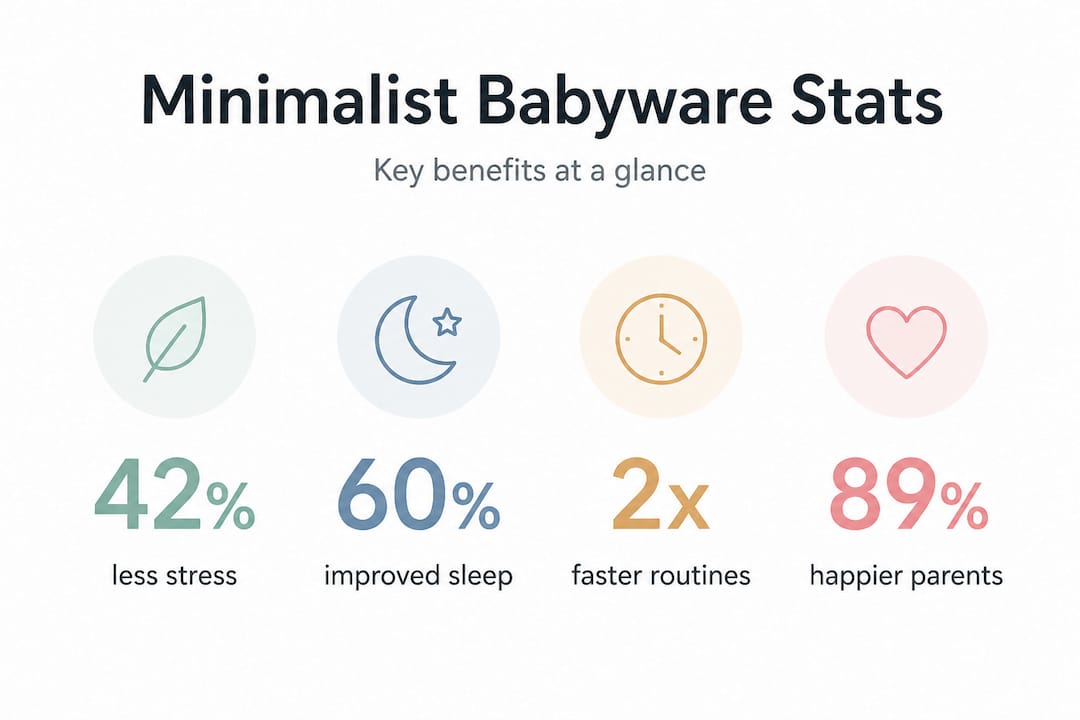
Statistic to keep in mind: Studies on early childhood environments consistently find that simpler, less visually overwhelming spaces help infants and toddlers regulate their attention more effectively. Overstimulating environments can interfere with a baby’s ability to settle, sleep, and engage meaningfully with caregivers.
Pro Tip: Before buying any new baby product, ask yourself whether it handles at least two needs. A silicone suction bowl that doubles as a portion plate, or a carrier that works from newborn through toddler stages, gives you twice the value from one purchase.
Taking the same careful approach to your child’s daily skincare routines reinforces the minimalism mindset. A short, consistent routine with proven-gentle ingredients beats a complicated multi-step process every single time, especially when you’re tired and rushing through the evening.
Finding the right balance: when less isn’t always best
Minimalism is powerful, but applying it without thinking critically can create its own set of problems. Not every “extra” item is dispensable. Some products exist for very good developmental, comfort, or safety reasons, and removing them without understanding why they exist is a mistake.
Minimalist parenting is not universally about reducing the number of toys or gadgets to zero. More can sometimes be necessary depending on your family’s unique needs. A baby with reflux may genuinely need a specialized feeding pillow. A child with sensory sensitivities may benefit from a particular type of fabric or sound machine. Rigid checklists of “what you need vs. don’t need” rarely account for these individual situations.
Here’s a practical framework to use before removing or skipping any item:
- Assess the function. What specific need does this item address? Is that need real and recurring, or theoretical?
- Check the safety evidence. Does this product meet current safety standards? Has it been reviewed or studied?
- Evaluate developmental benefit. Does it support a milestone or skill, or does it primarily entertain?
- Consider family context. Does it fit your home layout, your routines, your specific child’s temperament?
- Ask about multi-functionality. Can one item cover this need AND another need, reducing total items required?
| Decision factor | Keep | Remove or skip |
|---|---|---|
| Safety evidence | Strong, current | Weak or anecdotal |
| Function | Unique and recurring | Duplicated by another item |
| Multi-use potential | High | Single-use only |
| Family fit | Matches real need | Based on trend or guilt |
Some items have mixed evidence about their benefits. Exersaucers (bouncy seats with activity trays) are a clear example. Used briefly and appropriately, they can provide sensory engagement. Overused, they can limit floor time and movement. Minimalism here doesn’t mean avoiding them entirely. It means understanding the limits and using them deliberately.
Pro Tip: When friends or family offer to hand down baby items, use your framework before saying yes. Free doesn’t always mean necessary. A cluttered home with secondhand items you don’t actually use creates just as much mental load as buying new ones.
The same nuance applies when exploring a skinimalism guide for adults. The principle is identical: pare back to what genuinely works, keep things that serve a real purpose, and resist the pull of “just in case” purchases.
Minimalistic babyware in daily life: Practical tips for getting started
Ready to apply this to your actual home? The good news is that you don’t have to start from scratch or throw everything out in one weekend. A gradual, thoughtful process works better and feels less overwhelming.
Start with what the minimalist parenting approach calls the mental load reduction framework: simpler, space-saving, and stress-reducing. That maps directly onto three core categories: feeding, sleeping, and transport. Master the essentials in each area before adding anything else.
Here’s what to ask when evaluating every single item in your current collection:
- Is it multifunctional? Does it serve two or more purposes?
- Does it solve a recurring challenge? Or was it bought for a situation that rarely happens?
- Is it safe and well-evidenced? Not just popular, but actually backed by research or safety standards?
- Does your child actually use it? Usage patterns after two weeks reveal a lot.
- Would you miss it if it were gone? If the honest answer is no, that’s your answer.
After sorting through existing items, begin building your “big three” intentionally. For feeding, choose one quality set of bowls, spoons, and bibs that handles all feeding stages. For sleeping, invest in one certified, firm sleep surface without extra padding or accessories. For transport, find a single system that covers your daily needs, whether that’s a stroller, a carrier, or a compact travel setup.
Periodically reassess what your baby actually uses. Babies change fast. An item that was essential at four months may be completely obsolete at eight. Doing a quick quarterly review keeps the nursery current with your child’s actual stage and stops unnecessary items from piling up again.
Streamlined routines deliver a real bonus: daily care becomes genuinely enjoyable. When bath time involves two or three trusted products instead of a shelf full of options, it’s calmer and more connected. The same effect applies to baby feeding routines, where consistent, simple approaches tend to support healthy development far more effectively than complicated or constantly changing methods.
Pro Tip: Create a “pending” box for items you’re unsure about. Put them out of sight for two weeks. If you don’t reach for them, donate them. If you do, they earn their place back in the rotation.
Why intentional minimalism works better than a numbers game
Here’s an honest take that most minimalism content won’t give you: counting items is the wrong goal. The parents who genuinely benefit from minimalistic babyware aren’t the ones with the fewest products in their nursery. They’re the ones who made every selection deliberately and revisited those choices as their family evolved.
The “fewer is automatically better” myth can cause real harm. Parents feel guilty for owning a bouncer their colicky baby actually needs, or they skip buying a quality feeding set because they’re trying to hit an imaginary number. That’s not minimalism. That’s performance. And it adds stress instead of removing it.
True minimalism is strategic and evidence-backed. It means you choose a product because you understand what it does, how it was designed, and whether it fits your child’s current needs. Not because it’s on a trending list of “must-have minimal nursery items.” Those lists are often just marketing with a new label attached.
The most practical thing you can do is build your own personal criteria for every category. What does your feeding setup need to do for your specific child? What sleep environment works for your family’s layout and routines? Those answers differ for every household, and that’s exactly the point.
Revisiting safe baby skincare as your child grows is a perfect model for this mindset. A newborn’s skin needs differ from a toddler’s. The intentional minimalist updates their approach as the child changes, rather than sticking to a fixed routine because it used to work or because it’s on a popular list.
Real minimalism also builds resilience. When your home isn’t full of single-use items that become clutter the moment your child ages out of them, transitions between stages feel smoother. You spend less time reorganizing and more time engaging.
Explore curated minimalistic babyware for modern parenting
If this approach resonates with you, the next step is finding products that actually match these values: well-designed, multi-functional, safe, and built to make your daily routines easier rather than more complicated.

At Skin-Styles.com, we believe that intentional choices make the biggest difference for modern parents. Our 8-piece silicone feeding set is a perfect example of minimalism in action: BPA-free materials, suction plates and bowls designed to stay put during self-feeding, and a bib included so you have everything you need in one clean, practical set. It covers the essentials for feeding from early stages through toddlerhood. Browse our family-friendly essentials and find the products that genuinely earn their place in your home.
Frequently asked questions
Does minimalistic babyware mean I need to buy everything new?
No, minimalism is about selecting only what’s necessary, and quality secondhand items can be a very smart and sustainable choice. Focus on function and safety standards rather than whether something is brand new.
Are minimalistic products less safe than regular babyware?
Safety depends on the product’s design and usage context, not the total number of items you own. As product mechanics and usage context show, fewer items does not automatically mean lower risk, so always review evidence and safety standards before choosing anything.
How do I know which baby items are truly essential?
Focus on must-haves for feeding, sleeping, and transport first, then add only as your child’s needs evolve. As deliberate parenting research confirms, what’s necessary varies by family, so use your own context as the guide.
Does going minimalistic mean sacrificing my child’s development?
No. Research indicates that fewer, well-chosen items that are multi-functional and mechanically appropriate can adequately support development when selected thoughtfully. The quality and suitability of each item matters far more than the quantity.