

81% of women 35+ now prefer streamlined skincare routines, and that number keeps climbing. For years, the beauty industry pushed the idea that more products equal better skin. Serums stacked on serums, toners before essences, and a different cream for every concern. But real skin health rarely needs eight steps. Skinimalism is the movement pushing back against that noise, and this guide breaks down exactly what it means, how to build a routine around it, and whether it’s the right fit for your skin.
Table of Contents
- What is skinimalism?
- How skinimalist routines work
- Why less can be more: Benefits and evidence
- When skinimalism works (and when it doesn’t)
- Transitioning to a skinimalist routine: Practical steps
- Skinimalist essentials for your routine
- Frequently asked questions
Key Takeaways
| Point | Details |
|---|---|
| Streamline your skincare | Using fewer, multifunctional products supports skin health and saves time. |
| Prioritize quality over quantity | Success in skinimalism depends on the right, high-quality products for your needs. |
| Not one-size-fits-all | Severe skin issues or active medical treatments may require a tailored approach beyond skinimalism. |
| Transition gradually | Introduce changes one step at a time and monitor your skin’s reaction for best results. |
What is skinimalism?
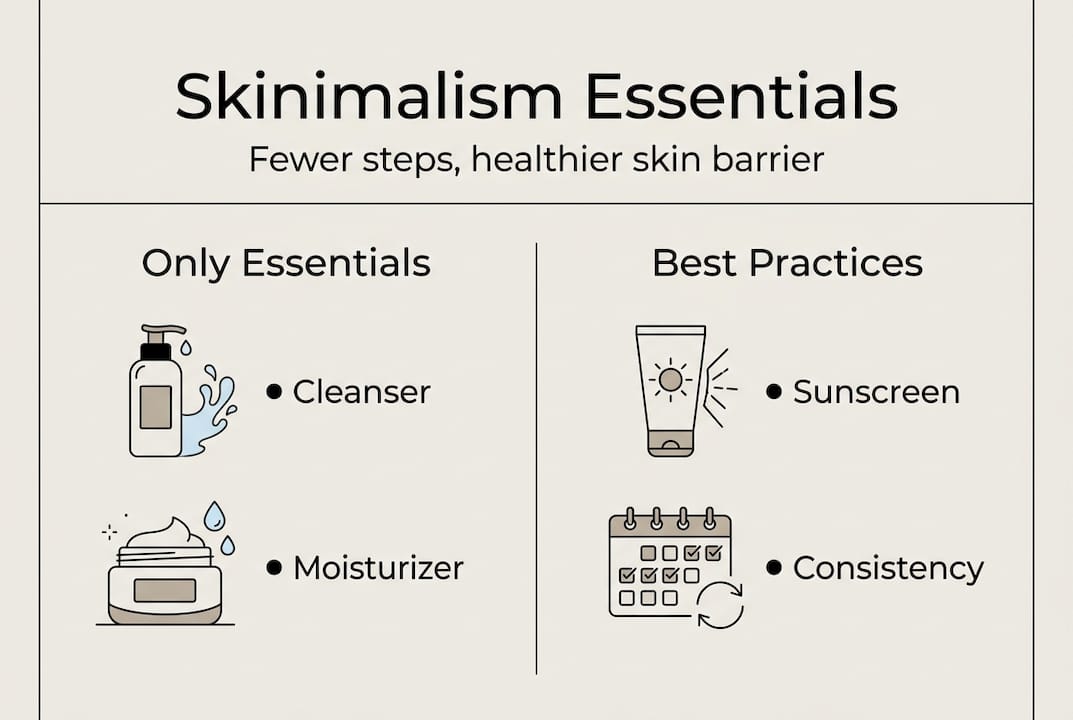
Skinimalism is not about being lazy with your skin. It’s a deliberate, focused approach that strips your routine down to what actually works. The word blends “skin” and “minimalism,” and the philosophy is simple: fewer, better products that do more for your skin barrier and overall health.
This shift is consumer-driven. People are burning out on complex routines that cost a fortune and deliver mixed results. Skinimalism focuses on 3 to 5 multifunctional, high-quality products built around essentials like a cleanser, a treatment serum, a moisturizer, and SPF. That’s it. No filler, no redundancy.
The market is responding. Multi-tasking products are growing at an 8.4% CAGR, reflecting how strongly consumers are voting with their wallets for simplicity. Brands are reformulating to pack more actives into fewer products, and shoppers are choosing quality over quantity.
“Skinimalism is not about doing less for your skin. It’s about doing the right things, with the right products, consistently.” — Dermatologist consensus across multiple clinical reviews
At its core, skinimalism prioritizes skin barrier health. A strong barrier keeps moisture in and irritants out. When you overload your skin with too many actives and conflicting ingredients, you compromise that barrier. Skinimalism protects it. For a deeper look at must-have skincare products, it helps to understand which ingredients actually earn their place in your routine.
| Traditional routine | Skinimalist routine |
|---|---|
| 7 to 10+ products | 3 to 5 products |
| Multiple overlapping actives | One targeted treatment serum |
| High risk of ingredient conflict | Curated, compatible formulas |
| Time-consuming, expensive | Efficient and cost-effective |
| Often leads to barrier damage | Supports barrier repair |
How skinimalist routines work
A skinimalist routine has a clear structure. Morning and evening routines differ slightly, but both stay lean and purposeful.
Morning routine:
- Gentle, pH-balanced cleanser
- Multitasking serum (vitamin C for antioxidant protection and brightening)
- Moisturizer with barrier-supporting ingredients like ceramides or hyaluronic acid
- Broad-spectrum SPF 30 or higher
Evening routine:
- Gentle cleanser to remove SPF and daily buildup
- Barrier repair moisturizer (look for ceramides, peptides, or niacinamide)
- Rotate actives as needed, such as a retinol or AHA, but not every night
The AM and PM structure keeps things intentional. Your morning routine focuses on protection. Your evening routine focuses on repair. You don’t need a different product for every concern when one well-formulated serum can address hydration, tone, and texture at once.
A few things to avoid:
- Using two exfoliants in the same routine (for example, a physical scrub plus a chemical AHA)
- Layering multiple vitamin C products or conflicting actives like retinol and AHA on the same night
- Adding a new product every week without giving your skin time to adjust
Pro Tip: If your serum already contains niacinamide, you don’t need a separate brightening toner. Overlap is the enemy of a skinimalist routine. Check your ingredient lists before adding anything new.
For a solid foundation, reviewing daily skincare basics helps you identify which steps are truly non-negotiable. And if your skin is already showing signs of irritation, understanding skin barrier repair is a smart starting point before you simplify.
Why less can be more: Benefits and evidence
The science behind skinimalism is straightforward. When you pile on too many actives, you increase the risk of ingredient conflicts, irritation, and long-term barrier damage. Maximalist routines risk ingredient clashes that compromise barrier function, especially in people with sensitive or reactive skin.
Skinimalism, by contrast, supports better routine adherence. When your routine takes three minutes instead of twenty, you actually do it every day. Consistency beats complexity every time.
“The skin barrier is your first line of defense. Overloading it with actives doesn’t accelerate results. It often reverses them.”
Here’s how the two approaches compare on key outcomes:
| Outcome | Maximalist routine | Skinimalist routine |
|---|---|---|
| Barrier health | Often compromised | Actively supported |
| Irritation risk | High | Low |
| Routine adherence | Low (too complex) | High (simple and fast) |
| Cost over time | Very high | Moderate to low |
| Best for skin type | Oily, resilient skin | Sensitive, dry, mature skin |
One important caveat: success relies on high-quality, compatible products. Cutting your routine to three products only works if those three products are well-formulated and suited to your skin type. A cheap, fragrance-heavy moisturizer won’t deliver the same results as a ceramide-rich formula.
For a broader look at how different approaches stack up, exploring routine results across skin types gives useful context.
When skinimalism works (and when it doesn’t)
Skinimalism is not a universal fix. It works exceptionally well for people with normal, sensitive, dry, or mature skin, especially those who have been either over-treating or under-treating their skin for years. If your skin is constantly irritated, red, or reactive, simplifying is often the fastest path to recovery.
Here’s where skinimalism shines:
- Sensitive skin prone to redness or reactivity
- Dry or dehydrated skin that needs barrier support
- Mature skin that benefits from ceramides and gentle hydration
- Anyone experiencing routine fatigue or product overload
- People new to skincare who want a clear, manageable starting point
But skinimalism has real limits. It’s not ideal for severe acne, significant hyperpigmentation, eczema, or conditions that require prescription actives like retinoids or azelaic acid. If your dermatologist has prescribed a specific treatment, a minimalist routine may not replace it.
Mature skin deserves a special note. Older skin tends to lose moisture faster and has a thinner barrier. Skinimalism works well here, but you need to monitor for dryness and make sure your moisturizer is doing real work. Ceramides, peptides, and hyaluronic acid are your best allies.
Pro Tip: If you have a medical skin condition, talk to your dermatologist before cutting your routine. Skinimalism is a lifestyle choice, not a medical treatment. For those dealing with barrier issues, the guide on barrier repair and sensitive skin is worth reading before you make any changes.
Transitioning to a skinimalist routine: Practical steps
Switching to skinimalism doesn’t mean throwing everything out overnight. A gradual, thoughtful transition protects your skin and helps you figure out what’s actually working.
- Audit your current routine. List every product you use morning and evening. Write down the key active ingredients in each one.
- Identify overlaps and conflicts. Are you using two exfoliants? Two vitamin C products? Two hydrating toners? Flag anything redundant.
- Rank by necessity. Ask yourself: does this product address a real concern, or did I buy it because it sounded good? Keep only what has a clear purpose.
- Swap to multifunctional formulas. Replace single-purpose products with ones that do more. A serum with niacinamide, ceramides, and hyaluronic acid covers hydration, barrier repair, and tone in one step.
- Remove one product at a time. Transition gradually by auditing your routine to avoid overloading your skin with sudden changes. Give each adjustment one to two weeks before evaluating.
- Track your skin’s response. Keep a simple log. Note any new breakouts, dryness, or improvements. This data helps you make smarter decisions.
The goal is a routine you can sustain. Three products used consistently will always outperform ten products used sporadically. For a clear framework to follow, the basic skincare workflow is a practical reference as you build your new routine.
Skinimalist essentials for your routine
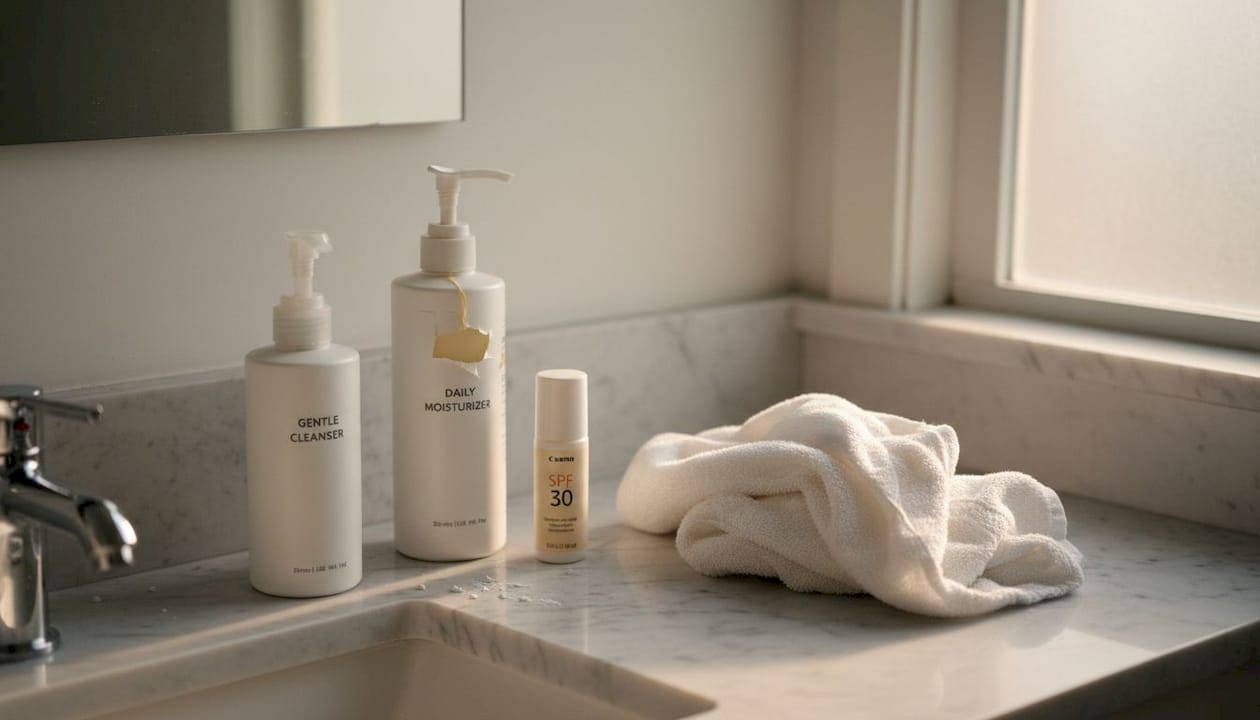
Once you know what your routine needs, finding the right products makes all the difference. A gentle cleanser that respects your skin’s pH, a barrier-focused moisturizer, and a reliable SPF are the non-negotiables. Everything else is optional.

At Skin-Styles.com, we’ve curated collections built for exactly this kind of intentional routine. Browse our facial cleansers for gentle, effective options that won’t strip your barrier. Explore facial creams and gels for moisturizers that do real work without unnecessary fillers. And if you’re looking for trusted, dermatologist-loved formulas, the Cosrx essentials collection is a great place to start. Every product in these ranges is chosen with a skinimalist mindset: fewer ingredients, better results, and real skin health at the center.
Frequently asked questions
Can I switch to skinimalism if I have acne?
Skinimalism can support mild acne through barrier-focused care, but severe acne requires targeted actives like retinoids or azelaic acid that go beyond a minimalist routine. Always consult a dermatologist for persistent breakouts.
Is skinimalism suitable for mature skin?
Yes. Mature skin benefits from barrier-focused minimalism, but you should monitor for dryness and prioritize ceramide-rich moisturizers to maintain hydration and skin integrity.
How fast can I transition to a skinimalist routine?
Transition gradually by auditing your current products and removing or replacing one item at a time. Allow one to two weeks between changes so your skin can adjust properly.
What products are absolutely essential in a skinimalist routine?
The core essentials are a cleanser, a multitasking serum, a moisturizer that supports barrier health, and a broad-spectrum SPF 30 or higher. These four cover protection, repair, and treatment in the fewest possible steps.