

Choosing babyware that genuinely protects both your child and the planet can feel complicated for eco-conscious parents. With conventional products made from synthetic plastics lingering in landfills for centuries, biodegradable babyware offers a smarter solution using natural materials that break down efficiently. Microorganisms mediate biodegradable material degradation, reducing environmental persistence compared to conventional synthetics. Discover how new advances in sustainable materials create safer, healthier options for your family and the world around you.
Table of Contents
- What Makes Babyware Biodegradable
- Popular Types And Material Differences
- Environmental Benefits Compared To Plastic
- Child Safety, Quality Standards, And Labels
- Limitations, Costs, And How To Choose
Key Takeaways
| Point | Details |
|---|---|
| Biodegradable Materials Are Key | Transitioning to biodegradable babyware reduces environmental impact by utilizing materials that decompose naturally, unlike traditional plastics. |
| Understand Disposal Options | It’s crucial to verify disposal methods for biodegradable products as some may require industrial composting facilities that are not widely accessible. |
| Check for Safety Certifications | Ensure that biodegradable babyware meets rigorous safety standards, as environmental benefits should not compromise child safety. |
| Cost Considerations Are Important | Biodegradable babyware often costs 30-50% more than conventional options, making it essential to assess affordability and selectivity based on usage. |
What Makes Babyware Biodegradable
Biodegradable babyware isn’t just a marketing label—it’s a fundamental shift in how products break down. Traditional diapers and feeding items are made from synthetic plastics that persist in landfills for decades. Biodegradable alternatives use materials that naturally decompose through biological processes.
The key difference lies in material composition. Standard babyware relies on petroleum-based plastics that resist breakdown. Biodegradable options swap these for materials like polylactic acid (PLA), poly(butylene adipate-co-terephthalate) (PBAT), bamboo fiber, and organic cotton—all engineered to degrade far more quickly.
How the Breakdown Actually Works
Biodegradation is the process where microorganisms break down materials into natural compounds. When you place biodegradable babyware in the right conditions, bacteria and fungi attack the material’s structure, reducing it to water, carbon dioxide, and biomass.
This differs dramatically from traditional plastic. Microorganisms mediate biodegradable material degradation, offering reduced environmental persistence compared to conventional synthetics. The timeline varies based on environmental conditions, but biodegradable products break down in months to a few years rather than centuries.
Key materials making this possible:
- Polylactic acid (PLA) — plant-based polymer that decomposes in industrial composting
- PBAT — synthetic biodegradable polyester that degrades in diverse environments
- Bamboo fiber — rapidly renewable plant material with natural decomposition properties
- Organic cotton — pesticide-free fiber that breaks down safely without chemical residue
The Innovation in Material Science
Researchers are now developing next-generation biodegradable babyware from unexpected sources. Protein biomass derived from food and agricultural waste creates porous structures that degrade quickly while remaining safe for flushing or composting as fertilizer.
This approach tackles two problems at once: it repurposes waste streams while eliminating reliance on petroleum. These innovative materials maintain the convenience parents expect without environmental guilt.
Biodegradable babyware breaks down through biological processes rather than sitting unchanged in landfills—a fundamental shift from traditional plastic-based products.
Real-World Performance Considerations
Not all biodegradable products perform identically. The environment where they degrade matters significantly. Industrial composting facilities reach specific temperatures that accelerate breakdown. Home composting works slower. Regular landfills may not provide ideal conditions for rapid degradation.
When selecting biodegradable babyware, check whether products are certified for industrial composting, home composting, or both. This determines where you can actually dispose of them responsibly.
Current challenges exist with scaling biodegradable options globally. Manufacturing costs remain higher than conventional plastics. Mechanical performance sometimes lags behind synthetics. But as demand grows, prices decline and performance improves.
Pro tip: Look for third-party certifications like “OK Compost” or “BPI Certified” on packaging—these verify that products actually biodegrade under real-world conditions, not just in theory.
Popular Types and Material Differences
Not all biodegradable babyware is created equal. Different materials break down at different rates, perform differently in use, and require specific disposal methods. Understanding what you’re buying helps you make choices that actually align with your environmental values.
The biodegradable babyware market includes several distinct material categories, each with unique strengths and trade-offs. Bio-based and biodegradable polymers used in babyware applications range from natural materials like starch and cellulose to engineered synthetics designed for specific performance needs.
Common Materials and How They Differ
Polylactic Acid (PLA) is plant-derived, typically from corn or sugarcane. It’s compostable in industrial facilities but requires high heat to break down. Home composting doesn’t work well for PLA—it needs temperatures above 130°F consistently.
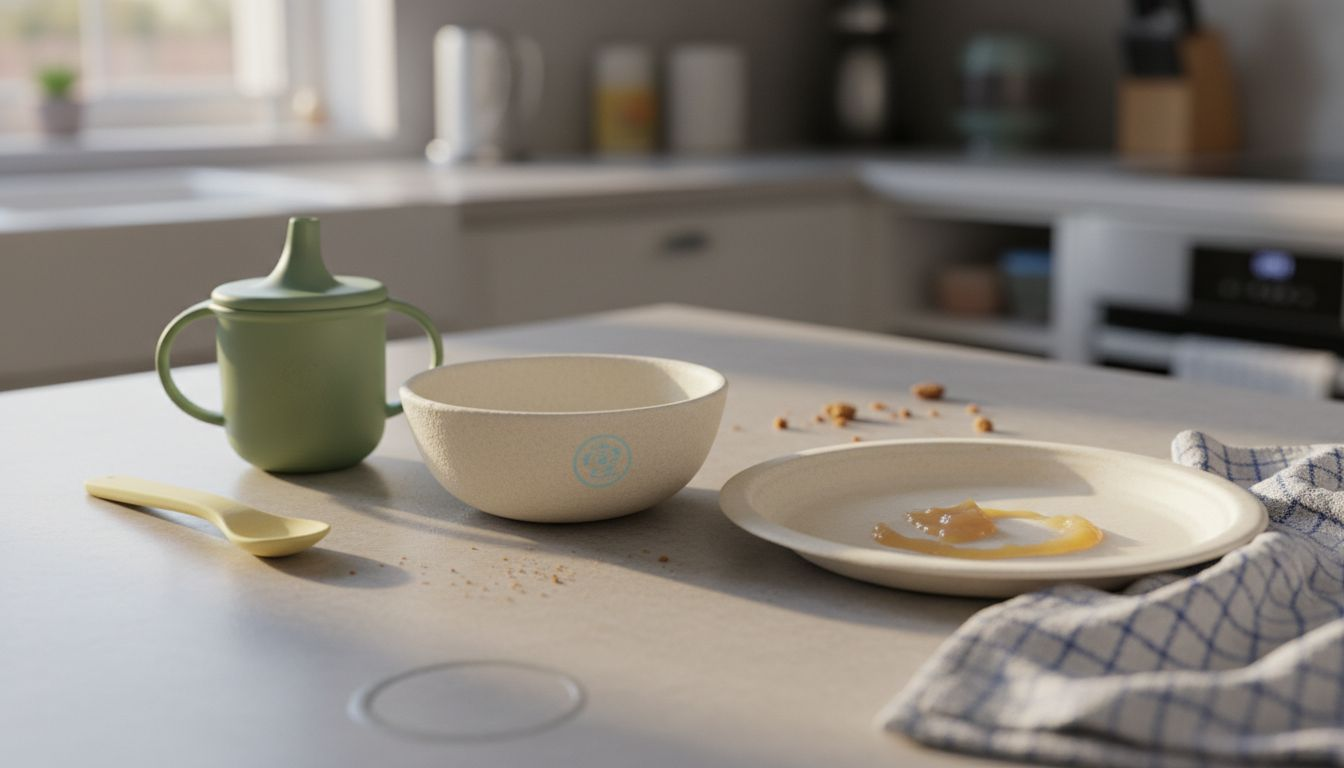
Polybutylene Succinate (PBS) offers better mechanical strength than PLA. It degrades faster in diverse environments and performs better under stress. This makes it ideal for products that need durability, like feeding plates or utensils.
Molded pulp comes from recycled paper and cardboard. It’s naturally biodegradable and fully recyclable, making it a solid choice for packaging. The downside is lower durability compared to plastic alternatives.
Starch-based materials provide the lowest cost option but have trade-offs. They degrade quickly but may be weaker and absorb moisture more easily. Often manufacturers blend starch with other polymers to improve performance.
Material comparison for babyware applications:
Here is a useful reference comparing common biodegradable babyware materials:
| Material Type | Typical Degradation Time | Disposal Method Required | Strength & Durability |
|---|---|---|---|
| Polylactic Acid (PLA) | 6-24 months in compost | Industrial composting needed | Rigid, less impact resistant |
| Polybutylene Succinate (PBS) | 3-12 months in various settings | Industrial or home composting | Flexible, good for plates/utensils |
| Molded Pulp | 2-6 months when moist | Home or industrial composting | Weak, best for packaging |
| Starch Blends | 1-4 months in compost | Composting preferred | Variable, can absorb moisture |
| Cellulose Composites | 6-18 months in compost | Industrial composting needed | Reinforced, stronger than pulp |
- PLA: Industrial composting only, good rigidity, clear appearance
- PBS: Biodegradable in various environments, better flexibility and strength
- Molded pulp: Recyclable plus biodegradable, lower durability, eco-friendly packaging
- Starch blends: Most affordable, faster degradation, variable performance
- Cellulose composites: Natural fiber reinforcement, improved strength, industrial composting
Why Blending Creates Better Products
Manufacturers increasingly combine materials to optimize performance. Mixing biopolymers lets companies tailor products for specific needs—durability for feeding items, flexibility for soft goods, moisture resistance for packaging.
Blending biopolymers maintains biodegradability while improving durability and safety. A product might combine PLA’s clarity with PBS’s strength, creating something that performs like conventional plastic but still decomposes naturally.
This approach also reduces costs as production scales. Engineered blends outperform single materials in real-world use without sacrificing environmental benefits.
Material choice determines both how well a product works and how it breaks down—selecting the right type matters for your family’s needs and the planet.
Making Sense of the Options
When shopping for biodegradable babyware, look beyond the “eco-friendly” label. Check what material it actually uses and verify the disposal requirements. Some products need industrial composting; others work in home compost or regular waste streams.
Cost, durability, and environmental impact all vary significantly. Higher-priced biodegradable feeding sets often use PBS blends for superior strength. Budget options might use starch-based materials that work fine but degrade faster.
Your household situation determines which material makes sense. Limited access to industrial composting? Skip pure PLA. Want maximum durability? Look for PBS-blended products. Focused purely on reducing landfill impact? Molded pulp packaging works.
Pro tip: Check product packaging for material composition and composting certification symbols—this tells you exactly where and how to dispose of items after your child outgrows them.
Environmental Benefits Compared to Plastic
Traditional plastic babyware creates a permanent environmental footprint. A single disposable diaper takes 450 years to decompose in a landfill. Your child’s feeding items, toys, and accessories made from conventional plastic will outlive multiple generations.
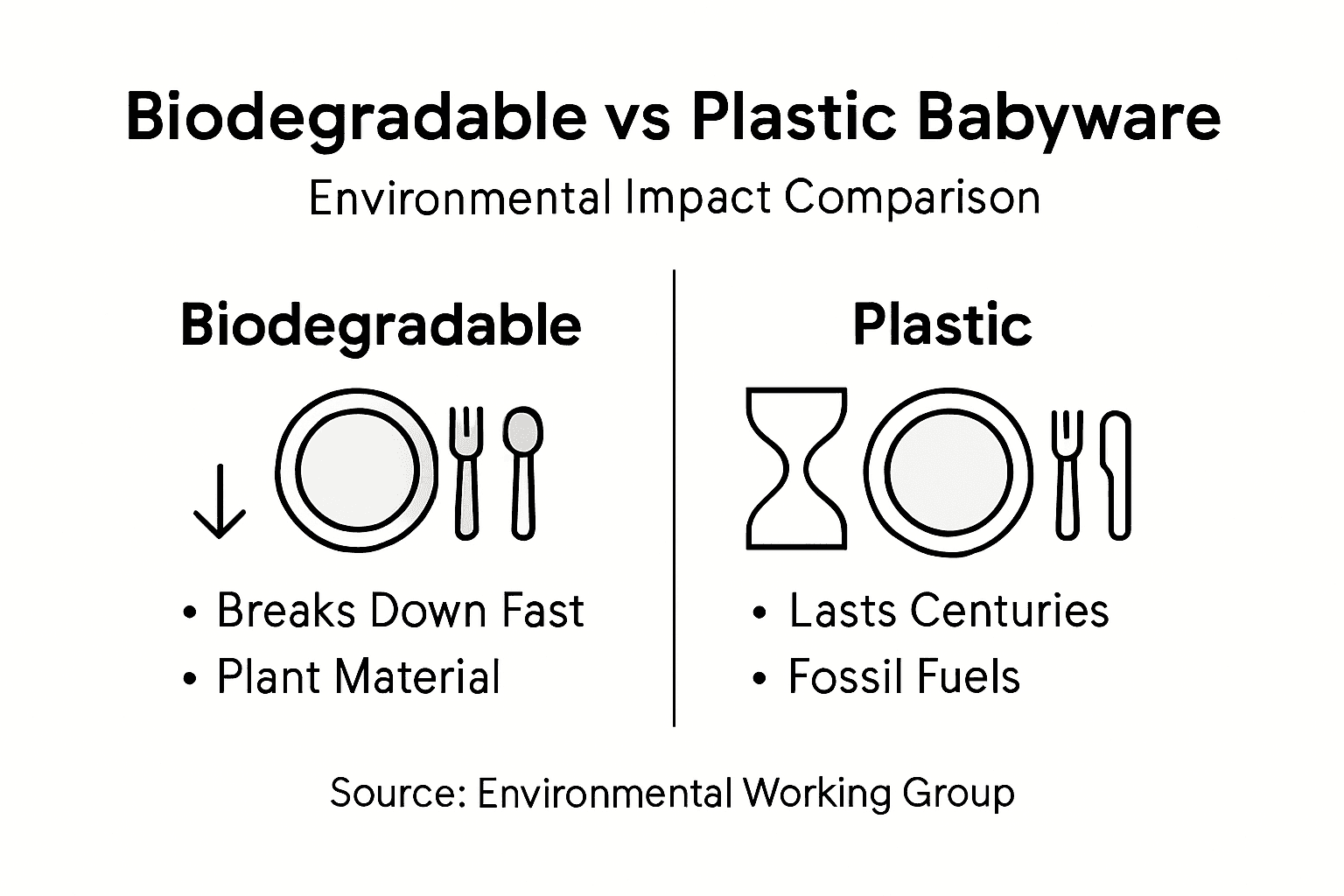
Biodegradable alternatives solve this core problem. Instead of persisting for centuries, these products break down within months to a few years. The difference isn’t just about timeline—it fundamentally changes what happens to waste after your family is done with it.
The Microplastic Problem
Traditional plastics don’t disappear. They fragment into smaller and smaller pieces called microplastics, which contaminate soil, water, and ultimately food chains. These particles end up in groundwater, oceans, and even the air you breathe.
Biodegradable materials significantly reduce microplastic pollution by breaking down completely rather than fragmenting into persistent particles. When a biodegradable product decomposes, it transforms into natural compounds like water and carbon dioxide instead of toxic microplastics that accumulate in ecosystems.
This distinction matters for your children’s future. Less microplastic in the environment means cleaner water, safer food, and healthier soil for years to come.
Carbon Footprint and Renewable Resources
Biodegradable babyware typically carries a lower carbon footprint than conventional plastic. Many bioplastics derive from renewable agricultural sources like corn, sugarcane, or bamboo rather than fossil fuels.
Plus, biodegradable products support circular economy principles. At end of life, they return to the earth as nutrients. Traditional plastic is extracted from oil, used once, then buried forever.
Key environmental advantages:
- Derived from renewable plant sources instead of petroleum
- Reduced greenhouse gas emissions during production
- Break down into harmless organic matter, not toxic residue
- Support compost systems that nourish soil and reduce landfill volume
- Eliminate reliance on fossil fuel extraction
Managing Degradation Properly
One important caveat exists: biodegradation conditions matter significantly. Optimal end-of-life management like industrial composting reduces environmental impact compared to leaving products in regular landfills where they may not degrade as intended.
Some biodegradable products require industrial composting facilities operating at specific temperatures. Others break down in home compost or natural environments. Degradation in the wrong conditions—like regular landfills without oxygen—can produce greenhouse gases instead of clean decomposition.
The solution is straightforward: dispose of biodegradable babyware according to product specifications. Check the label for composting requirements before purchase.
Biodegradable babyware breaks down into nutrients rather than persisting as pollution—a fundamental shift in what your choices mean for the planet.
The Long-Term Impact
Individual product choices accumulate. One family using biodegradable diapers, feeding sets, and clothing prevents tons of plastic from entering landfills over a decade. Multiply that across thousands of eco-conscious families, and the environmental impact becomes substantial.
You’re not just reducing your family’s waste. You’re supporting growing markets that drive innovation in material science, making biodegradable options cheaper and more accessible for everyone.
Pro tip: Purchase biodegradable babyware from retailers that accept returns or resale, extending product life before composting and maximizing environmental benefits.
Child Safety, Quality Standards, and Labels
Biodegradable doesn’t automatically mean safe. You need products that are both environmentally responsible and rigorously tested for your child’s health. This is where quality standards and certifications become essential.
Global regulatory bodies have established strict safety requirements for babyware. These standards address chemical exposure, mechanical hazards, and material integrity—ensuring products protect your child regardless of their environmental credentials.
Understanding Safety Standards
Multiple safety frameworks govern babyware globally. Global safety standards for baby products address chemical limits and mechanical safety across different regions. The United States follows ASTM standards, the European Union uses EN standards, and China applies GB standards. International markets reference ISO standards.
These aren’t suggestions. They’re legal requirements that manufacturers must meet before selling products to families.
Key regulatory frameworks include:
- ASTM standards — Mechanical and chemical safety requirements in North America
- EN standards — European Union safety specifications covering mechanical, chemical, and physical risks
- ISO standards — International guidelines ensuring worldwide consistency
- GB standards — China’s specific safety requirements for baby products
What These Standards Actually Test
European Union safety requirements cover mechanical, chemical, and physical safety aspects for baby bottles, feeding utensils, and diapers. Manufacturers must test for harmful substances like phthalates and lead, verify products won’t break or create sharp edges, and confirm they meet strict labeling requirements.
Biodegradable babyware undergoes the same rigorous testing as conventional plastic products. The material may be eco-friendly, but safety standards remain equally demanding.
Common safety concerns addressed:
- Toxic chemical exposure from materials or coatings
- Choking hazards from small components or degradation
- Sharp edges or structural failures
- Allergenic reactions from materials or dyes
- Migration of harmful substances into food or saliva
Reading Labels and Certifications
Look for third-party certification marks on packaging. These symbols indicate independent testing verified compliance with safety standards. A product labeled “EN certified” or “ASTM compliant” has undergone rigorous evaluation by recognized testing laboratories.
Don’t rely on marketing language alone. “Safe,” “natural,” and “non-toxic” are marketing terms without legal definitions. Certifications backed by actual testing standards carry real weight.
When shopping, prioritize products displaying:
- CE marks for European compliance
- ASTM certification for US-market products
- Third-party testing logos from recognized laboratories
- Clear material composition on the label
- Age-appropriate warnings and usage guidelines
Biodegradable babyware must meet the same rigorous safety standards as conventional plastic—environmental benefits never compromise child protection.
What to Check Before Buying
Read the fine print on packaging. Look for material specifications, testing certifications, and manufacturing origin. Products made in facilities with strong quality control standards tend to be more reliable.
Check for recall histories online. Organizations like the US Consumer Product Safety Commission maintain searchable databases of problematic products. A few minutes of research prevents costly mistakes.
Verify that products match your child’s age and developmental stage. Some biodegradable feeding items work for infants; others suit older babies. Age-inappropriate products can create safety risks regardless of material quality.
Pro tip: Cross-reference product certifications on manufacturer websites before purchasing, confirming that claimed safety standards are actually verified by third-party testing labs.
Limitations, Costs, and How to Choose
Biodegradable babyware sounds like the obvious choice, but real-world limitations exist. Understanding these trade-offs helps you make decisions that work for your family and budget.
The biodegradable market isn’t perfect. Production costs remain higher than conventional plastics. Supply chains are less developed. Not every product performs identically to plastic alternatives. These challenges affect availability and price in ways eco-conscious families need to understand.
The Cost Reality
Biodegradable babyware typically costs 30-50% more than conventional plastic equivalents. A biodegradable feeding set that costs $25 might replace a $15 plastic alternative. Over months of purchasing diapers, bottles, and accessories, costs accumulate.
Higher production costs and limited scalability affect biodegradable babyware pricing. Smaller manufacturing facilities, specialized materials, and lower production volumes all drive expenses up. As markets grow, prices should decline, but current options remain pricier.
This matters for budget-conscious families. Environmental values are important, but so is financial reality. You need to balance both.
Key cost factors:
- Specialized manufacturing equipment and processes
- Smaller production volumes compared to conventional plastic
- Higher raw material expenses for sustainable sourcing
- Import tariffs on some biodegradable materials
- Limited retail competition keeping prices elevated
Performance Limitations Under Real Conditions
Biodegradable materials don’t always perform identically to plastic. Some struggle with high humidity environments. Others lack the durability of conventional plastics under heavy use.
Material performance variability and limited mechanical durability create practical challenges for biodegradable babyware. A biodegradable feeding plate might crack more easily than plastic. Some biodegradable bottles show less flexibility. Performance gaps vary by material type and product design.
This doesn’t mean biodegradable products fail. It means you’re making trade-offs. Environmental benefits come with slightly lower durability in some cases.
Common limitations you might encounter:
- Reduced flexibility compared to conventional plastics
- Lower impact resistance in some materials
- Moisture absorption issues in humid climates
- Staining or discoloration over time
- Limited color and design options
Infrastructure and Disposal Challenges
Many biodegradable products require industrial composting facilities. Not all communities have access to these services. Your biodegradable diaper won’t break down in a regular landfill—it needs specific conditions.
Before purchasing, research what composting infrastructure exists in your area. If industrial composting isn’t available, biodegradable products offer fewer advantages over conventional alternatives.
Biodegradable babyware delivers environmental benefits only when disposed of properly—check your local composting options before buying.
A Smart Selection Strategy
Balance environmental impact, budget, and practical performance. You don’t need to replace everything simultaneously. Start with items you replace most frequently, like diapers or feeding supplies.
Prioritize biodegradable options where they make sense: items your child outgrows quickly, high-volume purchases, or products heading to landfills anyway. Skip biodegradable versions for items you’ll reuse for multiple children or expect to last years.
Consider hybrid approaches. Buy biodegradable feeding sets but conventional high-chairs. Purchase eco-friendly diapers but conventional clothing. This optimizes both environmental impact and family budget.
Selection questions to ask:
The following table summarizes key purchase considerations for families evaluating biodegradable babyware:
| Consideration | Questions to Ask Before Buying | Impact on Choice |
|---|---|---|
| Local Compost Access | Is industrial composting available? | Limits which items truly degrade |
| Cost Impact | Can I afford 30-50% higher prices? | Determines product type selection |
| Product Longevity | Will this be reused or disposable? | Guides reuse vs. compost focus |
| Safety Certifications | Are trusted safety labels present? | Ensures child health and safety |
| Material Suitability | Is the material durable for intended use? | Avoids performance disappointment |
- How frequently will we replace this item?
- Is industrial composting available in our area?
- Can we afford the 30-50% cost premium?
- Does performance matter more than environmental impact for this product?
- Will we reuse this across multiple children?
Pro tip: Start with one biodegradable product category (like diapers) to test cost and performance fit, then gradually expand to other items if results satisfy your family’s needs.
Choose Biodegradable Babyware That Truly Supports Your Family and the Planet
The challenge of finding babyware that is safe for your child and kind to the environment is real. You want products that biodegrade properly without compromising on durability or safety. This means understanding materials like PLA and PBS, confirming composting options, and ensuring rigorous safety certifications. At Skin-Styles.com, we recognize these concerns and offer thoughtfully selected biodegradable babyware and family essentials to meet your eco-conscious values.

Explore our Other Products – Skin Styles category where you can find carefully curated items that balance environmental responsibility with high quality and safety standards. Make your next purchase count by choosing products that are designed with your child’s health and the planet’s future in mind. Visit Skin-Styles.com today and embrace smarter choices for your family’s wellness and sustainability.
Frequently Asked Questions
What materials are used in biodegradable babyware?
Biodegradable babyware typically uses materials like polylactic acid (PLA), polybutylene adipate-co-terephthalate (PBAT), bamboo fiber, and organic cotton, which break down more quickly than traditional petroleum-based plastics.
How does biodegradation work for babyware products?
Biodegradation is the process by which microorganisms break down materials into natural compounds. Conditions such as moisture, temperature, and the presence of bacteria and fungi are crucial for this process, allowing biodegradable babyware to decompose within months to a few years instead of centuries like conventional plastic.
How should I dispose of biodegradable babyware?
Disposal methods depend on the material. Some biodegradable babyware requires industrial composting facilities to break down effectively, while others may compost in home systems. Always check the packaging for specific disposal instructions to ensure proper degradation.
Are biodegradable babyware products safe for my child?
Yes, biodegradable babyware must meet the same safety standards as conventional plastic products. Look for certifications that indicate compliance with safety requirements, ensuring that these eco-friendly options are safe for use by children.