

TL;DR:
- Safe baby plates should be made from inert, non-leaching materials like food-grade stainless steel or platinum-cured silicone.
- Certifications such as FDA, LFGB, CPSIA, Prop 65, or MADE SAFE indicate independent safety verification.
- Avoid plastics labeled BPA-free and products with vague claims or chemical odors to ensure safety.
Choosing a baby plate sounds simple until you start reading ingredient labels, recall notices, and conflicting online claims. Parents today face a wall of products all marketed as “safe,” yet headlines about chemical leaching, microplastics, and formaldehyde keep surfacing. That tension is real, and it deserves a real answer. This guide walks you through exactly what safe materials look like, what certifications actually mean, and how to make a confident, evidence-backed decision without spending hours in research rabbit holes. Your child’s health and your peace of mind are both worth getting this right.
Table of Contents
- Understand what makes a baby plate safe
- Gather your requirements: What to consider before buying
- Step-by-step: How to select and verify a safe baby plate
- Common mistakes and troubleshooting your choice
- Why material safety for baby plates is more complicated than it looks
- Safer solutions for eco-minded parents
- Frequently asked questions
Key Takeaways
| Point | Details |
|---|---|
| Prioritize material safety | Choose stainless steel or platinum-cured silicone plates to minimize health risks. |
| Certifications matter | Only buy plates with clear FDA, LFGB, or MADE SAFE markings for real safety assurance. |
| Verify before first use | Check for odors, test stability, and inspect for safety features before serving food. |
| Stay skeptical of greenwashing | Don’t trust eco-labels or ‘BPA-free’ claims without real certification. |
Understand what makes a baby plate safe
Safety in a baby plate comes down to one core concept: the material must not release harmful chemicals into food. Scientists call this being “inert” or “non-leaching,” meaning the plate stays chemically stable even when it contacts hot food, acidic sauces, or repeated washing. If a material leaches, even tiny amounts of toxic compounds can transfer directly into your baby’s meal.
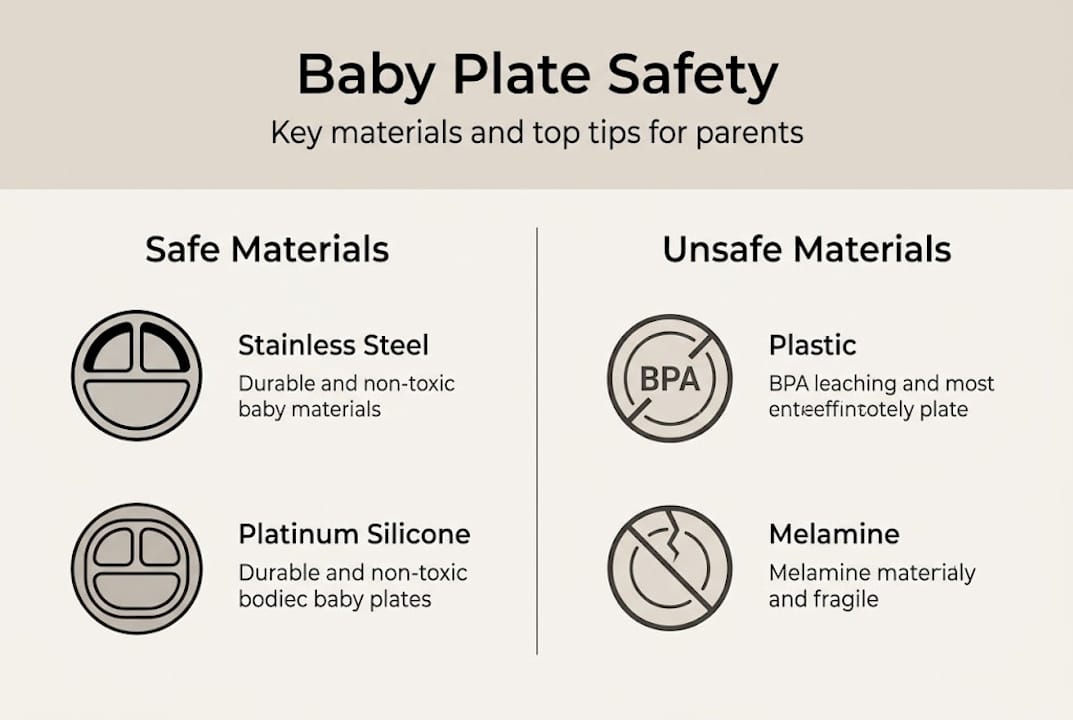
Prioritize stainless steel (18/8 or 304 food-grade) and high-quality platinum-cured silicone for baby plates because these materials are inert, non-leaching, and built to last. Stainless steel in the 18/8 or 304 grade contains a specific ratio of chromium and nickel that creates a passive oxide layer, preventing rust and chemical release. Platinum-cured silicone uses a platinum catalyst during manufacturing rather than peroxide, which results in a purer, more stable final product with no byproduct residues.
On the other side of the spectrum, avoid plastic even BPA-free versions because heat exposure risks BPS, phthalates, and microplastic release. Melamine and bamboo fiber composites carry formaldehyde and melamine glue risks, while low-quality ceramics may contain lead or cadmium in their glazes. These are not rare edge cases. They are documented risks backed by independent lab testing.
Safety warning: A plate labeled “BPA-free” tells you only one chemical was removed. It says nothing about BPS, BPF, phthalates, or the microplastic particles that flake off any plastic surface with repeated heating and washing. “BPA-free” is a marketing claim, not a safety certification.
Here is what to look for on any baby plate:
- Material label: Must specify 304 or 18/8 stainless steel, or platinum-cured food-grade silicone
- Certifications listed: FDA food-grade, LFGB (European Union’s stricter food contact standard), CPSIA, California Prop 65, or MADE SAFE
- No chemical smell: A new plate should smell neutral, not plastic-like or rubbery
- Smooth, rounded edges: Sharp edges are a physical hazard for small hands and mouths
- Suction base option: Helps prevent spills and reduces frustration at mealtimes
| Material | Pros | Cons | Safety rating |
|---|---|---|---|
| 304 stainless steel | Durable, inert, easy to clean | Heavier, no suction base | Excellent |
| Platinum-cured silicone | Flexible, lightweight, suction-friendly | Requires certification check | Very good |
| BPA-free plastic | Cheap, lightweight | Leaches BPS/phthalates/microplastics with heat | Poor |
| Melamine/bamboo fiber | Looks natural | Formaldehyde and melamine glue risks | Avoid |
| Low-quality ceramic | Aesthetically pleasing | Lead/cadmium risk in glazes | Risky without cert |
For parents who want to extend this thinking to other feeding tools, explore safe baby utensils and learn more about eco-friendly baby feeding options that align with the same material standards.
Gather your requirements: What to consider before buying
Knowing what makes a plate safe is the foundation. Knowing what makes a plate work for your family is equally important. Before you buy, take five minutes to map out your real-world needs.
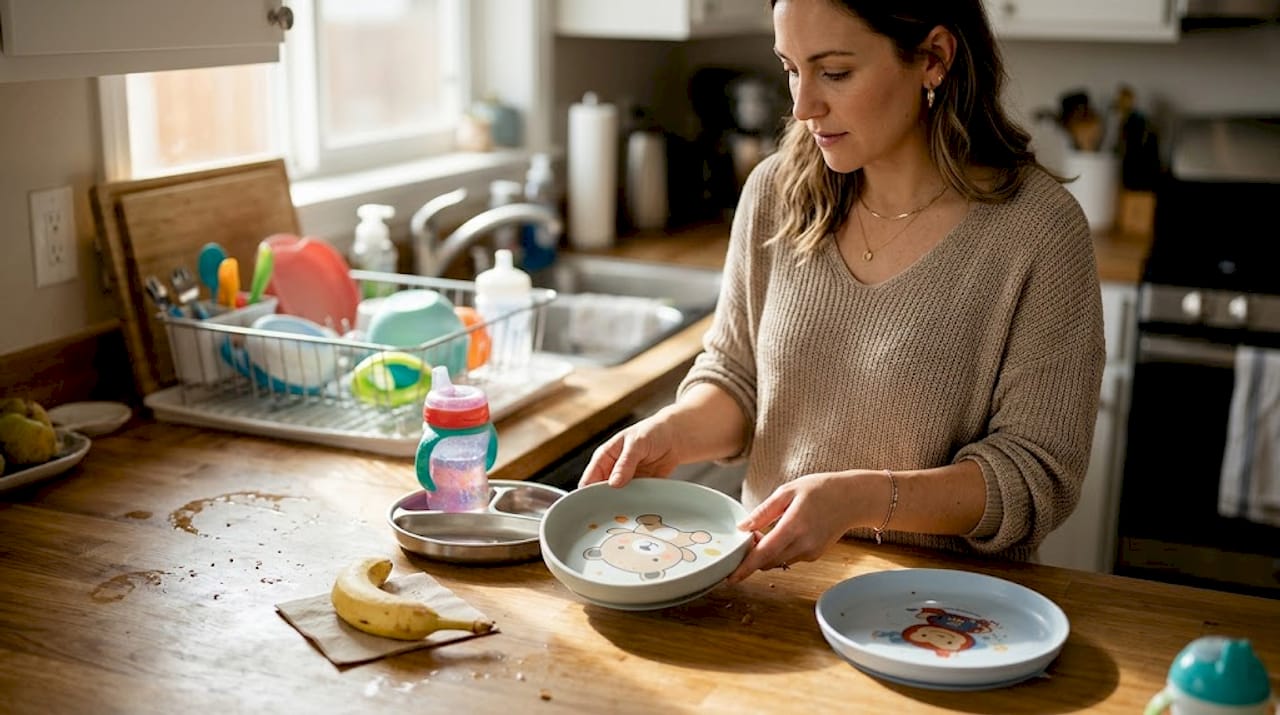
Age and developmental stage shape everything. Infants starting solids need shallow plates with wide, flat surfaces that make spoon feeding easy. Toddlers benefit from divided plates that keep foods separated, since texture aversion is common in this stage. Older babies who self-feed do better with plates that have raised edges for scooping.
Here are the practical features worth prioritizing:
- Dishwasher safe: A non-negotiable for busy households
- Microwave safe: Stainless steel is not, so factor in your reheating habits
- Suction base: Dramatically reduces meal chaos for independent eaters
- Portion divisions: Useful for picky eaters and introducing new foods
- Durability: Will it survive being thrown across the kitchen floor repeatedly? (It will be.)
| Scenario | Best material choice | Key feature to prioritize |
|---|---|---|
| Infant, spoon-fed | Platinum-cured silicone | Shallow design, suction base |
| Toddler, self-feeding | Stainless steel or silicone | Divided sections, raised edges |
| Multiple children | Stainless steel | Durability, dishwasher safe |
| On-the-go family | Silicone | Lightweight, foldable options |
Sustainability also plays a real role. A plate you keep for three years produces far less waste than cheap plastic sets replaced every few months. Look for honest reusability claims and avoid vague “eco” language that is not backed by a material specification or certification. Some products marketed as “plant-based” or “natural” are actually bamboo fiber composites held together with melamine resin, which is exactly the kind of greenwashing that catches well-meaning parents off guard. For deeper guidance on genuinely sustainable options, check out biodegradable babyware resources that separate real eco claims from marketing noise.
Look for certifications including FDA food-grade, LFGB, CPSIA, Prop 65, and MADE SAFE alongside physical checks like no chemical smell, smooth rounded edges, and suction bases for stability.
Pro Tip: If a product claims to be “natural” but lists “melamine resin” or “urea-formaldehyde” in the fine print or materials data sheet, put it down. Real natural materials like stainless steel and silicone have clear, specific grade designations, not vague ingredient language.
Step-by-step: How to select and verify a safe baby plate
Having your requirements ready makes the selection process fast. Here is how to move from browsing to confident purchase in a structured way.
- Research the brand first. Look for third-party test results on the brand’s website or in their product listings. Reputable brands publish lab reports. If you cannot find any, that is a red flag.
- Inspect the packaging for material specifics. The label should name the exact material grade. “Stainless steel” alone is not enough. You want to see “304” or “18/8.” “Silicone” alone is not enough. You want “platinum-cured, food-grade.”
- Check for recognized certifications. FDA, LFGB, CPSIA, Prop 65, and MADE SAFE are not just stamps. They require independent lab testing. A brand that displays these has passed external scrutiny.
- Search product recalls. The U.S. Consumer Product Safety Commission (CPSC) maintains a public recall database. A quick search of the brand name takes under two minutes and can save you from a serious mistake.
- Test for odor before first use. Run your thumb across the surface and take a sniff. A strong plastic smell or rubbery chemical odor suggests residual compounds from manufacturing.
- Test for stability with food. Before your baby uses it, try the suction base on your table or high chair tray with a bit of water underneath. If it releases easily, it may not hold under a determined toddler.
Silicone is safer than plastic but you must verify it is platinum-cured and food-grade. Some parents prefer stainless steel for zero leaching risk, while others choose silicone for its flexibility and suction compatibility. Both are valid if the grade and certifications check out.
Pro Tip: Fill a new silicone plate with warm water and let it sit for 60 seconds. Then smell the water. Clean, certified silicone should produce no detectable odor. Any chemical smell suggests the silicone is low-grade or peroxide-cured rather than platinum-cured. This quick test costs nothing and takes one minute.
For related context on how material choices extend beyond plates, the eco-friendly utensils safety guide covers how the same principles apply to spoons, forks, and cups.
Common mistakes and troubleshooting your choice
Even careful parents make avoidable errors. Here are the five most common mistakes and how to sidestep them.
- Trusting “BPA-free” as a safety guarantee. Plastic even BPA-free risks leaching BPS, phthalates, and microplastics when heated, so this label alone means very little.
- Skipping certification checks. A pretty design and a low price can feel convincing. Without a recognized certification, you have no external proof of safety.
- Ignoring odor. A new plate that smells strongly chemical is giving you direct evidence of a problem. Trust that signal.
- Falling for greenwashing. Phrases like “made with natural materials,” “earth-friendly,” or “plant-based” are not regulated claims. Always ask what the material actually is.
- Neglecting maintenance. Even the safest plates can degrade. Deep scratches in silicone, pitting in stainless steel, or chipped ceramics change how the surface behaves and may create new risks.
Important reminder: “Bamboo” plates that look warm and natural are almost always made from bamboo fiber mixed with melamine resin, a compound that releases formaldehyde when heated or exposed to acidic foods. The natural appearance is the point. The chemistry underneath is the problem.
If you notice problems after purchase, act quickly. A new chemical smell that develops after washing may indicate degradation. Color changes or cloudiness in silicone suggests breakdown. In either case, stop using the product and contact the manufacturer for documentation of their testing. If they cannot provide it, request a refund and move on.
For more on spotting safer feeding accessories for older babies, the silicone safety for toddlers resource offers practical, experience-based guidance.
Why material safety for baby plates is more complicated than it looks
Simple rules feel reassuring. “Silicone is always better than plastic” or “BPA-free means safe” give parents a shortcut. The problem is that shortcuts in this space can create a false sense of security that is arguably more dangerous than having no rule at all.
Certification loopholes exist. Some manufacturers obtain certifications from less rigorous labs or display outdated test results on new product lines. Vague materials claims like “food-safe composite” or “non-toxic blend” appear official but carry no enforceable standard. Even stainless steel requires scrutiny. Not all grades behave the same, and some imported plates labeled “stainless” contain elevated nickel or chromium that can release under acidic conditions.
The uncomfortable truth is that no single label, material, or brand name substitutes for understanding what you are actually buying. Parents who rely on eco-friendly approaches grounded in material science and third-party verification consistently make better long-term choices than those chasing trend-driven “safer” options. The evidence is the standard. Everything else is marketing.
Safer solutions for eco-minded parents
At Skin-Styles.com, we know that the same careful attention you bring to skincare ingredients belongs at your family’s table too. The standards we apply to what goes on skin—scrutinizing formulations, checking certifications, and prioritizing clean ingredients—translate directly to what goes near your baby’s food.

Whether you are building a greener feeding routine or looking for guidance on conscious family purchases, our more safety guides cover skincare, feeding accessories, and family wellness from the same evidence-first perspective. For families exploring clean beauty alongside clean feeding, browse our related health and beauty products and see how the same values show up across every product we stand behind.
Frequently asked questions
Are silicone baby plates truly safer than plastic?
High-quality platinum-cured silicone is a much safer choice than plastic because it is inert and non-leaching when verified by third-party certifications. Not all silicone products meet this standard, so checking for certification is essential.
What certifications should I check for when buying baby plates?
Look for FDA, LFGB, CPSIA, Prop 65, and MADE SAFE certifications to ensure your baby plate meets strict, independently verified safety standards.
Is ‘BPA-free’ plastic safe for hot foods?
No. Even BPA-free plastics risk leaching BPS, phthalates, or microplastics when heated, so avoid using any plastic plate with hot foods regardless of BPA-free labeling.
How do I check if a plate is real stainless steel or just looks like it?
Check the label for 18/8 or 304 food-grade designations. A basic magnet test and the absence of any visible coating or paint layer can also help confirm true stainless steel.