

Toddler mealtimes often turn into cleanup marathons, with food landing everywhere except the mouth. Parents juggle spills, stained clothes, and endless laundry cycles while trying to make feeding enjoyable. Silicone bibs offer a practical solution to these challenges, combining waterproof protection with features designed specifically for messy eaters. Understanding what makes these bibs effective helps you choose feeding accessories that actually work. This guide explores how silicone bibs simplify cleanup, protect clothing, and adapt to your growing toddler’s needs.
Table of Contents
- How To Evaluate Bibs: Key Benefits Of Silicone Bibs
- Superior Spill Protection And Built-In Catch Pockets
- Effortless Cleaning And Long-Term Durability
- Comfort And Adaptability For Growing Toddlers
- Comparing Silicone Bib Styles: Finding The Best Fit For Your Family
- Explore Silicone Baby Feeding Essentials At Skin Styles
Key takeaways
| Point | Details |
|---|---|
| Waterproof protection | Silicone material blocks liquids and food from reaching clothes, keeping toddlers dry during meals |
| Built-in food catchers | Wide pockets trap falling crumbs and spills, reducing floor and furniture mess |
| Quick cleanup | Dishwasher safe design eliminates hand washing and stain treatment requirements |
| Adjustable sizing | Multiple neck settings accommodate growing toddlers, extending product lifespan |
| Durable construction | Stain resistant material maintains appearance and function through hundreds of uses |
How to evaluate bibs: key benefits of silicone bibs
Selecting the right bib involves weighing multiple factors that impact both functionality and value. Safety stands as the foundation of any feeding product choice. Food-grade silicone materials ensure the highest safety standards, free from chemicals that could leach into food or irritate sensitive skin. Look for explicit BPA-free certifications on product labels.
Adjustability determines how long a bib remains useful. Multiple snap or button positions let you modify neck size as your toddler grows from 6 months through preschool years. This adaptability means purchasing fewer bibs over time, making silicone options economical despite higher upfront costs compared to disposable alternatives.
Cleaning ease dramatically affects daily parenting workload. Dishwasher safe bibs save 10-15 minutes per meal compared to hand washing cloth versions. Silicone’s non-porous surface prevents stains from setting, so yesterday’s spaghetti sauce rinses away without scrubbing. This material also resists odor absorption, staying fresh between thorough cleanings.
Comfort influences whether toddlers actually keep bibs on during meals. Lightweight, malleable silicone conforms gently to neck contours without the stiffness of hard plastics. Soft edges prevent chafing during active eating and playing. When toddlers don’t fight bib wearing, mealtimes become less stressful for everyone.
Durability translates directly to value. Quality silicone resists tearing even when toddlers pull and twist the material. Unlike cloth bibs that fade and fray, silicone maintains its shape and appearance through hundreds of wash cycles. This longevity offsets the higher initial investment.
Pro Tip: Test neck adjustability before purchasing by checking whether snap positions span at least 2 inches to accommodate growth spurts.
Exploring why choose silicone bibs reveals additional selection criteria that matter for different family situations and feeding styles.
Superior spill protection and built-in catch pockets
Waterproof construction forms the core advantage of silicone bibs. Unlike fabric that absorbs liquids, silicone provides superior spill protection by creating an impermeable barrier between food and clothing. Milk, juice, soup, and sauces bead on the surface rather than soaking through layers. This keeps toddlers’ outfits completely dry even during particularly messy meals.
The built-in pocket design revolutionizes spill management. Wide catch pockets collect food and liquids, preventing them from reaching laps, chairs, and floors. These pockets typically measure 3-4 inches deep and curve outward to maximize catching capacity. When toddlers drop food mid-bite or overfill spoons, the pocket intercepts fallen items before they create cleanup work.
Pocket effectiveness depends on proper positioning. The scoop should sit close enough to catch food but not so tight that it restricts movement or causes discomfort. Adjustable neck closures help achieve this balance. Some designs feature reinforced pocket edges that maintain shape rather than collapsing flat, improving catch rates for chunky foods like pasta or fruit pieces.
“The strategic pocket placement in quality silicone bibs can reduce post-meal floor cleanup by up to 70%, giving parents more time to focus on positive mealtime interactions rather than constant wiping.”
Material thickness affects both protection and flexibility. Thicker silicone offers more rigid pocket structure but may feel less comfortable. Standard food-grade silicone at 0.5mm thickness balances durability with wearability. This gauge prevents tears while remaining flexible enough for easy storage and comfortable wearing.
Coverage area matters for active eaters. Full-coverage bibs extend lower on the torso, protecting more clothing surface area. This proves especially valuable during self-feeding practice when toddlers experiment with utensils and frequently miss their mouths. The waterproof barrier combined with generous coverage means you can let toddlers explore foods independently without worrying about outfit changes.
Discover more about built-in pockets for catching food and liquids and how pocket design variations suit different feeding scenarios.
Effortless cleaning and long-term durability
Cleaning simplicity ranks among silicone bibs’ most appreciated features. Dishwasher safe construction saves time by eliminating hand washing, soaking, and stain treatment steps required for cloth alternatives. After meals, simply rinse large food particles into the sink, then place the bib on the top dishwasher rack. High heat sanitizes while removing residue completely.
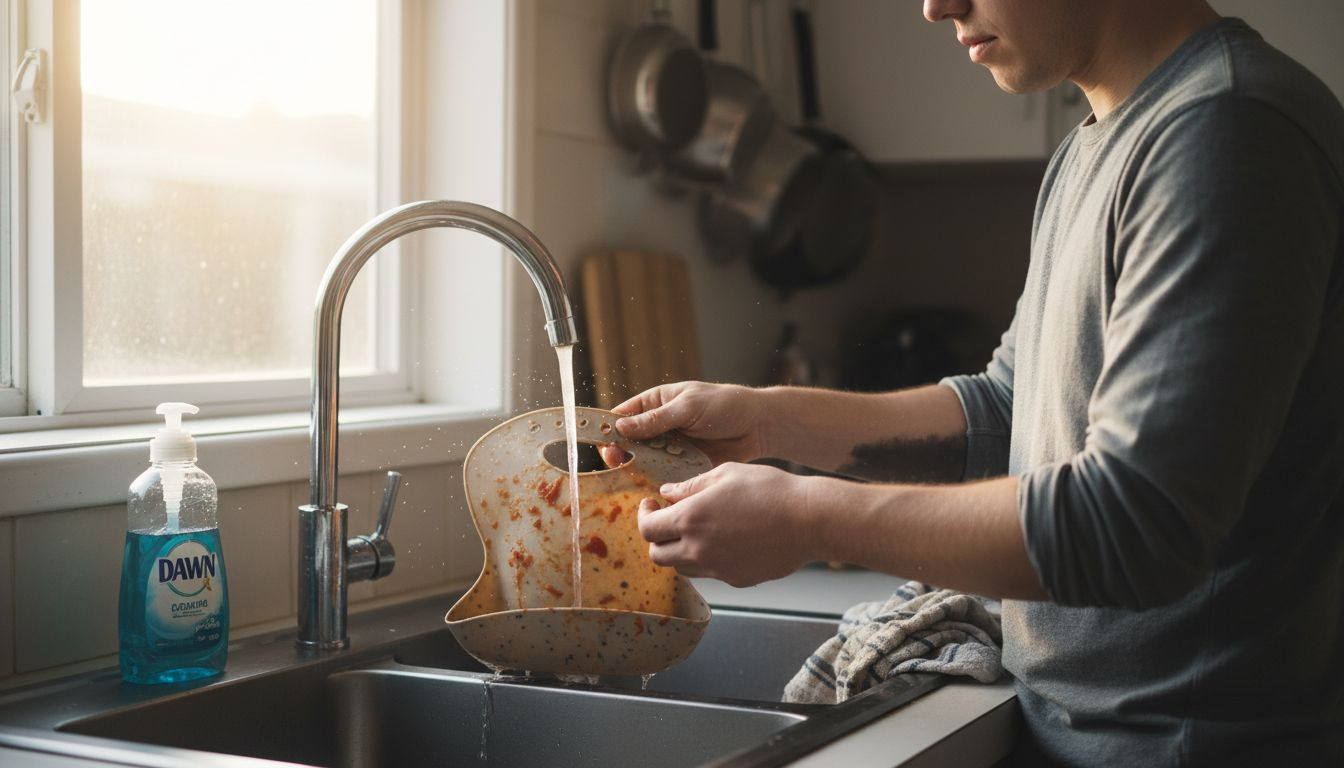
For quick cleanups between dishwasher cycles, wiping with a damp cloth removes fresh spills in seconds. The non-porous surface prevents food from embedding in fibers, so even sticky substances like peanut butter or yogurt wipe away cleanly. This instant cleanup option proves invaluable during busy mornings or when traveling without dishwasher access.
| Feature | Cloth Bibs | Silicone Bibs |
|---|---|---|
| Cleaning method | Machine wash, stain treatment, air dry | Wipe clean or dishwasher, air dry in minutes |
| Stain resistance | Absorbs stains, requires pre-treatment | Non-porous surface resists staining |
| Odor retention | Absorbs food odors over time | Resists odor absorption |
| Average lifespan | 6-12 months before wear shows | 2-3 years with proper care |
| Replacement frequency | Multiple bibs needed as sizes change | One bib adjusts through growth stages |
Durability extends product value significantly. Silicone bibs resist stains, odors, and deformation through extended use, maintaining appearance and function far longer than fabric options. Quality silicone withstands repeated exposure to hot dishwasher cycles without warping or losing flexibility. The material doesn’t crack, fade, or develop weak spots that lead to tears.
This longevity translates to fewer replacements and lower long-term costs. While a silicone bib may cost three times more than a cloth bib initially, it typically outlasts five or more cloth versions. Parents avoid the cycle of constantly purchasing new bibs as old ones wear out or children outgrow fixed sizes.
Hygiene benefits complement cleaning ease. Silicone’s smooth surface harbors fewer bacteria compared to fabric’s woven fibers. Food particles can’t hide in texture variations, making thorough cleaning more achievable. This reduces the risk of bacterial growth between uses, particularly important for young toddlers still developing immune systems.
Pro Tip: After dishwasher cleaning, inspect pocket creases and neck closure areas where food particles sometimes lodge, wiping these spots with a small brush to prevent buildup.
Maintaining proper feeding set hygiene guide safe mealtimes practices ensures bibs remain sanitary and functional throughout their extended lifespan.
Comfort and adaptability for growing toddlers
Adjustable design features make silicone bibs economical investments. Multiple neck size options accommodate growth, allowing one bib to serve from early self-feeding stages around 6 months through toddlerhood and beyond. Snap or button closures typically offer 3-5 size positions spanning 2-3 inches of adjustment range. This eliminates the need to purchase different sized bibs as your child grows.
Material flexibility enhances wearing comfort significantly. Soft, malleable silicone conforms to neck contours without the rigid feel of hard plastic alternatives. The material gently drapes against skin rather than creating pressure points or gaps where food can slip through. This comfortable fit encourages toddlers to tolerate bib wearing throughout entire meals rather than pulling them off mid-feeding.
Lightweight construction promotes compliance, as toddlers barely notice they’re wearing protection. Standard silicone bibs weigh just 2-3 ounces, compared to 4-6 ounces for thick cloth versions when wet. This minimal weight prevents the heavy, restrictive feeling that causes some children to resist bibs. When feeding accessories don’t interfere with movement or comfort, toddlers focus on eating rather than fighting gear.
Neck closure design impacts both safety and comfort. Look for closures that:
- Fasten securely without pinching skin
- Release easily for quick removal if needed
- Feature rounded edges that won’t scratch
- Adjust in small increments for precise fitting
- Remain fastened during active eating and playing
Ergonomic shaping accommodates natural toddler posture and movement. Bibs with gentle curves rather than stiff rectangular shapes move with children as they twist, reach, and lean during meals. This flexibility prevents the bib from pulling uncomfortably or creating gaps that defeat spill protection. The material’s memory allows it to return to its original shape after stretching or folding.
Temperature neutrality adds to comfort. Silicone doesn’t retain heat or cold like some materials, so it feels comfortable against skin regardless of room temperature or food temperature. This consistent feel prevents the startling sensation of cold fabric that makes some toddlers reject bibs.
Understanding adjustable straps and child comfort features helps you select products that children actually want to wear. For additional guidance on toddler nutrition and feeding development, consult feeding nutrition advice for toddlers from pediatric experts.
Comparing silicone bib styles: finding the best fit for your family
Silicone bib designs vary in features that affect daily usability. Different design variations impact cleaning and functionality, making it worthwhile to understand options before purchasing. This comparison helps match bib styles to your specific needs and feeding situations.
| Bib Style | Neck Adjustment | Pocket Design | Cleaning Ease | Typical Price Range |
|---|---|---|---|---|
| Basic scoop bib | 2-3 snap positions | Standard 3-inch pocket | Dishwasher safe, simple shape | $8-$12 |
| Extended coverage | 4-5 snap positions | Extra-wide 4-inch pocket | Dishwasher safe, more surface area | $12-$18 |
| Roll-up travel | Adjustable snap closure | Collapsible pocket | Dishwasher safe, compact storage | $10-$15 |
| Sleeve bib | Elastic or snap sleeves | Full-front coverage pocket | Hand wash recommended, more crevices | $15-$22 |
Basic scoop bibs suit everyday feeding with standard mess levels. These straightforward designs offer:
- Quick on-and-off for busy meal times
- Minimal crevices that trap food particles
- Easy storage due to simple shape
- Budget-friendly entry point for trying silicone
Extended coverage bibs excel for heavy spillers and self-feeding practice. Benefits include:
- Lower torso protection for messy foods
- Larger pockets catching more dropped items
- Better coverage during utensil learning
- Worth the premium for very messy eaters
Roll-up travel bibs prioritize portability for families on the go. Features include:
- Compact folding for diaper bags
- Snap or button closure securing rolled shape
- Adequate protection in restaurant settings
- Slightly smaller pockets trade capacity for convenience
Sleeve bibs provide maximum protection but require more maintenance. Consider these when:
- Toddlers frequently get food on arms
- Practicing painting or craft activities at mealtime
- Extra coverage justifies additional cleaning effort
- Willing to hand wash for thorough cleaning
Pocket depth and angle affect catching efficiency. Deeper pockets hold more food but may feel bulkier. Pockets angled slightly outward catch food better than those lying flat against the body. Test pocket positioning by checking whether it stays open when the bib is worn, not collapsed flat.
Closure type influences daily usability. Snap closures adjust quickly but may be harder for toddlers to unfasten independently. Button closures offer more size positions but take longer to adjust. Velcro provides infinite adjustment but may weaken with repeated washing. Choose based on whether you prioritize adjustment precision, speed, or toddler independence.
Explore detailed silicone bib styles comparison to see how different designs perform across various feeding scenarios and family lifestyles.
Explore silicone baby feeding essentials at Skin Styles
Transitioning from research to purchase becomes simple with curated feeding collections designed for modern parents. Skin Styles offers thoughtfully selected silicone feeding products that combine safety, functionality, and ease of use. Each item meets rigorous BPA-free standards, giving you confidence in materials touching your toddler’s food and skin.

The 8-piece silicone baby feeding set provides a complete mealtime solution with coordinated bibs, plates, and utensils. This comprehensive approach ensures all feeding accessories share the same easy-clean benefits and safety features. Suction bases keep dishes in place during enthusiastic self-feeding attempts, while matching bibs catch inevitable spills.
Beyond feeding essentials, Skin Styles serves families’ broader care needs. Browse the Cosrx collection for gentle skincare solutions, or explore facial cleansers collection for parent self-care products. This integrated approach supports whole-family wellness from mealtime through daily routines.
FAQ
Are silicone bibs safe for babies?
Yes, food-grade silicone bibs are free from harmful chemicals including PVC, lead, phthalates, and BPA. This material meets strict safety standards for food contact, making it appropriate for babies and toddlers. Always verify that products explicitly state “100% food-grade silicone” and display relevant safety certifications. Quality manufacturers test their silicone for chemical leaching to ensure it remains inert even when exposed to hot foods or dishwasher temperatures.
How do I clean and maintain silicone bibs?
Wipe bibs immediately after use to remove fresh food, then run them through the dishwasher for thorough sanitization. Place bibs on the top rack to avoid direct heating element exposure. For hand washing, use warm soapy water and a soft brush to clean pocket creases where food particles lodge. Inspect neck closures and pocket seams regularly, as these areas can trap debris. Air dry completely before storing to prevent any moisture-related issues. Following proper feeding set hygiene guide safe mealtimes practices extends bib lifespan while maintaining sanitation.
Can silicone bibs replace cloth bibs entirely?
Silicone bibs excel for meal protection and easy cleanup, but many parents use both types depending on situations. Cloth bibs absorb drool better throughout the day, making them preferable during teething or between meals. Silicone bibs provide superior protection during actual eating when spills and dropped food create the most mess. Consider maintaining a few cloth bibs for drool management and multiple silicone bibs for dedicated mealtime use. This combination approach leverages each material’s strengths.
At what age should I start using silicone bibs?
Most babies can start wearing silicone bibs around 4-6 months when beginning solid foods. Ensure the smallest neck adjustment fits comfortably without gaps that allow food to slip through. Very young babies may find silicone slightly heavier than soft cloth initially, so introduce it gradually during meal times. The adjustable sizing means the same bib continues working through toddlerhood and preschool years, typically until age 3-4. This extended usability makes silicone bibs particularly economical for families planning multiple children who can reuse the same bibs.