

Every parent faces that moment when their baby wants to grab the spoon and feed themselves, yet the wrong tools can make self-feeding messy and frustrating. Choosing safe, ergonomically designed baby utensils is a top concern for American families and caregivers worldwide, as over 60 percent of infant feeding issues are linked to utensil design or hygiene problems. Understanding how to match your child’s readiness with the proper utensils ensures a smooth, safe start for self-feeding while maintaining hygiene and usability.
Table of Contents
- Step 1: Assess Feeding Readiness And Utensil Needs
- Step 2: Research Materials And Safety Certifications
- Step 3: Compare Ergonomic Designs For Tiny Hands
- Step 4: Verify Hygiene And Cleaning Requirements
- Step 5: Test Product Usability Before Purchase
Quick Summary
| Key Point | Explanation |
|---|---|
| 1. Assess Feeding Readiness | Observe milestones like sitting upright and interest in food between 6 to 12 months for self-feeding. |
| 2. Prioritize Safe Materials | Choose utensils made from food-grade silicone, stainless steel, and BPA-free plastics with safety certifications. |
| 3. Focus on Ergonomic Designs | Select utensils with comfortable handles and balanced weight to support your baby’s grip and control. |
| 4. Maintain Hygiene Practices | Implement a thorough cleaning routine to sanitize utensils, ensuring safety against harmful bacteria. |
| 5. Test Usability Before Buying | Assess how utensils perform in real-world scenarios to find the best fit for your baby’s self-feeding skills. |
Step 1: Assess feeding readiness and utensil needs
Understanding when your baby is ready to start self-feeding is crucial for introducing utensils safely. Early feeding skills development involves observing specific developmental milestones that indicate your child is prepared to explore feeding independently.
Typically, babies demonstrate readiness for self-feeding between 6 and 12 months. Key indicators include the ability to sit upright without support, showing interest in food, and developing hand eye coordination. According to child development guidelines, infants usually start using their fingers around 6 months and progress to using basic utensils like spoons between 10 and 12 months. Look for signs such as reaching for food, attempting to grab utensils, and having sufficient neck and trunk stability.
When assessing utensil needs, consider your baby’s current motor skills and developmental stage. Start with soft tipped spoons and lightweight utensils designed specifically for small hands. Avoid utensils with sharp edges or complex designs that might frustrate your baby during early learning stages.
Pro tip: Keep a close eye on your baby’s grip strength and coordination while practicing with new utensils and always supervise feeding sessions to ensure safety.
Step 2: Research materials and safety certifications
Selecting safe baby utensils requires careful research into materials and safety standards that protect your infant during mealtime. Infant feeding safety frameworks emphasize the critical importance of choosing utensils constructed from non toxic materials that meet rigorous health guidelines.
When researching utensil materials, prioritize food grade silicone, stainless steel, and BPA free plastics. Look for clear indicators of safety such as third party safety certifications that validate manufacturing standards. These certifications ensure the utensils have been independently tested for harmful chemicals, durability, and overall product safety. Pay special attention to labels indicating compliance with international safety regulations and specific infant product standards.
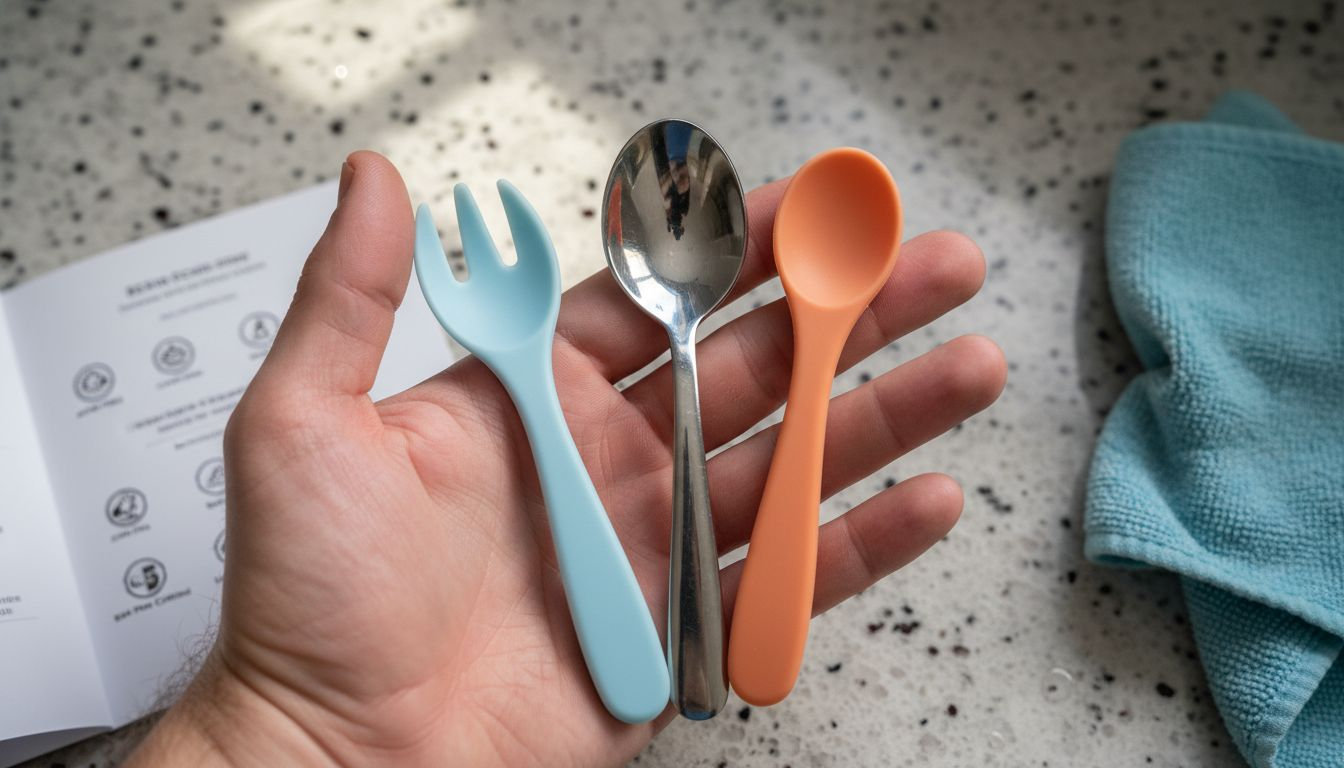
Key safety markers to investigate include FDA approval, NSF certification, ASTM international standards, and explicit statements about being free from harmful substances like lead, phthalates, and BPA. Compare different brands and their safety documentation carefully before making a final selection.
Here’s a side-by-side overview of common baby utensil materials and their key attributes:
| Material | Safety Features | Cleaning Ease | Durability |
|---|---|---|---|
| Food-grade silicone | Non-toxic, flexible | Dishwasher-safe, air dries easily | Long-lasting, resists cracking |
| Stainless steel | Lead- and BPA-free | Resists stains, easy to sanitize | Very sturdy, won’t warp |
| BPA-free plastic | Free of hazardous chemicals | Handwash recommended | Moderately durable |
Pro tip: Create a checklist of safety certifications and material requirements before shopping to streamline your research and ensure you select the most appropriate baby utensils.
Step 3: Compare ergonomic designs for tiny hands
Selecting the right utensils requires understanding how ergonomic design principles specifically support infant motor skill development. The goal is finding utensils that match your baby’s physical capabilities and encourage independent feeding.
When comparing utensil designs, focus on three critical ergonomic elements. First, evaluate handle thickness and grip comfort carefully. Lightweight utensils with slightly textured grips help babies maintain control without excessive strain. Look for handles between 1 to 1.5 inches wide that allow small fingers to wrap around comfortably. Practical ergonomic guidelines suggest selecting utensils with non slip surfaces and balanced weight distribution to support emerging motor skills.
Pay attention to material flexibility, handle angle, and overall weight. Soft tipped silicone utensils with slightly curved handles can help guide your baby’s learning process. Avoid rigid designs that might frustrate your child or make self feeding more challenging. Choose utensils with smooth edges and minimal complexity to support your baby’s developing coordination.
Pro tip: Test potential utensils by mimicking your baby’s hand size and grip strength before purchasing to ensure the best ergonomic match.
Compare key ergonomic features for baby utensils to aid selection:
| Feature | Benefits for Babies | What to Look For |
|---|---|---|
| Handle thickness | Easy gripping, boosts control | 1-1.5 inches wide |
| Grip texture | Prevents slipping, improves hold | Soft, slightly textured surface |
| Weight distribution | Reduces hand fatigue, steadier feeding | Lightweight, balanced design |
Step 4: Verify hygiene and cleaning requirements
Maintaining impeccable cleanliness for baby utensils is crucial to preventing potential health risks. Infant feeding hygiene practices require systematic and thorough cleaning methods that eliminate harmful bacteria and ensure your baby’s safety during mealtime.
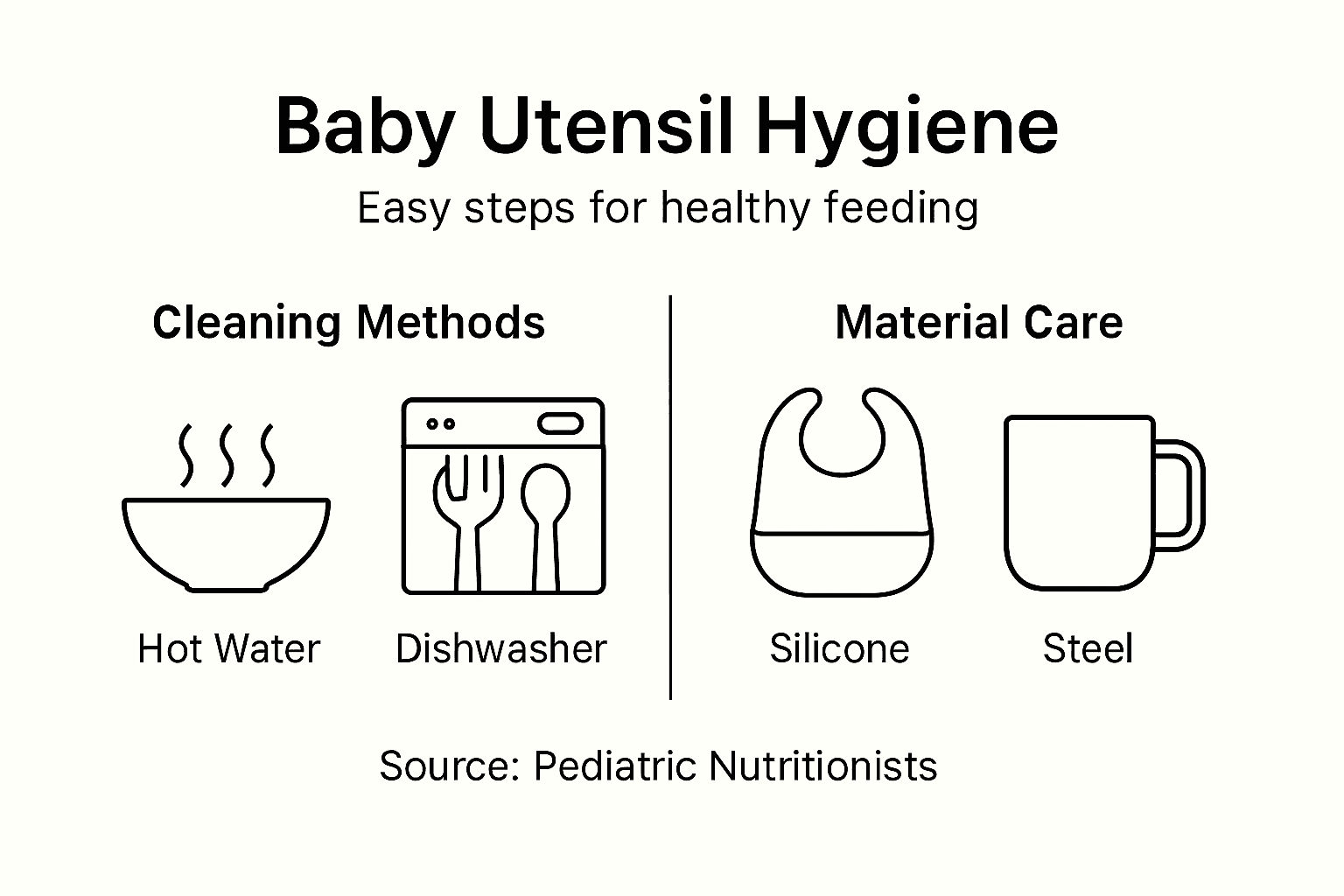
Establish a comprehensive cleaning routine that involves immediate post use washing. Rinse utensils thoroughly with hot water and mild soap, ensuring all food residue is completely removed. Use a dedicated soft brush for hard to reach areas and clean surfaces. CDC cleaning guidelines recommend sanitizing utensils either through high temperature dishwasher cycles or by using specialized infant safe sanitizing solutions. Always air dry utensils on a clean rack rather than using potentially contaminated towels to prevent bacterial transfer.
Pay special attention to materials that require specific cleaning approaches. Silicone and stainless steel utensils often have different care instructions compared to plastic versions. Check manufacturer recommendations for temperature tolerances and specific sanitization protocols. Consider investing in a dedicated sanitizing system for baby feeding items to streamline your cleaning process and maintain optimal hygiene standards.
Pro tip: Create a designated drying area for baby utensils with good air circulation to ensure complete moisture evaporation and prevent bacterial growth.
Step 5: Test product usability before purchase
Effectively evaluating baby utensils requires understanding how testing methods reveal product performance for infant feeding needs. Your goal is selecting utensils that genuinely support your baby’s emerging self feeding skills.
During usability testing, simulate real world scenarios by observing how utensils perform across different conditions. Try holding the utensils from your baby’s perspective checking factors like handle comfort, weight distribution, and grip ease. Usability testing techniques recommend practical interaction assessments that mimic actual infant feeding experiences. Pay attention to details such as how easily food might stick to the utensil surface, whether the handle provides secure gripping, and if the design allows natural wrist movement for young children.
Consider bringing sample utensils home for extended trials if possible. Some specialty baby stores offer temporary purchase options or extended return policies that allow you to test utensils in your actual home environment. Watch how your baby interacts with different designs noting their comfort level, frustration points, and ability to manipulate the utensil independently. Compare multiple options side by side to identify the most intuitive and supportive design for your child’s developmental stage.
Pro tip: Videotape your baby’s initial interactions with potential utensils to objectively analyze their usability and comfort.
Simplify Your Baby’s First Feeding Journey with Safe Utensils
Introducing self-feeding to your baby means carefully choosing utensils that match their developmental needs and ensure safety at every bite. This article highlights the challenges parents face when evaluating utensil materials, ergonomic design, and hygiene to support emerging motor skills. Navigating through options for soft tipped spoons and lightweight handles that fit tiny hands can feel overwhelming.
Experience peace of mind by exploring the variety of baby-friendly feeding solutions at Other Products – Skin Styles.

Take control of your baby’s safe self-feeding today by selecting utensils designed with proven safety certifications and comfortable ergonomics. Visit Skin-Styles.com now to find trusted items tailored to support your child’s growth and your family’s well-being. Empower your baby’s feeding milestones with confidence and ease.
Frequently Asked Questions
What signs indicate my baby is ready for self-feeding?
To know if your baby is ready for self-feeding, look for milestones such as sitting upright without support, showing interest in food, and developing hand-eye coordination. Observe these signs between 6 and 12 months to ensure a safe introduction to self-feeding.
How can I choose safe materials for baby utensils?
Select utensils made from food-grade silicone, stainless steel, or BPA-free plastics to ensure safety. Research safety certifications, such as FDA approval, to confirm that the materials meet health standards.
What ergonomic features should I look for in baby utensils?
When choosing utensils, focus on handle thickness, grip comfort, and overall weight. Look for handles that are 1 to 1.5 inches wide with a textured surface, as these features will help your baby self-feed more effectively.
How should I clean and sanitize baby utensils?
Establish a cleaning routine that includes washing utensils with hot soapy water immediately after use. For added hygiene, sanitize them using a high-temperature dishwasher cycle or specialized solutions, and always air dry on a clean rack to prevent bacteria growth.
How can I test the usability of baby utensils before purchasing?
To evaluate usability, simulate how your baby would use the utensils by holding them from your child’s perspective. Observe factors like grip comfort and ease of use to assess if they support your baby’s self-feeding skills effectively.