

TL;DR:
- Dewy skin is achieved through intentional hydration and a healthy skin barrier, not oiliness.
- It differs from oily, matte, and glass skin in appearance and underlying cause.
- Consistent skincare focusing on humectants like hyaluronic acid creates a lasting, natural glow.
Most people assume dewy skin is just another word for oily or shiny skin. It is not. Dewy skin is the result of intentional hydration, a healthy skin barrier, and smart product choices that create a luminous, fresh-faced look without any greasiness. Oily skin happens to you. Dewy skin is something you build. In this guide, you will learn exactly what dewy skin is, how it differs from oily, matte, and glass skin, which ingredients actually work, and how to build a routine that delivers a real, lasting glow without the guesswork.
Table of Contents
- What is dewy skin? The essentials explained
- Dewy skin vs. oily, matte, and glass skin: Key differences
- Skin science: How hydration creates the dewy look
- Step-by-step: How to achieve and maintain dewy skin
- Common mistakes and pro-level nuances for a lasting glow
- What most people get wrong about dewy skin
- Discover the products behind your dewy glow
- Frequently asked questions
Key Takeaways
| Point | Details |
|---|---|
| Dewy skin defined | A dewy complexion is hydrated, luminous, and healthy-looking—not oily or shiny. |
| Hydration is crucial | Layered hydration with proven ingredients like hyaluronic acid creates a lasting glow. |
| Routine matters | Gentle cleansing, exfoliation, and proper product layering are essential for maintaining dewy skin. |
| Avoid common pitfalls | Over-stripping, skipping sunscreen, or misapplying products can undermine your glow. |
| Customize for your skin | Adapt products and steps based on your individual skin type and needs. |
What is dewy skin? The essentials explained
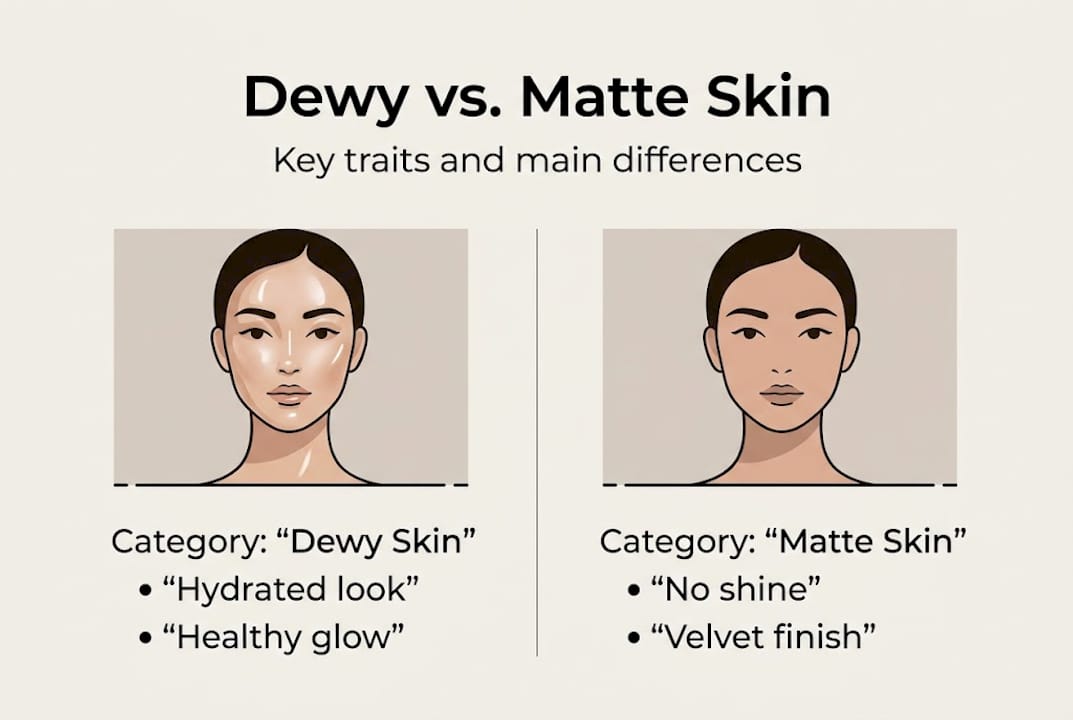
Dewy skin is not a trend. It is a visual signal of a well-hydrated, well-cared-for complexion. According to skincare educators, dewy skin means a fresh, luminous complexion that appears healthy and glowing from within, with a subtle natural sheen on the high points of the face like the cheekbones and nose bridge. That definition matters because it separates dewy skin from every other “glow” category.
The look is characterized by three core qualities:
- Luminosity: A soft, reflective quality that catches light without looking wet or slick
- Even tone: No patchy dry areas or congested zones, just smooth, balanced skin
- Natural highlights: Concentrated glow on the cheekbones, nose bridge, and brow bone, where light naturally falls
What creates this look beneath the surface? A strong skin barrier. When your barrier is intact, it holds moisture inside the skin efficiently. That trapped moisture plumps skin cells slightly, which gives the surface a smooth, light-catching quality. Damage the barrier through over-washing, harsh actives, or skipping moisturizer, and that glow disappears fast.
“Dewy skin is not about adding shine to your face. It is about restoring the moisture your skin naturally wants to hold.”
The good news is that dewy skin is achievable for every skin type, not just dry skin. Tatcha’s dewy skin guide confirms that the foundation is always skincare first, makeup second. You can follow skincare steps for radiant skin to build that base before you even think about a highlighter or skin tint.
Think of it this way: a grape is dewy. A raisin is not. Both are the same fruit, but one is full of water and one has lost it. Your skin works the same way.
Dewy skin vs. oily, matte, and glass skin: Key differences
Once you understand what dewy skin is, the next step is learning what it is not. These four skin finish categories get mixed up constantly, and the confusion leads to wrong product choices.
| Skin finish | Cause | Appearance | Control |
|---|---|---|---|
| Dewy | Intentional hydration | Soft luminous sheen | Deliberate |
| Oily | Excess sebum production | Greasy, heavy shine | Unintentional |
| Matte | Oil absorption or low hydration | Velvety, shine-free | Deliberate |
| Glass skin | Extreme smoothness and hydration | Poreless, translucent radiance | Deliberate |
The critical distinction between dewy and oily is intent and source. Dewy skin features controlled hydration versus an unintentional greasy shine, while matte skin is radiant-free and velvety, and glass skin sits above dewy with a poreless, lit-from-within translucency. Oily skin produces excess sebum, which sits on top of the skin and creates a heavy, reflective layer that can clog pores and cause breakouts. Dewy skin produces no extra oil. Its glow comes from water content, not lipid overload.

Matte skin sits on the opposite end. It absorbs shine and creates a flat, velvety finish that many people with oily skin prefer. The downside is that matte formulas can look dry or dull on skin that is already dehydrated.
Glass skin, popularized by Korean beauty culture, takes the dewy concept further. It requires an ultra-smooth, almost poreless surface with a deep, translucent glow. Think of it as dewy skin’s more intense cousin. You can explore glass skin vs. dewy to understand where the two approaches diverge.
Here is a quick reference for choosing your finish:
- Dry or dehydrated skin: Dewy or glass skin finishes work best
- Oily or combination skin: Dewy with oil-control products, avoid heavy oils
- Mature skin: Dewy finish adds dimension and avoids the flatness of matte
- Acne-prone skin: Lightweight dewy products with ingredients for hydrated skin that do not clog pores
Skin science: How hydration creates the dewy look
The science behind dewy skin is straightforward once you understand the skin barrier. The outermost layer of your skin, called the stratum corneum, is made of skin cells held together by lipids. When this layer is healthy, it keeps moisture in and irritants out. When it is compromised, moisture escapes and the skin looks dull, tight, or flaky.
Hydration is the direct driver of the dewy look. The right ingredients pull water into the skin and keep it there.
| Ingredient | Function | Best for |
|---|---|---|
| Hyaluronic acid | Draws water into skin cells | All skin types |
| Glycerin | Humectant, retains moisture | All skin types |
| Squalane | Lightweight emollient, seals hydration | Dry, sensitive, oily |
| Ceramides | Repairs skin barrier | Dry, sensitive, mature |
Hyaluronic acid (HA) is the star ingredient for dewy skin. HA holds up to 1000x its weight in water, and clinical studies confirm improved hydration, radiance, and elasticity with consistent use. That is not marketing language. That is measurable skin science.
Glycerin works alongside HA as a humectant, meaning it attracts water from the environment and deeper skin layers to the surface. Squalane acts as an emollient that locks everything in without feeling heavy or greasy, which makes it ideal even for oily skin types.
“The best dewy skin routine is not about adding more products. It is about choosing ingredients that work with your skin’s biology.”
Pro Tip: Apply your hyaluronic acid serum to slightly damp skin, right after cleansing. HA needs water to work. On dry skin, it can actually pull moisture out of deeper layers, which is the opposite of what you want.
For MD-backed advice on achieving a dewy glow, dermatologists consistently emphasize barrier repair before layering actives. You can also browse hydration-boosting ingredients to find formulas that match your skin type.
Step-by-step: How to achieve and maintain dewy skin
Building a dewy skin routine is less about buying every product on the shelf and more about layering the right ones in the right order. Here is a practical sequence that works for most skin types.
- Cleanse gently: Use a low-pH, non-stripping cleanser morning and night. Harsh cleansers destroy your barrier before you even start.
- Exfoliate 1 to 2 times per week: Use a mild chemical exfoliant like lactic acid or polyhydroxy acids (PHAs) to remove dead cells that dull the surface.
- Apply essence: Pat a hydrating essence onto damp skin to prep the surface for absorption.
- Layer your serum: Use a hyaluronic acid or glycerin-based serum while skin is still slightly damp.
- Moisturize: Seal everything in with a moisturizer suited to your skin type. Gel-cream for oily, rich cream for dry or mature.
- Apply SPF: A luminous or dewy-finish sunscreen doubles as sun protection and a glow booster. Never skip this step.
- Optional facial oil: One to two drops of squalane or rosehip oil pressed over moisturizer adds an extra layer of glow for dry skin.
- Dewy makeup: Tatcha recommends skin tints, cream blush, cream highlighter, and a hydrating setting spray to lock in the look.
For oily skin, skip the facial oil and choose water-based formulas throughout. For dry skin, layer more generously and add the oil step. Mature skin benefits from creamy textures and a focus on barrier repair. Balancing hydration for oily types is about using lightweight humectants, not avoiding moisture entirely.
Pro Tip: Sleep, water intake, and leafy greens all contribute to dewy skin from the inside. No serum can fully compensate for chronic dehydration or poor sleep.
For guidance on product order, layering skincare products correctly makes a measurable difference in how well each step absorbs and performs. You can also revisit daily skincare routines for a broader framework.
Common mistakes and pro-level nuances for a lasting glow
Even with the right products, a few common habits quietly sabotage the dewy look. Knowing what to avoid is just as important as knowing what to do.
- Over-exfoliating: Exfoliating more than twice a week strips the barrier and triggers redness, sensitivity, and dullness. Less is more.
- Skipping SPF: UV damage breaks down collagen and dehydrates skin over time. No glow routine survives without daily sun protection.
- Using heavy oils on oily skin: Coconut oil and other comedogenic oils block pores. Stick to squalane or jojoba for oily and acne-prone types.
- Incorrect layering: Applying thick creams before thin serums blocks absorption. Always go thinnest to thickest.
- Chasing a filtered look: Real skin has texture and pores. Dewy skin looks healthy and luminous, not plastic.
Over-stripping oil leads to rebound production, which means oily skin that skips moisturizer actually gets oilier over time. Hydration prevents this cycle even for people who think their skin does not need moisture.
Pro Tip: If your skin looks shiny by midday, the fix is usually not a mattifying powder. Try a lighter moisturizer or switch to a gel-based formula and see if the midday shine reduces within a week.
Seasonal adjustments matter too. Your skin needs richer hydration in winter and lighter formulas in summer. Why layering matters year-round is about adapting textures, not abandoning your routine. For extra guidance on applying HA correctly, hyaluronic acid pro tips from dermatologists are worth bookmarking.
What most people get wrong about dewy skin
Here is the honest truth: most people chasing dewy skin are actually chasing a photograph. Magazine covers and social media filters show a level of glow that no skincare product can fully replicate in real life. Pursuing that standard leads to over-layering, over-spending, and frustrated skin.
Real dewy skin is subtle. It is the difference between skin that looks tired and skin that looks rested. It does not require ten steps or a $200 serum. It requires consistency, the right ingredients, and a willingness to listen to your own skin instead of following every new trend.
The brands and influencers selling the most expensive routines rarely mention that sleep, hydration, and a balanced diet do more for your glow than any product stack. Building an internal foundation is not glamorous advice, but it is the most effective one.
Adapt your routine as your skin changes with age and seasons. What worked at 25 may not work at 40. Practical tips for real skin are always more useful than chasing a perfected, filtered version of what dewy skin is supposed to look like.
Discover the products behind your dewy glow
Now that you know exactly what dewy skin needs, the next step is finding the right products to make it happen. Whether your skin leans dry, oily, or somewhere in between, the right formula changes everything.

At Skin-Styles.com, you will find a curated selection of hydrating facial creams and gels designed for every skin type, from lightweight gel-creams for oily skin to rich, barrier-repairing creams for dry or mature skin. If you are looking for targeted solutions with proven actives, the Cosrx skin solutions range includes some of the most trusted hydrating formulas available. Browse by skin goal, texture preference, or ingredient, and match your routine to what your skin actually needs.
Frequently asked questions
Is dewy skin suitable for oily or acne-prone skin?
Yes, oily or acne-prone skin can achieve a controlled dewy glow by using lightweight water-based hydrators like hyaluronic acid and niacinamide, along with oil-control cleansers, while avoiding heavy or comedogenic oils.
How do I prep my skin for a dewy finish with makeup?
Layer hydrating skincare in essence, serum, and moisturizer order, apply sunscreen, then use skin tints and cream highlighters finished with a hydrating setting spray for a natural dewy makeup look.
What is the best ingredient for dewy skin?
Hyaluronic acid is the top choice because it holds up to 1000x its weight in water, with clinical evidence showing improved hydration, radiance, and elasticity with regular use.
Can mature or dry skin achieve a dewy glow without looking greasy?
Yes, mature and dry skin should focus on creamy, nourishing hydrators that boost glow, and avoid heavy dew formulas that can settle into fine lines or leave an overly slick finish.