

Finding the right routine is challenging when faced with hundreds of product options from American and international brands. Skin’s natural barrier can be affected by both age and environmental changes, making thoughtful layering more important than ever. With over 60 percent of adults reporting confusion about product order, this guide will help you confidently assess your needs, pick the best cleansers and serums, and achieve the results you want, no matter your skin type.
Table of Contents
- Step 1: Assess Your Skin’s Needs
- Step 2: Cleanse And Prepare Your Face
- Step 3: Apply Treatments And Serums
- Step 4: Moisturize And Seal In Benefits
- Step 5: Verify Product Absorption And Adjust
Quick Summary
| Key Point | Explanation |
|---|---|
| 1. Assess your skin’s needs | Understand your unique skin profile to create an effective skincare routine tailored to your age, environment, and characteristics. |
| 2. Cleanse gently | Use a non-abrasive cleanser with lukewarm water and clean hands to maintain your skin’s natural balance while removing impurities. |
| 3. Apply treatments in order | Layer products from thinnest to thickest, beginning with water-based serums, to ensure optimal absorption and effectiveness. |
| 4. Moisturize thoroughly | Choose a moisturizer that suits your skin type to seal in hydration and protect your skin barrier. |
| 5. Verify product absorption | Monitor your skin’s reaction to products, adjusting your routine if you notice irritation or ineffective absorption. |
Step 1: Assess your skin’s needs
Understanding your unique skin profile is the foundational step in creating an effective skincare routine. Skin health requires a personalized approach that considers multiple physiological factors, including age, environment, and individual characteristics. Intrinsic and extrinsic factors significantly impact skin’s protective functions, making a comprehensive assessment critical for targeted skincare.
To effectively assess your skin, start by conducting a thorough visual and tactile examination. Observe your skin’s texture, hydration levels, potential sensitivity, and any recurring concerns like uneven tone, breakouts, or fine lines. Pay attention to how your skin responds to different environmental conditions such as humidity, temperature changes, and sun exposure. Consider keeping a skincare journal to track changes and document your skin’s reactions to various products and lifestyle factors.
Your assessment should also include understanding your skin type categorization including oily, dry, combination, or sensitive skin. This classification helps determine which product layers and ingredients will work most effectively for your specific needs. Consulting with a professional dermatologist can provide deeper insights into your skin’s unique characteristics and potential underlying conditions that might influence your skincare approach.
The following table summarizes how environmental factors can affect your skin and suggest possible adjustments:
| Environmental Factor | Skin Effect | Routine Adjustment |
|---|---|---|
| High Humidity | Increased oil, clogged pores | Use lightweight moisturizer |
| Cold Weather | Dryness, flaking | Apply richer creams |
| Air Pollution | Dullness, irritation | Use antioxidant serums |
| Sun Exposure | Dark spots, aging | Daily broad-spectrum SPF |
Here is a quick guide to identifying common skin types and recommended care focus:
| Skin Type | Key Characteristics | Best Care Focus |
|---|---|---|
| Oily | Shiny, enlarged pores | Gentle cleansing, oil control |
| Dry | Flaky, tight, dull appearance | Rich moisturization, hydration |
| Combination | Oily T-zone, dry cheeks | Balanced products, spot treatment |
| Sensitive | Redness, irritation, easily reacts | Minimalist routine, anti-inflammatory care |
Pro tip: Perform your skin assessment in natural daylight using a clean, makeup-free face to get the most accurate understanding of your skin’s true condition.
Step 2: Cleanse and prepare your face
Cleansing is the critical first active step in preparing your skin for an effective skincare routine. According to dermatology experts, using a gentle nonabrasive cleanser helps maintain your skin’s natural protective barrier while removing accumulated dirt, oil, and environmental impurities.
Start by selecting a cleanser appropriate for your specific skin type. Use lukewarm water that is neither too hot nor too cold, as extreme temperatures can disrupt your skin’s natural balance. Gently massage the cleanser into your face using your fingertips with soft circular motions, focusing on areas prone to oil buildup like the forehead, nose, and chin. Avoid using washcloths or rough materials that can create unnecessary skin irritation. Thoroughly rinse your face, ensuring no cleanser residue remains, and pat your skin dry with a clean soft towel using gentle dabbing motions.

Remember that over-cleansing can strip your skin of essential natural oils, so limit face washing to twice daily maximum. This approach helps maintain your skin’s hydration and prevents potential irritation or excess oil production. The goal is to create a clean canvas that is perfectly prepped for subsequent skincare product application.
Pro tip: Keep your cleansing routine consistent but adjust product selection seasonally to accommodate changes in your skin’s moisture needs.
Step 3: Apply treatments and serums
Applying skincare treatments and serums is a precise art that requires understanding the unique properties and absorption characteristics of each product. The goal is to maximize the effectiveness of active ingredients by applying them in the correct sequence and with the right technique, allowing each product to penetrate and work optimally on your skin.
Begin by selecting serums that target your specific skin concerns such as hydration, brightening, or anti-aging. Water-based serums should always be applied first, immediately after cleansing while your skin is still slightly damp. Use gentle patting motions with your fingertips to help the product absorb, focusing on pressing the serum into your skin rather than rubbing. Ingredients like hyaluronic acid, vitamin C, and retinoids work best when applied directly to clean skin, creating a concentrated treatment layer that can deeply penetrate and nourish.
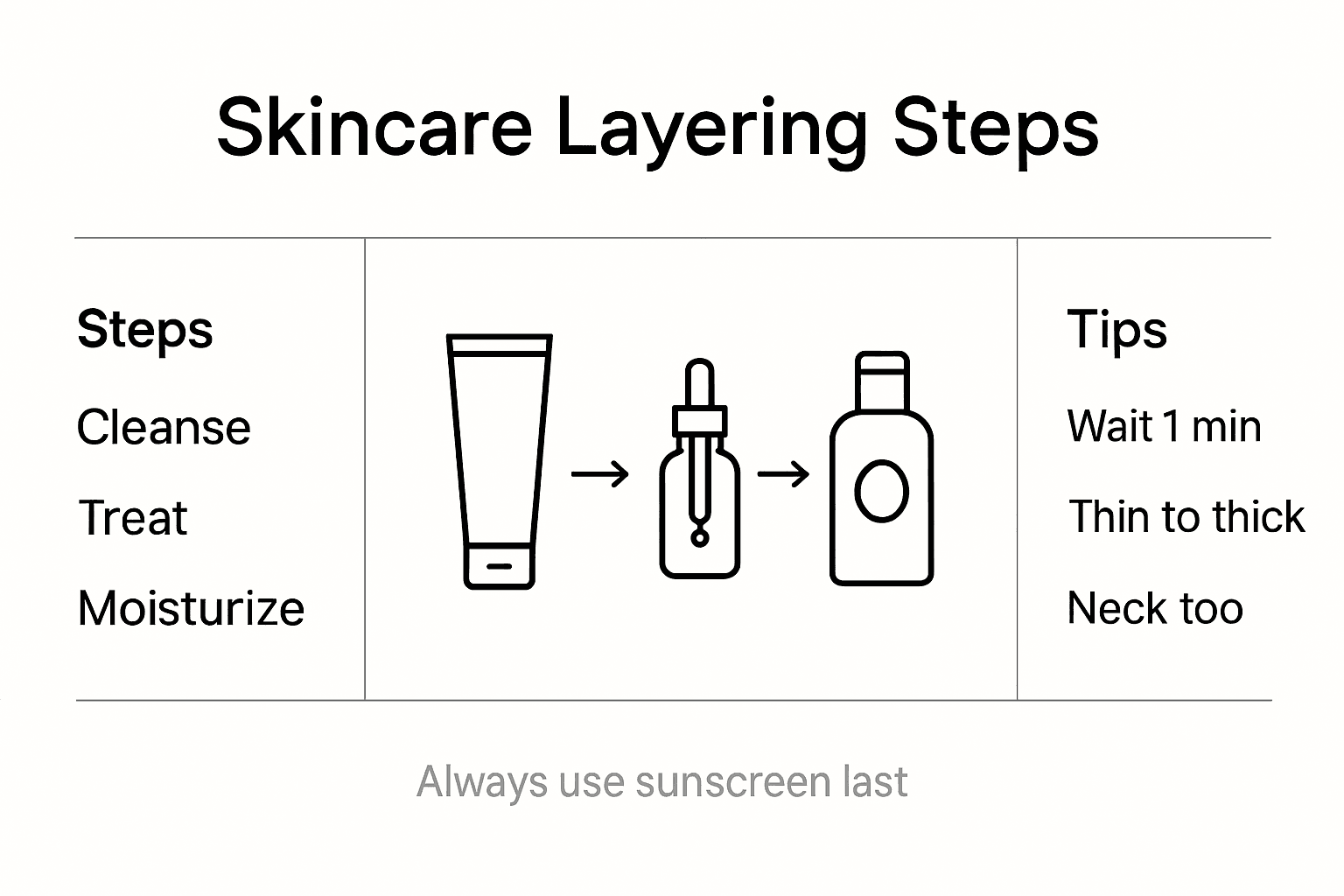
When layering multiple treatments, remember the key rule of skincare: move from thinnest to thickest consistency. This means applying lightweight water-based serums before richer, oil-based treatments. Wait approximately 30 to 60 seconds between each product application to allow proper absorption and prevent potential interaction or dilution of active ingredients. Pay attention to how your skin responds and be prepared to adjust your routine based on its changing needs and tolerances.
Pro tip: Store your water-based serums in a cool, dark place and always check their expiration dates to maintain maximum potency and effectiveness.
Step 4: Moisturize and seal in benefits
Moisturizers play a critical role in protecting the skin barrier and preventing water loss, serving as the final and most important step in your skincare layering routine. By sealing in the previous treatments and providing essential hydration, moisturizers help lock in all the beneficial ingredients you have carefully applied.
Select a moisturizer that matches your specific skin type and addresses your individual skin concerns. For dry skin, choose richer cream based formulations with occlusive ingredients like ceramides or hyaluronic acid. If you have oily or combination skin, opt for lightweight gel or water based moisturizers that provide hydration without feeling heavy. Dermatologists recommend applying moisturizer after treatments to maximize absorption and enhance the skin’s barrier function, using gentle upward circular motions that help stimulate blood circulation and promote better product penetration.
When applying your moisturizer, remember to extend the product beyond your face to your neck and décolletage area. These regions are often overlooked but are equally susceptible to environmental damage and aging. Use a small amount and build up if needed, ensuring even coverage without overwhelming your skin. Pay special attention to areas that tend to be drier or show early signs of aging, and take your time massaging the product into your skin.
Pro tip: Consider keeping your moisturizer in the refrigerator during summer months to provide an extra cooling and refreshing sensation when applied.
Step 5: Verify product absorption and adjust
Understanding skin absorption mechanisms is crucial for optimizing your skincare routine, requiring a careful assessment of how your skin responds to different product layers and formulations. Absorption verification helps you determine whether your carefully curated skincare routine is truly delivering the intended benefits.
To effectively verify product absorption, start by observing your skin’s immediate and subsequent responses. Check for signs of proper absorption such as smooth skin texture, minimal residue, and absence of pilling or product buildup. Pay attention to how quickly products seem to disappear into your skin and whether they leave a greasy or uncomfortable feeling. The FDA recommends systematic evaluation of topical product effectiveness through careful observation of skin responses, which means tracking changes in skin hydration, texture, and overall appearance over several weeks.
If you notice uneven absorption or skin irritation, consider adjusting your routine. This might involve changing the order of product application, reducing the quantity of a specific product, or switching to alternative formulations that better suit your skin’s unique characteristics. Remember that skin absorption can vary based on factors like temperature, humidity, and individual skin biology, so remain flexible and willing to experiment.
Pro tip: Take clear, well-lit photos of your skin at the start of your new routine and every two weeks thereafter to objectively track absorption and effectiveness.
Elevate Your Skincare Routine with Expertly Layered Products
Achieving optimal skin health means mastering how to layer your skincare products effectively. If you struggle with dryness, irritation, or uneven absorption this article addresses, now is the time to refine your routine. By understanding your skin type and the proper sequence of cleansing, applying serums, and moisturizing you can unlock true radiance and resilience.
Discover targeted solutions tailored to your needs in our Facial Serums – Skin Styles collection that help you deliver active ingredients deeper into your skin. Follow up with nourishing care from our Facial Creams & Gels – Skin Styles to lock in hydration and protective benefits.

Transform your daily ritual into a powerful self-care experience. Visit Skin-Styles.com today to explore expertly formulated products designed for your unique skin journey. Start layering smartly and see visible improvements now.
Frequently Asked Questions
How do I assess my skin’s needs before layering skincare products?
Understanding your skin’s needs is crucial for effective layering. Begin by examining your skin’s texture, hydration, and any specific concerns like breakouts or fine lines. Keep a skincare journal to track these observations and consider consulting a dermatologist for deeper insights.
What is the proper order for layering skincare products?
The correct order to layer skincare products is to start with the thinnest consistency and work your way to the thickest. Generally, apply your cleanser first, followed by water-based serums, oil-based treatments, and finally, a moisturizer to seal in all the benefits. This method helps each product penetrate and work optimally on your skin.
How long should I wait between applying different skincare layers?
You should wait approximately 30 to 60 seconds between applying different products to allow for proper absorption. This pause helps prevent potential interactions between ingredients and ensures that each layer effectively penetrates your skin.
How can I tell if my skincare products are being absorbed correctly?
To verify correct product absorption, check for a smooth skin texture and minimal residue after application. If you notice any pilling or greasy feelings, consider adjusting the quantity you apply or the order in which you layer your products to improve absorption.
Should I change my skincare routine with the seasons?
Yes, you should adjust your skincare routine with the seasons to accommodate changes in your skin’s moisture needs. For instance, use richer creams during colder months when skin tends to be drier, and consider lighter products during warmer seasons to avoid feeling heavy on your skin.
What ingredients should I prioritize for effective skincare layering?
Focus on active ingredients tailored to your specific skin concerns, such as hyaluronic acid for hydration, vitamin C for brightening, and retinoids for anti-aging. Identify your primary skin concerns and select serums and treatments that target these issues to achieve optimal results.