

TL;DR:
- Derma rolling stimulates collagen production at a cellular level through micro-injuries created by tiny needles. It benefits skin scars, wrinkles, pores, and hair growth when used correctly. Proper technique, hygiene, and appropriate needle length are essential for safe and effective results.
Most people assume any facial roller delivers the same results. That assumption is wrong. Derma rolling is a form of microneedling using tiny needles to create controlled micro-injuries in the skin, triggering a real biological repair response. Unlike jade rollers or gua sha tools, it works at a cellular level. The science is solid, the results are measurable, and the risks are manageable when you know what you’re doing. This guide breaks down exactly what derma rolling is, how it works, who it helps, and how to use it safely for visible, lasting results.
Table of Contents
- What is derma rolling?
- How does derma rolling work? The science behind the results
- Who benefits from derma rolling and what are the real results?
- Safe (and effective) derma rolling: Step-by-step and expert tips
- At-home versus professional derma rolling: What skincare enthusiasts need to know
- What most guides miss: The key to safe, high-impact derma rolling
- Skincare essentials for your derma rolling routine
- Frequently asked questions
Key Takeaways
| Point | Details |
|---|---|
| Collagen boost | Derma rolling can enhance collagen production and skin texture when performed correctly. |
| Safety is essential | Proper hygiene and the right needle length are critical for effective and safe results. |
| At-home vs. professional | Professional treatments are deeper and more effective, but at-home rolling is suitable for mild issues. |
| Pair with gentle skincare | Post-rolling skin absorbs active ingredients better, so use calming serums or creams after treatment. |
What is derma rolling?
Derma rolling is essentially at-home microneedling. You roll a small, handheld device covered in fine needles across your skin, creating hundreds of tiny, controlled punctures. These punctures are shallow enough to be safe but deep enough to signal your body’s repair systems.
A standard derma roller has 192 needles ranging from 0.2 to 2.5mm in length. The needle density and length you choose will determine how intense the treatment is. Most at-home users stick to shorter needles, while longer ones are reserved for clinical settings.
What makes derma rolling different from other exfoliators or facial tools is its mechanism. Rather than buffing away dead skin cells, it stimulates natural repair and collagen production from within. It’s a fundamentally different approach compared to, say, dermaplaning basics, which works purely on the surface.
Key specs to know before you buy:
- Needle count: typically 192 per roller head
- Needle length: 0.2mm (surface) to 2.5mm (clinical)
- Roller width: usually 3-4cm for facial use
- Material: titanium or surgical stainless steel
| Feature | At-home roller | Clinical device |
|---|---|---|
| Needle length | 0.2 to 0.5mm | 1.0 to 2.5mm |
| Anesthesia needed | No | Yes |
| Frequency | Every 1-2 weeks | Every 4-6 weeks |
| Cost per session | Low | High |
Pro Tip: If you’re new to derma rolling, start with a 0.25mm needle. It’s effective for product absorption and mild texture improvement without overwhelming your skin.
How does derma rolling work? The science behind the results
The moment those tiny needles puncture your skin, your body interprets it as minor damage. That’s intentional. The wound healing cascade kicks in immediately, releasing growth factors and sending signals to fibroblasts, the cells responsible for producing collagen and elastin.
Collagen is the protein that keeps skin firm and smooth. Elastin is what gives skin its bounce. Both decline naturally with age. Derma rolling essentially tricks your body into producing more of both.
Here’s the impressive part: micro-injuries can boost collagen production by up to 400% after four sessions. That’s not a modest improvement. That’s a significant structural change in the skin.
“Microneedling creates controlled micro-injuries that stimulate the release of growth factors, triggering new collagen and elastin synthesis in the dermis.”
The process unfolds in three phases:
- Inflammation: Blood flow increases, platelets release growth factors, and repair begins within hours.
- Proliferation: New collagen fibers form over the next few days to weeks.
- Remodeling: Skin texture and firmness improve as collagen matures over months.
There’s another benefit that often gets overlooked. The microchannels created by the needles temporarily increase skin permeability. This means active ingredients in your serums absorb far more effectively immediately after rolling. For collagen induction details and the role of growth factors, the research is clear. Pairing rolling with the right products matters enormously, which is why serum selection post-derma rolling is one of the most important decisions you’ll make in your routine.
| Skincare method | Collagen stimulation | Absorption boost | Surface exfoliation |
|---|---|---|---|
| Derma rolling | High | Yes | Minimal |
| Chemical exfoliant | None | Moderate | Yes |
| Jade roller | None | No | No |
| Retinol cream | Moderate | No | Mild |
Who benefits from derma rolling and what are the real results?
Derma rolling isn’t a one-size-fits-all solution, but its range of applications is genuinely broad. Understanding where it excels and where it falls short helps you set realistic expectations.

Derma rolling is FDA-cleared for acne scars and wrinkles in adults over 22. It also enhances product penetration and shows solid evidence for hair growth when combined with minoxidil. Those are meaningful, verified outcomes.
Best candidates for derma rolling:
- Acne scars (atrophic or rolling scars respond well)
- Fine lines and early wrinkles
- Enlarged pores
- Stretch marks
- Dull, uneven skin texture
- Thinning hair (when paired with topical treatments)
For hair specifically, microneedling for hair regrowth shows promising results, particularly when used alongside minoxidil. One study found a 40% improvement in hair count compared to minoxidil alone. The role of serums and absorption applies here too since derma rolling increases how much of any topical treatment actually reaches the follicle.
Who should avoid derma rolling:
- Active acne breakouts (rolling spreads bacteria)
- Keloid-prone skin (risk of raised scarring)
- Rosacea or eczema flare-ups
- Anyone on blood thinners or isotretinoin
- Open wounds or active skin infections
Statistic: Users combining derma rolling with minoxidil saw up to 40% more hair regrowth than those using minoxidil alone in clinical trials.
The results are real, but they require patience. Most people see meaningful improvement after 3 to 6 sessions, spaced weeks apart.
Safe (and effective) derma rolling: Step-by-step and expert tips
Technique matters as much as the tool itself. Skipping steps or rushing the process is where most people run into trouble. Home derma rolling is safest with needles ≤0.5mm and careful hygiene. Anything longer belongs in a clinical setting.
Your step-by-step routine:
- Wash your hands thoroughly with soap and water.
- Cleanse your face with a gentle, non-stripping cleanser.
- Disinfect your roller by soaking it in 70% isopropyl alcohol for 5 to 10 minutes.
- Roll in sections: Use light pressure, rolling horizontally, vertically, and diagonally across each zone (forehead, cheeks, chin). Lift and reposition the roller rather than dragging it.
- Apply your serum immediately after rolling while channels are open. Stick to hydrating, gentle actives like hyaluronic acid or peptides.
- Moisturize and protect with SPF the next morning. Your skin is more vulnerable to UV damage post-treatment.
Pro Tip: Never roll over active pimples, open cuts, or irritated patches. Treat those areas as off-limits until fully healed.
Risks include infection, irritation, and scarring when hygiene or technique is poor. These aren’t rare edge cases. They happen when people skip disinfection, press too hard, or roll too frequently.
“If you experience prolonged redness beyond 48 hours, swelling, or signs of infection, stop use and consult a dermatologist.”
For a broader picture of safe exfoliation and rolling practices and where derma rolling fits into your full skincare workflow, building a consistent routine around it makes all the difference.
At-home versus professional derma rolling: What skincare enthusiasts need to know
The gap between at-home and clinical derma rolling is wider than most people realize. It’s not just about needle length. It’s about precision, safety protocols, and the depth of results you can realistically achieve.
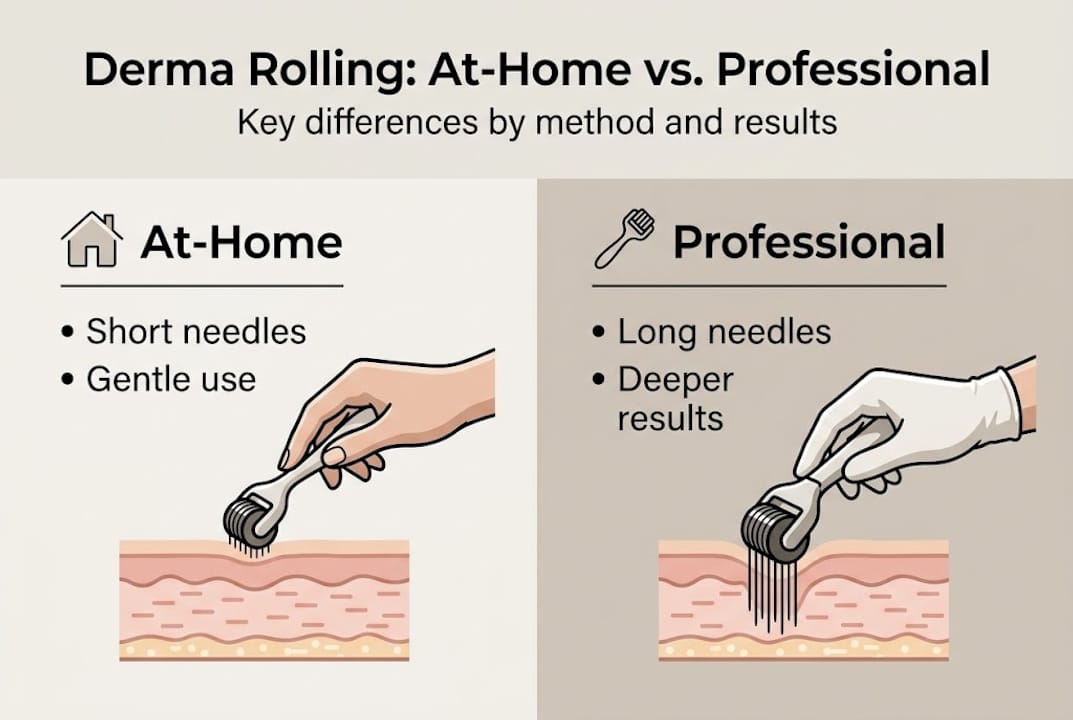
Professional derma rolling uses anesthesia for needles longer than 1mm and allows for deeper, more targeted treatment. A trained professional can address deeper scars and more significant texture issues that at-home devices simply can’t reach safely.
At-home devices are not FDA-cleared for hair growth or deep treatment and carry a slightly higher risk of irritation when combined with other active therapies.
| Factor | At-home | Professional clinic |
|---|---|---|
| Needle depth | Up to 0.5mm | Up to 2.5mm |
| Anesthesia | No | Yes (for deeper needles) |
| Session cost | $20 to $60 (device) | $200 to $700 per session |
| Downtime | Minimal | 1 to 3 days |
| Results | Gradual, maintenance | Faster, more dramatic |
| Scar treatment | Mild improvement | Significant improvement |
Key decision criteria:
- Budget: At-home is far more cost-effective for maintenance.
- Skin concern severity: Deep scars or significant texture issues warrant professional treatment.
- Risk tolerance: Sensitive or reactive skin does better under professional supervision.
- Time: At-home fits easily into a regular routine; clinical sessions need scheduling and recovery time.
For at-home users, pairing your roller with the right products is essential. Knowing how to approach choosing serum for at-home use can significantly amplify your results without adding risk.
What most guides miss: The key to safe, high-impact derma rolling
Here’s something the typical beauty article won’t tell you: going deeper and rolling more often does not mean better skin. It often means damaged skin. The “more is better” mindset is one of the most common and costly mistakes in the derma rolling space.
Overuse and poor hygiene severely increase risk, and proper technique, professional advice, and product synergy matter far more than needle depth. We’ve seen this pattern repeatedly: someone reads that 1mm needles produce more collagen, buys a longer roller, and ends up with prolonged inflammation or broken skin barrier.
Moderation is the actual strategy. Short needles used consistently with proper hygiene outperform aggressive sessions every time. The real edge comes from what you apply afterward. Pairing rolling with the best serums to pair with your skin type turns a good session into a great one.
Before self-experimenting with needle lengths beyond 0.5mm, consult a dermatologist. The investment in one professional consultation can save you months of recovery from a preventable mistake. Skincare should build your confidence, not set it back.
Skincare essentials for your derma rolling routine
With your derma rolling knowledge strengthened, here’s your next step to healthier, glowing skin.
What you apply before and after rolling matters just as much as the technique itself. Your skin is primed for absorption post-session, which means the right products deliver dramatically better results. The wrong ones, like harsh acids or fragranced formulas, can cause real irritation on freshly treated skin.

At Skin Styles, we’ve curated products specifically suited for every stage of your rolling routine. Explore our range of shop hydrating facial creams to lock in moisture and support recovery. If reducing fine lines is your goal, browse our collection to target fine lines with clinically trusted formulas. For gentle, barrier-friendly options, the Cosrx skincare solutions lineup is a favorite among derma rolling enthusiasts for a reason.
Frequently asked questions
Is derma rolling safe to do at home?
Yes, home rolling is safest with needles ≤0.5mm, strict hygiene, and no active skin infections or open wounds present.
How often should I derma roll my face?
Most experts recommend once every 1 to 2 weeks at home with short needles, giving your skin adequate recovery time between sessions. Weekly intervals for ≤0.5mm rolling is the standard guideline.
Can derma rolling help with hair growth?
Studies show derma rolling may promote hair growth, especially when combined with minoxidil. However, FDA clearance is for skin rejuvenation, not hair treatment specifically.
What should I put on my skin after derma rolling?
Use gentle, hydrating serums or creams immediately after rolling. Post-rolling serums should be gentle and designed for absorption. Avoid retinoids, strong acids, or essential oils right after treatment.
Are there any side effects of derma rolling?
Short-term redness and mild swelling are common and expected. Infection risk increases significantly if hygiene is lacking or if the device is shared or not properly disinfected.