

More than 60 percent of american adults now use at least one specialized skincare product, yet few truly understand how serums set themselves apart. In a crowded market, using a serum can literally transform the way your skin looks and feels thanks to their potent concentration of active ingredients. This guide will help you cut through confusion and discover how the right serum can deliver real results for your unique needs.
Table of Contents
- What Are Serums in Skincare?
- Types of Serums and Their Benefits
- Key Ingredients and How Serums Work
- Choosing the Right Serum for Your Skin
- Common Mistakes and How to Avoid Them
Key Takeaways
| Point | Details |
|---|---|
| Serum Functionality | Serums are concentrated skincare products that deliver active ingredients deep into the skin for transformative effects. |
| Types of Serums | Hydrating, brightening, and anti-aging serums target specific skin concerns with unique benefits. |
| Selecting the Right Serum | Choose serums based on your skin type and specific issues for a personalized skincare experience. |
| Avoiding Common Mistakes | Use serums suited for your skin type and apply them in the correct order to maximize effectiveness. |
What Are Serums in Skincare?
Skin serums represent a powerful, highly concentrated skincare product designed to deliver targeted active ingredients deep into the skin. According to research from pharmatutor.org, these formulations contain active substances at concentrations up to ten times higher than traditional moisturizers, enabling rapid and effective skin transformation.
Typically available in lightweight gel or fluid lotion formats, serums are engineered for maximum absorption and penetration. The iosrjournals.org research highlights that these products are meticulously crafted to quickly penetrate skin layers, delivering potent ingredients precisely where they’re most needed.
Key characteristics of serums include:
- Extremely lightweight texture
- High concentration of active ingredients
- Fast absorption rate
- Targeted treatment for specific skin concerns
- Compatible with multiple skin types
While traditional moisturizers create a protective barrier, serums work differently. They are molecular magicians that transport specialized ingredients like hyaluronic acid, vitamin C, or retinol directly into your skin’s deeper layers.
Think of serums as your skin’s precision instrument - small in volume but massive in impact. They’re not about covering up, but transforming from within.
Types of Serums and Their Benefits
Serums are sophisticated skincare products designed to target specific skin concerns with precision and potency. According to realitypathing.com, serums can be categorized into distinct types based on their primary functions, each offering unique benefits for different skin needs.
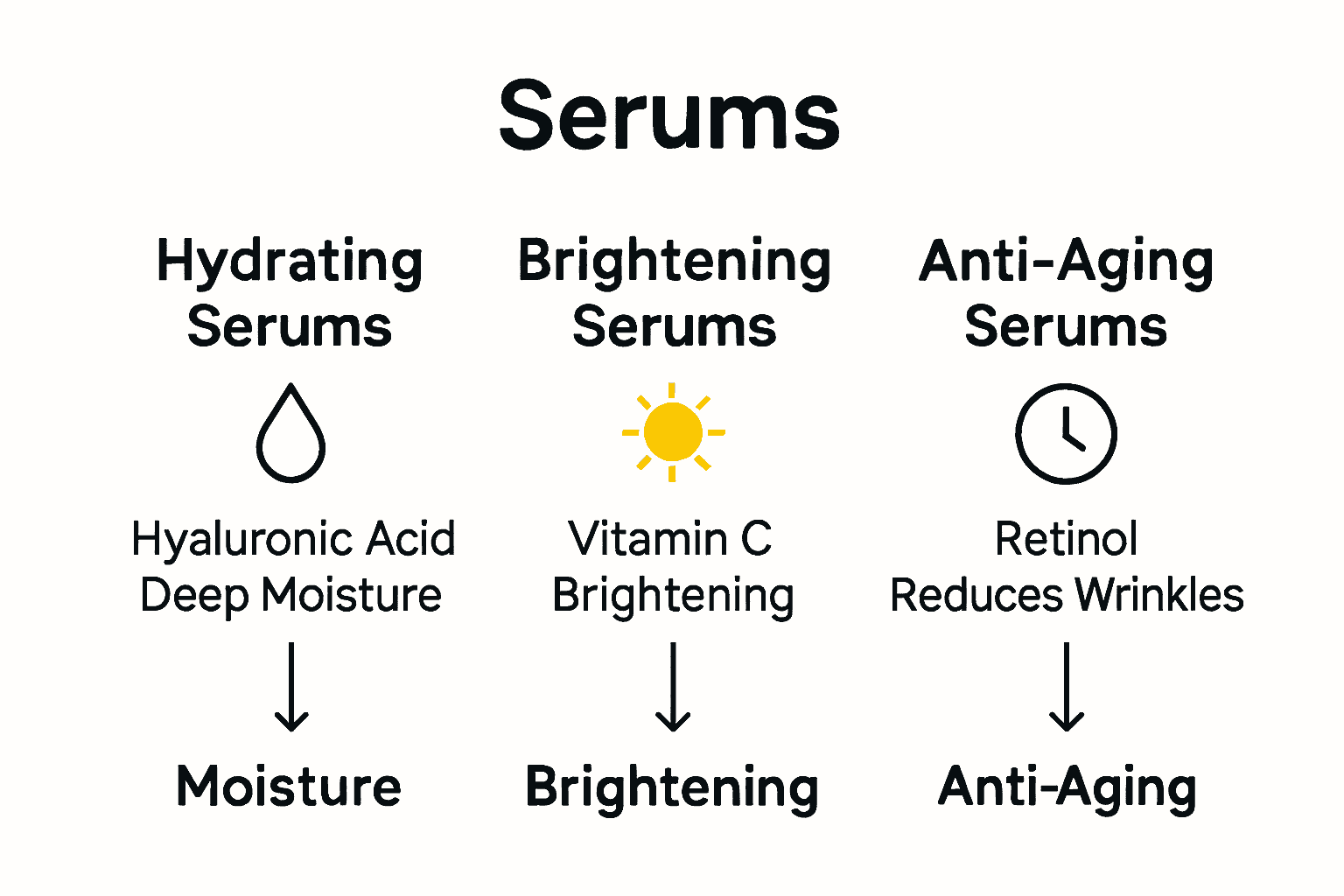
Hydrating Serums are the moisture mavens of skincare. Packed with ingredients like hyaluronic acid, these serums attract and lock in moisture, creating a plump, dewy complexion. They’re particularly beneficial for individuals experiencing dry or dehydrated skin, providing an intense hydration boost that goes beyond traditional moisturizers.
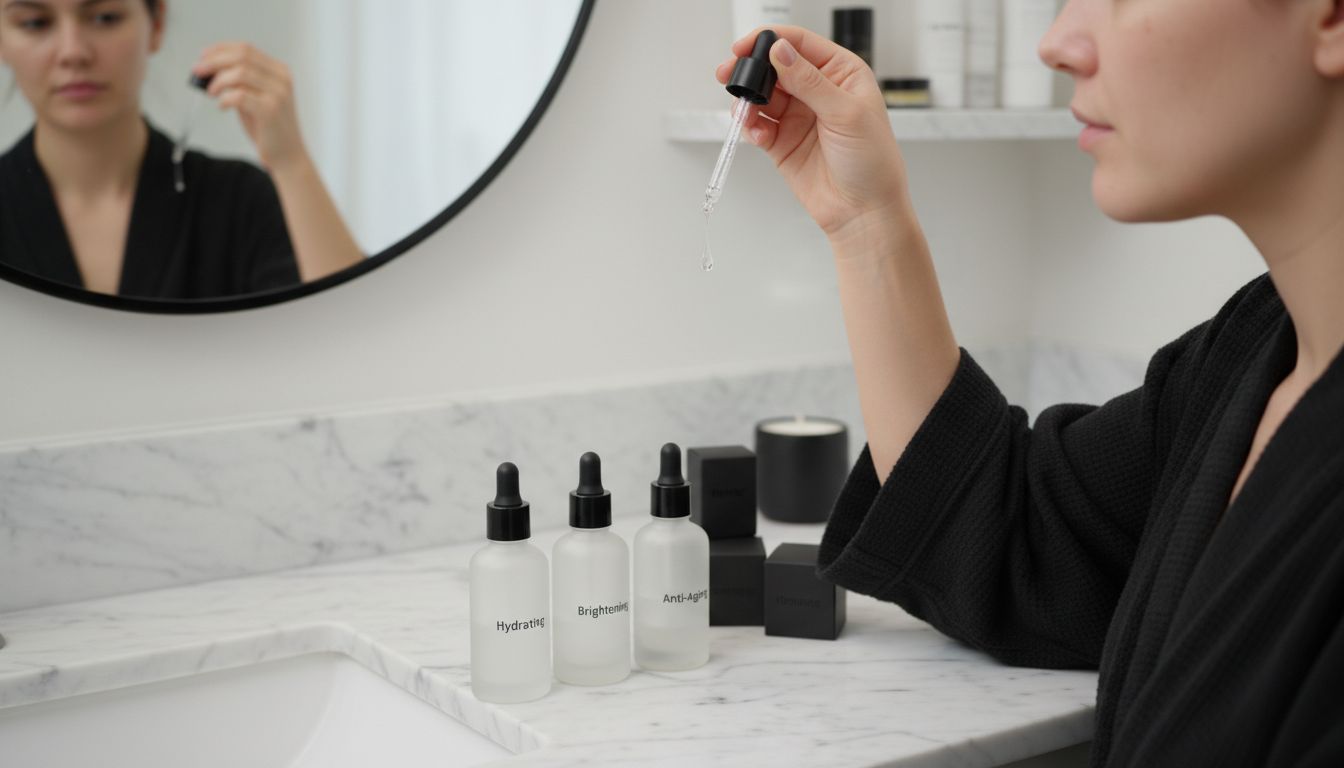
Brightening Serums work to combat uneven skin tone and hyperpigmentation. Typically infused with vitamin C, these powerhouse formulations help:
- Reduce dark spots
- Even out skin tone
- Protect against environmental damage
- Stimulate collagen production
- Provide antioxidant protection
Anti-Aging Serums are the time-defying champions of skincare. Formulated with ingredients like retinol, peptides, and growth factors, these serums target fine lines, wrinkles, and loss of skin elasticity. They stimulate cellular regeneration and promote a more youthful, radiant appearance.
For those looking to dive deeper into selecting the perfect serum for their skincare routine, our expert guide to choosing serum for perfect skin results offers comprehensive insights.
Remember, the right serum can be a game-changer in your skincare arsenal - think of it as a targeted treatment that speaks directly to your skin’s unique language.
Key Ingredients and How Serums Work
Understanding the science behind serums requires diving deep into their unique molecular composition and powerful active ingredients. According to healthencyclopedia.org, serums are distinguished by their ability to deliver key ingredients through smaller molecular structures that penetrate deeper into the skin, dramatically enhancing ingredient effectiveness.
Key Active Ingredients play a transformative role in serum performance. Research from pharmatutor.org highlights several critical components:
- Vitamin C: Brightens skin and stimulates collagen production
- Hyaluronic Acid: Provides intense hydration
- Retinol: Accelerates cell turnover
- Vitamin E: Protects against environmental damage
- Antioxidants: Minimize pores and improve skin texture
The mechanism of action for serums is remarkably sophisticated. Their liquid or gel-like consistency allows for rapid absorption, enabling active ingredients to penetrate skin layers more efficiently than traditional creams. This means each drop delivers a concentrated burst of targeted treatment directly where your skin needs it most.
If you’re curious about selecting the perfect serum for your unique skin needs, explore our iUNIK Beta Glucan Power Moisture Serum for an example of advanced skincare innovation.
Think of serums as precision instruments - small in volume, massive in impact. They don’t just sit on your skin’s surface; they communicate directly with your skin’s deeper layers.
Choosing the Right Serum for Your Skin
Selecting the perfect serum is like finding your skincare soulmate - it requires understanding your unique skin profile and specific concerns. According to realitypathing.com, the key to choosing an effective serum lies in matching the product precisely to your individual skin type and targeted needs.
Skin Type Matching is the foundational step in serum selection. Different skin types demand different approaches:
- Dry Skin: Seek hydrating serums with hyaluronic acid
- Uneven Skin Tone: Choose brightening serums with vitamin C
- Aging Concerns: Opt for retinol-based anti-aging serums
- Sensitive Skin: Look for gentle, soothing formulations
- Oily Skin: Select lightweight, non-comedogenic serums
Beyond skin type, consider your specific skin challenges. Are you battling persistent hyperpigmentation? Struggling with fine lines? Dealing with dehydration? Each concern requires a targeted approach. Vitamin C serums excel at evening skin tone, hyaluronic acid serums provide deep hydration, and retinol serums work magic on reducing visible signs of aging.
To help you navigate this complex landscape, our guide on the role of cleansers offers complementary insights into building a comprehensive skincare routine that supports your serum’s effectiveness.
Remember, skincare is not one-size-fits-all. Your serum should feel like a personalized treatment, speaking directly to your skin’s unique language and needs.
Common Mistakes and How to Avoid Them
Navigating the world of serums can be tricky, with potential pitfalls that could compromise your skincare routine. According to pharmatutor.org, one of the most critical mistakes is applying serums without considering your specific skin condition, which can lead to unexpected irritation and adverse reactions.
Common Serum Mistakes that can derail your skincare goals include:
- Using the wrong serum for your skin type
- Applying serums in incorrect order
- Overloading your skin with too many active ingredients
- Skipping patch tests for sensitive skin
- Neglecting to check ingredient compatibility
For individuals with sensitive skin conditions like eczema or rosacea, the rapid absorption of liquid or gel-like serums can trigger inflammation. This means you cannot simply grab any serum off the shelf. Careful selection is paramount. Consider your skin’s unique characteristics, sensitivities, and current health status before introducing a new product.
Layering serums requires strategic thinking. Start with the thinnest, most water-based formulations and progress to thicker, oil-based products. This ensures maximum absorption and prevents product blocking. Pro tip: Wait 30-60 seconds between serum applications to allow each layer to penetrate effectively.
To help you build a comprehensive understanding of your skincare routine, our guide on the role of toners offers additional insights into creating a harmonious skincare approach.
Remember: Your skin is unique. Treat it with the personalized care it deserves.
Unlock Your Skin’s True Potential with the Right Serum
Struggling to find a serum that truly addresses your unique skin concerns can be frustrating. This guide showed how serums penetrate deeply to deliver powerful ingredients like hyaluronic acid, vitamin C, and retinol exactly where your skin needs them. Whether your goal is intense hydration, brightening uneven tone, or fighting signs of aging understanding these key benefits is essential. Avoid common mistakes like mismatched products or improper layering by choosing serums tailored to your skin type and concerns.
Discover a curated collection of targeted treatments at Facial Serums – Skin Styles designed to transform your skincare routine with high concentration actives.

Experience the confidence that comes with radiant skin today. Visit Skin-Styles.com and explore serums crafted to meet your goals. Ready to fight wrinkles while restoring youthful glow See our Anti Wrinkles – Skin Styles category for proven solutions. Don’t wait to give your skin the precise care it deserves and shop now for visible results.
Frequently Asked Questions
What is a serum in skincare?
Skin serums are highly concentrated products designed to deliver active ingredients deep into the skin, typically containing concentrations up to ten times higher than traditional moisturizers for rapid and effective results.
How do I choose the right serum for my skin type?
Selecting the right serum involves understanding your skin type and concerns. For dry skin, use hydrating serums with hyaluronic acid; for uneven skin tone, opt for brightening serums with vitamin C; and for aging concerns, consider retinol-based serums.
Can serums be used in conjunction with other skincare products?
Yes, serums can be layered with other products, but it’s essential to apply them in the correct order, starting with the thinnest, water-based serums and progressing to thicker, oil-based formulations. Allow each layer to absorb before applying the next.
What common mistakes should I avoid when using serums?
Common mistakes include using the wrong serum for your skin type, applying serums in the incorrect order, overloading the skin with too many active ingredients, and neglecting patch tests for sensitive skin. Always choose serums that fit your unique skin profile.