
Finding skincare that keeps your pores clear can feel confusing, especially if you deal with sensitive or acne-prone skin. The growing demand for non-comedogenic products proves that many want formulas that will not trigger breakouts or irritation. Understanding what “non-comedogenic” actually means empowers you to spot marketing truth from fiction and confidently choose products that genuinely support your skin’s health. This guide highlights the science, regulations, and real-world benefits behind non-comedogenic skincare for clear, healthy skin everywhere.
Table of Contents
- Defining Non-Comedogenic In Skincare
- How Non-Comedogenic Products Prevent Acne
- Identifying Genuine Non-Comedogenic Claims
- Common Myths And Misconceptions
Key Takeaways
| Point | Details |
|---|---|
| Non-Comedogenic Products | These products are specifically formulated to avoid clogging pores, making them suitable for acne-prone, oily, and sensitive skin. |
| Ingredient Awareness | Not all non-comedogenic products are created equal; consumers should check ingredient lists and look for products with clinical testing. |
| Individual Skin Response | The effectiveness of non-comedogenic products varies by individual; patch testing is essential for finding suitable products. |
| Realistic Expectations | Non-comedogenic products help reduce the risk of breakouts, but visible improvements typically require consistent use over several weeks. |
Defining Non-Comedogenic in Skincare
Non-comedogenic products are formulated to avoid clogging your pores. The term describes cosmetics and skincare items designed specifically for people with acne-prone, oily, or sensitive skin. Understanding this concept helps you make smarter product choices.
The science behind non-comedogenic skincare is relatively recent. Scientists first identified that cosmetics could trigger breakouts in 1972, coining the term “Acne Cosmetica” to describe persistent acne caused by cosmetic use. This discovery launched decades of research into which ingredients block pores and which don’t.
Why This Matters to Your Skin
Comedogenic substances block your hair follicles and create comedones, the technical name for blackheads and whiteheads. When ingredients accumulate inside pores, bacteria thrive, inflammation increases, and acne develops. Non-comedogenic formulas prevent this chain reaction.
Common comedogenic ingredients include:
- Heavy oils and waxes
- Certain fragrances
- Synthetic dyes and colors
- Some preservatives
- Thick occlusives that trap bacteria
Non-comedogenic alternatives use lightweight, non-greasy variants that nourish your skin without blocking follicles. This makes them ideal when you’re managing breakout-prone skin.
To better understand the differences between comedogenic and non-comedogenic products, see this comparison:
| Aspect | Comedogenic Products | Non-Comedogenic Products |
|---|---|---|
| Pore Interaction | Tend to clog and block pores | Formulated to avoid clogging |
| Ideal Skin Type | Suited for drier, less acne-prone | Best for oily, breakout-prone |
| Common Ingredient Base | Heavy oils and waxes | Lightweight hydrators |
| Risk of Breakouts | Increased risk for most users | Lower risk, but still possible |
The Labeling Problem
Here’s where things get tricky. The term “non-comedogenic” is largely unregulated, meaning brands can use it without meeting strict testing standards. Some products labeled non-comedogenic may still cause breakouts in sensitive individuals because everyone’s skin chemistry differs.
When examining ingredient lists, look for formulations that combine non-comedogenic bases with other beneficial components. For example, occlusive ingredients in skincare serve protective functions while lightweight versions prevent pore-clogging concerns.
Understanding Comedogenicity Testing
Dermatologists assess comedogenicity through standardized assays, but these tests don’t guarantee results for every individual. Identification of comedogenic substances remains crucial for consumer awareness and product development.
Your skin type, climate, and existing conditions all influence which non-comedogenic products work best for you. What prevents breakouts for your friend may irritate your skin. This variability explains why patch-testing new products matters.
What Non-Comedogenic Really Means
Think of non-comedogenic formulas as designed with a lower likelihood of triggering breakouts compared to conventional products. They prioritize lightweight hydration and nutrient delivery without the pore-blocking components.
Non-comedogenic products won’t clog your pores for most people, but individual skin responses vary—testing remains essential.
Pro tip: Start with one new non-comedogenic product at a time, waiting 2-3 weeks before introducing another, so you can identify which ingredients actually work for your specific skin.
How Non-Comedogenic Products Prevent Acne
Non-comedogenic products stop acne before it starts by keeping pores clear and unblocked. These formulations work through careful ingredient selection, removing substances that trigger breakouts while maintaining skin health. Understanding how this prevention works helps you choose products that actually deliver results.
The mechanism is straightforward. Acne develops when pores become clogged with sebum, dead skin cells, and bacteria. Comedogenic ingredients cause blocked pores by accumulating inside follicles, creating an environment where acne thrives. Non-comedogenic formulas interrupt this process by avoiding these problem ingredients entirely.

The Prevention Strategy
Non-comedogenic products use two core approaches to prevent acne:
- Exclude problematic substances like heavy oils, fragrances, and synthetic dyes
- Include lightweight ingredients that nourish without blocking pores
This balance matters because your skin still needs hydration and nutrients. Non-comedogenic formulations deliver these benefits through ingredients specifically chosen for their inability to clog follicles. The result is moisturized, healthy skin without the breakout risk.
How the Ingredients Work
Comedy prevention starts at the formulation level. Non-comedogenic products eliminate substances that cause follicular hyperkeratinization, the process where dead skin cells accumulate inside pores. They also prevent sebum buildup, which feeds acne-causing bacteria.
Specific ingredient choices matter tremendously. Products avoiding comedogenic oils and synthetic additives create an environment where acne cannot easily develop. When managing breakout-prone skin, understanding these ingredient differences helps explain why certain products work for you while others don’t.
Real-World Prevention Benefits
Using non-comedogenic formulas consistently reduces breakout frequency over time. Your skin experiences:
- Fewer new comedones appearing
- Reduced inflammation and redness
- Clearer pores and smoother texture
- Less bacterial growth in follicles
These benefits accumulate, creating visible improvements within 4-6 weeks of consistent use. The prevention works continuously, not just when you apply the product.
Non-comedogenic products prevent acne by stopping pore-clogging before breakouts develop, making prevention more effective than treating existing blemishes.
For those managing oily skin specifically, non-comedogenic products prove particularly valuable since oily skin types face higher acne risk. When combining non-comedogenic bases with strategies for managing oily skin naturally, you create a comprehensive prevention approach.
Pro tip: Pair your non-comedogenic moisturizer with regular gentle exfoliation (2-3 times weekly) to prevent dead skin cell buildup inside pores, maximizing the acne-prevention benefits.
Identifying Genuine Non-Comedogenic Claims
Not all products labeled “non-comedogenic” live up to that promise. The term remains largely unregulated, meaning brands can claim it without rigorous testing or third-party verification. Learning to spot genuine claims protects your skin from misleading marketing.
The problem starts with regulatory gaps. There’s no standardized, mandatory testing that all companies must follow before using the non-comedogenic label. Some brands rely on self-certification or outdated methods that don’t accurately predict real-world results on human skin.
What Testing Actually Matters
Legitimate non-comedogenic claims rest on specific testing methodologies. The most credible approach uses human volunteers in follicular biopsy testing, which directly examines whether products cause pore-clogging. This gold standard method provides predictive results because it tests on actual human skin.
Weaker testing methods include:
- Self-certification without independent testing
- Animal testing models on rabbit ears
- Outdated lab methods unrelated to human skin
- Claims based only on ingredient lists
Genuine non-comedogenic products typically showcase clinical trial data or dermatologist recommendations. These companies invest in proper validation because their reputation depends on it.
Red Flags in Non-Comedogenic Marketing
Watch for these warning signs when evaluating products:
- No mention of testing methods or clinical trials
- Vague language about “tested” without specifics
- No third-party dermatologist endorsement
- Claims but no ingredient transparency
- Contradictions between marketing and actual ingredient lists
Brands serious about non-comedogenic claims provide concrete evidence. They list testing methods, share clinical results, and answer questions about formulation transparently.
How to Verify Claims Yourself
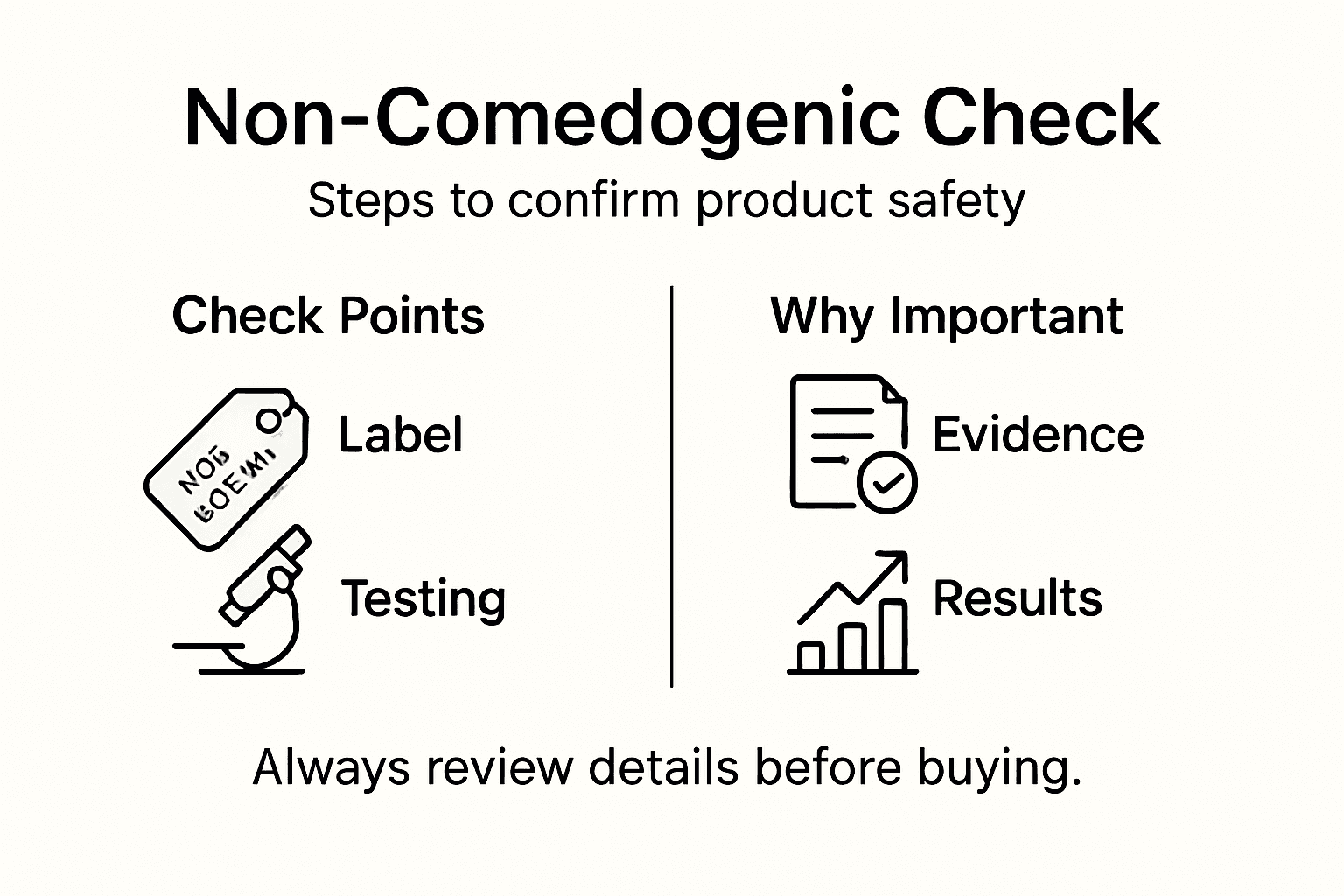
Before purchasing, take these verification steps:
- Check the ingredient list against known comedogenic substances
- Search for clinical trial data or published studies
- Look for dermatologist partnerships or endorsements
- Read consumer reviews from people with acne-prone skin
- Patch test on a small area before full application
Gentle skincare routines complement non-comedogenic products effectively. Understanding why gentle cleansers matter helps you build a complete acne-prevention system rather than relying on one product alone.
Genuine non-comedogenic products provide clinical evidence and transparent ingredient lists, not just marketing claims.
Pro tip: Request product specification sheets from manufacturers before buying, which reveal testing methods and clinical data that substantiate non-comedogenic claims.
Here is a summary of what to look for when verifying non-comedogenic product claims:
| Verification Step | What to Check For | Why It Matters |
|---|---|---|
| Ingredient Review | Compare to known pore-cloggers | Avoid hidden comedogenic agents |
| Clinical Test Reports | Availability of human trials | Confirms effectiveness |
| Dermatologist Endorsements | Professional recommendations | Adds credibility |
| Transparent Marketing | Clear evidence and data provided | Prevents misleading claims |
| Consumer Reviews | Feedback from sensitive users | Reveals real-world results |
Common Myths and Misconceptions
Non-comedogenic marketing claims often mislead consumers into believing these products solve all acne problems. The reality is more nuanced. Understanding what non-comedogenic products actually do—and don’t do—prevents disappointment and unrealistic expectations.
Myth 1: Non-Comedogenic Means Acne Prevention
This is the most widespread misconception. Non-comedogenic products reduce pore-clogging risk but don’t actively treat or prevent acne types caused by bacteria, hormones, or inflammation. They support acne management by reducing one triggering factor: pore blockage.
Your acne might stem from multiple sources simultaneously. Non-comedogenic formulas address only the clogging component. For comprehensive acne control, combine them with cleansing routines, targeted treatments, or dermatological advice.
Myth 2: One Size Fits All
Many people assume non-comedogenic products work identically for everyone. Individual skin chemistry varies dramatically. The same product may prevent breakouts for one person while triggering them in another due to ingredient concentration, formulation balance, and skin type differences.
What works for your friend’s acne-prone skin might not work for yours. This explains why the non-comedogenic label feels unreliable—it’s actually a general guideline, not an absolute guarantee.
Myth 3: Oil-Free and Non-Comedogenic Are the Same
These terms describe different product properties:
- Oil-free means no oils are included in the formula
- Non-comedogenic means less likely to clog pores (which may include some oils)
Some oils are non-comedogenic and highly beneficial. Completely avoiding oils isn’t necessary—choosing the right ones matters more. Understanding product ingredients trumps avoiding entire categories.
Myth 4: All Non-Comedogenic Products Are Equal
Not all products labeled non-comedogenic underwent the same testing standards. Some relied on self-certification, others on actual clinical trials. The label provides no information about testing quality or rigor, creating a wide credibility gap.
Myth 5: Natural Ingredients Can’t Be Comedogenic
Many natural oils are considered healthy yet remain comedogenic. Vegan skincare products contain various plant oils that don’t universally prevent pore-clogging. Natural doesn’t automatically mean pore-safe or suitable for acne-prone skin.
Non-comedogenic products reduce clogging risk but don’t treat acne, and their effectiveness varies by individual skin chemistry.
Myth 6: Results Appear Instantly
Non-comedogenic formulas work preventatively, not reactively. Visible improvements require consistent use over 4-6 weeks. Patience and realistic timelines prevent people from abandoning effective products prematurely.
Pro tip: Track your breakouts in a journal while testing non-comedogenic products for 6 weeks, noting which formulas correlate with fewer breakouts, since individual responses determine what truly works for your skin.
Discover Your Path to Clearer Skin with Non-Comedogenic Solutions
Struggling to find skincare products that truly respect your skin’s unique needs without causing breakouts? The challenge of navigating non-comedogenic claims and avoiding pore-clogging ingredients leaves many feeling frustrated and uncertain. At Skin-Styles.com, we understand the importance of lightweight hydration and clean formulas that nurture your skin without compromise. Prioritize your skin’s health by choosing products thoughtfully designed to reduce comedones and support a clearer complexion.

Explore our curated selection of moisturizers and cleansers labeled to minimize pore blockage and match your skin’s delicate balance. Act now to embrace skincare that aligns with proven science and real results. Visit Skin-Styles.com to start your journey. For deeper insight, learn about the role of occlusive ingredients in skincare and why gentle cleansers matter in maintaining clear skin. Your best skin awaits with every informed choice.
Frequently Asked Questions
What does non-comedogenic mean in skincare?
Non-comedogenic refers to products that are specifically formulated to avoid clogging pores, making them ideal for individuals with acne-prone or sensitive skin.
How do non-comedogenic products prevent acne?
Non-comedogenic products prevent acne by excluding comedogenic ingredients that block pores and by using lightweight ingredients that nourish the skin without causing breakouts.
Are all non-comedogenic products safe for all skin types?
While non-comedogenic products are designed to reduce the risk of breakouts, individual skin chemistry varies; a product that works for one person may not work for another, so patch testing is essential.
How can I verify if a product is genuinely non-comedogenic?
To verify a product’s non-comedogenic claim, check for credible clinical trial data, dermatologist endorsements, and a transparent ingredient list while looking out for any red flags in marketing language.