

Finding beauty products that align with your values can be challenging, especially when labels create confusion about what counts as truly vegan. Many women are turning to vegan skincare to avoid unwanted chemicals and support ethical standards, but misunderstandings about vegan versus cruelty-free options persist worldwide. This article delivers clarity on vegan skincare definitions, highlights common misconceptions, and empowers you to choose effective plant-based solutions that match your health and ethical goals.
Table of Contents
- Vegan Skincare Defined And Common Misconceptions
- Key Ingredients And Product Formulations
- How Vegan Skincare Differs From Alternatives
- Ethical, Environmental, And Health Impacts
- What To Look For When Buying Vegan Skincare
Key Takeaways
| Point | Details |
|---|---|
| Vegan Skincare Is Ethical | It avoids all animal-derived ingredients and emphasizes plant-based alternatives, ensuring animal welfare and environmental sustainability. |
| Distinction Between Vegan and Cruelty-Free | Vegan skincare excludes animal products, while cruelty-free pertains solely to testing practices; both terms are not interchangeable. |
| Read Labels Carefully | Consumers should check for verified vegan certifications and scrutinize ingredient lists for hidden animal-derived components. |
| Sustainable Benefits | Vegan skincare contributes to a lower carbon footprint and promotes natural health by minimizing harmful chemicals and allergens. |
Vegan Skincare Defined and Common Misconceptions
Vegan skincare represents a holistic approach to beauty that excludes all animal-derived ingredients and prioritizes ethical production practices. Unlike traditional skincare products, these formulations focus on plant-based alternatives that deliver powerful results without compromising animal welfare.
The term “vegan skincare” goes beyond simply avoiding animal products. Clear consumer definitions matter in understanding what truly qualifies a product as vegan. Key characteristics include:
- No animal-derived ingredients like beeswax, lanolin, or collagen
- Sourced exclusively from plant-based materials
- Manufactured without animal testing
- Transparent ingredient labeling
- Commitment to environmental sustainability
Understanding the nuanced differences between vegan and cruelty-free is crucial. While often conflated, these terms represent distinct concepts. Cruelty-free specifically refers to products not tested on animals, whereas vegan focuses on ingredient origin. A product can be cruelty-free without being vegan, and vice versa.
To help clarify the terminology, here’s how vegan and cruelty-free skincare differ:
| Term | Ingredient Focus | Animal Testing Policy | Typical Certification Logos |
|---|---|---|---|
| Vegan | No animal-derived materials | Not necessarily required | The Vegan Society Trademark |
| Cruelty-Free | May include animal ingredients | Mandatory | Leaping Bunny, PETA Cruelty-Free |
| Vegan & Cruelty-Free | Only plant-based, no animal testing | Required | Dual vegan and cruelty-free logos |
Common misconceptions about vegan skincare persist, including beliefs that these products are less effective or only suitable for strict vegans. Research reveals plant-based alternatives can be equally potent and beneficial for all skin types. Natural preservatives and botanical extracts often provide robust skincare solutions that rival traditional formulations.
Pro tip: Always read ingredient lists carefully and look for certified vegan logos to ensure your skincare truly meets ethical standards.
Key Ingredients and Product Formulations
Vegan skincare formulations represent a sophisticated approach to beauty, leveraging powerful plant-based ingredients that deliver exceptional skin benefits. Natural ingredient research reveals a comprehensive range of botanical compounds that can effectively replace traditional animal-derived skincare components.
The most prominent vegan skincare ingredients include:
- Antioxidant-rich plant extracts
- Peptides promoting collagen synthesis
- Probiotics for microbiome balance
- Natural moisturizing compounds
- Anti-inflammatory botanical ingredients
Plant extracts play a crucial role in vegan skincare formulations. Marine and botanical ingredients like aloe vera, chamomile, jojoba oil, and marine algae provide extensive skin benefits. These natural ingredients offer comprehensive skincare solutions including hydration, elasticity improvement, and environmental protection.
Here is a quick reference guide to the most common animal-derived ingredients and their vegan substitutes in skincare:
| Animal-Derived Ingredient | Common Source (Animal) | Vegan Substitute |
|---|---|---|
| Lanolin | Sheep’s wool grease | Shea butter, jojoba oil |
| Beeswax | Honeybee secretion | Candelilla, carnauba wax |
| Collagen | Bovine/marine tissues | Soy protein, peptides |
| Carmine | Cochineal insects | Beetroot extract |
| Squalene | Shark liver | Olive, amaranth oil |
Modern vegan skincare goes beyond simple ingredient replacement. Sophisticated formulations now combine multiple plant-based components to create powerful, multifunctional products that rival - and often surpass - traditional skincare offerings. By prioritizing natural, sustainable ingredients, these products deliver targeted skin nutrition without compromising ethical standards.
Pro tip: Look for products with transparent ingredient lists that specifically highlight their plant-based and vegan certifications.
How Vegan Skincare Differs From Alternatives
Vegan skincare represents a fundamentally different approach to personal care, driven by ethical considerations and environmental consciousness. Consumer values dramatically shape product choices, distinguishing vegan products from conventional skincare alternatives through profound philosophical and practical differences.
The key distinctions between vegan and non-vegan skincare include:
- Ingredient sourcing prioritizing plant-based materials
- Strict exclusion of animal-derived components
- Commitment to animal welfare and environmental sustainability
- Transparent production and testing practices
- Emphasis on holistic wellness beyond cosmetic benefits
While traditional skincare often relies on animal-derived ingredients like collagen, lanolin, and beeswax, vegan alternatives meticulously select plant-based substitutes. This approach not only eliminates animal products but also challenges long-standing industry practices. Consumers choosing vegan skincare are making a deliberate statement about their personal ethics, environmental impact, and commitment to cruelty-free beauty standards.
Modern vegan skincare transcends mere product selection - it represents a comprehensive lifestyle philosophy. These products demonstrate that effective, luxurious skincare can be achieved without compromising animal welfare or environmental integrity. By rejecting traditional ingredient sourcing, vegan brands are pioneering a more compassionate and sustainable approach to personal care.
Pro tip: Research product certifications and ingredient lists to ensure genuine vegan commitment beyond marketing claims.
Ethical, Environmental, and Health Impacts
Vegan skincare extends far beyond personal beauty, representing a comprehensive approach to global wellness and environmental responsibility. Sustainability in cosmetic dermatology is revolutionizing how consumers understand the broader impacts of their skincare choices.
The key environmental and ethical benefits of vegan skincare include:
- Significant reduction in carbon footprint
- Elimination of animal agriculture dependencies
- Decreased greenhouse gas emissions
- Reduction of water consumption in production
- Avoidance of synthetic chemical exposure
- Promotion of cruelty-free product development
Health considerations play a crucial role in the vegan skincare movement. By prioritizing plant-based ingredients, these products minimize potential allergen exposure and reduce the risk of harmful chemical interactions. Consumers increasingly recognize that ethical skincare choices can simultaneously support personal health and global ecological sustainability.

The transformative potential of vegan skincare extends beyond individual product selections. Global market trends demonstrate a growing commitment to ethical consumption, challenging traditional beauty industry practices and encouraging more responsible manufacturing approaches.
Pro tip: Investigate product certifications and research brand sustainability practices to make truly informed skincare choices.
What to Look for When Buying Vegan Skincare
Making informed vegan skincare choices requires careful investigation and critical evaluation of product claims. Authentic vegan certification matters immensely in navigating the complex landscape of ethical beauty products.
Key factors to consider when purchasing vegan skincare include:
- Verified third-party vegan certifications
- Comprehensive ingredient list analysis
- No animal-derived substances
- Cruelty-free testing standards
- Transparent manufacturing practices
- Detailed supply chain information
Careful ingredient scrutiny is essential. Look out for hidden animal-derived components like beeswax, lanolin, collagen, and carmine. Some ingredients might appear plant-based but could involve animal processing. Identifying authentic vegan products requires diligence and understanding of complex ingredient sourcing.
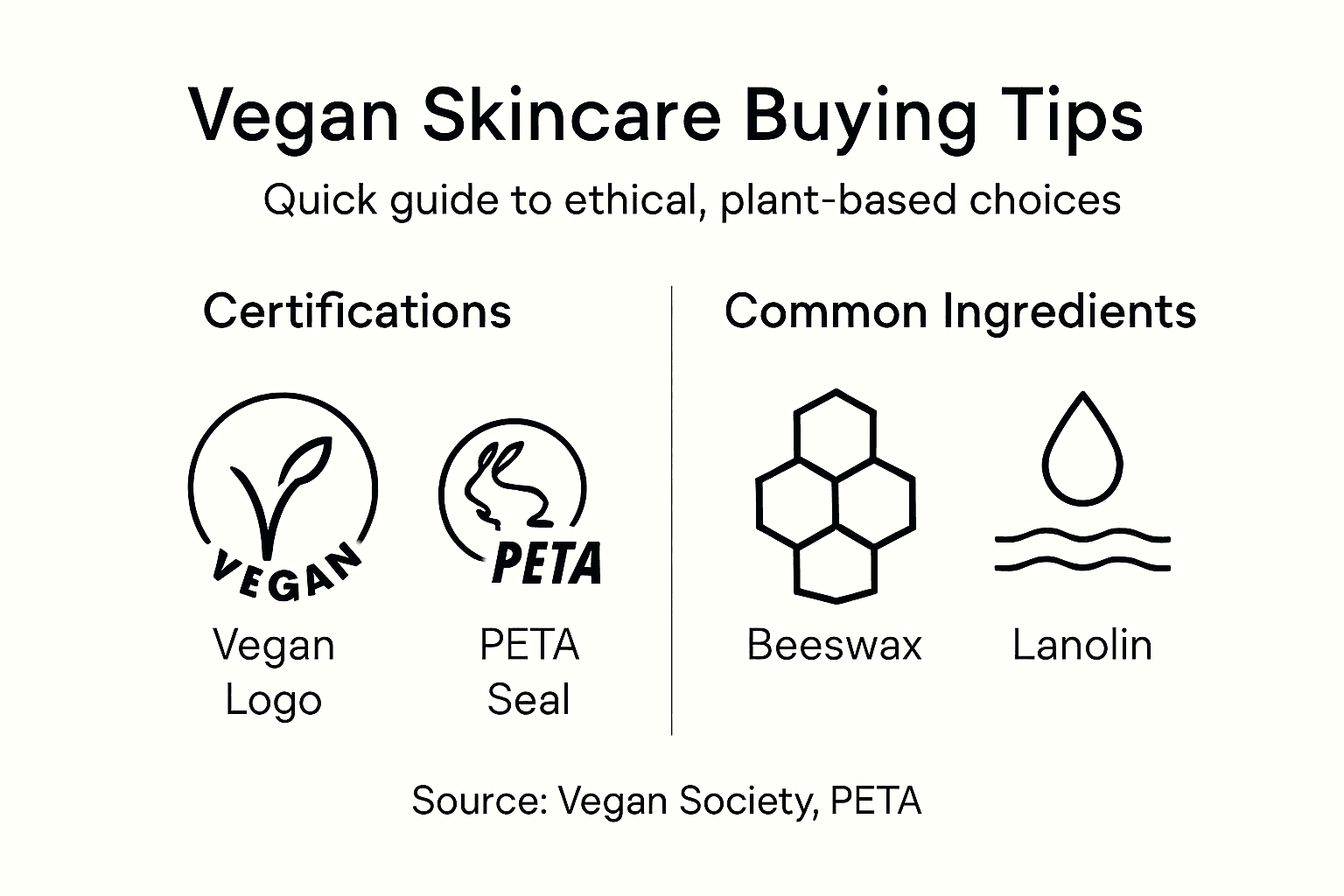
Consumers should prioritize reputable certifications such as The Vegan Society Trademark, PETA’s Cruelty-Free and Vegan logo, or Leaping Bunny certification. These logos provide immediate verification of ethical standards and help combat misleading marketing claims. Technology now offers additional support through smartphone apps that can quickly scan and verify ingredient authenticity.
Pro tip: Download ingredient verification apps and familiarize yourself with common animal-derived ingredients to make confident vegan skincare selections.
Elevate Your Skincare Routine with Ethical and Effective Vegan Options
Are you ready to embrace the power of plant-based ingredients while caring deeply about animal welfare and sustainability Vegan skincare offers you the chance to nourish your skin with antioxidant-rich botanicals that rival traditional products without compromise Explore our range of expertly curated solutions in the Facial Serums and Facial Creams & Gels collections at Skin Styles to experience true vegan beauty innovation

Make a meaningful choice today by selecting products that are transparently labeled and certified vegan Discover why thousands trust us for effective, cruelty-free skincare that supports your values and enhances your natural glow Visit Skin Styles now and take the first step toward a compassionate, sustainable skincare routine
Frequently Asked Questions
What is vegan skincare?
Vegan skincare refers to beauty products that do not contain any animal-derived ingredients and are produced without animal testing, focusing on plant-based alternatives.
How do vegan and cruelty-free skincare differ?
Vegan skincare is defined by the absence of animal products, while cruelty-free skincare is focused on products that have not been tested on animals. A product can be cruelty-free without being vegan.
What are some common animal-derived ingredients to avoid in skincare?
Common animal-derived ingredients include beeswax, lanolin, collagen, and carmine. Vegan alternatives like plant-based oils and botanical extracts can effectively replace these components.
What are the environmental benefits of using vegan skincare?
Vegan skincare promotes environmental sustainability by reducing carbon footprints, eliminating dependencies on animal agriculture, decreasing greenhouse gas emissions, and minimizing water consumption in production.