

TL;DR:
- Adjustable bibs provide a customizable, long-lasting fit that adapts to your child’s growth, reducing mess and laundry. Their features, such as multiple closure points and crumb catchers, improve mealtime comfort and efficiency for families. Investing in quality adjustable bibs enhances feeding routines, promotes independence, and minimizes frustration.
Not all bibs are created equal, and most parents figure that out the hard way. A bib that’s too tight leaves red marks on your baby’s neck. One that’s too loose lets pureed carrots slide right onto a fresh outfit. And then your child grows two sizes in a month, and suddenly you’re tossing yet another bib into the trash. Adjustable bibs solve these exact problems, and once you understand how they work and why they last, you’ll wonder how you ever managed without one.
Table of Contents
- What makes adjustable bibs unique?
- Real-world benefits for parents and kids
- Comparing adjustable bibs to standard bibs
- Choosing the best adjustable bib: features to prioritize
- The overlooked value of adjustable bibs: our take
- Ready to upgrade mealtime? Explore our adjustable bibs
- Frequently asked questions
Key Takeaways
| Point | Details |
|---|---|
| Longer use and fit | Adjustable bibs grow with your child, fitting babies and toddlers alike. |
| Easier cleanup | Waterproof and crumb-catching designs minimize messes and laundry. |
| Safer for delicate skin | High-quality materials such as BPA-free silicone protect your child’s sensitive skin. |
| Increases independence | A comfortable and secure bib can encourage your toddler to self-feed. |
| Cost-effective choice | One adjustable bib often replaces multiple traditional bibs, saving money over time. |
What makes adjustable bibs unique?
After recognizing the everyday challenges with typical bibs, it’s important to understand what sets adjustable bibs apart from the rest of the lineup at your local baby store.
The word “adjustable” means more than just a loose fit. In the world of baby bibs, it refers to a closure system that lets you change the neck opening at multiple points, so one bib can accommodate a tiny three-month-old and the same bib can still work comfortably for a curious two-year-old who insists on feeding herself. That kind of flexibility is genuinely rare in baby gear.
Core features that set adjustable bibs apart:
- Multiple neck settings: Most adjustable bibs offer two to four snap positions or a sliding buckle that opens the neck in small increments. This prevents the too-tight pressure marks that parents often see after using standard bibs.
- Flexible, forgiving materials: Soft silicone and stretch-blend fabrics move with your child instead of bunching up and creating gaps where food escapes.
- Easy-on/easy-off closures: Magnetic snaps, side-release buckles, and Velcro options mean you can get the bib on and off in under five seconds, which matters when a hungry toddler is screaming in a high chair.
- Wide coverage zones: Many adjustable bibs are contoured to cover more of the chest and lap, catching food before it hits clothing.
- Deep crumb catchers: The molded front pocket found on silicone versions collects dropped pieces of food instead of letting them fall to the floor.
Silicone bib benefits are well documented, and adjustable designs amplify those advantages by addressing fit issues that frustrate parents daily.
Pro Tip: When shopping, look for bibs with a simple side-release buckle rather than Velcro. Velcro collects lint and food residue in the hooks, and it stiffens over time. A buckle stays clean and reliable wash after wash.
The bottom line is that adjustable bibs were designed specifically to solve the problems parents actually complain about: poor fit, leaks, short lifespan, and fussy closures. Every feature connects directly to a real mealtime frustration.
Real-world benefits for parents and kids
Knowing what defines an adjustable bib, let’s see how those features positively impact daily routines for both parents and children across every stage of the feeding journey.
Comfort for your child: A bib that fits correctly does not press against the throat or chafe the back of the neck. This sounds simple, but it matters enormously. A child who is uncomfortable will pull at the bib, fuss through the meal, and associate eating with irritation. Proper neck sizing removes that friction from the experience entirely.

Long-term cost savings: Because the fit grows with your child, you do not need to buy multiple bib sizes as your baby develops. One good adjustable bib can realistically take you from early solid foods at six months all the way through the messy toddler years at age two or three. For parents who are already managing diaper costs, formula, and every other baby expense, this kind of longevity adds up to real savings.
Fewer outfit changes per day: When food stays in the bib instead of on the shirt, you run fewer loads of laundry. According to mess-free feeding solutions backed by parent testimonials, families using silicone adjustable bibs report doing noticeably less laundry each week, with some saving several hours per month just from reduced clothing changes and spot cleaning.
How families reduce cleanup time with adjustable bibs:
- Use the crumb catcher pocket to collect dropped food during the meal.
- Rinse the bib immediately after feeding to prevent staining.
- Wipe the tray and high chair once instead of scrubbing soaked fabric from a cloth bib.
- Hang the bib to dry or toss it in the dishwasher top rack if it’s silicone.
- Skip the full outfit change because the bib caught the spill.
Following those five steps, many parents find that post-meal cleanup drops from fifteen minutes to about five. That kind of time savings adds up across three meals a day, seven days a week.
The emotional benefit: Fewer messes mean fewer frustrating interruptions. Meals flow more naturally when you’re not constantly jumping up to change your baby’s clothes or wiping down the high chair after every spoonful. Parents report that this smoother routine actually makes mealtimes more enjoyable for everyone at the table.
Comparing adjustable bibs to standard bibs
To help you make the most informed decision, let’s see how adjustable bibs hold up against standard bib types in core areas that matter most to busy families.
| Feature | Adjustable bib | Standard cloth bib |
|---|---|---|
| Neck fit | Multiple settings, grows with child | Fixed size, one stage only |
| Coverage area | Wide contoured chest coverage | Narrow, often leaves sides exposed |
| Waterproofing | Yes (silicone or coated fabric) | Rarely, absorbs liquid |
| Ease of cleaning | Rinse, wipe, or dishwasher safe | Requires machine wash, may stain |
| Average lifespan | 18 to 30 months per bib | 3 to 6 months before outgrown or worn out |
| Crumb catcher | Yes (pocket design) | No |
| Initial cost | Higher ($8 to $20 per bib) | Lower ($3 to $8 per bib) |
| Total cost over 2 years | Low (1 to 2 bibs needed) | High (6 to 10 bibs needed) |
| Toddler removal resistance | High with buckle closure | Low, easily pulled off |
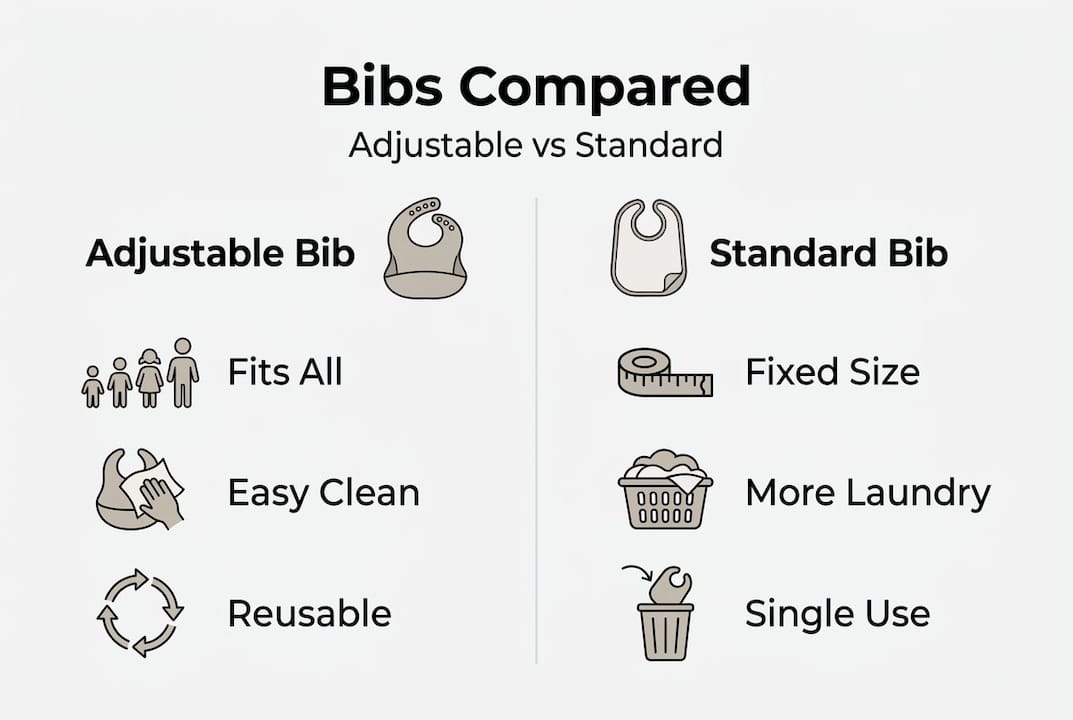
The math is straightforward. A standard bib might cost $5, but if you go through eight of them in two years, that’s $40. A single adjustable silicone bib at $15 that lasts the same period is both cheaper and far less wasteful.
Why silicone bibs work is a question more parents are asking as they realize the total cost of ownership comparison is no contest. And when you factor in time saved on laundry and outfit changes, the value of the adjustable option becomes even clearer.
It is also worth noting that protective accessories comparison data shows that materials designed for sensitive skin consistently outperform basic cotton blends in both durability and safety ratings. Adjustable bibs made from food-grade silicone or soft jersey knit last longer and hold up to repeated cleaning without breaking down.
The reusability advantage is a key differentiator. Adjustable bibs outperform simple cloth bibs when it comes to reusability and versatility across multiple growth stages, making them the smarter long-term investment for families.
Choosing the best adjustable bib: features to prioritize
After weighing the benefits and comparisons, the next step is choosing a bib that delivers the most value for your family’s specific needs and daily routine.
Not every adjustable bib is built the same way. Here’s what to focus on when you’re shopping:
Material safety first:
- Choose bibs made from BPA-free silicone or certified organic cotton.
- Avoid bibs with plastic parts that are not labeled food-safe, since babies put everything in their mouths.
- Look for certifications like ASTM or CPSC compliance on the product listing.
- Avoid bibs with small detachable parts that could become choking hazards.
Safe baby skincare choices extend beyond lotions and shampoos. The items that touch your child’s skin during feeding need the same level of scrutiny. BPA-free materials and secure closures are essential for both safety and convenience, especially for babies still exploring textures with their hands and mouths.
Closure quality matters more than you think: Look for closures that are secure enough that your toddler cannot pull the bib off in the middle of a meal, but easy enough for a tired parent to remove quickly. Side-release buckles and magnetic snaps hit this balance well. Avoid overly complex closures that require two hands and fine motor precision while you’re also trying to manage a squirming child.
Coverage and design:
- Wide bibs with curved bottom edges catch more food.
- Silicone bibs with a deep front pocket are the most effective at catching falling food.
- Short bibs work for younger babies but leave the lap exposed once toddlers start scooping with a spoon.
- Machine washable fabric bibs should have tight seams to prevent fraying.
Pro Tip: Before you buy a silicone bib online, check whether the crumb catcher pocket can be flattened and locked open. Some designs collapse easily and don’t hold food at all. The pocket should maintain its shape during active feeding.
Fit and sizing range: A bib that claims to be adjustable should list its specific neck measurement range. Look for bibs that cover at least a 10 to 14 inch neck circumference range to ensure it truly grows with your child across multiple stages.
The overlooked value of adjustable bibs: our take
Now that you understand the practical side, here’s the insight that most guides gloss over: adjustable bibs change the entire feeding experience, not just the cleanup.
Most of the conversation around bibs focuses on mess control, and that’s fair. But when you talk to parents who’ve made the switch from standard bibs to well-fitted adjustable ones, something interesting comes up consistently. The shift is not just about fewer stains or less laundry. It is about what happens to the energy in the room during meals.
When a bib fits well and stays put, the child stops fussing with it. When the mess is contained, the parent stops hovering anxiously. When everyone relaxes, the toddler becomes more willing to try new foods and experiment with self-feeding. One parent put it plainly: “I realized feeding was less of a battle and more fun once we switched.”
That is not a small thing. Mealtime stress in toddlerhood can affect food relationships for years. Kids who associate eating with tension or discomfort often become picky eaters. Anything that removes friction from the feeding environment is working on a deeper level than it appears.
The family product recommendations we stand behind are chosen with this bigger picture in mind. Families report less mealtime stress and greater toddler independence when using well-designed adjustable bibs, and we think that is the most compelling reason to make the switch.
The conventional wisdom says buy cheap bibs and replace them often. We respectfully disagree. Invest once in a bib that fits correctly, and you invest in calmer meals, a more adventurous eater, and a whole lot less time on laundry.
Ready to upgrade mealtime? Explore our adjustable bibs
If you’re ready to put these insights to work, our shop offers versatile bibs and feeding sets tailored for your family’s real-world needs.
At Skin-Styles.com, we’ve curated a selection of child-safe, easy-clean feeding accessories designed for parents who want less mess and more joy at the table. Our adjustable bib and children’s feeding set options are made from BPA-free materials with secure, comfortable closures that hold up through every sticky, saucy mealtime.

Browse our feeding collection to find bibs with crumb-catching pockets, wide coverage, and adjustable neck settings that grow with your child from first foods through the toddler years. Every product in our range is chosen for safety, durability, and the kind of practical design that actually makes your day easier. Your next calm, mess-free mealtime is one click away.
Frequently asked questions
Do adjustable bibs fit all ages and stages?
Yes, adjustable bibs accommodate children at different growth stages through their multiposition closures and flexible materials, typically fitting babies from around four months through age three.
Are silicone adjustable bibs safe for sensitive skin?
High-quality silicone adjustable bibs are specifically designed for sensitive skin and are free from BPA and harsh chemicals, making them a reliable choice. BPA-free silicone is non-irritating and safe for direct contact with baby skin throughout daily use.
How do adjustable bibs reduce laundry?
Their waterproof materials and crumb-catching designs mean less mess reaches clothing, resulting in fewer outfit changes per day. Silicone adjustable bibs cut down on laundry by eliminating the need to wash fabric bibs after every single meal.
Can adjustable bibs help my toddler self-feed?
Yes, the comfortable neck fit and secure closure allow toddlers to move freely and focus on the food rather than the bib, encouraging more independent and confident self-feeding behavior over time.
What features should I look for in an adjustable bib?
Prioritize BPA-free materials, a secure but adult-friendly closure, and a wide contoured design with a deep front pocket for maximum mess protection. BPA-free materials combined with practical design remain the top recommendations from child safety and feeding experts.