

TL;DR:
- Sippy cups are meant for short-term transition from bottles, not long-term use.
- Using spouted sippy cups for too long can delay speech development and increase dental risks.
- Pediatric experts recommend switching to straw or open cups by 12 to 18 months.
Sippy cups feel like a parenting staple, right up there with bibs and baby food. Most caregivers grab one without a second thought, assuming it’s the safest, most logical step between bottle and regular cup. But pediatric experts increasingly point out that sippy cups are a transitional tool meant to bridge bottle to open cup use, typically introduced around 6 to 9 months, not a long-term solution. The reality is more textured than the product aisle suggests. This guide will walk you through the real benefits, the often-overlooked risks, and the smartest practices to support your child’s feeding independence.
Table of Contents
- What are sippy cups and why are they used?
- The developmental impact of sippy cups
- Are sippy cups necessary? Expert recommendations and alternatives
- Practical tips: Using sippy cups safely and supporting development
- A fresh look at sippy cups: What most guides miss
- Supporting your child’s feeding journey with the right tools
- Frequently asked questions
Key Takeaways
| Point | Details |
|---|---|
| Sippy cups are a bridge tool | Use them only briefly to transition from bottles to more advanced cups and minimize risk. |
| Developmental risks exist | Prolonged or improper use may impact oral motor skills, speech, and dental health. |
| Experts prefer open and straw cups | Straw, 360, and open cups support healthy development better than spouted sippy cups. |
| Timely weaning is critical | Transition to advanced cups by 12-18 months for optimal oral and speech development. |
| Use safe materials and quality design | Choose well-designed feeding tools to encourage healthy, independent eating. |
What are sippy cups and why are they used?
Now that you have a sense of why sippy cups spark debate, let’s clarify their design and intended use.
A sippy cup is a lidded drinking vessel with a spout, valve, or soft nozzle designed to prevent spills. Unlike straw cups, which require a child to use suction through a tube, or 360 cups, which allow drinking from any edge like an open cup, spouted sippy cups function more like a bottle in how liquid is delivered. Open cups, of course, have no lid at all and require full motor control. Each cup type places different demands on a child’s mouth, tongue, and jaw.
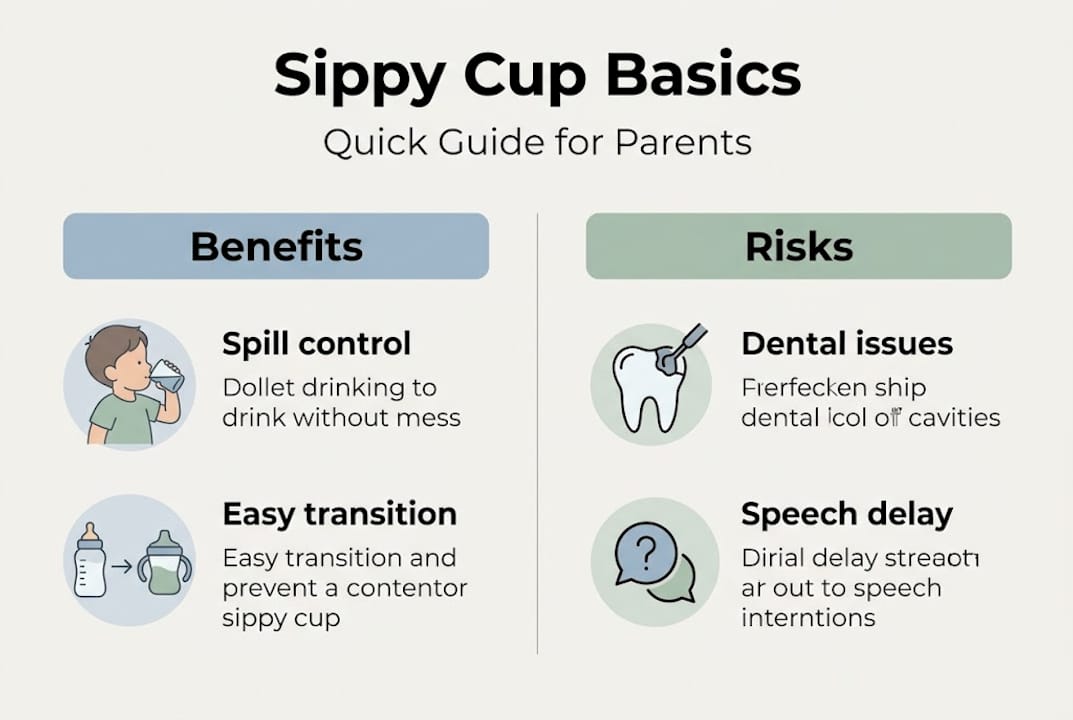
Sippy cups became popular for good reason. Parents love them because they reduce mess during the messy early feeding months, they encourage a child to hold and tip a cup independently, and they make the shift away from bottle-feeding feel gradual. Spill prevention alone is a powerful motivator for any caregiver juggling a squirmy toddler and a clean shirt.
Signs your child may be ready to try a sippy cup include:
- Sitting upright with minimal support
- Showing curiosity about cups or reaching for yours
- Beginning solid foods or purees
- Losing the tongue-thrust reflex that pushes food out
- Around 6 months of age, though every child is different
When choosing among cup styles, the AAP guidance on cup types leans toward options that promote mature drinking patterns. That nuance matters more than most parents realize at the store.
Here’s a quick breakdown of common cup types and their typical use windows:
| Cup type | Typical age range | Spill resistance | Developmental demand |
|---|---|---|---|
| Spouted sippy cup | 6 to 18 months | High | Low (bottle-like) |
| Straw cup | 9 months and up | Medium | Moderate |
| 360 cup | 12 months and up | Medium | Moderate to high |
| Open cup | 6 months with help | None | High |
Pediatric guidelines suggest sippy cups are best introduced at 6 to 9 months as a temporary bridge, not a permanent fixture in the feeding routine. That’s an important distinction. When thinking about the right utensils for your child’s eating journey, understanding choosing baby utensils early makes the whole process smoother. And pairing cup practice with feeding spoon success builds broader mealtime confidence in your child.
The developmental impact of sippy cups
Understanding the basics, parents must consider how the wrong cup could impact development.
The way a child drinks is not just about hydration. It’s a motor skill. Every sip engages the tongue, lips, jaw muscles, and palate in a coordinated pattern. Spouted sippy cups create a sipping motion that closely mirrors bottle sucking, which is fine for infants but problematic if it continues past the age when a child should be developing more mature oral motor patterns.
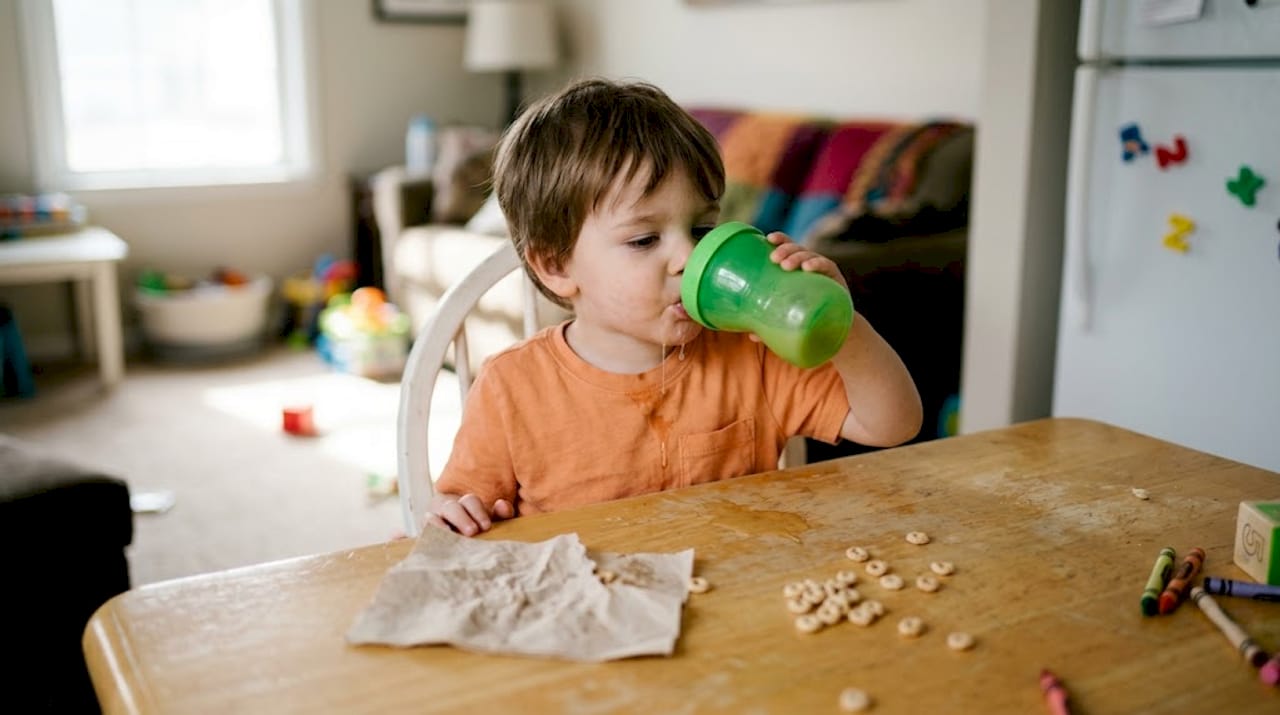
Speech-language pathologists often flag this issue. Oral motor skills refer to the coordinated muscle movements of the mouth used for eating, drinking, and producing speech sounds. When children spend too long using a spouted sippy cup, they may develop a forward tongue thrust, where the tongue pushes forward against teeth rather than lifting to the roof of the mouth during swallowing. That pattern can contribute to speech sound errors and dental misalignment.
Here’s how cup types compare developmentally:
| Cup type | Tongue position | Jaw activity | Speech impact | Dental risk |
|---|---|---|---|---|
| Spouted sippy | Forward, low | Minimal | Potentially delays sounds | Moderate |
| Straw cup | Elevated, retracted | Active | Supports development | Low |
| 360 cup | Natural, upright | Moderate | Neutral to positive | Low |
| Open cup | Natural | Active | Positive | Lowest |
Speech-language pathologists consistently recommend straw and open cups over spouted sippy cups, noting that spouted designs promote immature sucking patterns similar to bottles, which can delay mature oral motor skills, affect speech sounds, and cause dental misalignment.
Dental health is another real concern. The spout concentrates liquid flow against the upper front teeth, and if that liquid contains milk or juice, sugar exposure becomes a recurring issue tied to early childhood tooth decay.
Pro Tip: If your child already uses a spouted sippy cup, consider switching to a straw cup as early as 9 to 12 months. Even a soft silicone straw is a meaningful upgrade for oral development.
To monitor feeding milestones and catch potential concerns early, pay attention to how your child positions their tongue and whether speech sounds seem to develop on schedule. For specific cup drinking benchmarks by age, the guidance at cup benchmarks provides clear, developmental context.
Are sippy cups necessary? Expert recommendations and alternatives
Given the developmental considerations, what do the experts say about whether sippy cups should even be used?
Here’s the honest answer: sippy cups are not required. The American Academy of Pediatrics takes a measured stance, recommending that parents wean from bottles by 12 to 18 months, use sippy cups only for short-term transition purposes with water at meals, and prefer straw, 360, or open cups for better developmental outcomes.
That’s a significant departure from how sippy cups are marketed. Most packaging implies long-term use. The pediatric guidance says otherwise.
Safer alternatives include:
- Straw cups: Build lip closure and elevate the tongue tip, supporting speech development
- 360 cups: Mimic open cup drinking while reducing spills, ideal from 12 months
- Open cups with a small amount of liquid: Supervised practice as early as 6 months with a caregiver’s help builds mature skills fastest
- Weighted straw cups: Easier for younger children to manage, regardless of cup angle
The case for skipping sippy cups altogether is surprisingly strong for some children. Kids who transition directly from breast or bottle to straw cups often adapt quickly, especially if the switch happens before 12 months when oral habits are still forming. For families practicing baby-led weaning tips, open cup practice tends to start earlier naturally, which puts those children in a developmental advantage.
A statistic worth noting: early childhood tooth decay affects roughly 23% of children ages 2 to 5 in the United States, and prolonged sippy cup use with sugary drinks is a recognized contributing factor. That number alone shifts the conversation.
Best practices for short-term sippy cup use:
- Limit sippy cup use to meals and snack times only
- Fill only with water or milk, never juice
- Begin transitioning to a straw cup by 12 months
- Never use a sippy cup as a pacifier or comfort tool
- Always supervise drinking to observe technique
Practical tips: Using sippy cups safely and supporting development
Even if you use sippy cups for a short period, there are best practices to keep your child healthy.
A stage-by-stage approach reduces both developmental risk and parental stress. Here’s a practical framework:
- At 6 to 9 months: Introduce a spouted sippy cup with water only during meals. Focus on grip and tipping rather than volume consumed.
- At 9 to 12 months: Begin offering a straw cup alongside the sippy cup. Let your child explore both. Most children take to straw cups faster than expected.
- At 12 to 15 months: Make the straw or 360 cup the primary drinking vessel. Sippy cup use should be shrinking, not expanding.
- At 15 to 18 months: Aim to eliminate the spouted sippy cup entirely. Open cup practice with a small amount of liquid at meals is age-appropriate and builds confidence.
- After 18 months: If a spouted sippy cup is still the main cup, it’s time to make the switch. Prolonged use beyond 12 to 18 months directly increases the risk of tooth decay due to constant sugar exposure against the teeth.
Key do’s and don’ts for daily use:
- Do rinse the cup after every use to prevent bacteria buildup in the valve
- Do practice open cup sipping with a tiny amount of water starting at 6 months
- Don’t let your child walk around or nap with a sippy cup filled with milk or juice
- Don’t use a sippy cup as a bedtime soother, as milk pooling against teeth overnight is a major decay risk
- Do watch for signs of readiness: less drooling, better lip closure, stable seated posture
Pro Tip: Try the “open cup with a straw” method: put a short straw in a small open cup and hold it steady for your child. It builds straw skills and open cup awareness simultaneously.
For detailed dental care tips specific to baby cup use, your pediatric dentist is a great resource at the 12-month visit. And when you’re ready to invest in feeding sets that grow with your child, choosing sets that include multiple cup styles supports a smoother developmental transition.
A fresh look at sippy cups: What most guides miss
Most sippy cup articles present a clean checklist: introduce at 6 months, wean by 18 months, done. Real parenting is rarely that tidy. Some children latch onto straw cups immediately. Others need months of encouragement. A child with low muscle tone or a sensory sensitivity may find open cup transitions genuinely hard, and that is not a failure. It’s information.
The strongest parenting move is not following the script perfectly. It’s watching your individual child. Are they developing speech sounds on track? Are their teeth coming in cleanly? Are they gaining confidence at the table? Those signals matter far more than hitting a cup-transition date on a calendar.
We believe the real takeaway is that sometimes skipping sippy cups entirely is the simplest and best path, especially for families already doing open feeding approaches. But for others, a brief spouted cup phase is a perfectly reasonable bridge. The goal is to monitor feeding growth closely and stay flexible. No cup type defines your child’s development. Your attention does.
Supporting your child’s feeding journey with the right tools
Choosing the right feeding tools makes every developmental stage feel more manageable rather than overwhelming. When your child is ready to move beyond sippy cups, having a set designed for self-feeding independence can build real confidence at every meal.

Our 8-piece silicone feeding set includes BPA-free suction plates, bowls, and a bib built for toddler-led eating. These tools are designed with safe materials and ergonomic shapes that encourage little hands to take charge. To understand why gear quality matters, read more about quality feeding sets and how they support healthy habits long-term. Browse the full range of family-friendly options at Skin-Styles.com and find what fits your child’s current stage.
Frequently asked questions
When should I stop using sippy cups with my child?
Sippy cups should be phased out by 12 to 18 months, with a transition to straw or open cups. The AAP recommends weaning from bottles around this age and limiting sippy cups to short-term meal use primarily with water.
Are sippy cups bad for my child’s teeth?
Prolonged or improper use can increase tooth decay risk and affect dental alignment. Prolonged sippy use beyond 12 to 18 months raises decay risk from repeated sugar contact against teeth, especially with juice or milk.
What type of cup do experts recommend after sippy cups?
Pediatric and speech experts prefer straw or open cups to support mature swallowing, speech sound development, and healthy oral motor patterns. Spouted cups are seen as the least developmental option among covered cup styles, as noted in sippy cup guidance.
Is it okay to skip sippy cups entirely?
Yes, many experts agree sippy cups are not necessary. Some experts advise starting directly with open or straw cups, which is safe and often developmentally preferable for most children.
What liquids should be used in a sippy cup?
Offer only water or milk in sippy cups during meals and avoid juice or sugary drinks. Limiting to water at meals is the clearest way to minimize dental risks tied to sippy cup use.