

Feeding milestones reveal far more than whether your child can eat solid foods. They serve as critical markers of overall developmental health, offering early insights into motor skills, sensory processing, and cognitive growth. When you track these milestones, you’re not just monitoring nutrition—you’re gaining a window into your child’s broader development and catching potential delays before they become serious concerns.
Table of Contents
- What Are Feeding Milestones And Why Do They Matter?
- Early Signs Of Feeding Difficulties And Developmental Delays
- Tracking Self-Feeding Milestones And Promoting Independence
- Choosing The Right Weaning Approach And Monitoring Nutritional Growth
- Explore Baby Feeding Essentials For Your Child’s Healthy Development
- FAQ
Key takeaways
| Point | Details |
|---|---|
| Early monitoring enables intervention | Tracking feeding milestones helps identify developmental delays early when interventions are most effective. |
| Milestones reflect multiple skills | Feeding progress indicates oral motor development, sensory processing abilities, and social-emotional growth. |
| Delays may signal underlying issues | Missing milestones can point to medical conditions or developmental disorders requiring professional evaluation. |
| Self-feeding builds independence | Progress in self-feeding demonstrates growing fine motor skills, problem-solving abilities, and confidence. |
| Proper tracking supports outcomes | Monitoring feeding behaviors correlates with healthier physical growth and improved cognitive development. |
What are feeding milestones and why do they matter?
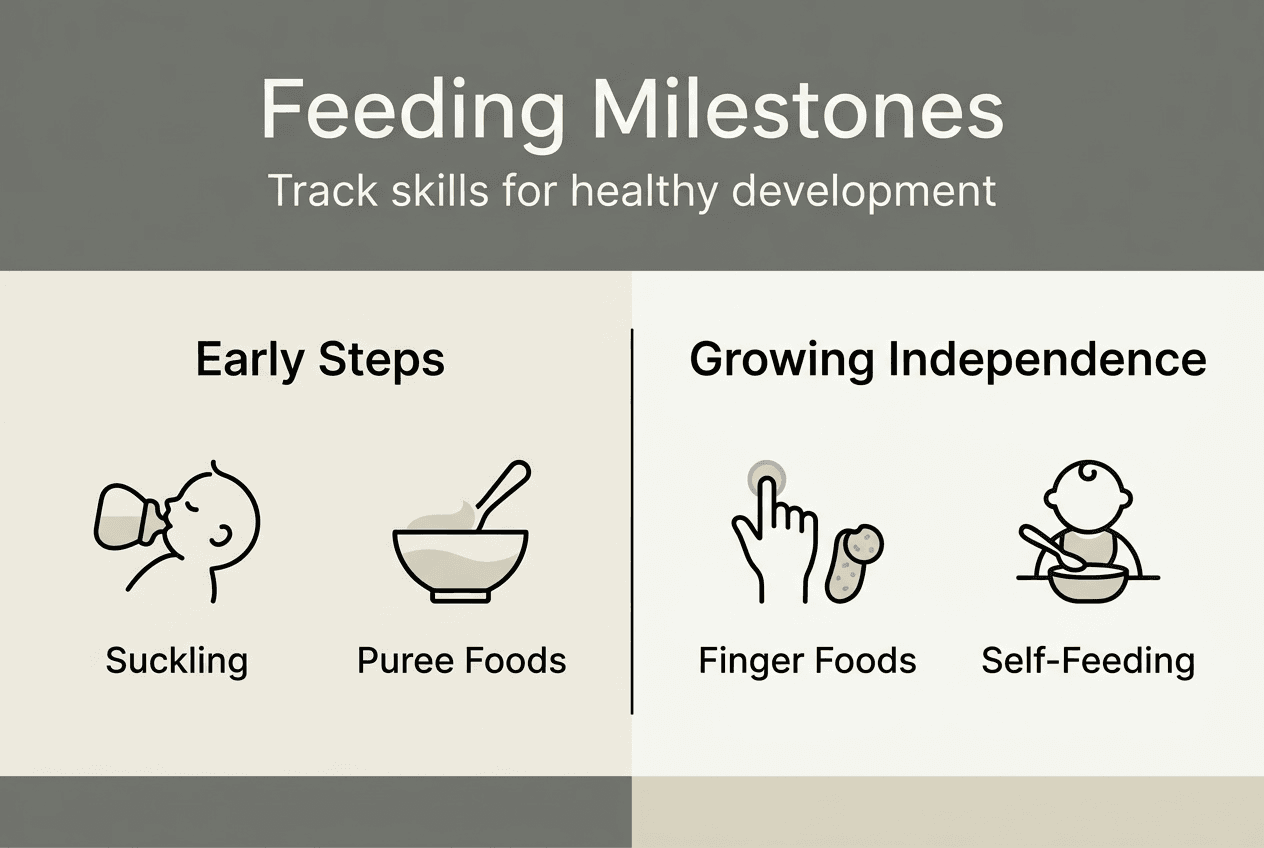
Feeding milestones encompass the progressive skills children develop from birth through toddlerhood. These include suckling, swallowing, chewing, handling different textures, and eventually self-feeding with utensils. Each skill represents a complex coordination of muscles, sensory systems, and cognitive processes working together.
These milestones matter because feeding indicates oral motor skills, sensory processing, and social-emotional development. When your child learns to chew, they’re strengthening the same muscles needed for speech. When they explore new textures, they’re developing sensory integration that affects how they process the world around them. The connection runs deeper than most parents realize.
Research shows a strong link between feeding difficulties and speech or language delays. The oral motor skills required for eating directly translate to those needed for articulation and communication. Children who struggle with coordinating tongue and jaw movements during feeding often face similar challenges when learning to speak.
Typical feeding milestones progress predictably:
- Birth to 4 months: Sucking reflex and coordinated swallowing
- 4 to 6 months: Moving food from front to back of mouth, showing interest in foods
- 6 to 9 months: Munching movements, handling mashed textures
- 9 to 12 months: Controlled biting, finger feeding, drinking from cups
- 12 to 18 months: Chewing mixed textures, using utensils with help
- 18 to 24 months: Independent spoon use, managing most table foods
These markers function as an early warning system for development. When children miss expected milestones, it signals the need for closer observation and possible professional evaluation. Understanding the role of texture in baby feeding helps you recognize whether your child is progressing appropriately through texture stages.
Early signs of feeding difficulties and developmental delays
Failure to meet feeding milestones often indicates underlying developmental or medical issues that require attention. Recognizing these red flags early makes a significant difference in outcomes. Common feeding difficulties include persistent gagging on age-appropriate textures, refusal to try new foods beyond typical pickiness, inability to transition from purees to solids, choking frequently on safe foods, and limited self-feeding attempts despite developmental readiness.
Research shows that feeding difficulties link to conditions like cerebral palsy, autism spectrum disorder, and genetic syndromes. These conditions often present with feeding challenges as early symptoms, making milestone monitoring a valuable screening tool. Children with autism may show extreme texture sensitivity or rigid food preferences. Those with cerebral palsy might struggle with muscle coordination needed for chewing and swallowing.
The good news? Early intervention significantly improves developmental outcomes in children with feeding difficulties. Speech therapists, occupational therapists, and feeding specialists can address these challenges with targeted strategies. The earlier you identify concerns, the more effective these interventions become.
“Parents should seek professional evaluation if their child consistently refuses multiple food textures, shows no interest in self-feeding by 15 months, experiences frequent choking or gagging, or demonstrates significant anxiety around mealtimes.”
Monitoring becomes especially important during high-risk periods like the introduction of solids and the transition to table foods. These phases require new skills and coordination. Difficulties during these transitions warrant closer attention and possible consultation with your pediatrician.
Understanding why you should supervise baby feeding connects directly to recognizing feeding difficulties. Supervision allows you to notice subtle signs of struggle that might otherwise go undetected.
Tracking self-feeding milestones and promoting independence
Self-feeding milestones represent major developmental achievements that extend beyond mealtime. Tracking self-feeding helps understand progress in motor skills and independence. These behaviors demonstrate hand-eye coordination, problem-solving abilities, and growing autonomy.
Typical self-feeding progression follows these stages:
- 6 to 8 months: Holding and mouthing foods, bringing items to mouth independently
- 8 to 10 months: Picking up small pieces with pincer grasp, attempting to hold bottles or cups
- 10 to 12 months: Finger feeding most meals, drinking from sippy cups with some spills
- 12 to 15 months: Loading spoons with help, attempting independent spoon use with messiness
- 15 to 18 months: Gaining better spoon control, successfully getting most bites to mouth
- 18 to 24 months: Using forks and spoons with increasing accuracy, drinking from open cups
Each stage reflects developing coordination between vision, hand movements, and cognitive planning. When your baby successfully brings a piece of food to their mouth, they’re demonstrating spatial awareness, motor control, and cause-and-effect understanding. These same skills support other developmental areas like playing with toys and eventually writing.

Pro Tip: Offer safe finger foods early and often, even if messy. Let your child explore different utensils and self-feeding tools without rushing perfection. The process matters more than clean results.
Encouraging self-feeding supports healthy development in multiple ways. It builds fine motor strength and dexterity. It fosters independence and decision-making skills. It creates positive associations with mealtimes and reduces power struggles over eating.
Make self-feeding easier by choosing baby utensils designed for safe feeding that match your child’s developmental stage. Age-appropriate tools make success more likely and build confidence.
Choosing the right weaning approach and monitoring nutritional growth
Different weaning methods impact how children meet feeding milestones and achieve nutritional adequacy. Understanding these approaches helps you make informed decisions and monitor development effectively. The three main methods are baby-led weaning, traditional weaning, and combination weaning.
Baby-led weaning (BLW) allows infants to self-feed finger foods from the start, skipping purees entirely. Traditional weaning (TW) begins with smooth purees and gradually progresses to textured foods and table foods. Combination weaning (CW) blends both approaches, offering purees alongside finger foods.
Recent research reveals important differences in outcomes. Baby-led weaning links with lower calorie and iron intake compared to traditional weaning, while combination weaning shows optimal growth patterns. This finding surprises many parents who assume BLW provides superior nutrition.
| Weaning Method | Calorie Intake | Iron Intake | Growth Pattern | Self-Feeding Skills |
|---|---|---|---|---|
| Baby-Led (BLW) | Lower | Lower | Adequate but slower | Earlier development |
| Traditional (TW) | Higher | Higher | Steady growth | Later development |
| Combination (CW) | Optimal | Optimal | Best outcomes | Balanced progression |
The key insight? No single method suits every child perfectly. Monitoring your child’s specific milestones and growth helps you adjust your approach. If your baby struggles with self-feeding finger foods, incorporating some spoon-fed foods ensures adequate nutrition while they develop skills.
Research also shows healthier feeding practices at 8 months reduce neurodevelopmental delay risk. This emphasizes the importance of responsive feeding, appropriate portion sizes, and varied nutrient-dense foods during the critical first year.
Pro Tip: Track your child’s weight gain, energy levels, and milestone achievement rather than rigidly following one weaning philosophy. Adjust your feeding strategy based on what works for your individual child.
Establishing a consistent baby feeding routine supports both nutritional intake and developmental progress. Regular mealtimes create predictability that helps children develop healthy eating patterns.
Explore baby feeding essentials for your child’s healthy development
Supporting your child’s feeding milestone journey requires the right tools designed for safety and developmental appropriateness. Quality feeding products make self-feeding easier and safer, encouraging the independence and motor skill development we’ve discussed throughout this article.

The 8-piece silicone baby feeding set offers everything toddlers need for successful self-feeding experiences. This BPA-free collection includes suction plates that stay put during enthusiastic eating attempts, perfectly sized bowls for appropriate portions, and a protective bib that makes cleanup manageable. Each piece supports the developmental milestones outlined in this guide while keeping safety as the top priority. Explore these feeding essentials to give your child the best foundation for healthy eating habits and developmental success.
FAQ
How can I tell if my child is meeting feeding milestones?
Observe whether your child demonstrates age-appropriate behaviors like sitting with head control, chewing different textures without excessive gagging, and showing interest in self-feeding with fingers or utensils. Focus on steady progress over time rather than hitting exact ages, since development varies among children. If you notice your child consistently struggles with skills that peers have mastered or shows regression in previously acquired abilities, consult your pediatrician.
What should I do if my child is behind on feeding milestones?
Schedule an evaluation with your pediatrician or a pediatric feeding specialist to identify any underlying issues. Early intervention benefits are well-documented, and professional guidance can address concerns before they impact other developmental areas. Many feeding difficulties respond well to targeted therapy strategies. Learn more about supervising baby feeding safely while working with specialists.
How does self-feeding support my child’s development?
Self-feeding strengthens fine motor skills through repeated grasping, lifting, and coordinating hand-to-mouth movements. It builds problem-solving abilities as children figure out how to load utensils and manage different food types. The process fosters independence and confidence, creating positive associations with mealtimes that support healthy eating attitudes long-term. Social skills also develop as children participate more fully in family meals.
When is the right time to introduce solid foods?
Watch for physical readiness signs rather than following a strict age guideline. Babies should have good head control, sit with support, open their mouth for food, and transfer food from a spoon. Most infants show these signs between 4 and 6 months, though some need more time. Starting solids before your baby is physically ready increases choking risk and feeding difficulties. Choose appropriate baby utensils for safe feeding once you begin the solid food journey.