

Every new parent faces the challenge of choosing the right feeding routine while juggling changing schedules and growing nutritional needs. Understanding how and when to introduce complementary foods is a crucial step, as most infants start solids before six months according to recent research. This guide offers practical strategies for assessing your baby’s unique needs, preparing safe accessories, and establishing a schedule that fits your family’s lifestyle.
Table of Contents
- Step 1: Assess Your Baby’s Unique Feeding Needs
- Step 2: Prepare Feeding Supplies And Hygiene Essentials
- Step 3: Establish A Consistent Feeding Schedule
- Step 4: Implement Effective Feeding Techniques
- Step 5: Monitor Progress And Make Adjustments
Quick Summary
| Key Insight | Explanation |
|---|---|
| 1. Assess Your Baby’s Needs | Monitor growth patterns and hunger cues to personalize feeding. Understanding individual requirements is essential for effective nutrition. |
| 2. Prepare Feeding Supplies | Ensure a complete, sanitized feeding kit, including sterilized bottles and cleaning tools to protect your baby’s health. |
| 3. Establish a Feeding Schedule | Create a flexible routine based on developmental stages to support your baby’s changing nutritional needs. |
| 4. Use Effective Feeding Techniques | Implement responsive feeding methods that foster trust and comfort between you and your baby during feeding times. |
| 5. Monitor and Adjust Progress | Regularly track your baby’s feeding patterns and growth, making necessary changes for improved nutrition and comfort. |
Step 1: Assess your baby’s unique feeding needs
Successfully establishing a personalized feeding routine starts with understanding your baby’s individual nutritional requirements and developmental stage. Each infant has distinctive needs that require careful observation and responsive caregiving.
To effectively assess your baby’s feeding needs, you’ll want to focus on several key factors. The complementary foods introduction timeline plays a critical role in understanding nutritional transitions. Consider these essential evaluation steps:
- Monitor your baby’s growth patterns
- Track weight gain and developmental milestones
- Observe hunger and satiety cues
- Document feeding frequency and duration
- Note any allergic reactions or digestive responses
Recognizing infant hunger signals is crucial for successful feeding. These might include:
- Rooting reflex
- Increased alertness
- Hand-to-mouth movements
- Soft whimpering or crying
Understanding your baby’s unique nutritional journey requires patience, attentiveness, and flexibility.
Remember that feeding patterns evolve rapidly during the first year. By monitoring nutrition guidance closely, you can adapt your approach to meet your baby’s changing needs.

Pro tip: Keep a detailed feeding journal to track patterns and discuss insights with your pediatrician during regular checkups.
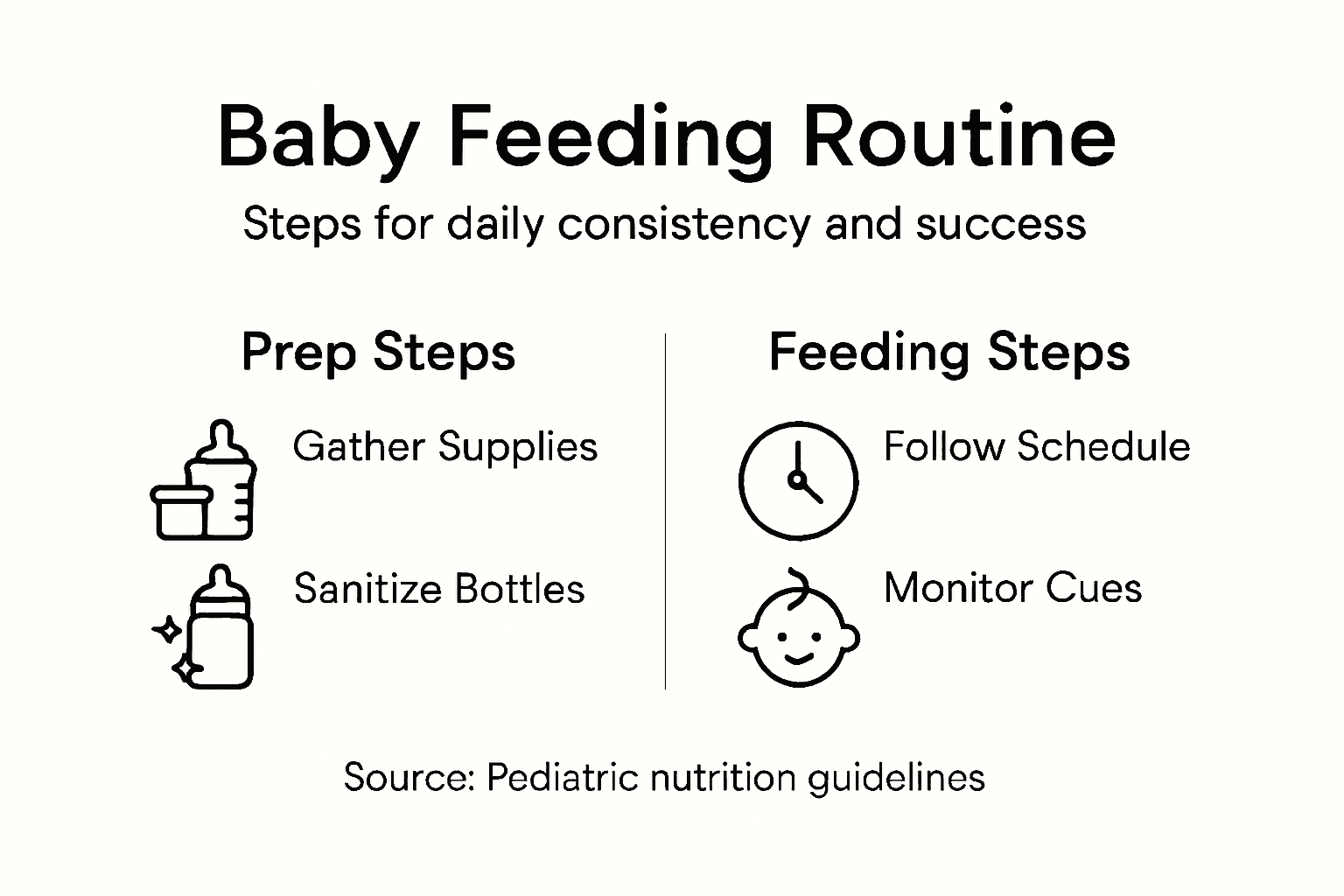
Step 2: Prepare feeding supplies and hygiene essentials
Effective infant feeding requires more than just milk or formula. You need a comprehensive collection of clean, safe supplies that support your baby’s nutritional needs and protect their health. Infant feeding equipment preparation involves strategic selection and meticulous sanitization.
Essential feeding supplies include:
- Sterilized bottles and nipples
- Breast pump (if needed)
- Nursing pads
- Breast milk storage bags
- Cleaning brushes
- Bottle warmers
- Sanitizing solutions
When preparing feeding equipment, follow these critical hygiene steps:
- Wash hands thoroughly with antibacterial soap
- Clean all surfaces with disinfectant
- Sterilize bottles and equipment
- Check equipment for damage before use
- Store supplies in clean, sealed containers
Proper hygiene is your first line of defense in preventing potential infant infections.
Additionally, safe formula handling practices are crucial. Always read manufacturer instructions, check expiration dates, and maintain strict cleanliness during preparation.
Pro tip: Invest in a reliable bottle sterilizer to simplify your sanitization process and ensure consistent hygiene.
Here’s how different feeding support tools contribute to infant nutrition and parent convenience:
| Tool | Main Function | Benefit for Baby | Benefit for Parent |
|---|---|---|---|
| Breast pump | Extracts milk for storage | Consistent milk supply | Allows flexibility, storage |
| Bottle sterilizer | Sanitizes feeding equipment | Reduces infection risk | Saves time and effort |
| Nursing pads | Absorbs breast milk leakage | Keeps feeding area dry | Enhances comfort and hygiene |
| Storage bags | Safely stores expressed milk | Ensures milk freshness | Simplifies feeding logistics |
Step 3: Establish a consistent feeding schedule
Creating a reliable feeding routine is crucial for your baby’s nutritional health and overall development. Infant feeding frequency guidelines provide a framework for understanding how often and how much to feed your little one during different developmental stages.
Feeding schedule basics for the first six months typically include:
- Newborns: 8-12 feedings per day
- Every 2-3 hours during daytime
- Frequent night feedings
- Gradually increasing intervals between feedings
Key considerations for developing a consistent schedule:
- Recognize hunger cues early
- Feed on demand initially
- Track feeding times and quantities
- Maintain flexible but predictable patterns
- Adjust schedule as baby grows
Consistency matters more than perfection in establishing feeding routines.
As babies develop, feeding intervals naturally change to accommodate growing nutritional needs. Around six months, you’ll begin introducing solid foods while maintaining a structured milk or formula feeding schedule.
Pro tip: Use a feeding app or journal to track your baby’s eating patterns and share detailed insights with your pediatrician.
Compare feeding schedule planning approaches for newborns versus older infants:
| Age Range | Feeding Frequency | Key Focus | Adjustments Needed |
|---|---|---|---|
| 0-6 months | Every 2-3 hours | Track cues, feed on demand | Increase intervals slowly |
| 6-12 months | 3-5 times plus solids | Add solid foods, maintain routine | Balance solids with milk feeds |
Step 4: Implement effective feeding techniques
Successful infant feeding requires more than just providing nutrition. Infant-driven feeding techniques are essential for building trust and ensuring comfortable, stress-free feeding experiences for both you and your baby.
Key feeding positioning techniques include:
- Cross cradle hold for breastfeeding
- Side-lying position for nighttime feeds
- Upright seated position for bottle feeding
- Paced bottle feeding to mimic breastfeeding
- Skin-to-skin contact during feeds
Critical techniques for effective feeding:
- Watch for early hunger cues
- Maintain relaxed body positioning
- Support baby’s head and neck
- Allow natural feeding rhythm
- Pause and burp periodically
Responsive feeding means listening to your baby’s unique signals and respecting their individual pace.
As your baby grows, baby-led feeding approaches become increasingly important. Focus on engagement cues, comfort, and creating positive feeding interactions.
Pro tip: Practice different feeding positions before your baby arrives to build confidence and muscle memory.
Step 5: Monitor progress and make adjustments
Tracking your baby’s feeding progress is a dynamic process that requires consistent observation and thoughtful adaptation. Infant feeding performance assessment involves carefully monitoring multiple aspects of your baby’s nutritional journey.
Key monitoring strategies include:
- Track weight gain consistently
- Observe feeding behavior patterns
- Note infant stress signals
- Measure pre- and post-feeding weight
- Watch for hunger and fullness cues
Critical monitoring steps:
- Weigh baby regularly
- Document feeding volumes
- Assess feeding comfort
- Check growth chart progress
- Consult pediatrician quarterly
Small, consistent adjustments create the most successful feeding experiences.
Ongoing feeding performance evaluation requires attentiveness to infant states before, during, and after feeding. Understanding your baby’s unique signals helps you make informed nutritional adjustments.
Pro tip: Create a simple tracking spreadsheet or use a digital app to log feeding details and spot trends quickly.
Create a Feeding Routine That Supports Your Baby’s Well-Being and Comfort
Establishing a consistent feeding routine is one of the biggest challenges every new parent faces. From monitoring hunger cues to preparing clean, safe feeding supplies, the detailed steps in the Baby Feeding Routine Guide highlight exactly how important routine, hygiene, and adaptability are to your baby’s growth and happiness. If you are seeking trusted products to support your baby’s feeding journey and enhance your caregiving experience, explore our carefully curated collection at Other Products – Skin Styles.

Discover supplies designed to make feeding safer and more comfortable for your infant, while giving you confidence and peace of mind. Visit Skin-Styles.com today to shop helpful tools and essentials that align with your baby’s unique feeding needs. Start building a nourishing routine that grows with your family now.
Frequently Asked Questions
How can I assess my baby’s unique feeding needs?
To assess your baby’s unique feeding needs, monitor their growth patterns, track weight gain and developmental milestones, and observe hunger cues. Document these observations over the first few months to identify any changes in their nutritional requirements.
What supplies do I need to prepare for my baby’s feeding routine?
Essential supplies for your baby’s feeding routine include sterilized bottles, nursing pads, a breast pump if necessary, and cleaning brushes. Gather these items and ensure they are sanitized to maintain hygiene.
How do I establish a consistent feeding schedule for my baby?
To establish a consistent feeding schedule, recognize early hunger cues and initially feed on demand. Gradually, aim for predictable feeding times as your baby grows, typically every 2–3 hours for newborns and adjusting to 3–5 times a day by 6 months.
What techniques should I use for effective infant feeding?
Implement effective feeding techniques by positioning your baby comfortably and being attentive to their signals. Use techniques like paced bottle feeding or skin-to-skin contact to create a positive feeding experience for both you and your baby.
How can I monitor my baby’s feeding progress effectively?
To monitor your baby’s feeding progress, regularly track their weight gain and observe their feeding behavior. Keep a log of feeding volumes and comfort levels, making small adjustments as needed to enhance their nutritional success.
When should I introduce solid foods into my baby’s feeding routine?
Introduce solid foods around 6 months of age while maintaining the milk feeding schedule. Start with small amounts and gradually increase solids, ensuring that the routine remains consistent and accommodates your baby’s nutritional needs.