

Choosing baby-led weaning tools often confuses parents who mistakenly believe the method simply means skipping purees. The truth is far more nuanced. Selecting appropriate feeding essentials directly influences your infant’s ability to develop self-feeding skills safely and effectively. Research demonstrates that infants using ergonomic silicone utensils showed 30% higher self-feeding retention compared to those using standard plastic implements. This guide clarifies the critical tool and food choices that transform mealtime struggles into confident feeding experiences for both you and your baby.
Table of Contents
- How To Choose Baby-Led Weaning Essentials: Selection Criteria
- Essential Feeding Tools For Baby-Led Weaning
- Recommended First Foods To Introduce In Baby-Led Weaning
- Comparison Of Baby-Led Weaning Feeding Tools Vs Traditional Methods
- Safety And Hygiene Considerations For Baby-Led Weaning Essentials
- Product Pricing And Availability
- Situational Picks: Choosing The Right Tools Based On Family Needs
- Discover Your Perfect Baby-Led Weaning Sets At Skin Styles
Key Takeaways
| Point | Details |
|---|---|
| Safety First | BPA-free, ergonomic designs reduce choking risks and support motor development. |
| Food Selection Matters | Soft, grippable fruits and vegetables like avocado promote safe chewing skill development. |
| Tools Outperform Traditional Methods | Baby-led utensils reduce feeding refusals by 25% compared to spoon-feeding purees. |
| Hygiene is Essential | Regular cleaning and sanitization prevent bacterial contamination during self-feeding. |
| Match Tools to Needs | Budget-friendly starter sets or premium ergonomic options fit varied family situations. |
How to Choose Baby-Led Weaning Essentials: Selection Criteria
When you walk into a store or browse online for baby-led weaning tools, the overwhelming array of options can paralyze decision making. Understanding core selection criteria transforms this confusion into confidence. Let me walk you through what actually matters.
Safety certifications stand as your non-negotiable starting point. Every feeding tool must be BPA-free and phthalate-free, with clear labeling that confirms food-grade materials. Research on ergonomic feeding tools demonstrates that silicone sets with easy-grip handles significantly improve infant self-feeding success while reducing choking risk.
Ergonomic design directly impacts whether your baby can actually use the tool. Handles should fit tiny hands naturally, with textured grips that stay secure even when covered in mashed banana. Spoons need short, chubby handles and shallow bowls that prevent gagging. Plates require suction bases strong enough to withstand enthusiastic grabbing but easy enough for you to remove.
Age and developmental readiness guide every choice you make. A six-month-old needs different tools than a twelve-month-old with refined pincer grasp. Observe your baby’s motor skills honestly. Can they sit unsupported? Do they reach for objects with purpose? These milestones matter more than calendar age.
Cleaning ease prevents the bacterial contamination that concerns every parent. Tools with fewer crevices, dishwasher-safe materials, and stain-resistant surfaces save time and promote hygiene. You will wash these items multiple times daily, so convenience directly affects consistency.
Affordability and availability complete your practical considerations. The perfect tool means nothing if it exceeds your budget or requires international shipping. Balance features against realistic family finances. Choosing baby utensils safely requires both idealism and pragmatism.
Pro Tip: Test grip comfort yourself before purchasing. If the handle feels awkward in your adult hand, it will frustrate your baby’s smaller grasp even more.
Essential Feeding Tools for Baby-Led Weaning
The right tools make the difference between frustrating mealtimes and joyful exploration. Let me introduce you to the essentials that pediatric nutritionists consistently recommend for supporting infant independence.
Ergonomic silicone utensils with easy-grip handles form the foundation of successful baby-led weaning. Studies show infants aged 6-12 months demonstrated 30% higher self-feeding retention when using silicone utensils versus standard plastic ones. The soft, flexible material protects delicate gums while the chunky handles accommodate developing motor control.
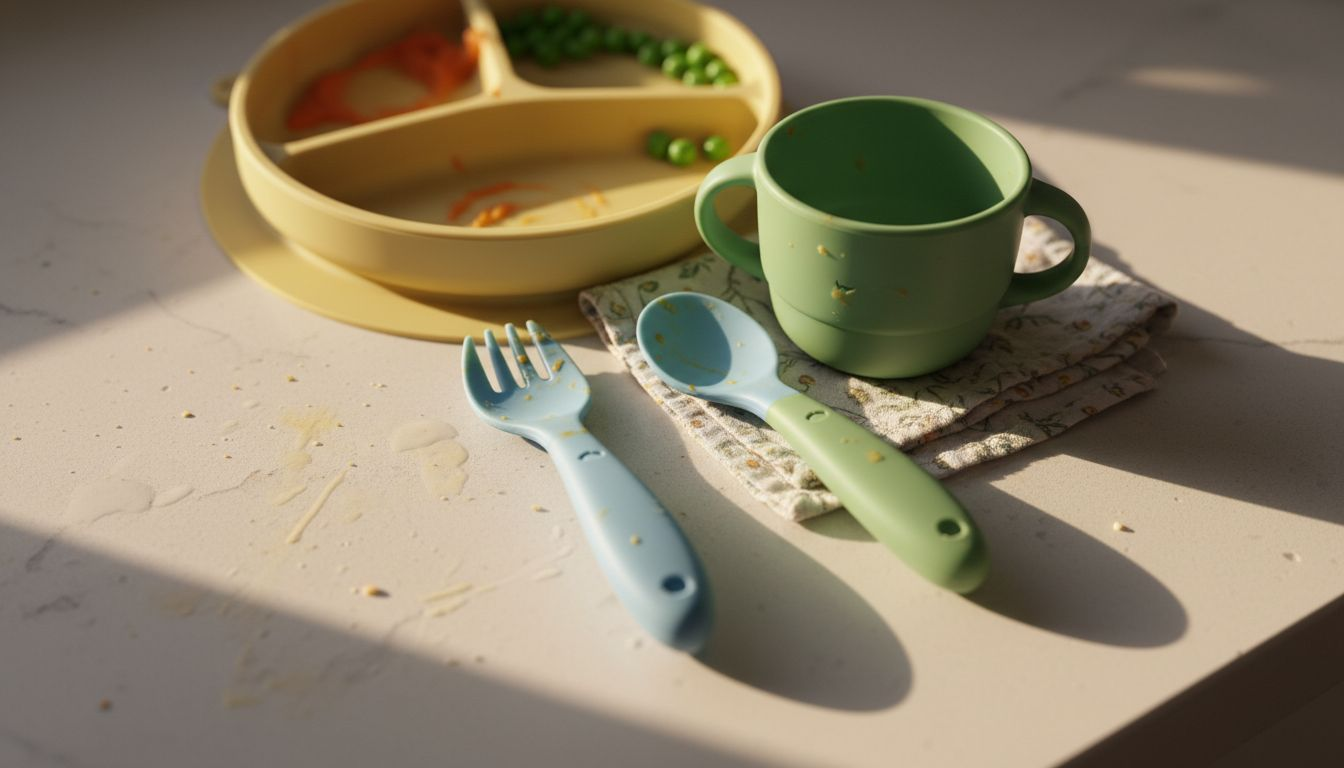
Soft-tipped spoons deserve special attention because they prevent the gum injuries common with rigid implements. Look for spoons with temperature-sensitive tips that change color when food is too hot. This simple feature prevents burns and builds your confidence during meal prep.
Suction-based divided plates revolutionize mess containment while teaching portion awareness. Strong suction prevents plate flipping, the universal toddler pastime that covers floors and walls in sweet potato. Divided sections naturally separate foods, helping babies learn that different items have distinct flavors and textures.
- Silicone bibs with food-catching pockets reduce waste and laundry
- Small, shallow bowls with non-slip bases prevent tipping
- Sippy cups with weighted bottoms and soft spouts transition from bottles
- Silicone placemats define eating space and protect surfaces
All recommended tools share one critical characteristic: complete absence of BPA, phthalates, and other harmful chemicals. Your baby will mouth, chew, and eventually use these items hundreds of times. Material safety is not optional.
Multi-purpose feeding sets offer coordinated tool collections that grow with your child, providing better long-term value than piecemeal purchases.
Pro Tip: Buy duplicate sets of your baby’s favorite utensils. When one goes missing or needs deep cleaning, you avoid mealtime meltdowns.
Recommended First Foods to Introduce in Baby-Led Weaning
After securing the right tools, you face the equally important question of what foods to offer. The World Health Organization recommends soft-textured fruits and vegetables for initial baby-led weaning foods to promote safe chewing skill development.
Start with naturally soft fruits that require minimal preparation. Ripe avocado slices provide healthy fats while their buttery texture dissolves easily in the mouth. Ripe banana spears, peeled but left long enough to grip, offer natural sweetness and potassium. Ripe pear pieces, steamed until tender, introduce new flavors without overwhelming texture.
Steamed vegetables create safe, nutritious first foods when prepared correctly. Carrot sticks steamed until fork-tender develop chewing skills without choking risk. Broccoli florets with long stems provide natural handles for tiny fists. Sweet potato wedges roasted until soft inside introduce complex carbohydrates and beta-carotene.
Proper food preparation follows specific safety guidelines. All pieces should be roughly the size of your baby’s fist, too large to fit entirely in the mouth. Foods must be soft enough to squish between your thumb and forefinger with gentle pressure. This squish test becomes your daily safety check.
- Avoid hard, round foods like whole grapes, cherry tomatoes, or nuts
- Skip sticky foods like peanut butter globs that can obstruct airways
- Eliminate small, hard items such as popcorn, raw carrots, or apple chunks
- Remove all seeds, pits, and tough skins before serving
Choosing the right feeding utensils works hand in hand with appropriate food selection to create safe feeding experiences. The combination of proper tools and correctly prepared foods minimizes risk while maximizing developmental benefits.
Comparison of Baby-Led Weaning Feeding Tools vs Traditional Methods
Understanding how baby-led weaning tools differ from traditional spoon-feeding implements helps you make informed decisions. The evidence strongly favors modern baby-led approaches for multiple outcomes.
Randomized controlled trials found baby-led weaning utensils led to 25% fewer feeding refusals than spoon-feeding purees. This dramatic difference stems from increased infant autonomy and improved appetite regulation. When babies control what enters their mouths, they develop healthier relationships with food.
Research demonstrates infants started self-feeding approximately one week earlier with baby-led weaning utensils than traditional spoon-feeding implements. This accelerated milestone achievement reflects better tool design that accommodates infant motor abilities.
| Feature | Baby-Led Tools | Traditional Spoon-Feeding |
|---|---|---|
| Appetite Regulation | Enhanced through self-pacing | Limited by caregiver control |
| Feeding Refusals | 25% lower | Higher resistance |
| Self-Feeding Milestone | 1 week earlier | Later achievement |
| Ergonomic Design | Optimized for infant grip | Adult-oriented handles |
| Mess Containment | Suction plates, catch bibs | Standard bowls, cloth bibs |
Parents consistently report higher satisfaction with baby-led feeding tools. Suction-based divided plates stay put during enthusiastic eating, reducing floor cleanup time significantly. Silicone bibs with deep pockets catch dropped food, allowing second chances that reduce waste.
Traditional plastic spoons lack the ergonomic consideration modern tools provide. Their thin handles slip through chubby fingers, and rigid materials can hurt sensitive gums. Standard bowls slide across high chair trays, teaching babies that mealtimes involve chasing dishes.
- Baby-led tools promote independent feeding skills
- Traditional methods maintain caregiver feeding control
- Modern implements reduce stress for both parent and child
- Conventional tools often require more direct supervision
Feeding set hygiene tips apply equally to both methods, but baby-led tools typically feature simpler designs that clean more thoroughly.
Safety and Hygiene Considerations for Baby-Led Weaning Essentials
No discussion of baby-led weaning essentials is complete without addressing safety and hygiene. These practices form the foundation of worry-free feeding experiences.
Parental supervision during feeding remains absolutely critical regardless of which tools or methods you choose. Never leave your baby alone while eating, even for seconds. Choking can occur silently and requires immediate intervention. Position yourself within arm’s reach during every meal.
Use only feeding tools clearly labeled as BPA-free and compliant with food safety standards. Inspect items regularly for damage such as cracks, tears, or loose pieces that could break off. Replace compromised tools immediately, as damaged implements pose ingestion risks.
Clean and sanitize feeding sets after every use to prevent bacterial contamination. Hot, soapy water removes visible food residue, but periodic deep cleaning with baby-safe sanitizers eliminates hidden pathogens. Dishwasher-safe tools simplify this process, though hand washing with attention to crevices works equally well.
- Establish a dedicated clean zone for preparing baby foods
- Wash your hands thoroughly before handling feeding tools
- Separate raw and cooked foods to prevent cross-contamination
- Store cleaned tools in covered containers, not open dish racks
Ensure all foods meet texture and size safety requirements before serving. The squish test mentioned earlier protects against choking, but you must perform it consistently. As your baby develops chewing skills, gradually introduce more challenging textures while maintaining appropriate sizes.
Create a feeding environment that balances independence with safety. High chairs with secure five-point harnesses prevent falls during enthusiastic reaching. Non-slip mats under high chairs ease cleanup while protecting floors. Good lighting helps you monitor every bite.
Feeding set hygiene guide and sterilizing feeding sets resources provide detailed protocols for maintaining clean feeding environments.
Pro Tip: Keep a dedicated bin for dirty feeding tools near your eating area. This prevents contaminated items from mixing with clean dishes and establishes clear cleaning workflows.
Product Pricing and Availability
Balancing budget constraints with quality needs challenges many families exploring baby-led weaning essentials. Understanding the pricing landscape helps you make strategic purchases.
Baby-led weaning essentials range from approximately $15 for basic starter sets to $50 or more for premium collections. This wide price range reflects differences in materials, design sophistication, and included pieces. Your budget absolutely can accommodate safe, effective tools.
Basic sets typically include BPA-free plastic spoons, a suction plate with two or three compartments, and a simple silicone bib. These foundational items suit beginners perfectly and cost $15 to $25. They meet all safety standards while providing essential functionality for early feeding exploration.
Mid-range options between $25 and $40 add ergonomic silicone utensils with textured grips, deeper suction plates with more compartments, and bibs with reinforced food catchers. These improvements enhance usability without breaking budgets.
Premium sets exceeding $40 feature advanced ergonomic designs developed with pediatric occupational therapists, medical-grade silicone throughout, and comprehensive piece collections covering multiple developmental stages. Families planning long-term use or managing special feeding needs often find premium investments worthwhile.
- Major e-commerce platforms stock extensive baby-led weaning selections
- Baby specialty stores offer hands-on examination before purchase
- Direct-from-manufacturer websites sometimes provide better pricing
- Subscription boxes occasionally include feeding essentials as samples
Consider value versus premium benefits carefully. If your baby has motor delays or texture sensitivities, premium ergonomic tools may accelerate progress significantly. For typically developing infants from budget-conscious families, basic sets provide everything necessary for success.
Most products enjoy wide availability across retail channels, so comparison shopping easily identifies best prices. Watch for bundle deals that reduce per-item costs while providing comprehensive tool collections.
Situational Picks: Choosing the Right Tools Based on Family Needs
Every family’s situation differs, so one-size recommendations fail most parents. Let me help you match essentials to your specific circumstances.
Budget-conscious families benefit enormously from starter sets featuring basic BPA-free plastic utensils and suction plates. These affordable collections, typically under $20, provide all safety features and fundamental functionality without premium pricing. You sacrifice some ergonomic refinement but gain accessible entry into baby-led weaning.
Long-term users planning to support multiple children or extended feeding journeys should invest in premium ergonomic silicone utensils. Higher upfront costs distribute across years of use, and superior designs better promote motor skill development. These tools withstand hundreds of dishwasher cycles while maintaining their supportive features.
Travel-friendly compact feeding sets with foldable suction plates revolutionize on-the-go meals. Collapsible bowls, retractable utensils, and lightweight designs pack easily into diaper bags without sacrificing functionality. Families who eat out frequently or travel regularly need these portable solutions.
Families with infants experiencing motor delays should seek specialized ergonomic tools designed for ease of grasp and enhanced safety. Occupational therapists often recommend extra-chunky handles, angled spoons that require less wrist rotation, and plates with higher edges that guide food onto utensils. These adaptations reduce frustration while building skills.
- First-time parents: Comprehensive starter sets with instructional materials
- Experienced parents: Individual premium pieces replacing worn items
- Allergy-concerned families: Clear, uncolored tools revealing hidden contamination
- Eco-conscious households: Sustainable bamboo and silicone combinations
Matching essentials to lifestyle reduces feeding stress significantly and supports consistent baby-led weaning practice. When tools fit your reality, you use them regularly instead of abandoning approaches that feel impractical.
Discover Your Perfect Baby-Led Weaning Sets at Skin Styles
Now that you understand what makes feeding essentials effective, finding the right products becomes straightforward.
Skin Styles offers carefully curated baby-led weaning collections designed around the safety, ergonomic, and usability principles this guide emphasizes. Every feeding set features BPA-free materials, thoughtful design details, and the practical functionality busy families need.

Explore the 8-piece silicone feeding set featuring everything from suction plates to catch bibs in one coordinated package. Discover creative approaches through the multi-purpose baby feeding sets blog that helps you maximize your investment. Access expert guidance in the feeding hygiene guide ensuring your tools stay safe and effective.
FAQ
What are the safest materials for baby-led weaning feeding tools?
Choose BPA-free, phthalate-free silicone or plastic explicitly certified safe for food contact by recognized safety organizations. Medical-grade silicone offers the highest safety profile, resisting bacterial growth while remaining gentle on gums. Always verify safety certifications before purchasing any feeding implement.
When should I start offering baby-led weaning foods and tools?
Begin around six months when your infant demonstrates good head control and can sit unsupported for several minutes. These physical milestones indicate readiness for self-feeding exploration. Consult your pediatrician for personalized readiness confirmation, especially if your baby was premature or has developmental concerns.
How can I prevent choking during baby-led weaning?
Always actively supervise infants during meals, positioning yourself within immediate reach to intervene if necessary. Prepare all foods soft enough to squish between your fingers and cut into appropriate sizes following feeding safety tips. Use ergonomically designed feeding tools that reduce risks by supporting proper self-feeding mechanics. Never offer hard, round, or small foods that commonly cause choking incidents.
Are expensive baby-led weaning tools worth it?
Premium tools typically offer superior ergonomics, extended durability, and versatile designs supporting multiple developmental stages. Families planning long-term use or addressing special feeding needs often find the investment worthwhile. Basic affordable sets suffice perfectly for beginners or budget-conscious families with typically developing infants. Choose based on your baby’s specific needs and your realistic feeding lifestyle rather than price alone.