

You wake up, look in the mirror, and your skin looks dull, tired, and somehow worse than when you went to bed. Sound familiar? The problem often isn’t your skin itself. It’s a routine that isn’t working with your body’s natural repair cycle. Your skin does its most intensive healing while you sleep, and the right products applied in the right order can make a real difference. This guide walks you through exactly how to build a nighttime routine that works, what products to use, and how to customize everything for your specific skin type.
Table of Contents
- How nighttime skincare works
- What you need for an effective nighttime routine
- Step-by-step nighttime skincare routine
- Choosing and layering active treatments
- Customizing your routine for unique skin needs
- What results to expect (and how to maximize them)
- Skincare picks to get you started
- Frequently asked questions
Key Takeaways
| Point | Details |
|---|---|
| Optimize nightly repair | Nighttime is when your skin repairs itself best, so proper routines amplify results. |
| Stick to proven steps | Follow a cleanse, treat, and moisturize routine with gentle active introduction for consistent improvements. |
| Choose actives carefully | Retinoids and hyaluronic acid boost results, but mix and layer them wisely for your skin type. |
| Customize for your needs | Adapt your products and steps to dryness, sensitivity, or aging for better outcomes. |
| Patience equals progress | Visible changes take time—track your routine and stick to it for best benefits. |
How nighttime skincare works
Your skin isn’t passive while you sleep. It’s actively repairing damage, producing collagen, and renewing cells. This is driven by your body’s circadian rhythm effects on skin, which cause cell turnover and collagen production to peak during nighttime hours. The skin barrier also becomes more permeable at night, meaning topical treatments absorb more effectively than they would during the day.
This is why the same moisturizer you use in the morning can deliver noticeably better results when applied at night. The nighttime skincare benefits are rooted in biology, not marketing. Understanding this helps you choose products that actually match what your skin needs after dark.
“Your skin’s repair processes peak at night due to circadian rhythm shifts, with increased cell turnover, collagen production, and greater absorption through a more permeable barrier.” — Byrdie
Here’s a quick look at how nighttime skin activity compares to daytime:
| Skin function | Daytime | Nighttime |
|---|---|---|
| Cell turnover rate | Lower | Higher |
| Collagen production | Moderate | Peaks during sleep |
| Barrier permeability | Tighter | More open |
| Repair activity | Minimal | Maximum |
| Product absorption | Standard | Enhanced |
This table makes it clear: nighttime is when your skin is most receptive. A well-structured global skincare routine guide takes full advantage of this window.
What you need for an effective nighttime routine
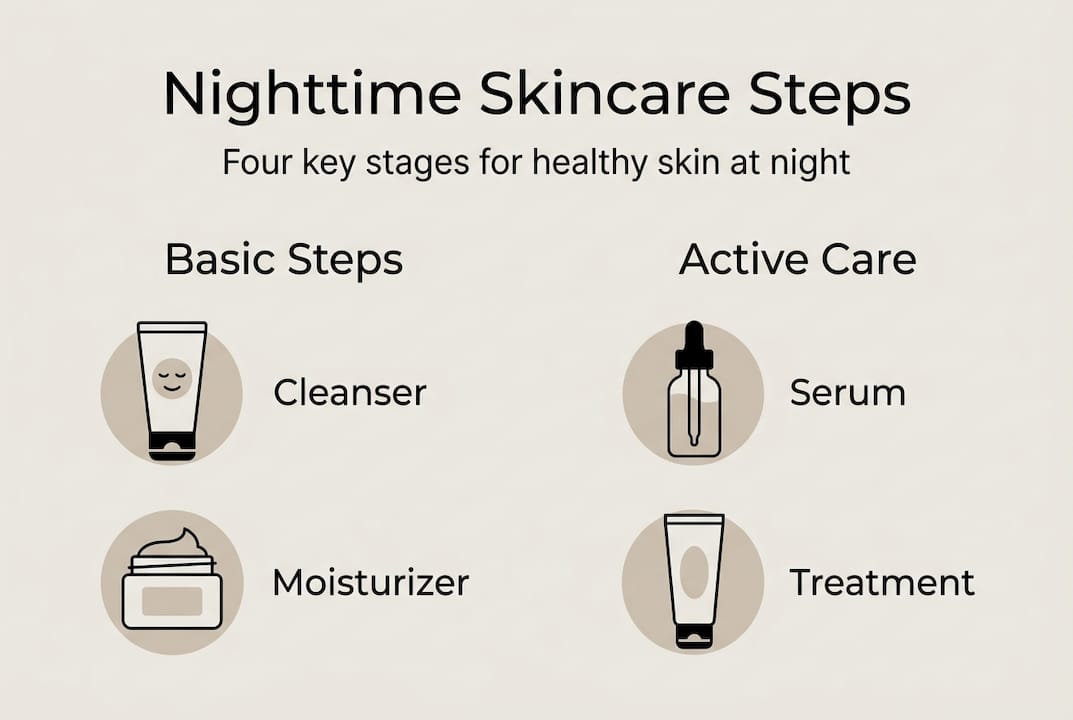
Building a solid routine doesn’t require a shelf full of products. The nighttime skincare steps break down into four core stages: cleanse, optional exfoliate or tone, treat with serums, and moisturize. That’s it. Everything else is a bonus.
Here’s a comparison of essential versus optional products:
| Product type | Essential or optional | Best for |
|---|---|---|
| Cleanser | Essential | All skin types |
| Toner or exfoliant | Optional (2-3x per week) | Oily, acne-prone, dull skin |
| Serum or treatment | Essential | Targeted concerns |
| Moisturizer | Essential | All skin types |
| Overnight mask | Optional | Dry or dehydrated skin |
| Eye cream | Optional | Puffiness, dark circles |
For dry or mature skin, look for products with hyaluronic acid and ceramides. These ingredients support the skin barrier and lock in moisture overnight. The routine essentials for this skin type lean toward richer textures and gentler formulas.
Key ingredients to look for:
- Hyaluronic acid: Draws moisture into the skin
- Ceramides: Strengthen and repair the skin barrier
- Retinol: Boosts cell turnover and collagen (introduce slowly)
- Niacinamide: Calms redness and controls oil
- Peptides: Support elasticity and firmness
Pro Tip: If you’re new to actives, start with just one new ingredient at a time. Adding multiple new products at once makes it impossible to know what’s helping or causing a reaction. Check out skincare for mature dry skin for a targeted approach.
Step-by-step nighttime skincare routine
Here’s the exact order to follow, based on routine best practices recommended by dermatologists and skincare experts:
- Double cleanse: Start with an oil-based cleanser to remove makeup, SPF, and excess sebum. Follow with a water-based cleanser to clean the skin itself. If you didn’t wear makeup or SPF, a single gentle cleanse is fine.
- Exfoliate or tone (2-3 nights per week): Use a chemical exfoliant like AHA or BHA to remove dead skin cells and improve texture. Skip this step on nights when you plan to use retinoids.
- Apply targeted serums: Layer your serums from thinnest to thickest consistency. Water-based serums go first, followed by oil-based treatments.
- Spot treatments: Apply any targeted treatments like retinol or vitamin C directly to areas of concern.
- Moisturize: Seal everything in with a moisturizer suited to your skin type. This step is non-negotiable, regardless of skin type.
Wait 1-2 minutes between each active step. This isn’t just patience. It’s consistency key advice that allows each layer to absorb properly before the next one goes on.
Pro Tip: Never use a strong retinoid and an exfoliating acid on the same night. This combination dramatically increases irritation risk. Alternate them on different nights instead. If you’re building an anti-aging routine, this scheduling matters a lot.
Choosing and layering active treatments
Actives are the powerhouse ingredients in your routine. But more isn’t always better. Knowing which ones to use and how to layer them prevents irritation and maximizes results.
Retinoids are among the most studied skincare ingredients available. Retinoids reduce wrinkles by boosting collagen production and accelerating cell turnover, with visible results typically appearing after 3 to 6 months of consistent use. Start every other night to let your skin adjust.
For sensitive skin, bakuchiol is a plant-based alternative that delivers similar benefits without the irritation. It’s worth exploring through a solid serum guide to understand how it fits into your routine.
Layering tips for active treatments:
- Apply water-based serums before oil-based ones
- Use hyaluronic acid after retinol to reduce dryness
- Pair peptides with moisturizer for added firmness support
- Avoid mixing vitamin C with retinol on the same night
- Use niacinamide to buffer irritation from stronger actives
A clinical study found that hyaluronic acid improves hydration and elasticity, and when combined with retinoids and AHA, delivers enhanced anti-aging results without excess irritation. That’s a powerful combination when used correctly.
Stat to know: Retinoids can produce visible wrinkle reduction in as little as 3 months, but most people see the clearest results between months 4 and 6. Patience is part of the process. Use a choosing a serum resource to match the right active to your concern.
Customizing your routine for unique skin needs
The four-step framework works for everyone, but the specific products you choose should reflect your skin’s individual needs. Here’s how to adapt:
Dry or mature skin: Use a creamy, hydrating cleanser. Prioritize hyaluronic acid serums, ceramide-rich moisturizers, and peptides. Introduce actives like retinol gradually. According to routine for dry/mature skin guidance, this skin type benefits most from layering hydration before sealing with a rich cream.
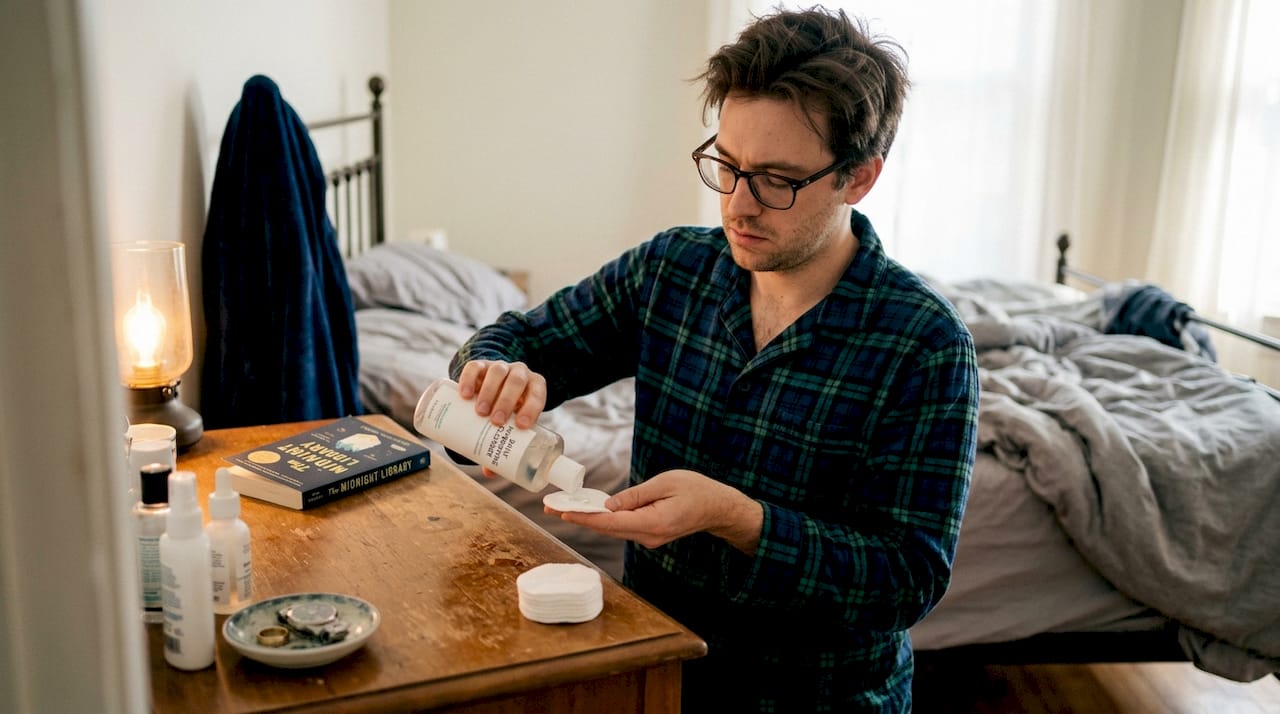
Sensitive skin: Patch test every new product before applying it to your full face. Swap retinol for bakuchiol. Avoid strong acids and stick to gentle, fragrance-free formulas. The Korean routine for mature skin approach is a great model here, emphasizing layered hydration over aggressive actives.
Oily or acne-prone skin: Use a gel cleanser to remove excess oil without stripping the skin. Choose lightweight, non-comedogenic moisturizers. Niacinamide is your best friend for controlling shine and calming breakouts. Chemical exfoliants like salicylic acid work well 2 to 3 nights per week.
Pro Tip: Even oily skin needs moisturizer at night. Skipping it can trigger your skin to produce even more oil to compensate. A lightweight gel moisturizer gives you hydration without heaviness.
What results to expect (and how to maximize them)
Setting realistic expectations keeps you consistent. Here’s a general timeline for common nighttime routine results:
| Ingredient or treatment | Expected timeline for results |
|---|---|
| Hyaluronic acid | Immediate plumping, lasting hydration in 2-4 weeks |
| Niacinamide | Reduced redness in 4-8 weeks |
| Retinoids | Visible wrinkle reduction in 3-6 months |
| Ceramides | Barrier improvement in 2-4 weeks |
| Peptides | Firmness improvement in 8-12 weeks |
Research on combined topical and oral treatments shows impressive numbers. One study found that a combined melatonin approach improved moisturization by 23.6% and reduced wrinkles by 18.5% compared to topical treatment alone. That’s a meaningful difference for anyone serious about anti-aging results.
“Consistency beats complexity every time. A simple routine done nightly outperforms an elaborate one done sporadically.” — Skincare principle backed by Women’s Health
To maximize your results, track your progress. Take a photo in the same lighting once a week. Keep a short skin journal noting what you used and how your skin felt. This makes it much easier to spot what’s working and what needs adjusting. Explore anti-aging routine results to see what consistent effort can achieve over time.
Skincare picks to get you started
Now that you have the knowledge, the next step is finding the right products to put it into practice. Skin-Styles.com makes that part easy.

Browse the facial creams and gels collection to find moisturizers suited to every skin type, from lightweight gels for oily skin to rich creams for dry and mature complexions. If anti-aging is your focus, the anti-wrinkle products collection features retinoids, peptide serums, and targeted treatments that fit directly into the routine steps covered above. For trusted K-beauty formulas with proven ingredients, the Cosrx collection is a great starting point. Every product is available with detailed descriptions to help you match what you’ve learned here to what goes on your skin tonight.
Frequently asked questions
What is the order of products in a nighttime skincare routine?
Start with cleanser, then apply an optional toner or exfoliant, follow with serums and targeted treatments, and finish with moisturizer. The 4-step routine is the standard framework most dermatologists recommend.
How long does it take to see results from retinoids?
Visible results from retinoids typically appear after 3 to 6 months of consistent nightly use, with collagen improvements continuing beyond that.
Should you use the same products every night?
Hydrating and gentle products like cleansers and moisturizers work best when used every night. Strong actives like retinoids and exfoliating acids should be alternated on different nights to avoid irritation.
Is double cleansing necessary every night?
Double cleansing is most beneficial on nights when you wore makeup or SPF. On bare-skin days, a single gentle cleanser is sufficient to prep your skin for treatments.
Can I use retinol and acids together at night?
It’s best to avoid using retinoids and exfoliating acids on the same night. Alternating them reduces irritation risk significantly, and for sensitive skin, bakuchiol is a gentler alternative to retinol altogether.