

TL;DR:
- Scientific evidence supporting “breast-like” bottle features is limited, emphasizing the importance of feeding technique.
- Paced bottle feeding and slow-flow nipples are proven to support healthy feeding behaviors better than specific bottle designs.
- Introducing cups early, practicing patience, and focusing on behavioral cues aid effective transition from bottles to self-feeding.
Walk into any baby store and you’ll see shelves lined with bottles claiming to mimic breastfeeding perfectly. The labels are bold, the promises are convincing, and the price tags reflect it. But here’s what most parents don’t hear until much later: most marketed claims about “breast-like” bottle features are backed by surprisingly thin scientific evidence. That doesn’t mean transitional bottles aren’t useful. It means understanding what actually works will save you money, stress, and a lot of guesswork during one of your child’s most important developmental windows.
Table of Contents
- What are transitional bottles and why are they used?
- The science behind transitional bottles: What actually matters?
- When and how to transition: Practical tips for parents
- Sippy cups, valves, and open cups: What designs actually promote healthy drinking?
- A fresh take: Why focusing on feeding technique beats chasing the perfect bottle
- Shop the right tools for your feeding journey
- Frequently asked questions
Key Takeaways
| Point | Details |
|---|---|
| Scientific claims vs. marketing | Most ‘breast-like’ bottle features are not backed by strong scientific evidence. |
| Early transition timing | Start cup practice around 6 months and aim to wean off bottles by 18 months. |
| Technique over tool | Parental technique and feeding strategies matter more than the bottle design itself. |
| Choose cups for sipping | Select cups that encourage sipping, avoiding valves that reinforce sucking patterns. |
What are transitional bottles and why are they used?
Transitional bottles are designed to support infants and toddlers as they move between feeding methods, most commonly from breastfeeding to bottle feeding, or from bottle feeding toward cups and self-feeding. Unlike standard bottles, which focus purely on liquid delivery, transitional bottles often aim to preserve specific feeding behaviors that support oral motor development.
The idea is sound. Feeding isn’t just about getting nutrition into a child. It involves jaw movement, tongue positioning, swallowing rhythm, and even breathing coordination. Transitional bottles attempt to account for these factors by offering features like flexible nipple shapes, adjustable flow rates, and ergonomic designs that claim to reduce nipple confusion.
Here are some of the most common features marketed on transitional bottles:
- Slow-flow nipples to mimic the effort required at the breast
- Wide-base nipples promoted as more “breast-like” in shape
- Flexible silicone that responds to jaw pressure
- Vented or anti-colic systems to reduce air intake
- Angled bottle necks to keep the nipple filled with milk during feeding
However, a 2025 research review found that scientific evidence supporting many of these marketed “breast-like” claims was scarce. Many bottles are built on marketing logic rather than clinical evidence, which puts parents in a tough spot.
| Feature claimed | What marketing says | What evidence shows |
|---|---|---|
| Wide, breast-shaped nipple | Reduces nipple confusion | Weak or absent evidence |
| Slow-flow nipple | Mimics breastfeeding effort | Some support, more research needed |
| Flexible nipple material | Feels like the breast | Largely anecdotal |
| Anti-colic vent system | Reduces gas and fussiness | Mixed evidence |
| Angled neck design | Prevents air ingestion | Limited clinical data |
The upshot? Transitional bottles can be genuinely useful tools, especially when it comes to controlling flow rate and supporting paced feeding. But the idea that one specific bottle will replicate breastfeeding is more hope than science. Parents who want to support self-feeding success in their children will benefit more from understanding technique than from chasing the “perfect” bottle.
The science behind transitional bottles: What actually matters?
Let’s be direct. Most bottle features marketed as “breast-like” are not supported by strong, peer-reviewed evidence. A rigorous 2025 systematic review found that only one high-quality study examined whether “breast-like” bottle features actually influence feeding outcomes, and the overall body of evidence was weak. That’s a striking gap considering how aggressively these features are marketed to new parents.
So what does the evidence actually support? Two key practices stand out repeatedly in pediatric feeding literature: paced bottle feeding and slow-flow nipple use. Paced bottle feeding is a technique, not a product feature. It involves holding the baby semi-upright, tilting the bottle horizontally, and allowing the infant to control the flow through natural sucking and pausing patterns. This approach can help prevent overfeeding and supports a more balanced oral motor rhythm regardless of which bottle you’re using.
“The bottle itself is rarely the deciding factor. Responsive feeding practice, including how you hold the bottle, how frequently you pause, and how you read your child’s hunger cues, consistently matters more than the bottle’s design.” This reflects the core message from clinical feeding research.
Here’s how popular bottle claims compare against evidence-based recommendations:
| Bottle feature | Evidence quality | Expert recommendation |
|---|---|---|
| “Breast-like” shape | Very weak | Prioritize technique instead |
| Slow-flow nipple | Moderate | Recommended for paced feeding |
| Wide-base nipple | Weak | No strong preference |
| Anti-colic venting | Mixed | Useful for some infants |
| Flexible nipple body | Anecdotal | Individual trial-and-error |
| Ergonomic bottle shape | Minimal data | Focus on hold position |
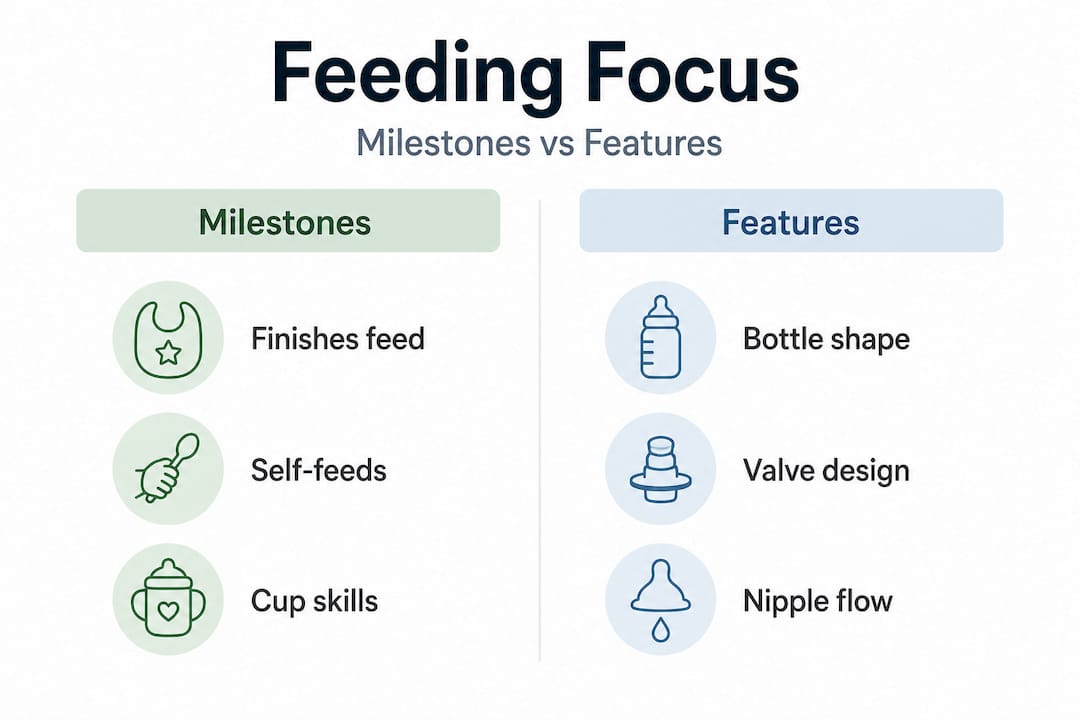
Tracking your child’s feeding milestones gives you a much more useful picture than comparing bottle specs. Are they finishing feeds at a comfortable pace? Are they showing early fullness cues like turning away or slowing their suck? Those behavioral signs tell you far more than a label on a bottle ever will.
Pro Tip: If you’re bottle feeding, practice pausing the feed every few minutes by tilting the bottle down slightly. Let your baby decide whether to continue. This single habit does more for healthy feeding development than most premium bottle features combined.
Investing in quality feeding sets built with safe materials and practical designs will serve you better than expensive bottles built on unproven claims.
When and how to transition: Practical tips for parents
Timing matters a lot when it comes to bottle weaning. Moving too fast can frustrate your child. Moving too slow can create strong bottle dependency that makes later weaning harder. Research and expert guidance give us helpful benchmarks to work with.
Pediatric experts commonly recommend introducing a cup as early as 6 months of age, alongside bottle or breastfeeds, and aiming to complete bottle weaning between 12 and 18 months. Extended bottle use beyond 18 months is associated with higher risks of tooth decay, iron deficiency, and feeding dependency that can affect appetite regulation.
Here’s a practical step-by-step process for making that transition go smoothly:
- Introduce a cup early. Offer a small open cup or straw cup at 6 months during mealtimes. It doesn’t need to replace the bottle yet. Familiarity builds comfort.
- Replace one bottle feed at a time. Start with the midday feed, which tends to have the least emotional attachment. Replace it with a cup feed for one to two weeks before making another swap.
- Shift to water in bottles. As you near 12 months, begin offering only water in bottles. Reserve milk for cups. This naturally reduces bottle appeal.
- Change the routine, not just the tool. If your child associates bottles with a specific chair or pre-nap ritual, gently alter those elements alongside the bottle swap.
- Make cups exciting. Let your child pick a cup at the store, use bright colors, or add a fun straw. Novelty drives curiosity, and curiosity drives willingness.
- Be consistent but patient. Expect some protest, especially around the bedtime bottle, which is typically the last to go. Normalize the process with calm repetition over days, not hours.
Supporting your child’s growing feeding spoon skills alongside cup introduction helps build the broader self-feeding confidence that makes this whole phase less overwhelming.

Pro Tip: Pair cup practice specifically with mealtimes rather than offering cups randomly throughout the day. When a cup always appears alongside food, children start associating it with the normal rhythm of eating, which makes the transition feel natural rather than forced.
The baby-led weaning approach also pairs well with gradual bottle weaning, since it encourages children to explore self-directed eating from an early age and builds independence in ways that make cup use feel like a natural next step.
Sippy cups, valves, and open cups: What designs actually promote healthy drinking?
Not all cups are created equal. In fact, the type of cup you choose during transition can significantly affect whether your child develops a mature, healthy drinking pattern or continues the sucking motion associated with bottle and breast feeding.
Sippy cups are the most popular transition tool, but they’re not without drawbacks. Many traditional sippy cups with spill-proof valves require a child to suck rather than sip, which keeps the same oral motor pattern as bottle feeding going much longer than necessary. That sucking motion can affect tongue positioning and, over time, has been linked to concerns about dental development and speech patterns.
Here’s a breakdown of common cup designs:
- Valve sippy cups: Easy for parents, familiar for babies. But they require sucking rather than true sipping, which can delay oral motor development.
- Straw cups: Encourage a slightly more mature oral pattern. Better than valved sippies for development, but straws still differ from open-cup drinking.
- 360-degree trainer cups: Designed to spill-resist while allowing lip drinking around the rim. A reasonable middle step between sippy and open cup.
- Open cups (small, weighted): The gold standard for oral development. Messy at first, but they teach real sipping skills fastest.
- Sport-top or bite-and-sip cups: Similar downsides to valve sippies. Better for older children on the go than for early transition.
“Designs that encourage sipping over sucking are consistently preferred by pediatric experts. Minimizing or eliminating valves is a key recommendation for healthy drinking skill development,” according to expert guidance on transitional cup use.
For parents navigating messy mealtimes, having the right setup helps. A dedicated mess-free feeding space with practical tools makes practicing open-cup drinking far less stressful. Yes, your child will spill. That’s part of learning. A good bib and a suction plate setup turn messes into manageable moments rather than frustrating ones.
The goal is to move toward an open cup or straw cup as soon as your child shows readiness, typically between 9 and 12 months. Many children who practice regularly can manage small amounts from an open cup by their first birthday.
A fresh take: Why focusing on feeding technique beats chasing the perfect bottle
Here’s something the baby product industry doesn’t want you to sit with too long: the bottle you choose matters far less than how you use it. We’ve reviewed the research. We’ve looked at what pediatric feeding specialists consistently recommend. And the pattern is clear. No amount of premium silicone or “breast-like” contouring replaces the simple, patient act of responsive feeding.
Parents are understandably drawn to product solutions. When you’re sleep-deprived and your baby is fussy, a bottle that promises to solve the problem feels like hope in a box. But the real parent experiences that lead to successful feeding transitions almost always involve consistency, calm, and practice rather than a specific brand or design.
What actually moves the needle? Slow, paced feeding sessions where you follow your child’s cues. Consistent exposure to cups during mealtimes so the new tool becomes familiar. Patience when a child rejects a cup for a week, and then suddenly accepts it with ease on day eight.
The uncomfortable truth is that marketing around transitional bottles has created a culture of anxiety around choosing the “right” one. Parents second-guess perfectly good feeding setups because a new bottle promises better latch transfer or less colic. Meanwhile, the evidence quietly suggests that those promises are mostly noise.
Support your child’s feeding skills, not just the feeding tool. A good slow-flow nipple, a practical open cup, and your patient presence during feeds will outperform any premium bottle on the market.
Shop the right tools for your feeding journey
The guidance in this article is meant to free you from overthinking the bottle aisle and focus on what genuinely supports your child’s development. But having the right physical tools still matters, especially when they’re thoughtfully designed and built from safe, BPA-free materials.

At Skin-Styles.com, we’ve pulled together feeding essentials that align with what developmental experts actually recommend: practical designs, safe materials, and tools that support independence rather than dependency. If you’re ready to make the transition smoother and more confident for both you and your child, explore our toddler feeding essentials set. It includes everything you need to support self-feeding milestones alongside your cup transition journey, all in one practical, parent-tested bundle.
Frequently asked questions
Are “breast-like” features on bottles truly important for feeding success?
Scientific support for “breast-like” bottle features is limited; a 2025 review found evidence for these claims was scarce, and technique-focused approaches like paced feeding consistently show stronger support.
What is the best age to start moving from bottle to cup?
Pediatric experts recommend introducing cups around 6 months of age, with bottle weaning ideally completed between 12 and 18 months to support healthy development and reduce dependency.
Should I use a sippy cup or go straight to an open cup?
Expert guidance favors cups that promote sipping over sucking, meaning open cups or straw cups are preferred over traditional valve-based sippy cups for better oral motor development.
How can I help my child successfully use transitional bottles?
Use a slow-flow nipple, practice paced feeding by pausing frequently during feeds, and give your child regular opportunities to practice with a cup during mealtimes so the new skill builds naturally over time.