

TL;DR:
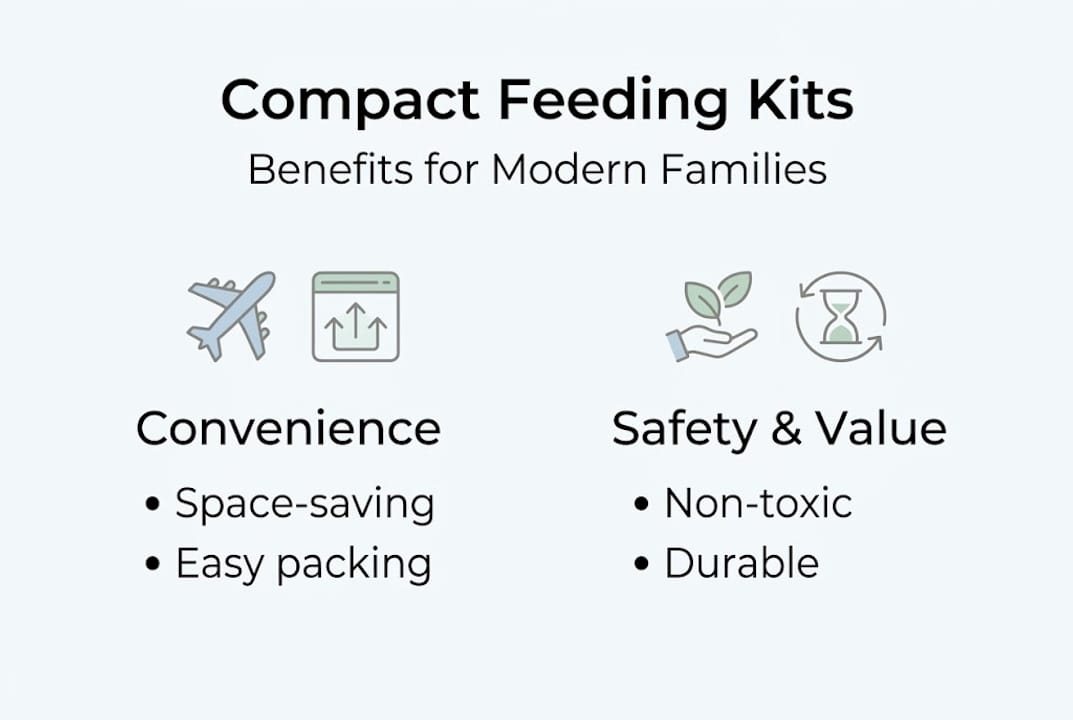
- Compact feeding kits are space-saving, all-in-one solutions designed for modern, mobile families.
- Silicone components in these kits are safe, durable, and easy to clean, ensuring safe mealtimes.
- Using a well-chosen compact kit can create calmer routines, reduce mess, and encourage independent feeding.
More gear has never guaranteed better mealtimes. Yet many parents find themselves buried under towers of mismatched bowls, oversized plates, and bulky bibs that barely fit in a single cabinet, let alone a diaper bag. The truth is that a leaner, smarter approach to baby feeding gear can actually produce calmer routines, less mess, and more confidence for both you and your child. Compact feeding kits are gaining serious traction among families, and for good reasons that go well beyond minimalist trends. Here is what you need to know before your next purchase.
Table of Contents
- What are compact feeding kits?
- Convenience: Making meals simple at home and on-the-go
- Safety and materials: Why parents trust silicone in feeding kits
- Compact versus traditional: A direct comparison for families
- Practical tips: Choosing and using your compact kit
- A realistic take: Why compact isn’t always ‘less’—it’s often ‘more’
- Discover solutions designed for modern families
- Frequently asked questions
Key Takeaways
| Point | Details |
|---|---|
| Compact kits save space | These kits fit easily into bags and reduce kitchen clutter for busy families. |
| Safety you can trust | Food-grade silicone is BPA-free and gentle, offering peace of mind for parents. |
| Mess-free meals anywhere | Foldable and suction-based designs keep feeding straightforward at home or on-the-go. |
| Smart buying is simple | Look for certifications, reputable brands, and design features tailored to your child’s stage. |
What are compact feeding kits?
A compact feeding kit is a curated collection of feeding essentials designed to take up as little space as possible while still covering every mealtime need. Think of it as the difference between packing a full suitcase and packing a perfectly organized carry-on. Everything that matters fits, and nothing that doesn’t is included.
Most kits contain some combination of the following:
- A shallow, wide plate with or without divided sections
- A deep bowl for soups, porridges, and purees
- A soft-tipped spoon sized for small mouths
- A sippy cup or lidded drinking cup
- A bib, often foldable or with a food-catching pocket
What sets these kits apart from traditional sets is intentional design. Each piece nests into or stacks on the others. The dimensions are chosen to fit inside standard diaper bag pockets, stroller organizers, and even large purse compartments. That level of planning makes a real difference when you are rushing to a restaurant or packing for a weekend at grandma’s house.
These kits are generally designed to serve children from the start of solid foods, around four to six months, through the toddler years and beyond. Younger infants starting on purees benefit from softer spoons and deeper bowls. Older toddlers transitioning to self-feeding benefit from plates with suction bases that stay in place and cups with easy-grip handles.
Material matters enormously here, and silicone has become the gold standard for most compact kit components. Food-grade silicone is BPA-free, flexible, durable, non-toxic, and gentle on gums, making it suitable from early solids all the way through the toddler stage. Parents who have invested in quality feeding sets consistently report that silicone pieces outlast their plastic counterparts and hold up through hundreds of dishwasher cycles without warping or staining.
The popularity of these kits is not a coincidence. Modern families are smaller, more mobile, and more conscious of what touches their child’s food than previous generations. A compact kit answers every one of those concerns in a single, well-designed package.
Convenience: Making meals simple at home and on-the-go
Convenience is often dismissed as a shallow reason to buy something. But when it comes to feeding a six-month-old at a crowded airport or managing a toddler’s lunch at daycare, convenience is not a luxury. It is a necessity.
Compact feeding kits are built around the realities of modern family life. Because the pieces are small and nest together, the entire kit typically fits inside a single zippered pouch. No rummaging through a giant bag to find a matching spoon. No discovering that you packed the bowl but forgot the bib.
Here is what genuinely useful portability looks like in practice:
- Suction bases on plates and bowls grip smooth surfaces like restaurant tables and high chair trays, reducing the chance of a bowl flying across the room during a toddler’s dramatic moment
- Foldable bibs collapse flat and slip into a side pocket, taking up almost no space
- Lockable lids on cups keep beverages secure during transit, even in a bag that gets jostled around
- Soft, flexible spoons that bend slightly without breaking are safer for young gums and easier to pack without worrying about breakage
Foldable and lockable designs with suction features and soft materials enable mess-free, safe feeding anywhere a family goes, a point that speech language pathologists who work with early feeders consistently highlight when recommending tools for developmental stages.
“The best feeding tool is the one that works equally well at your kitchen table and at a picnic blanket in the park.”
The convenience factor extends into your home, too. Fewer pieces means fewer items to wash, dry, and organize. Many parents who switch to compact kits report that cleaning up after a meal takes noticeably less time, and that their kitchen cabinets feel more manageable. That mental clarity ripples outward in ways that are hard to quantify but easy to feel at the end of a long day.
For mess-free feeding tips that work alongside compact kits, the real secret is pairing the right tools with consistent mealtime positioning. A suction bowl only works if the surface is clean and dry before you press it down. A foldable bib only stays in place if it’s sized correctly for your child. Small details, big results.
Pro Tip: When evaluating a kit for true portability, pack it into your diaper bag before buying. If it fits without forcing anything, and if the zipper closes without struggle, that kit will work for your life.
Safety and materials: Why parents trust silicone in feeding kits
Safety is the one non-negotiable in any feeding purchase. No amount of cute design or clever engineering matters if the materials touching your child’s food and mouth aren’t safe.
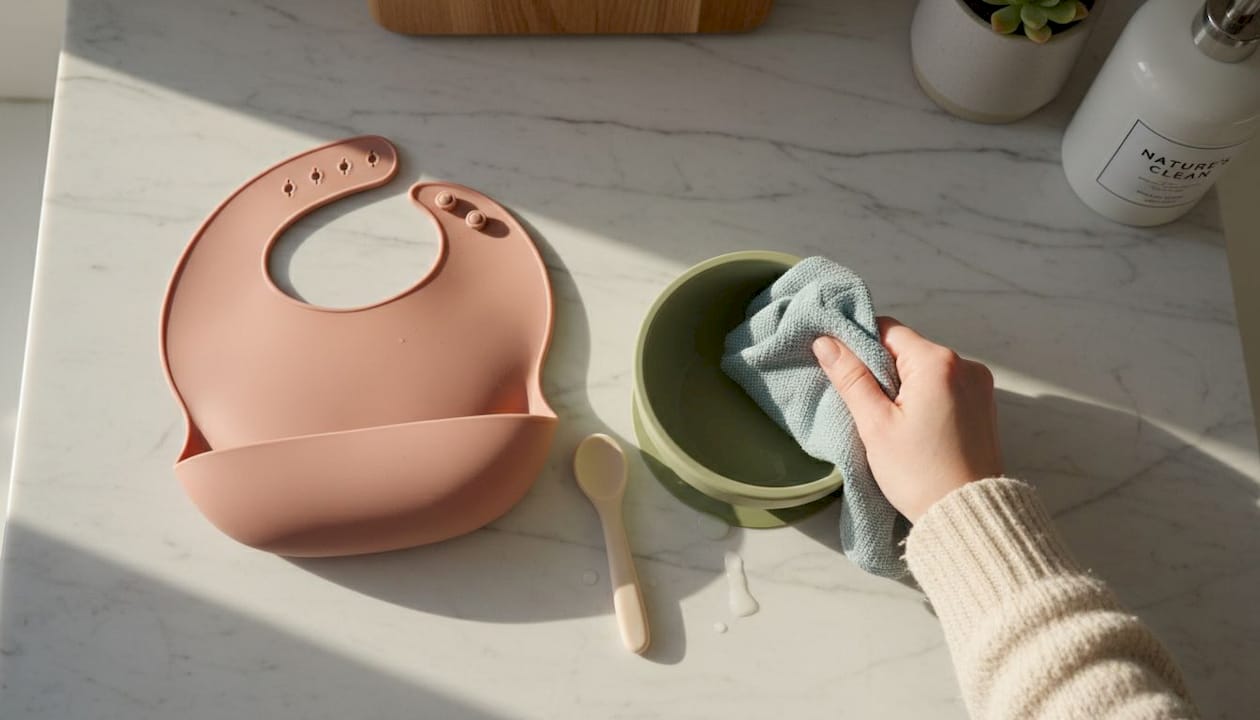
Food-grade silicone is BPA-free, flexible, durable, non-toxic, and gentle on young gums, which is why pediatric feeding specialists and parents alike have embraced it. But how does it compare to the other materials you’ll encounter on the market?
| Material | Safety profile | Durability | Portability | Ease of cleaning |
|---|---|---|---|---|
| Food-grade silicone | Excellent, BPA-free, non-toxic | Very high | Excellent, lightweight and flexible | Dishwasher safe |
| Stainless steel | Excellent, naturally BPA-free | Extremely high | Moderate, heavier | Dishwasher safe |
| Bamboo | Good, FDA-approved alternatives | Moderate | Good | Hand wash preferred |
| Standard plastic | Variable, watch for BPA | Moderate | Excellent | Dishwasher safe (varies) |
What the table shows clearly is that silicone leads across the most critical categories for parents of young children. Stainless steel is a worthy runner-up for durability, but it is heavier and lacks the flexibility that makes silicone so forgiving on an infant’s sensitive gums. Bamboo is a naturally appealing option, but it requires more careful cleaning and can crack over time, creating small crevices where bacteria can hide.
Spotting food-grade certification on packaging is not always straightforward. Look for labels that specifically say “food-grade silicone” rather than just “silicone.” The distinction matters because industrial silicone is not safe for food contact. Also look for explicit “BPA-free” and “phthalate-free” claims, and check whether the product meets FDA or LFGB standards, which are the two most rigorous certifications for food contact materials.
The silicone bib benefits extend beyond safety alone. Silicone bibs with food-catching pockets actually reduce the total amount of food that lands on clothing or the floor. That is less laundry and less mess in a single, well-designed accessory.
Pro Tip: Avoid kits that list “silicone-coated” rather than “100% food-grade silicone.” A coating can chip or peel over time, which defeats the purpose of choosing silicone in the first place.
Compact versus traditional: A direct comparison for families
Not every feeding situation calls for a compact kit. Understanding when each option shines helps you make a decision that actually fits your family’s life rather than someone else’s Instagram routine.
Compact kits prioritize convenience over the multi-gadget approach of full-size traditional sets, though some experts note that FDA-approved materials like bamboo and steel also serve important roles depending on the context and the child’s developmental needs.
| Feature | Compact kit | Traditional full-size set |
|---|---|---|
| Storage footprint | Minimal, nests together | Large, requires dedicated shelf space |
| Travel-ready | Yes, fits in diaper bag | No, requires extra bag |
| Piece count | 4 to 6 essential items | 8 to 15 or more items |
| Child age range | 4 months through toddler years | Often stage-specific |
| Cleaning time | Short, fewer pieces | Longer, more items to wash |
| Cost | Moderate, all-in-one value | Variable, can add up quickly |
Here is how to assess which type of kit makes sense for your specific situation:
- Identify your primary feeding context. If most meals happen at home with occasional outings, a traditional set at home and one compact kit for travel is a smart combination.
- Count how many locations feed your child regularly. Daycare, grandparents, and your own home each represent a separate feeding environment. A compact kit per location eliminates the scramble of packing and repacking.
- Assess your storage situation honestly. A small kitchen or apartment makes the case for compact kits even stronger, since every square inch of cabinet space matters.
- Think about your child’s current developmental stage. A six-month-old on purees has different needs than an 18-month-old who insists on using a spoon independently. Choose a kit that grows with those needs.
For detailed guidance on maintaining whichever kit you choose, reviewing feeding kit hygiene practices is a valuable next step. Clean gear is safe gear, and compact kits are generally easier to keep clean simply because they have fewer pieces to track.
Practical tips: Choosing and using your compact kit
Armed with the background knowledge, here is how to put it all into practice. Buying the right compact kit takes about five minutes of focused evaluation. Using and maintaining it well means it serves your family for years.
What to look for when buying:
- Explicit “food-grade silicone” labeling, not just “silicone”
- BPA-free and phthalate-free claims on the packaging or product listing
- FDA or LFGB certification marks where available
- Suction bases on plates and bowls for younger children who are still developing hand control
- Lockable or leak-proof lids on any included cup
- Pieces that nest or stack together compactly
- A brand with clear customer support and a transparent return policy
Cleaning and maintenance best practices:
- Rinse silicone pieces immediately after meals to prevent food from drying and staining
- Most food-grade silicone components are dishwasher safe, but always confirm on the label before loading them into the bottom rack near the heating element
- Inspect pieces monthly for tears, cracks, or discoloration, which can signal material breakdown
- Replace any piece that shows significant wear, because even safe materials can harbor bacteria in deep cracks
Encouraging independent feeding with compact kits:
One underappreciated advantage of compact kits is how well-suited they are to encouraging self-feeding. Smaller plates and bowls feel less overwhelming to a toddler learning to use a spoon. A plate that does not slide across the table lets a child focus on the mechanics of eating rather than chasing their food around. That builds confidence, which directly reduces mealtime frustration for everyone at the table.
Information on choosing silicone bibs that pair well with compact kits helps you complete the picture. A bib with a deep food-catching pocket paired with a suction plate means the floor stays considerably cleaner, and your child can practice self-feeding without anxiety about the mess.
When to upgrade or expand:
As children grow, their needs shift. A kit that was perfect at six months may need supplementing by 18 months when a child wants a larger plate, a straw cup, or divided sections to prevent foods from touching. Check your kit every few months against your child’s current stage and add single pieces as needed rather than replacing the entire kit unnecessarily.
A realistic take: Why compact isn’t always ‘less’—it’s often ‘more’
Here is something that rarely appears in product descriptions: going compact often improves mealtimes not by doing less, but by removing the friction that makes feeding harder than it needs to be.
We have seen this pattern consistently. Families who scaled back to a single, well-designed compact kit reported that meals felt calmer. Children had fewer meltdowns. Parents spent less time searching for matching pieces and more time actually engaging with their kids during meals. The clutter was not just physical. It was cognitive. Fewer things to manage meant more mental space for what actually mattered.
Child development professionals often note that clear, consistent environments help young children feel more secure. A predictable set of familiar feeding tools, the same bowl, the same spoon, the same bib, creates a ritual that signals “it is time to eat.” That routine is genuinely developmental, not just convenient.
The real-world silicone advantages become most visible when you see how much smoother a meal runs when every tool works as expected, stays in place, and cleans up in seconds. Compact is not a compromise. It is a better-thought-out version of what feeding gear should always have been.
Discover solutions designed for modern families
Finding products that genuinely serve your family’s daily rhythm, without overwhelming your space or your routine, is exactly what thoughtful shopping looks like. At Skin-Styles.com, the approach to family-oriented products is the same as it is to skincare: quality materials, clean formulas, and purposeful design.

Whether you’re building out a feeding routine for your little one or looking to simplify your own self-care regimen, Skin-Styles.com carries curated options across categories. Explore our range of facial creams and gels for parents who also want to prioritize their own skin health, or browse our targeted anti-wrinkle solutions designed to fit into busy lives without complicated routines. Simple, effective, and designed for real families.
Frequently asked questions
Are silicone feeding kits safe for infants and toddlers?
Yes, food-grade silicone kits are BPA-free, flexible, non-toxic, and gentle on young gums, making them safe from the introduction of solids all the way through the toddler years.
How easy are compact feeding kits to clean?
Most compact kits, especially those made from food-grade silicone, are dishwasher safe and designed so that food slides off easily, making post-meal cleanup significantly faster than with traditional sets.
Can compact feeding kits really reduce feeding mess?
Compact kits with suction bases and foldable parts significantly reduce spills and scattered food both at home and while traveling, particularly when used with a silicone bib that has a food-catching pocket.
What should I look for in a quality compact feeding kit?
Prioritize food-grade certification, BPA-free and phthalate-free materials, secure suction or locking features, and a reputable brand with transparent product information and responsive customer support.