

Over 60 percent of American adults assume their skin type is fixed for life, yet real skin changes with age, habits, and environment. For health-conscious parents worldwide, the search for personalized skincare can be confusing thanks to outdated ideas and stereotypes. This guide cuts through common myths and reveals how understanding your own skin’s unique traits leads to better beauty routines, healthier choices, and results tailored to every individual.
Table of Contents
- Defining Skin Types And Common Misconceptions
- Major Skin Type Categories And Their Traits
- How Skin Types Change Over Time
- Factors That Influence Your Unique Skin Type
- Risks Of Misidentifying Or Ignoring Skin Type
- Tailoring Your Skincare Routine To Skin Type
Key Takeaways
| Point | Details |
|---|---|
| Comprehensive Skin Assessment is Essential | Understanding individual skin types requires a professional evaluation as they are influenced by multifaceted factors including genetics and environment. |
| Skin Types are Dynamic | Skin characteristics can change over time due to age, hormones, and lifestyle, necessitating regular reassessment. |
| Tailored Skincare is Crucial | Customizing skincare products based on one’s specific skin type enhances effectiveness and minimizes adverse reactions. |
| Avoid Misidentification | Misidentifying skin type can lead to ineffective treatments and exacerbate existing skin issues. |
Defining Skin Types and Common Misconceptions
Understanding skin types is far more complex than simplistic racial or color-based categorizations. Modern dermatology recognizes that skin characteristics are nuanced and influenced by multiple factors beyond phenotype. Sophisticated skin classification systems reveal the intricate nature of skin diversity, challenging outdated perceptions.
Traditionally, skin types were categorized using the Fitzpatrick scale, which primarily measured UV response and pigmentation. However, contemporary research demonstrates that skin classification requires a multidimensional approach. Key factors now include skin hydration, sensitivity, oil production, resilience, and environmental interactions. This holistic perspective moves beyond surface-level observations to understand an individual’s unique dermatological profile.
Common misconceptions persist about skin typing. Many people mistakenly believe skin types are static or exclusively determined by racial background. In reality, skin characteristics can change due to age, hormonal shifts, diet, stress levels, and geographic location. Dermatological research highlights the critical need for precise, culturally sensitive language that recognizes individual skin diversity and complexity.
Pro tip: Consult a professional dermatologist for a comprehensive skin assessment that goes beyond generalized categorizations and provides personalized insights into your unique skin characteristics.
Major Skin Type Categories and Their Traits
Modern dermatology recognizes five primary skin type categories, each with unique characteristics that guide personalized skincare approaches. Comprehensive skin classification systems reveal the nuanced nature of skin diversity, emphasizing that understanding your specific type is crucial for effective treatment.
The five primary skin types include normal, dry, oily, combination, and sensitive skin. Normal skin represents the ideal balance of hydration and oil production, characterized by smooth texture and minimal sensitivity. Dry skin typically presents with rough, tight sensations and tends to lack natural oils, making it prone to flaking and discomfort. Oily skin produces excess sebum, resulting in a shiny appearance, enlarged pores, and increased potential for acne breakouts. Combination skin demonstrates mixed characteristics, often featuring an oily T-zone (forehead, nose, and chin) with drier cheek areas. Sensitive skin is the most delicate category, easily irritated and prone to redness, requiring gentle and carefully selected skincare products.

Here’s a concise overview of the five primary skin type categories and their unique traits:
| Skin Type | Typical Texture | Key Challenge | Ideal Product Feature |
|---|---|---|---|
| Normal | Smooth, balanced | Few issues, maintain | Gentle, supportive ingredients |
| Dry | Rough, tight | Flaking, discomfort | Deep hydration, barrier repair |
| Oily | Shiny, porous | Acne, excess sebum | Oil control, non-comedogenic |
| Combination | Mixed T-zone/chin | Multi-zone care needs | Targeted, region-specific care |
| Sensitive | Fragile, reactive | Redness, irritation | Soothing, hypoallergenic formula |
Interestingly, skin type characteristics vary significantly based on geographic location, genetic background, hormonal changes, and lifestyle factors. What works for one individual might not be suitable for another, underscoring the importance of personalized skincare routines that adapt to your skin’s unique needs and environmental influences.
Pro tip: Conduct a professional skin assessment with a dermatologist to accurately determine your specific skin type and develop a tailored skincare strategy.
How Skin Types Change Over Time
Skin is not a static entity but a dynamic system that transforms throughout an individual’s lifetime. Skin aging involves complex biological processes that fundamentally alter skin type characteristics, influenced by both intrinsic and extrinsic factors. Genetics, hormones, environmental exposures, and lifestyle choices all play crucial roles in determining how skin evolves.
During different life stages, individuals experience significant skin transformations. Teenagers often struggle with oily skin and acne, while young adults might maintain balanced skin types. As people enter their thirties and forties, skin typically becomes drier and less elastic. Hormonal changes during pregnancy, menopause, and aging can dramatically shift skin hydration, sensitivity, and oil production. For instance, previously oily skin might become combination or dry, while normally resilient skin could develop increased sensitivity.
Genetic profiling reveals intricate skin aging mechanisms that demonstrate how external factors accelerate skin type modifications. Sun exposure, diet, stress, and skincare habits can either preserve skin health or expedite aging processes. Chronic UV radiation, for example, can cause premature skin thinning, reduced elasticity, and increased sensitivity, fundamentally altering one’s original skin type characteristics.
Pro tip: Adapt your skincare routine every five years to accommodate your evolving skin type, and schedule regular professional skin assessments to track changes.
Factors That Influence Your Unique Skin Type
Skin traits emerge from a complex interaction of genetic and environmental factors that create an individual’s unique dermatological profile. Our genetic inheritance determines fundamental characteristics like sebum production, skin texture, and pigmentation, while external influences continuously shape and modify these inherent traits throughout our lifetime.
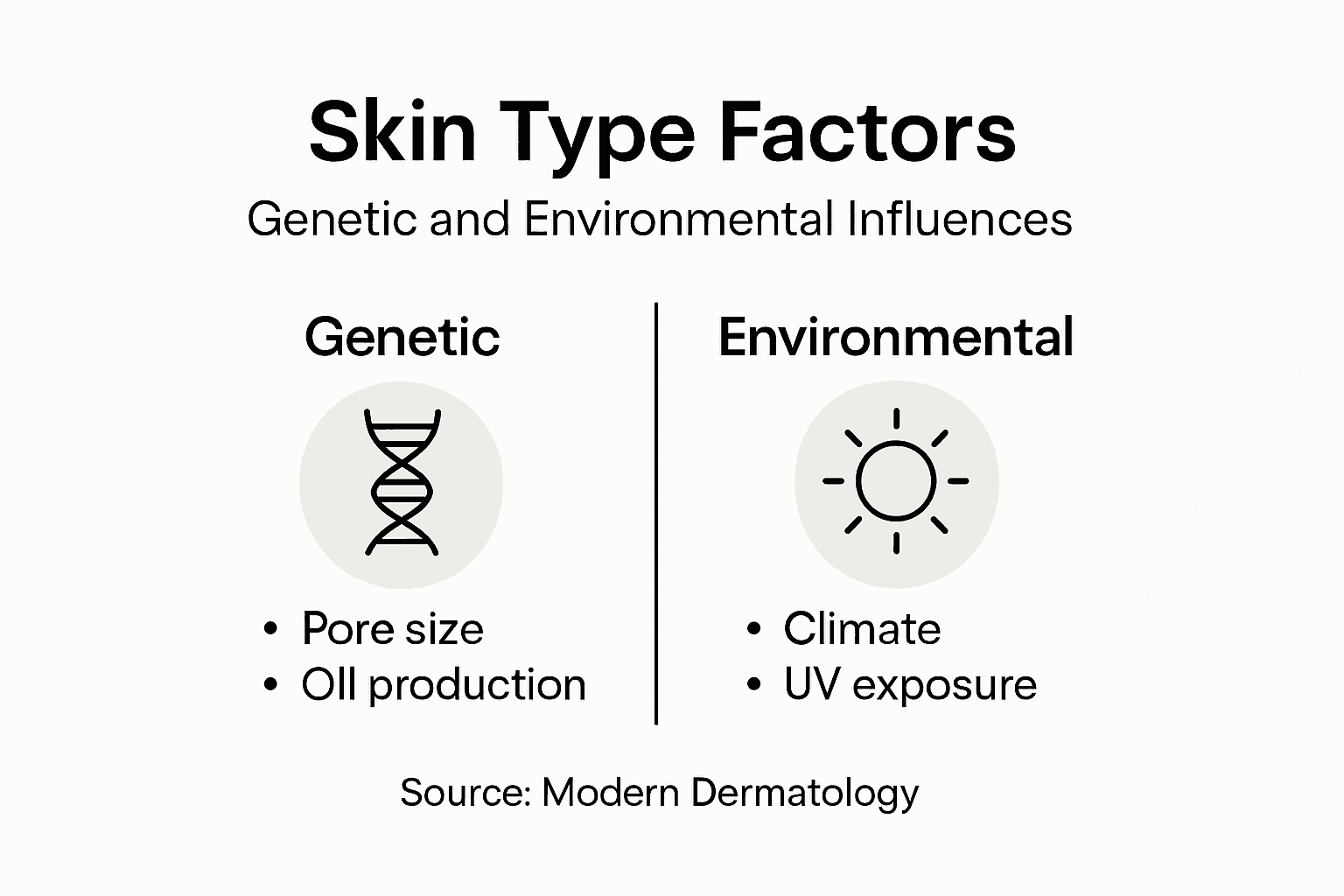
Genetic factors represent the foundational blueprint of skin type, influencing characteristics such as pore size, oil production, and natural elasticity. Hormonal changes play a critical role in skin transformation, with fluctuations during puberty, pregnancy, and menopause dramatically altering skin’s hydration, sensitivity, and oil production. Some individuals may experience dramatic shifts from oily to combination or dry skin simply due to hormonal transitions.
External environmental factors significantly impact skin condition including climate, pollution levels, UV exposure, and daily lifestyle choices. Urban dwellers might notice more rapid skin aging due to increased pollution, while individuals in humid climates could experience heightened oil production and larger pores. Diet, stress levels, sleep patterns, and skincare routines further contribute to ongoing skin type modifications, demonstrating that skin is a dynamic, responsive organ constantly adapting to internal and external stimuli.
To clarify how internal and external factors shape your skin type, consider this summary:
| Factor Type | Main Examples | Typical Impact on Skin |
|---|---|---|
| Genetic | Pore size, oil production | Sets baseline texture |
| Hormonal | Puberty, pregnancy, aging | Alters oil, sensitivity |
| Environmental | Climate, pollution, UV light | Triggers changes |
| Lifestyle | Diet, stress, sleep, skincare | Influences resilience |
Pro tip: Conduct a comprehensive skin assessment annually to track changes and proactively adjust your skincare routine based on emerging characteristics.
Risks of Misidentifying or Ignoring Skin Type
Misidentifying your skin type can lead to catastrophic skincare mistakes that potentially damage your skin’s health and appearance. Using incorrect products can trigger adverse reactions, exacerbate existing skin conditions, and create long-term dermatological challenges. Sensitive skin complications underscore the critical importance of understanding your unique skin characteristics before applying any treatments.
Different skin types respond dramatically to skincare products and environmental conditions. Oily skin treated with heavy moisturizers can develop severe acne and clogged pores, while dry skin subjected to harsh cleansers might experience increased irritation, inflammation, and accelerated aging. Combination skin requires nuanced approaches that balance hydration and oil control, and using inappropriate products can disrupt the delicate skin barrier, leading to increased sensitivity, redness, and potential long-term damage.
Ignoring your specific skin type can result in progressive skin deterioration. Individuals might experience persistent skin issues like chronic dryness, unexpected breakouts, premature wrinkles, or hyperpigmentation. These complications arise when skincare routines fail to address the fundamental needs of your unique skin type, demonstrating that a one-size-fits-all approach is not just ineffective but potentially harmful. Understanding and respecting your skin’s individual requirements is essential for maintaining its health, resilience, and natural beauty.
Pro tip: Consult a professional dermatologist for a comprehensive skin assessment to accurately identify your skin type and develop a personalized skincare strategy.
Tailoring Your Skincare Routine to Skin Type
Customizing skincare routines requires precise understanding of individual skin characteristics. Each skin type demands a unique approach to cleansing, moisturizing, and protecting, ensuring that products work synergistically with your skin’s natural properties rather than against them. The goal is to create a personalized strategy that addresses specific skin concerns while maintaining overall dermatological health.
For oily skin, lightweight, non-comedogenic products with salicylic acid or niacinamide help control excess sebum and minimize pore appearance. Dry skin requires rich, hydrating formulations with ingredients like hyaluronic acid and ceramides that replenish moisture and strengthen the skin barrier. Combination skin needs a balanced approach, often using different products for distinct facial zones—mattifying solutions for the T-zone and gentler, more hydrating products for cheeks and peripheral areas.
Seasonal variations and lifestyle factors significantly impact skincare effectiveness. Winter might require heavier moisturizers, while summer demands lightweight, oil-free formulations. Personalized aesthetic care involves continuous assessment and adaptation, recognizing that skin type is not static but a dynamic system responding to internal and external influences. Professional dermatological consultations can provide nuanced insights into your skin’s evolving needs.
Pro tip: Keep a detailed skincare journal tracking product reactions, environmental factors, and skin changes to develop a truly personalized and responsive skincare strategy.
Discover the Right Skincare for Your Unique Skin Type
Navigating the complex world of skin types is a crucial step to achieving healthy, radiant skin. If you have experienced frustrations from using products that worsen sensitivity, dryness, or oiliness, you are not alone. This article highlights how understanding your specific skin characteristics and how they evolve over time can empower you to make informed skincare choices. Key challenges like balancing hydration, controlling excess sebum, or soothing irritation require tailored solutions designed specifically for your skin’s needs.

Take control of your skincare journey today by exploring targeted options from the SKIN 1004 – Skin Styles collection. These products are thoughtfully formulated to address diverse skin types including combination and sensitive skin, helping you adapt to your skin’s changing requirements. Visit Skin-Styles.com now to find the perfect match for your skin type and start customizing your routine. Don’t wait as your skin deserves care that evolves with you—discover personalized solutions with us and achieve the healthy skin you have always wanted.
Frequently Asked Questions
What are the main skin types, and how are they categorized?
The primary skin types include normal, dry, oily, combination, and sensitive skin. Each type has unique characteristics that impact skincare needs and routines.
How can I determine my skin type accurately?
Consulting with a professional dermatologist is recommended for a comprehensive skin assessment. They can provide personalized insights based on hydration, sensitivity, oil production, and more.
How often should I reassess my skincare routine based on my skin type?
It is advisable to adapt your skincare routine every five years or whenever you experience significant changes in your skin. Regular professional assessments can help track these changes effectively.
What are the risks of using the wrong products for my skin type?
Using incorrect products can lead to adverse reactions, exacerbating existing skin conditions, and causing long-term skin damage. This includes triggering breakouts, irritation, or premature aging.