

Finding truly safe products for your baby can feel overwhelming when every choice seems important. Parents from the United States to European countries rely on reassurance that skincare and feeding accessories meet the highest standards. Learning what FDA approved babyware means today helps you understand the multi-layered protection and rigorous testing products must pass before reaching your home. Discover what these standards really offer for peace of mind and smarter decisions.
Table of Contents
- What FDA Approved Babyware Means Today
- Main Types of FDA Regulated Babyware
- How Approval and Compliance Work
- Key Regulations for Babyware Safety
- Risks, Misconceptions, and What to Avoid
Key Takeaways
| Point | Details |
|---|---|
| FDA Approval Importance | FDA approval indicates rigorous safety evaluations for babyware, but not all products require pre-market clearance. |
| Multiple Agencies Involved | Both the FDA and CPSC regulate baby products, creating a robust safety standard and compliance framework. |
| Ongoing Monitoring Required | Manufacturers must maintain quality control and be ready for recalls, ensuring continuous safety after market approval. |
| Awareness of Misconceptions | Parents should be cautious of misleading product claims and verify the safety status of baby products beyond FDA approval. |
What FDA Approved Babyware Means Today
Understanding FDA approved babyware involves recognizing the complex regulatory landscape that protects infant safety. The Food and Drug Administration plays a critical role in monitoring products designed for babies, ensuring they meet rigorous safety standards before reaching consumer markets.
The FDA approval process encompasses multiple dimensions of product evaluation. Safety regulations for infant products require manufacturers to demonstrate their items meet stringent quality benchmarks. This means comprehensive testing that evaluates potential risks, material composition, and potential interactions with infant health.
Key aspects of FDA approval for babyware include:
- Detailed material safety assessments
- Thorough toxicological screenings
- Comprehensive chemical composition analysis
- Durability and structural integrity testing
- Potential long-term health impact evaluations
While FDA approval offers significant reassurance, parents should understand that not all baby products require pre-market clearance. Consumer product safety regulations complement FDA oversight, creating a multi-layered protection system for infant products.
Here’s a comparison of oversight agencies and their primary roles in babyware safety:
| Agency | Main Focus | Type of Products Regulated | Enforcement Actions |
|---|---|---|---|
| FDA | Medical claims and health impact | Devices affecting infant health | Product approval, recalls |
| CPSC | Childhood injury prevention | Durable goods and toys | Mandatory safety standards, recalls |
| Independent Certifiers | Quality and safety testing | All baby products | Third-party inspections, certifications |
Pro tip: Always cross-reference FDA approval status with additional independent safety certifications when selecting babyware for your family.
Main Types of FDA Regulated Babyware
FDA regulated babyware encompasses a specific category of infant products that require careful medical device scrutiny. The Food and Drug Administration focuses on items that directly impact infant health and safety, creating a comprehensive framework for product evaluation.
Medical device baby products are classified into several critical categories that demand rigorous safety assessments. These include:
- Infant monitoring devices
- Sleep positioning equipment
- Medical-grade feeding accessories
- Health tracking wearables
- Specialized infant care technology
While many baby products exist, the FDA specifically targets items that make health claims or potentially interact with an infant’s physiological systems. Durable infant product regulations complement FDA oversight, ensuring a multi-layered approach to child safety.
Parents should understand that FDA regulation doesn’t automatically mean absolute safety, but represents a critical first step in product evaluation. Comprehensive testing involves analyzing material composition, potential health risks, and long-term interaction effects with infant bodies.
Pro tip: Always verify the specific regulatory status of babyware beyond general FDA approval, checking for additional independent safety certifications.
How Approval and Compliance Work
Babyware approval represents a complex, multi-layered regulatory process designed to protect infant health and safety. The Food and Drug Administration (FDA) and Consumer Product Safety Commission (CPSC) collaborate to create comprehensive standards that manufacturers must meet before bringing products to market.
FDA product approval involves a rigorous evaluation process with several critical stages:
- Comprehensive safety data submission
- Detailed manufacturing process review
- Clinical effectiveness assessment
- Risk-benefit analysis
- Extensive documentation verification
Manufacturers must demonstrate that their babyware products not only meet minimum safety requirements but also provide tangible benefits without introducing significant risks. Consumer product safety regulations mandate additional compliance measures, including mandatory lab testing and permanent product tracking information.

The regulatory landscape goes beyond initial approval, requiring ongoing monitoring and potential post-market interventions. This means manufacturers must maintain strict quality control and be prepared to implement immediate recalls if safety concerns emerge.
Pro tip: Request detailed compliance documentation from manufacturers and verify independent safety certifications before purchasing any babyware product.
Key Regulations for Babyware Safety
Babyware safety regulations represent a complex network of federal guidelines designed to protect infant health and well-being. Multiple government agencies collaborate to create comprehensive standards that manufacturers must meet before bringing products to market.
Baby product safety standards encompass multiple critical regulatory dimensions:
- Structural integrity requirements
- Material composition restrictions
- Detailed labeling mandates
- Mandatory safety testing protocols
- Comprehensive design evaluation criteria
The Food and Drug Administration (FDA) and Consumer Product Safety Commission (CPSC) play pivotal roles in establishing these stringent guidelines. FDA regulatory framework specifically focuses on products making health claims, ensuring that babyware meets rigorous safety and quality benchmarks.
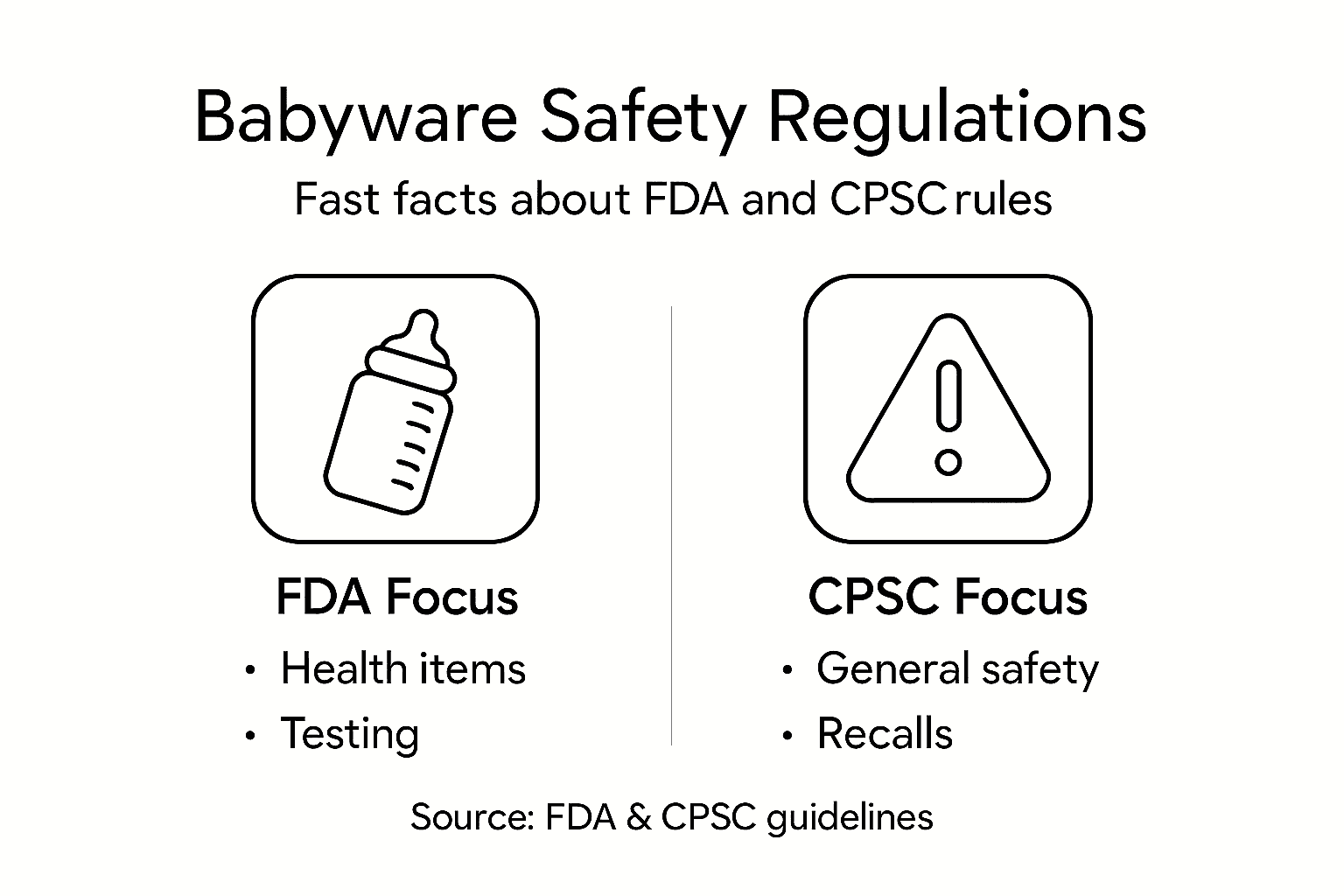
Manufacturers must navigate a complex landscape of federal regulations, which involve not just initial product approval but ongoing compliance monitoring. This includes maintaining detailed documentation, conducting regular safety assessments, and being prepared to implement immediate recalls if potential risks are identified.
Pro tip: Always request comprehensive safety documentation and third-party certification details when evaluating babyware products for your family.
Risks, Misconceptions, and What to Avoid
Babyware safety requires vigilant understanding of potential risks and common misconceptions that can compromise infant protection. Parents must look beyond marketing claims and understand the real safety implications of products designed for their children.
Baby product safety warnings highlight critical misconceptions parents should avoid:
- Products claiming SIDS prevention
- Unverified sleep positioning devices
- Unapproved respiratory support accessories
- Non-certified bedding materials
- Untested infant monitoring technologies
Consumers frequently misunderstand regulatory protections, assuming all baby products are automatically safe. Consumer product safety guidelines reveal that many seemingly innocuous items can pose significant hazards if not properly certified or used incorrectly.
Parents must recognize that regulatory approval does not guarantee absolute safety. Continuous supervision, understanding product limitations, and staying informed about recent safety recalls remain essential strategies for protecting infant well-being.
This summary outlines key risks and misconceptions parents should watch for:
| Risk/Misconception | Why It Matters | Safer Alternative |
|---|---|---|
| SIDS prevention claims | Misleading safety promises | Use approved sleep environment |
| Unverified devices | May lack required testing | Choose certified products |
| Non-certified materials | Possible exposure to harmful substances | Check for independent certification |
Pro tip: Regularly check manufacturer recall lists and maintain a proactive approach to verifying the safety of every babyware product in your home.
Protect Your Family with FDA Approved and Safe Babyware Today
Choosing truly safe babyware means understanding the challenges parents face when navigating complex FDA approval and safety regulations. The article highlights the importance of verifying product compliance with the Food and Drug Administration’s standards and independent certifications to avoid misleading claims and harmful risks to infants. Your goal is clear: find baby products that deliver peace of mind without compromise.
Explore a trusted selection of carefully curated items at Other Products – Skin Styles where quality and safety come first.

Don’t wait to ensure your baby’s well-being with products that meet rigorous safety requirements. Shop now at Skin-Styles.com and discover new offerings that align with your commitment to family health at New – Skin Styles. Act today so your little one benefits from the most reliable care solutions available.
Frequently Asked Questions
What does FDA approved babyware mean?
FDA approved babyware refers to infant products that have undergone rigorous testing and assessment by the Food and Drug Administration to ensure they meet strict safety and quality standards.
Which types of baby products require FDA approval?
FDA approval is required for baby products that make health claims or directly affect an infant’s health, such as infant monitoring devices, sleep positioning equipment, and medical-grade feeding accessories.
How can parents verify the safety of babyware before purchase?
Parents can verify the safety of babyware by checking for FDA approval status, looking for independent safety certifications, and requesting detailed compliance documentation from manufacturers.
What are common misconceptions about FDA approval for baby products?
A common misconception is that FDA approval guarantees absolute safety. While it is a critical first step, parents should remain vigilant, understand product limitations, and follow current safety guidelines to ensure their child’s well-being.