
Over two million American children live with a diagnosed food allergy, making everyday feeding decisions more complex than many realize. For families navigating these challenges, the right feeding set can offer peace of mind and genuine safety. Understanding what truly makes a feeding set allergy safe empowers parents to protect their infants from accidental exposures and hidden allergen risks, backed by research and proven materials designed specifically for sensitive American families.
Table of Contents
- What Makes A Feeding Set Allergy-Safe
- Common Allergens In Baby Feeding Products
- Types Of Allergy-Safe Feeding Sets Explained
- How Allergy-Safe Sets Prevent Health Risks
- Comparing Allergy-Safe Sets To Regular Options
Key Takeaways
| Point | Details |
|---|---|
| Allergy-Safe Feeding Sets | These specialized products are designed to minimize allergen exposure for infants using non-reactive materials. |
| Understanding Allergen Risks | Common allergens in baby feeding products include dairy, eggs, and nuts; parents should monitor for allergic reactions closely. |
| Material Comparison | Allergy-safe sets utilize medical-grade silicone and stainless steel, while regular options may contain harmful chemical additives. |
| Importance of Transparency | Parents should seek feeding sets with third-party allergen testing to ensure safety and reduce potential risks associated with food allergies. |
What Makes a Feeding Set Allergy-Safe
Allergy-safe feeding sets represent a critical safeguard for families navigating potential food sensitivities and allergic reactions in infants. These specialized feeding products go beyond standard design to minimize risks associated with food allergen exposure. Carefully constructed materials and thoughtful manufacturing processes distinguish truly allergy-safe feeding sets from standard infant feeding equipment.
Key characteristics of allergy-safe feeding sets include non-reactive materials that prevent potential cross-contamination and chemical leaching. Medical-grade silicone and polypropylene are preferred materials, as they resist bacterial growth and do not interact with food components. Research from pediatric health studies indicates that commercial baby feeding products often lack comprehensive allergen safety protocols, making intentional design crucial for parents seeking reduced risk options.
Additionally, allergy-safe feeding sets prioritize transparent manufacturing processes and rigorous testing. Parents should look for sets with:
- Third-party allergen testing certifications
- Clear ingredient disclosure
- Hypoallergenic material declarations
- Minimal processing additives
- Smooth, easily cleanable surfaces
Pro Tip: Allergen Verification Strategy: Always contact manufacturers directly to request comprehensive allergen testing documentation and verify the specific safety protocols used in their feeding set production.
Beyond material selection, understanding proper sterilization techniques plays a significant role in maintaining an allergy-safe environment. Regular, thorough cleaning using recommended methods helps prevent potential cross-contamination and reduces exposure risks for infants with sensitive systems.
Common Allergens in Baby Feeding Products
Food allergens represent a critical concern for parents introducing solid foods to their infant’s diet. Research on commercial baby food products reveals significant gaps in allergen representation, potentially compromising infants’ early exposure to common dietary triggers. Commercial feeding products frequently lack comprehensive allergen profiles, leaving parents uncertain about potential sensitivities.
The most prevalent allergens in baby feeding products include proteins from dairy, eggs, peanuts, tree nuts, wheat, soy, fish, and shellfish. Comprehensive analysis of commercial baby food suggests that while some products contain wheat and milk, many remain deficient in critical allergen representations like fish, eggs, nuts, and soy. This limited exposure can potentially impact an infant’s immune system development and allergen tolerance.
Parents should be particularly vigilant about potential allergens in feeding products, watching for signs like:
- Immediate skin reactions
- Respiratory difficulties
- Gastrointestinal distress
- Swelling around mouth or face
- Unexplained fussiness during feeding
Understanding ingredient lists and manufacturing processes becomes crucial in identifying potential allergen risks. Many commercial feeding sets and products may contain trace amounts of allergenic substances through cross-contamination during production.
Pro Tip: Allergen Tracking Strategy: Maintain a detailed food and product journal documenting your infant’s reactions, helping healthcare professionals identify specific sensitivities and guide future dietary introductions.
Types of Allergy-Safe Feeding Sets Explained
Allergy-safe feeding sets represent a critical innovation in infant nutrition, offering specialized solutions for families navigating complex dietary challenges. Infant nutrition guidelines emphasize the importance of diverse, carefully selected feeding tools that minimize potential allergic risks while supporting healthy dietary development.
The primary categories of allergy-safe feeding sets include:
- Silicone Feeding Sets: Hypoallergenic, non-reactive material that resists bacterial growth
- Medical-Grade Plastic Feeding Sets: BPA-free, chemical-resistant options with minimal interaction with food components
- Stainless Steel Feeding Sets: Durable, non-porous surfaces that prevent allergen accumulation
- Ceramic Coated Feeding Sets: Smooth surfaces with minimal chemical interaction
Each type of feeding set offers unique advantages in managing potential allergen exposure. Commercial baby food research highlights the critical need for feeding tools that provide safe, controlled nutrition without introducing unexpected allergenic substances. Parents must consider material composition, surface smoothness, and manufacturing processes when selecting appropriate feeding sets.
Here’s a quick comparison of common materials used in allergy-safe feeding sets:
| Material Type | Allergen Risk | Durability | Ease of Cleaning |
|---|---|---|---|
| Medical-grade silicone | Extremely low | Highly flexible | Easily sterilized, non-porous |
| Polypropylene | Minimal | Durable | Simple to clean, lightweight |
| Stainless steel | Very low | Extremely strong | Dishwasher safe, non-reactive |
| Ceramic coated | Low | Moderate | Smooth surface, stain resistant |
Advanced allergy-safe feeding sets often incorporate additional protective features like:
- Seamless design to prevent bacterial traps
- Interchangeable components
- Transparent material testing documentation
- Comprehensive cleaning instructions
Pro Tip: Material Verification Strategy: Request detailed material composition reports from manufacturers and cross-reference with pediatric allergy recommendations before selecting a feeding set for your infant.
How Allergy-Safe Sets Prevent Health Risks
Allergy-safe feeding sets represent a critical defense mechanism for preventing potential health risks in infants with sensitive dietary systems. Early food introduction research demonstrates the complex relationship between feeding practices and long-term allergic response development, highlighting the importance of strategic feeding equipment design.
These specialized feeding sets mitigate health risks through multiple protective mechanisms:
- Preventing cross-contamination between different food types
- Minimizing exposure to potential allergenic residues
- Providing controlled portion sizes for careful allergen introduction
- Creating barriers against bacterial growth
- Enabling precise monitoring of infant’s dietary interactions
Clinical studies on infant allergies underscore the nuanced challenges of managing potential allergic responses. Advanced allergy-safe feeding sets incorporate sophisticated design elements that reduce inadvertent exposure to potential trigger substances. These design features include seamless construction, non-porous materials, and easy-to-clean surfaces that minimize the potential for allergenic particle retention.
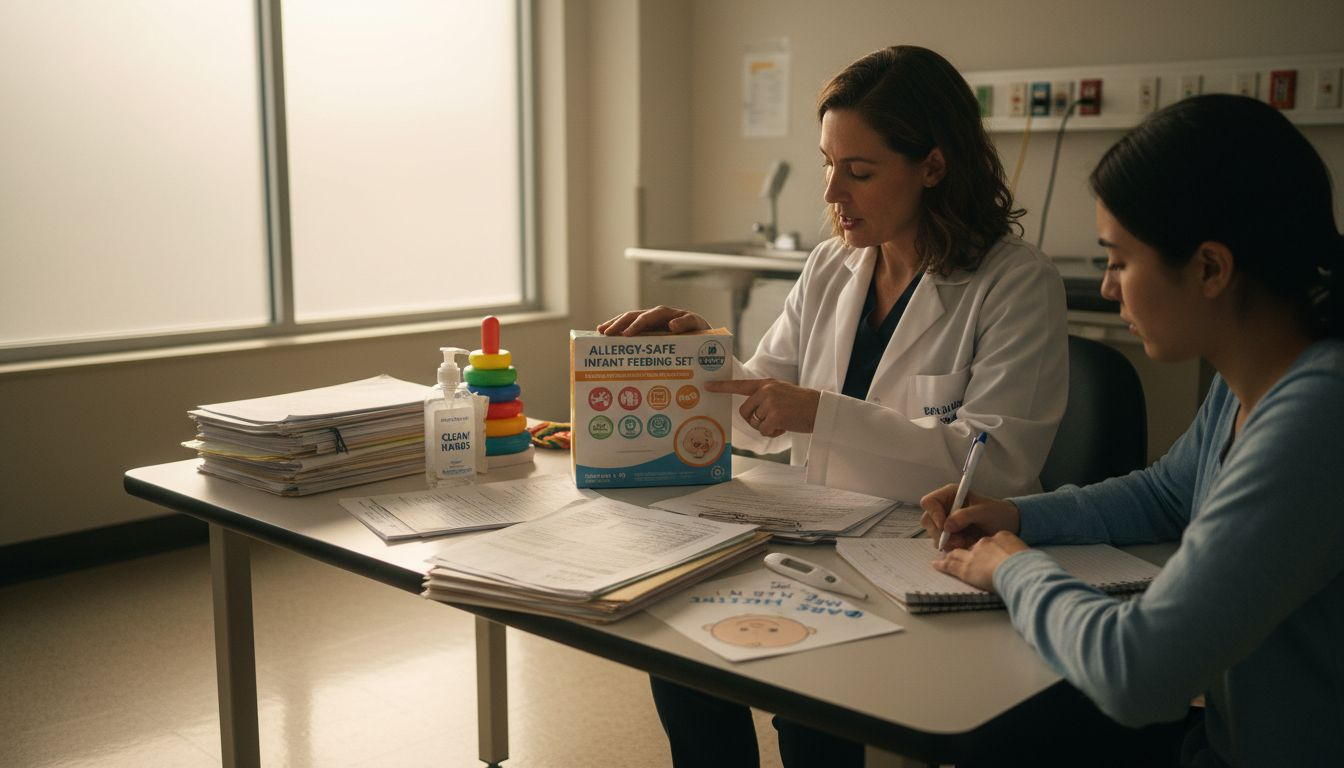
Moreover, allergy-safe feeding sets support healthcare professionals’ recommendations by providing controlled, safe platforms for gradual allergen exposure. Parents can use these specialized tools to systematically introduce potential allergens while maintaining a careful, monitored approach to infant nutrition.
The following summarizes health benefits provided by allergy-safe feeding sets:
| Health Benefit | How Allergy-Safe Sets Help | Impact on Infant Well-being |
|---|---|---|
| Reduced cross-contamination | Barrier materials and seamless design | Lowers accidental allergen exposure |
| Safer allergen introduction | Controlled portions and certifications | Enables gradual immune system exposure |
| Improved infection prevention | Non-porous, easy-to-clean surfaces | Decreases risk of bacterial growth |
| Greater parental confidence | Transparency in materials and testing | Supports stress-free feeding routines |
Pro Tip: Systematic Introduction Strategy: Work closely with pediatric nutritionists to develop a personalized allergen introduction plan that leverages the precise control offered by allergy-safe feeding sets.
Comparing Allergy-Safe Sets to Regular Options
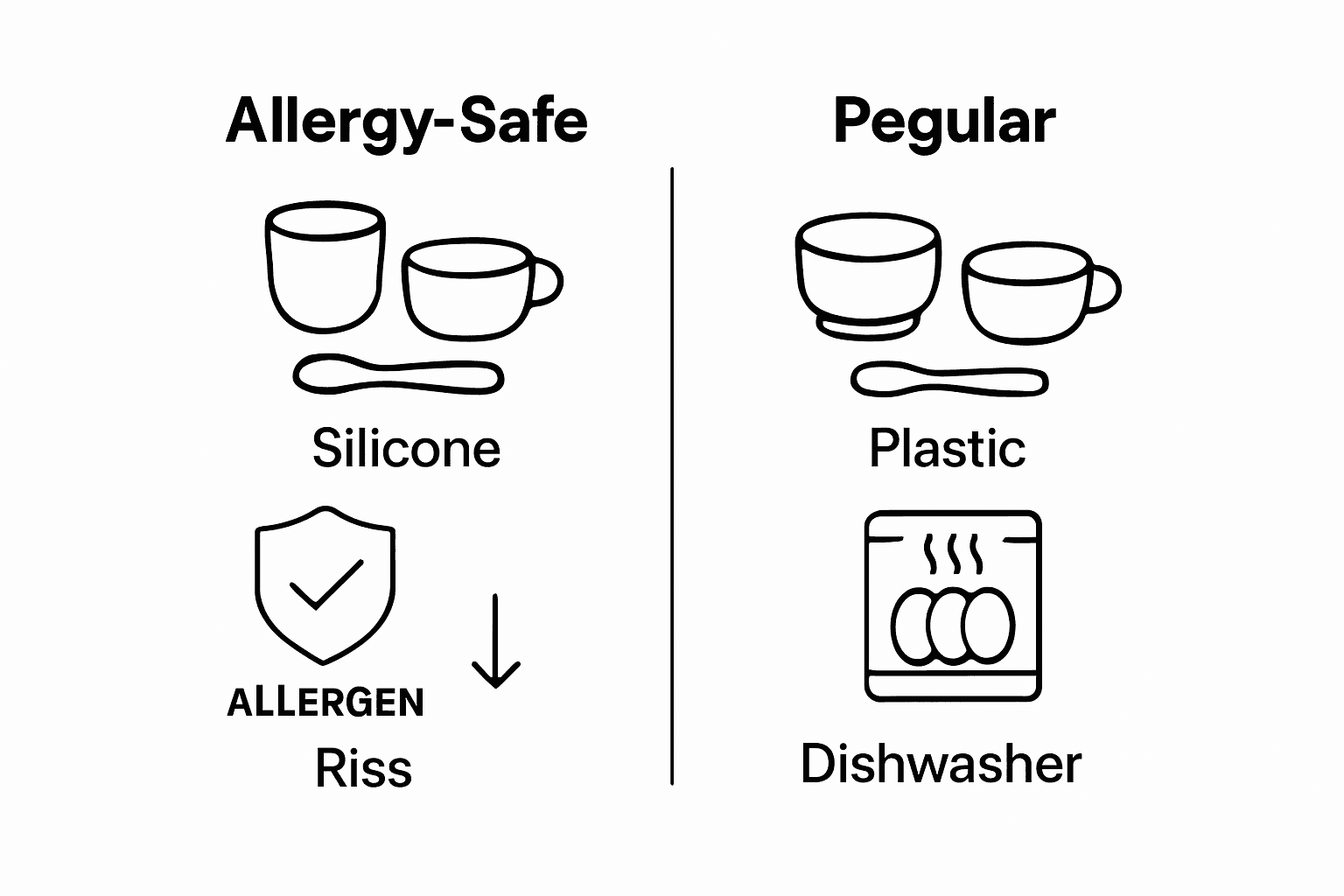
Commercial baby feeding sets vary dramatically in their approach to allergen management and safety. Research on commercial baby foods reveals significant disparities between standard and allergy-safe feeding products, highlighting critical differences that parents must understand to protect their infants’ nutritional health.
Key comparative aspects between allergy-safe and regular feeding sets include:
-
Material Composition:
- Allergy-Safe Sets: Medical-grade, hypoallergenic materials
- Regular Sets: Standard plastics, potentially containing chemical additives
-
Contamination Risk:
- Allergy-Safe Sets: Minimal cross-contamination potential
- Regular Sets: Higher risk of residual allergenic particles
-
Manufacturing Standards:
- Allergy-Safe Sets: Rigorous testing and certification
- Regular Sets: Minimal specialized allergen screening
Comprehensive analysis of baby food products demonstrates that regular feeding sets often lack the specialized design features necessary for comprehensive allergen management. Allergy-safe sets incorporate advanced design elements like seamless surfaces, non-porous materials, and precise portion control mechanisms that standard feeding sets typically do not provide.
The nutritional implications extend beyond mere material differences. Allergy-safe sets enable more controlled, systematic approaches to introducing potential allergens, allowing parents to monitor infant responses with greater precision and confidence. Regular feeding sets often lack the nuanced design features that support careful dietary introduction.
Pro Tip: Comparative Assessment Strategy: Create a detailed checklist comparing material composition, cleaning requirements, and design features when evaluating feeding sets to ensure maximum safety for your infant.
Protect Your Infant with Allergy-Safe Feeding Sets Today
Managing your baby’s exposure to allergens is a challenge every parent takes seriously. As the article explains, choosing feeding products made from medical-grade, hypoallergenic materials and designed to reduce cross-contamination can make a crucial difference in your child’s health and comfort. Avoiding potential allergens is not just about what goes inside the bottle but also ensuring the feeding set itself supports safe, controlled allergen introduction with easy-to-clean, seamless surfaces.
Explore carefully curated allergy-safe feeding sets and family-friendly products at Other Products – Skin Styles.

Don’t wait to give your infant the health protection they deserve. Visit Skin-Styles.com now to find feeding sets crafted to minimize allergen risks and support your careful feeding plan. Equip yourself with the right tools and confidence to make every feeding safe and stress-free.
Frequently Asked Questions
What are allergy-safe feeding sets?
Allergy-safe feeding sets are specialized infant feeding products designed to minimize risks associated with food allergens. They are made from non-reactive materials and undergo rigorous testing to prevent cross-contamination and ensure safety for infants with food sensitivities.
Why are the materials used in allergy-safe feeding sets important?
The materials, such as medical-grade silicone and polypropylene, are crucial because they resist bacterial growth and do not leach harmful chemicals. This helps protect infants from potential allergen exposure and ensures that the feeding process is safe and hygienic.
How can parents ensure they are using an allergy-safe feeding set?
Parents can ensure the safety of feeding sets by looking for third-party allergen testing certifications, clear ingredient disclosures, and hypoallergenic material declarations. Additionally, contacting manufacturers for comprehensive allergen testing documentation can provide further assurance.
What common allergens should parents be aware of when using baby feeding products?
Parents should be vigilant about common allergens including dairy, eggs, peanuts, tree nuts, wheat, soy, fish, and shellfish. Ingredients may be present in feeding products due to cross-contamination during manufacturing, so careful examination of item labels is essential.