

TL;DR:
- Many popular baby products with soft, padded surfaces can pose safety hazards by restricting airflow and promoting poor posture. Ergonomic design prioritizes flat, firm sleep surfaces, neutral head positioning, unrestricted limb movement, and breathable materials to support infant safety and development. Parents should prioritize safety standards, realistic testing, and proper positioning to ensure their baby’s well-being at home and in daily routines.
Softer isn’t always safer. That’s the uncomfortable truth behind many popular baby products that look plush, cozy, and inviting on store shelves. Overly contoured designs and heavily padded surfaces can restrict an infant’s airway and encourage poor posture, turning a seemingly comfortable product into a real hazard. This guide cuts through the marketing noise and explains exactly what ergonomic design means for your baby, why it matters beyond just comfort, and how to make smarter, evidence-backed choices in every product category from sleep surfaces to feeding gear.
Table of Contents
- Why infant ergonomics matter: More than just comfort
- Hidden hazards: Surface, airflow, and posture explained
- How safe designs are made: Testing, standards, and real-life use
- From transport to tummy time: Product types and what babies need most
- Making safe ergonomics a habit: What parents can do at home
- A parent’s perspective: Why the details matter more than the label
- Find products that put your baby’s ergonomics and safety first
- Frequently asked questions
Key Takeaways
| Point | Details |
|---|---|
| Ergonomics means safety first | Products must match your baby’s body and needs to safeguard airways and movement, not just feel soft or cozy. |
| Hidden risks in ‘comfort’ | Inclined or overly soft products can cause dangerous posture, restricted breathing, and suffocation hazards. |
| Choose and rotate wisely | Select firm, flat, and breathable surfaces for sleep, and alternate between supportive and open environments for healthy development. |
| Look for real testing | Favor products that meet measurable safety standards and are tested in real-life settings—not just those with comfortable branding. |
| Parental habits matter | Regular checklists, daily audits, and education make ergonomic safety part of your family routine and reduce risk. |
Why infant ergonomics matter: More than just comfort
With the confusion between comfort and safety set straight, let’s clarify what ergonomics really means for your baby’s health and development.
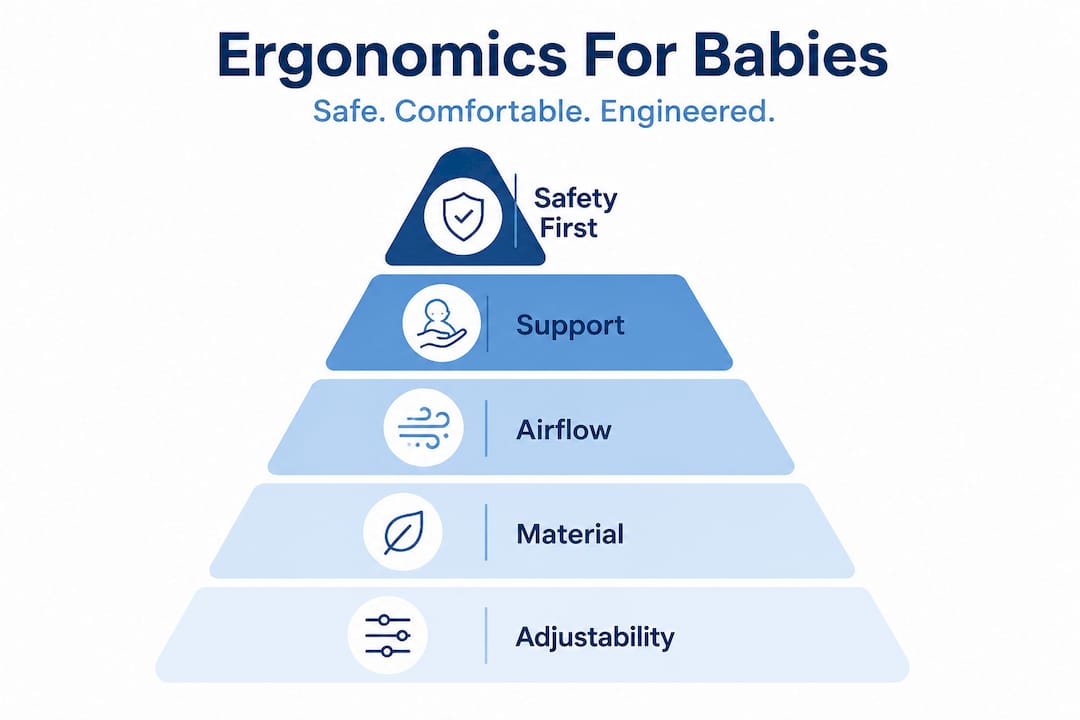
Most parents associate ergonomics with adult office chairs or supportive footwear. For infants, the stakes are much higher. Ergonomics in baby products is fundamentally a safety and biomechanics problem, not a luxury feature. An infant’s spine, airway, and musculoskeletal system are still forming, making them uniquely vulnerable to poor product design in ways adults simply aren’t.
A newborn’s head accounts for roughly 25% of their total body weight. That proportion shifts the risk equation dramatically. A product that tilts a baby’s chin toward their chest, even slightly, can narrow the airway enough to create a breathing hazard. This isn’t a theoretical concern. Sleep surface mechanics and infant posture are leading risk factors for breathing and suffocation hazards, according to peer-reviewed mechanistic research.
Here are the core ergonomic benchmarks every baby product should meet:
- Flat, firm sleep surface: Reduces airway compression and limits CO2 rebreathing risk.
- Neutral head and neck positioning: Keeps the chin up and airway open.
- Unrestricted limb movement: Allows natural motor skill development.
- Age-appropriate support: Products should fit the infant’s actual size and developmental stage.
- Breathable materials: Minimize heat buildup and allow airflow close to the face.
“The distinction between ‘feeling comfortable’ and ‘being biomechanically safe’ is the most important concept parents can internalize when shopping for infant gear.”
Making smart baby skincare safety choices follows the same logic: just because something feels soft or smooth doesn’t mean it’s the safest option for your infant’s delicate biology.
Pro Tip: When evaluating any baby product, ignore the fabric texture first. Instead, check how the product positions your baby’s head, neck, and back. That posture check is worth more than any softness rating.
Hidden hazards: Surface, airflow, and posture explained
Now that you understand why ergonomics truly matters, it’s time to see how real-world product design can impact infant safety through hidden mechanisms.
Two of the most underestimated hazards in baby products are CO2 rebreathing and airflow resistance. When a baby’s face is too close to a soft, porous-but-poorly-ventilated surface, exhaled carbon dioxide can accumulate in the space around their nose and mouth. If they breathe that back in repeatedly, oxygen levels drop quietly without any obvious alarm signal. Airflow resistance and CO2 rebreathing are independent, compoundable suffocation hazards, meaning they can each cause harm on their own and make each other significantly worse when combined.
| Feature | Safe design | Unsafe design |
|---|---|---|
| Surface firmness | Firm, resists indentation | Soft, conforms to head shape |
| Surface angle | Flat (under 10 degrees) | Inclined or contoured |
| Airflow | High breathability rating | Dense foam, poor ventilation |
| Side bolsters | Absent or minimal | Deep, surrounding padded walls |
| Material | Non-toxic, tested fabric | Unknown or untested materials |
The risks associated with each hazard break down clearly:
- Soft bedding: Creates a pocket around the face that traps CO2 and restricts head movement.
- Inclined surfaces (over 10 degrees): Cause neck flexion that narrows the infant airway passively.
- Deep contour shaping: Prevents self-correction movements that babies instinctively use to reposition.
- Bolsters and thick bumpers: Add suffocation risk if a baby rolls or shifts into contact with them.
Mattress firmness and breathability aren’t marketing terms. They are direct engineering targets linked to measurable infant safety outcomes. A study examining objective sleep quality in infants found that surface properties significantly influenced both safety and rest quality, reinforcing that these aren’t subjective preferences.
Understanding material safety in babyware extends this same principle. Toxic off-gassing from poorly sourced foams or fabric treatments adds another invisible hazard layer that parents rarely think to check.
How safe designs are made: Testing, standards, and real-life use
With the risks explained, you might ask: how do manufacturers ensure their products truly support infant safety and usability in daily life?
The answer is a combination of regulatory standards and human-centered usability testing. Neither is sufficient alone. Here is a simplified breakdown of how the best products get made:
- Prototype phase: Engineers develop initial designs based on infant anthropometric data (real body measurements from diverse infant populations).
- Lab testing: Products undergo mechanical testing for stability, firmness, and durability under simulated load and stress.
- Caregiver usability trials: Real parents use the product in realistic scenarios, including one-handed operation, low-light night use, and fatigue conditions.
- Standard compliance verification: Products are tested against ASTM and CPSC specifications.
- Iteration: Findings from caregiver trials directly shape redesigns before final production.
ASTM standards require testing for stability, restraint systems, and posture outcomes across infant product categories including swings, bouncers, and bassinets. The CPSC has formally adopted many of these as mandatory minimums, meaning products sold in the U.S. legally must pass them.
| Standard/test | What it measures |
|---|---|
| ASTM F2088 | Bassinet stability and restraint performance |
| ASTM F2194 | Bouncers: structural integrity and harness safety |
| CPSC 16 CFR 1218 | Bassinets and cradles mandatory safety standard |
| ASTM F833 | Stroller stability and locking mechanism performance |
| ASTM F2907 | Sling carrier structural integrity |
Usability testing in real scenarios such as one-handed buckle release in the dark or repositioning a sleeping baby without waking them is now recognized as a core part of modern ergonomic product design. Caregiver fatigue and stress are real variables that affect how safely a product gets used in practice.
Pro Tip: When comparing products, look for language like “caregiver usability tested” or “real-scenario validated” in addition to standard compliance. These signal that the brand went beyond minimum lab requirements. Also check resources covering eco-friendly material safety to understand what testing means for the materials touching your baby.
From transport to tummy time: Product types and what babies need most
Standards and real-life usability aside, parents still face dozens of choices. Let’s break down which products best support your baby’s development and why variety matters.
Each product category your baby interacts with offers a different ergonomic environment. The key insight most parents miss is that no single product, no matter how well designed, should dominate your baby’s waking or resting hours.
| Product type | Ergonomic pros | Ergonomic cons |
|---|---|---|
| Bassinet stroller | Flat position, supports spine | Heavier, less portable |
| Car seat stroller combo | Convenient transition, reduces disturbance | Semi-reclined, limits movement variety |
| Bouncer/rocker | Brief soothing, supervised use | Extended use increases postural strain |
| Floor play mat | Maximum movement freedom, motor development | Requires direct supervision |
| Baby carrier | Promotes bonding, upright positioning | Fit and technique are critical |
Car seat strollers should be limited outside the car for the healthiest postural variety. Pediatric physical therapists consistently recommend bassinet strollers or open floor mats as the default environments outside of vehicle travel. Car seats are designed for crash protection in moving vehicles, not for extended rest or exploration.
What parents should prioritize when choosing any product:
- Flat or near-flat positioning for sleep and rest (under 10 degree incline)
- Movement-friendly design that doesn’t restrict arms, legs, or head rotation
- Adjustable fit to grow with the baby rather than a one-size approach
- Simple, stable construction without excessive accessories or padding
- Easy cleaning to encourage regular hygiene without skipping steps
Travel systems engineered for easy transitions between car and stroller can genuinely reduce caregiver error when used as the manufacturer intended, particularly during the disorienting early weeks of parenthood.
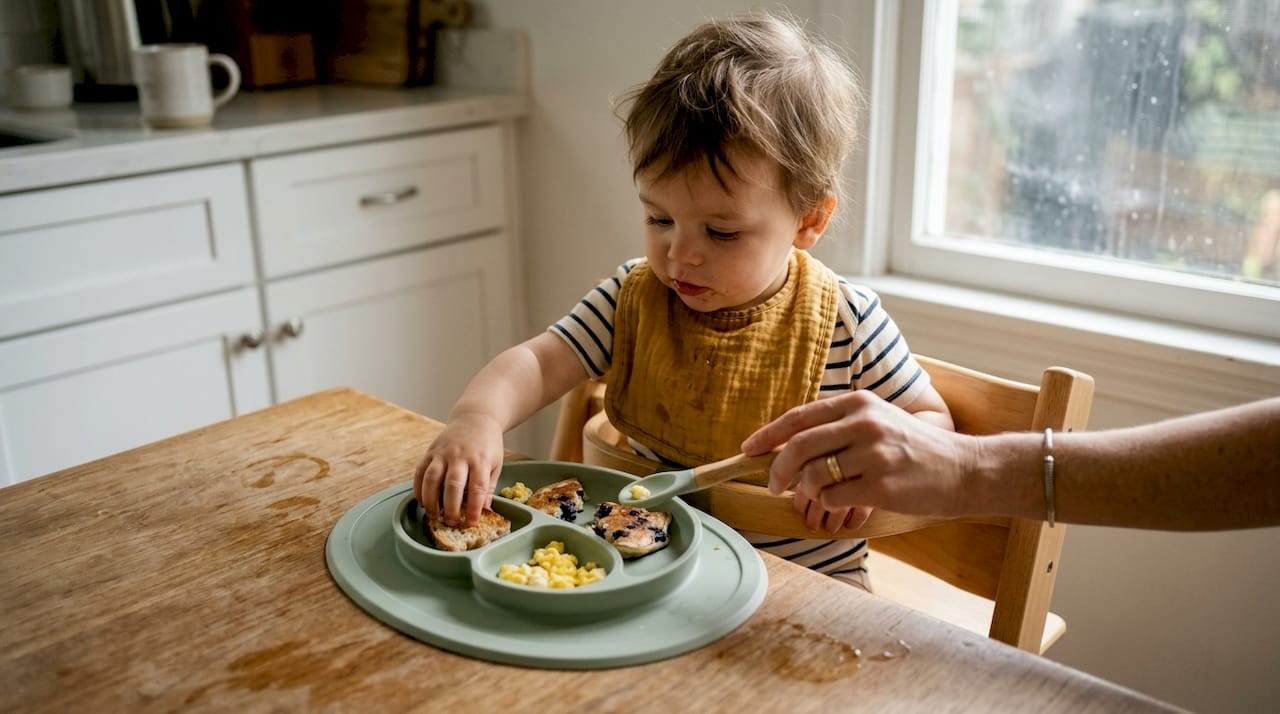
Feeding products deserve the same scrutiny. Well-designed quality feeding sets support proper oral motor development and reduce choking risk, while feeding routines and development research shows that consistent, ergonomically appropriate feeding positions also support healthy weight gain and bonding.
Pro Tip: Limit total time in any container, including bouncers, car seats, and swings, to the minimum needed. Rotate your baby through several ergonomic environments each day, including tummy time on a firm, flat surface. This variety is one of the single most powerful things you can do for early motor development.
Making safe ergonomics a habit: What parents can do at home
Understanding which products to choose is important, but so is your daily approach to setup, supervision, and routines. Here’s what you can do starting today.
Ergonomic safety isn’t a one-time purchase decision. It’s a daily practice. The good news is that building a simple routine dramatically lowers risk without requiring expensive equipment or constant vigilance.
Follow this daily ergonomic safe sleep checklist:
- Check the surface: Confirm it is firm, flat, and free of loose bedding, pillows, or soft items.
- Verify positioning: Baby is on their back, head and neck neutral, chin up and away from chest.
- Inspect the environment: No cords, strings, or soft toys within reach of the sleep space.
- Confirm breathability: Nothing is blocking airflow around baby’s face and head.
- Check fit: Swaddles, sleep sacks, or clothing are snug but not restricting chest expansion.
- Audit temperature: Room is comfortably cool. Overheating is an independent sleep safety risk.
- Review sleep location: Baby is in a safe sleep space, not on a sofa, adult bed, or inclined product.
Beyond the daily checklist, do a weekly environment audit. Look for new items that have crept into the sleep or play space, like a soft toy left by a sibling or an extra blanket added on a cold night. Small additions accumulate into real risk over time.
Community education matters too. Educational interventions and environment changes including checklists and audits have been shown to significantly lower unsafe sleep practices and reduce infant sleep-related deaths across diverse caregiver groups. Sharing these habits with grandparents, babysitters, and other caregivers who spend time with your baby is one of the highest-impact steps you can take.
“Parents who consistently use structured sleep checklists report lower rates of unsafe sleep setup and greater confidence in their infant care routines.”
Making these habits second nature also protects against fatigue-driven shortcuts, which are one of the leading causes of unsafe infant sleep environments. Revisiting skin-friendly safe products regularly ensures your choices stay current as your baby grows and their needs change.
A parent’s perspective: Why the details matter more than the label
Here’s what really stands out when you look closely at the ergonomic baby product space: the gap between what products claim and what they actually deliver is wider than most parents realize.
Marketing language like “cloud-soft,” “ultra-cozy,” and “perfectly contoured for your little one” is designed to trigger an emotional purchase response. None of those phrases correspond to any measurable safety standard. None of them tell you anything about airflow resistance, surface angle, or restraint performance. And yet they dominate packaging because they work on parents who are exhausted, overwhelmed, and genuinely trying to do right by their child.
Decades of product recalls and accident reports have revealed a consistent pattern. The products that get recalled aren’t usually cheap or obviously flimsy. Many are premium, well-marketed items that passed aesthetic review and sold in the millions before their structural or postural flaws surfaced in incident data. The Fisher-Price Rock 'n Play sleeper is the clearest recent example. It was widely beloved, recommended by fatigued parents everywhere, and eventually linked to dozens of infant deaths before being recalled in 2019. The comfort factor was real. The safety assumption was wrong.
Real ergonomic design focuses on three things: adjustability to fit real infant bodies at different developmental stages, validation through real-world caregiver testing (not just lab conditions), and simple, stable construction that works reliably under stress and fatigue. Products that tick those boxes tend to look less impressive on a shelf. That’s actually a useful signal.
Encourage yourself to read product specification sheets, not just product descriptions. Look for listed incline angles, firmness ratings, and compliance certifications. Compare those numbers against CPSC and ASTM recommendations. That habit, learned from rigorous material testing standards, gives you a real filter that marketing language simply cannot fake.
The details matter more than the label. Every time.
Find products that put your baby’s ergonomics and safety first
Ready to put ergonomics into action? Here are carefully designed options for safe, comfortable, developmentally appropriate feeding.
Choosing the right feeding products follows the same evidence-based principles covered throughout this guide: fit, material safety, real-world usability, and developmental support all matter.

At Skin-Styles.com, our ergonomic feeding sets are designed with these standards in mind. The 8-piece BPA-free silicone baby feeding set includes suction plates, bowls, and a bib built for the realities of early self-feeding. Suction bases support stable positioning, reducing spills and keeping food at a safe, ergonomic height. Food-grade silicone eliminates chemical exposure risks, and the soft-but-structured design encourages independent motor skill development at each meal. Browse the full collection to find feeding essentials that are safe by design, not just by appearance.
Frequently asked questions
What does ergonomic baby design actually mean?
It means products are engineered to fit the baby’s size, support healthy movement and sleep, and minimize risks like airway restriction or suffocation. Ergonomics supports safety by matching infant biomechanics to product design, not just making gear feel soft or look appealing.
Are firmer surfaces always safer for babies?
Firm, flat sleep surfaces are the safety recommendation, but breathability also needs to be engineered into the design alongside firmness. Mattress firmness and breathability are both core targets in safe infant sleep product design.
How can I check if a baby product meets safety standards?
Look for ASTM, CPSC, or EN compliance labeling, and specifically check that stability, restraint, and posture outcomes were tested. Safety standards confirm measurable fit and posture outcomes beyond just structural durability.
Does limiting time in containers really help my baby develop?
Yes, open space on a firm flat mat supports healthy movement variety that restrictive seats simply cannot provide. Flat and open space promotes healthy postural development and limits the cumulative restriction that comes from extended container time.
How often should I revisit my baby’s sleep and gear setup?
Review your setup at every major developmental milestone, roughly every one to two months in the first year, since ergonomic fit and safety needs shift quickly as your baby grows. A product that fit well at two months may be a poor fit by four months, especially for sleep surfaces, carriers, and feeding seats.