

Most people think grooming products are about looking polished. Clean shave, smooth skin, fresh scent. But the real story runs much deeper than the mirror. The ingredients inside your cleanser, shaving cream, and moisturizer are actively working to protect your skin barrier, control harmful microbes, and reduce long-term damage from friction and dryness. Once you understand what these products actually do at a biological level, you stop guessing and start choosing intentionally. This guide breaks down the science, the ingredients, and the practical steps so your routine delivers real, lasting results.
Table of Contents
- What grooming products really do for your skin
- Key ingredients and how they work
- Shaving, cleansing, and edge cases: Different needs, different solutions
- Maximizing grooming results: Routine tips, risks, and making your beauty regimen work for you
- Why less can be more: The truth about modern grooming routines
- Take your grooming routine further with expert-recommended products
- Frequently asked questions
Key Takeaways
| Point | Details |
|---|---|
| Hydration and protection | Grooming products hydrate your skin and protect its natural barrier beyond just appearances. |
| Smart ingredient layering | Combining humectants, emollients, and occlusives vastly improves hydration and skin softness. |
| Routine beats complexity | Simple, consistent grooming routines outperform complicated regimens and avoid skin irritation. |
| Tailored approach | Adjust grooming for your skin and hair type—especially for sensitive or curly hair—to minimize risk. |
What grooming products really do for your skin
There’s a widespread assumption that grooming is cosmetic. You apply something, it makes you look better, and that’s the end of it. That’s only half the story. What’s actually happening beneath the surface is a series of protective and restorative processes your skin depends on every day.
At the most fundamental level, grooming products hydrate and protect the skin barrier, soften hair, reduce friction during shaving, and control microbes. These aren’t bonus features. They’re the core functions that determine whether your skin stays resilient or breaks down over time.
Your skin barrier, technically called the stratum corneum, is a thin but critical layer that keeps moisture in and irritants out. When it’s compromised, you get dryness, redness, and sensitivity. Good grooming products actively reinforce this barrier rather than strip it.
Here’s what well-formulated grooming products are doing for you:
- Hydrating the outer skin layer to prevent tightness and flaking
- Softening coarse hair so blades glide without dragging
- Reducing friction that would otherwise cause micro-tears and irritation
- Controlling microbial growth to keep pores clear and skin hygienic
- Delivering active ingredients that repair and strengthen skin over time
“The skin barrier is your first line of defense. Products that support it aren’t a luxury. They’re maintenance.”
The invisible benefits are often the most important. You won’t see hydration working in real time, but you’ll notice the difference after a few weeks of consistent use. Skin that was tight and reactive starts to feel balanced. Shaving stops causing redness. Breakouts from clogged pores decrease.
Understanding the difference between humectants and emollients is a good first step in recognizing which products are doing which jobs. And once you know the jobs, you can pick the right tools. Learning about humectants in skincare gives you a practical foundation for reading labels and making smarter purchases.
Key ingredients and how they work
Understanding the primary actions helps, but real results come down to the ingredients inside your products.
There are three major categories of moisturizing ingredients in grooming and skincare formulas. Each does a different job, and they work best together.
Humectants draw moisture, emollients fill gaps, occlusives seal hydration to reduce TEWL (transepidermal water loss, which is the rate at which water evaporates from your skin). When all three are present and applied in the right order, your skin holds onto hydration far more effectively.
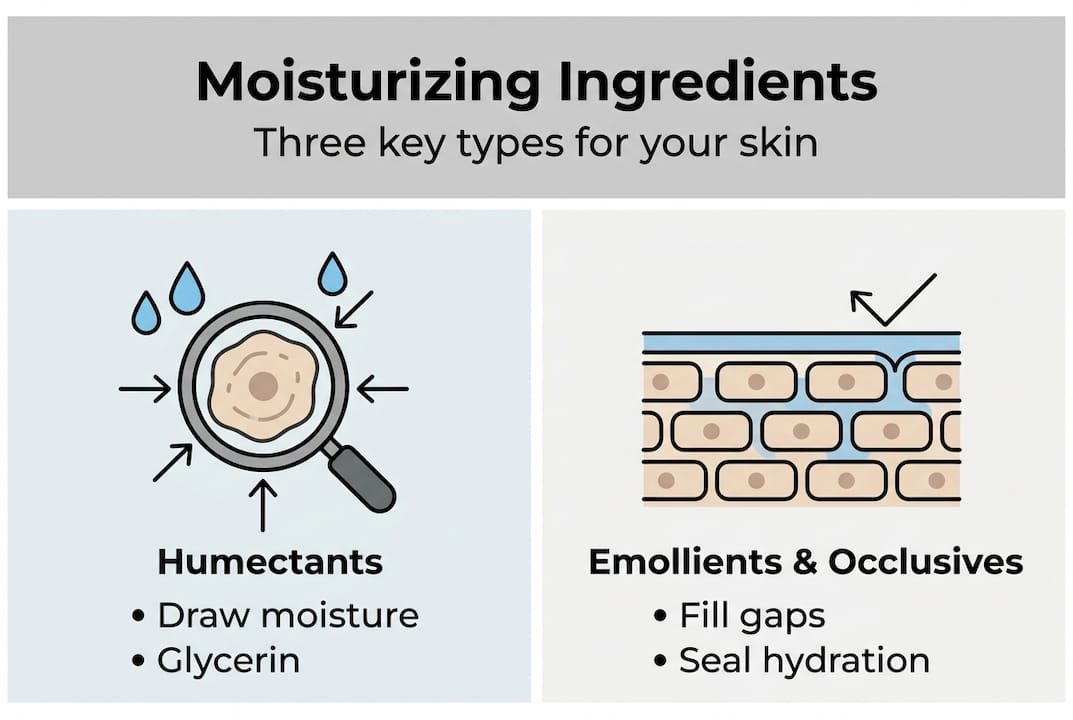
| Ingredient type | What it does | Common examples |
|---|---|---|
| Humectant | Draws water into the skin | Glycerin, hyaluronic acid, urea |
| Emollient | Smooths and fills gaps between cells | Squalane, shea butter, ceramides |
| Occlusive | Creates a seal to lock in moisture | Petrolatum, beeswax, dimethicone |
Here’s how to apply them for the best results:
- Start with a cleanser to remove surface debris without stripping natural oils
- Apply your humectant (like a serum or toner with glycerin or hyaluronic acid) to damp skin
- Follow with an emollient moisturizer to smooth and nourish
- Finish with an occlusive if your skin is very dry or you’re in a harsh climate
The role of humectants in this sequence is critical. Without them, the emollient and occlusive have less moisture to work with. And understanding occlusive skincare benefits helps you decide when that final sealing step is actually necessary for your skin type.
On ingredient labels, humectants usually appear early in the list since they’re often used at higher concentrations. Occlusives tend to appear later. Learning to read this order tells you a lot about what a product prioritizes.
Pro Tip: If your skin feels tight after applying a moisturizer, it likely lacks a proper humectant. Look for glycerin or sodium hyaluronate in the first five ingredients. Knowing how to layer skincare products correctly makes a noticeable difference in how your skin responds over time.
The synergy between these three types is well-documented. You can read more about how to layer humectants and emollients for a practical breakdown of real-world application.
Shaving, cleansing, and edge cases: Different needs, different solutions
Different routines and areas of focus call for adapting your grooming strategy.
Shaving is one of the most mechanically aggressive things you do to your skin. A blade moving across your face or body creates friction, removes surface skin cells, and can cut hair at angles that cause ingrown hairs. Shaving products are specifically engineered to reduce all of this.
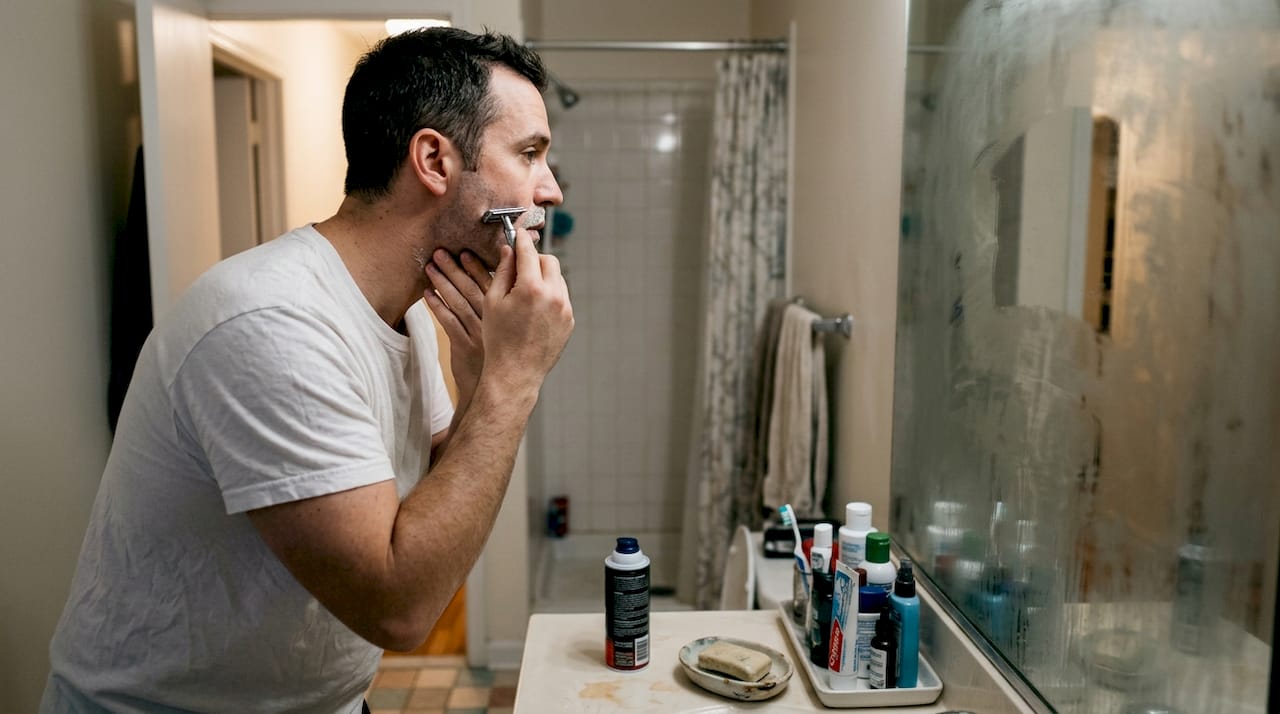
Shaving creams reduce friction, soften hair, and contain 20 to 30% surfactants. Surfactants are cleansing and foaming agents that lift oils and help the formula spread evenly. Edge cases like pseudofolliculitis barbae (PFB), commonly called razor bumps, require adjusted routines to prevent recurring irritation.
Cleansers work differently. Their job is to remove dirt, oil, and product buildup without disrupting the skin’s natural pH or stripping its lipid layer. A good cleanser leaves your skin feeling clean but not tight. If it feels squeaky clean, it’s probably too harsh.
Here’s what to look for based on your specific needs:
- Oily or acne-prone skin: Gel or foam cleansers with salicylic acid
- Dry or sensitive skin: Cream or milk cleansers with ceramides or hydration ingredients
- Curly or coarse hair: Pre-shave oils and conditioning creams to soften before the blade touches skin
- PFB or razor bumps: Single-blade razors, proper exfoliation, and products with glycolic acid
“Adjusting your technique matters as much as adjusting your products. The two work together.”
The table below shows how ingredient concentration shifts based on product function:
| Product type | Key ingredient | Typical concentration | Primary function |
|---|---|---|---|
| Shaving cream | Surfactants | 20 to 30% | Lubrication and foam |
| Facial cleanser | Mild surfactants | 5 to 15% | Cleansing without stripping |
| Moisturizer | Humectants/emollients | 2 to 10% | Hydration and barrier repair |
| Shaving gel | Glycerin | 5 to 20% | Slip and moisture retention |
For those dealing with PFB solutions, the research is clear: modifying shaving direction, using chemical exfoliants, and choosing the right lubricating products significantly reduces the frequency and severity of bumps.
Maximizing grooming results: Routine tips, risks, and making your beauty regimen work for you
Knowing what your products do makes it easier to build a routine that delivers consistent results.
The science backs up what experienced skincare users already know. Consistent, stepwise routines improve hydration by 72.5% and reduce dryness by 93.7%. Those aren’t small numbers. They represent the real difference between a random product stack and a thoughtfully designed routine.
Here’s how to structure your routine for maximum effect:
- Cleanse morning and evening to remove buildup without over-washing
- Apply actives (like vitamin C or niacinamide) while skin is still slightly damp
- Moisturize with a formula suited to your skin type
- Use SPF in the morning to protect the barrier you just reinforced
- Shave after cleansing when hair is soft and skin is prepped
Pro Tip: Your evening routine is where the real repair happens. Skin cell turnover peaks at night, so applying your most nourishing products before bed gives them the best chance to work. Understanding why you should layer skincare products in a specific order helps you get the most from every product you already own.
Risks are real and worth knowing. Over-grooming, using too many actives at once, or relying on heavily fragranced products can trigger irritation, allergic reactions, or a damaged barrier. Signs include persistent redness, stinging after application, or increased sensitivity to temperature.
A clinical skincare routine study found that irritation and allergy risk rises significantly when multiple strong actives are combined without a buffer or barrier-supporting step in between.
Track your progress by monitoring:
- Hydration levels: Does skin feel plump rather than tight after cleansing?
- Softness: Is texture smoother week over week?
- Irritation frequency: Are flare-ups becoming less common?
- Shaving comfort: Is there less redness or bumping post-shave?
Small, consistent improvements signal that your routine is working. Big reactions signal that something needs to change.
Why less can be more: The truth about modern grooming routines
Beyond practical steps, it’s time to rethink what a good routine actually means.
The beauty industry profits from complexity. More steps, more products, more SKUs in your bathroom cabinet. But the evidence points in the opposite direction. Moderation and barrier focus are preferred over aggressive, over-complicated routines. The skin doesn’t reward effort. It rewards consistency and restraint.
We’ve seen it repeatedly: people who strip their skin with too many actives, then pile on products to compensate, end up in a cycle of sensitivity and reactivity. A focused routine with a cleanser, a humectant, and an emollient will outperform a 10-step stack built on trend rather than need.
The most effective routines are built around what you leave out. Skip the fragrance if your skin is reactive. Drop the second exfoliant if you’re already using a retinoid. Understand the benefits of smart layering before adding anything new.
Simplicity isn’t laziness. It’s strategy.
Take your grooming routine further with expert-recommended products
Ready to apply what you’ve learned? The right products make the difference between a routine that feels like a chore and one that actually delivers results.

At Skin-Styles.com, we carry a curated selection of grooming and skincare solutions built around the science covered in this guide. Browse our facial creams and gels for barrier-supporting moisturizers, explore our facial cleansers for formulas that clean without stripping, and check out the Cosrx collection for clinically respected products that work across skin types. Whether you’re building a routine from scratch or refining what you already have, we have the tools to help you get there.
Frequently asked questions
What is the difference between a humectant and an emollient?
A humectant attracts moisture to your skin from the environment and deeper skin layers, while an emollient smooths and fills the gaps between skin cells for a softer, more even texture.
How can I tell if a grooming product will irritate my skin?
Check the ingredient list for strong fragrances or high concentrations of actives. Irritation risk rises with certain preservatives and active combinations, so always patch test new products on a small area before full use.
Why does shaving sometimes cause bumps or irritation?
Pseudofolliculitis barbae, or PFB, is especially common in curly hair types where cut hairs curl back into the skin. Adjusting your shaving technique and using lubrication-focused products significantly reduces the problem.
Are natural grooming products safer than synthetic ones?
Natural products can still provoke allergies and often have a shorter shelf life than synthetic formulas. Gentle and well-formulated matters more than the natural versus synthetic label.