

You might think only the sun can age your skin, but your phone, laptop, and LED lights emit blue light that penetrates deeper than UVA rays, triggering oxidative stress and premature aging. As screen time soars to over 7 hours daily for many adults, understanding blue light protection skincare has become essential for maintaining healthy, youthful skin. This guide explains what blue light does to your skin, how protection products work, and practical steps to shield yourself from digital aging.
Table of Contents
- What Is Blue Light And How Does It Affect Your Skin?
- Blue Light Protection Skincare: What It Is And How It Works
- Comparing Blue Light Protection With Traditional Sun Protection
- How To Incorporate Blue Light Protection Into Your Daily Skincare Routine
- Explore Blue Light Protection Skincare Products At Skin Styles
- FAQ
Key takeaways
| Point | Details |
|---|---|
| Blue light penetrates deeply | High energy visible light from screens and LEDs reaches deeper skin layers than UV, causing oxidative damage and collagen breakdown. |
| Specialized skincare offers protection | Products with antioxidants, niacinamide, and physical blockers reduce blue light damage that regular sunscreen may miss. |
| Daily routine integration is simple | Layer antioxidant serums under broad spectrum SPF and reapply during extended screen exposure for comprehensive defense. |
| Ingredients matter for effectiveness | Look for vitamins C and E, niacinamide, zinc oxide, and other proven antioxidants that neutralize free radicals from blue light. |
What is blue light and how does it affect your skin?
Blue light is high energy visible light with wavelengths between 400 and 500 nanometers, emitted by digital screens, LED lighting, fluorescent bulbs, and the sun. Unlike ultraviolet radiation that causes sunburn, blue light is visible to the human eye and makes up a significant portion of the light spectrum we encounter daily. Your smartphone, computer monitor, tablet, and even energy efficient home lighting constantly expose your skin to this form of radiation.
What makes blue light particularly concerning is its ability to penetrate skin more deeply than UVA rays. While UVA reaches the dermis, blue light can affect cellular structures at even greater depths, triggering biological responses that accelerate aging. When blue light hits your skin cells, it generates reactive oxygen species, or free radicals, which are unstable molecules that damage cellular components including DNA, proteins, and lipids.
The biological effects of blue light exposure include several concerning skin changes:
- Oxidative stress that overwhelms your skin’s natural antioxidant defenses
- Collagen and elastin degradation leading to wrinkles and sagging
- Inflammation that compromises skin barrier function
- Hyperpigmentation and uneven skin tone, particularly in darker skin types
- Disruption of skin’s natural repair processes
Modern lifestyles dramatically increase daily blue light exposure. The average person spends 7 to 10 hours per day in front of screens for work, entertainment, and communication. This constant bombardment means your facial skin receives blue light exposure comparable to or exceeding your UV exposure on many days, especially if you work indoors. Research shows that blue light exposure can cause oxidative stress leading to skin aging and hyperpigmentation, making protection as important as traditional sun defense.
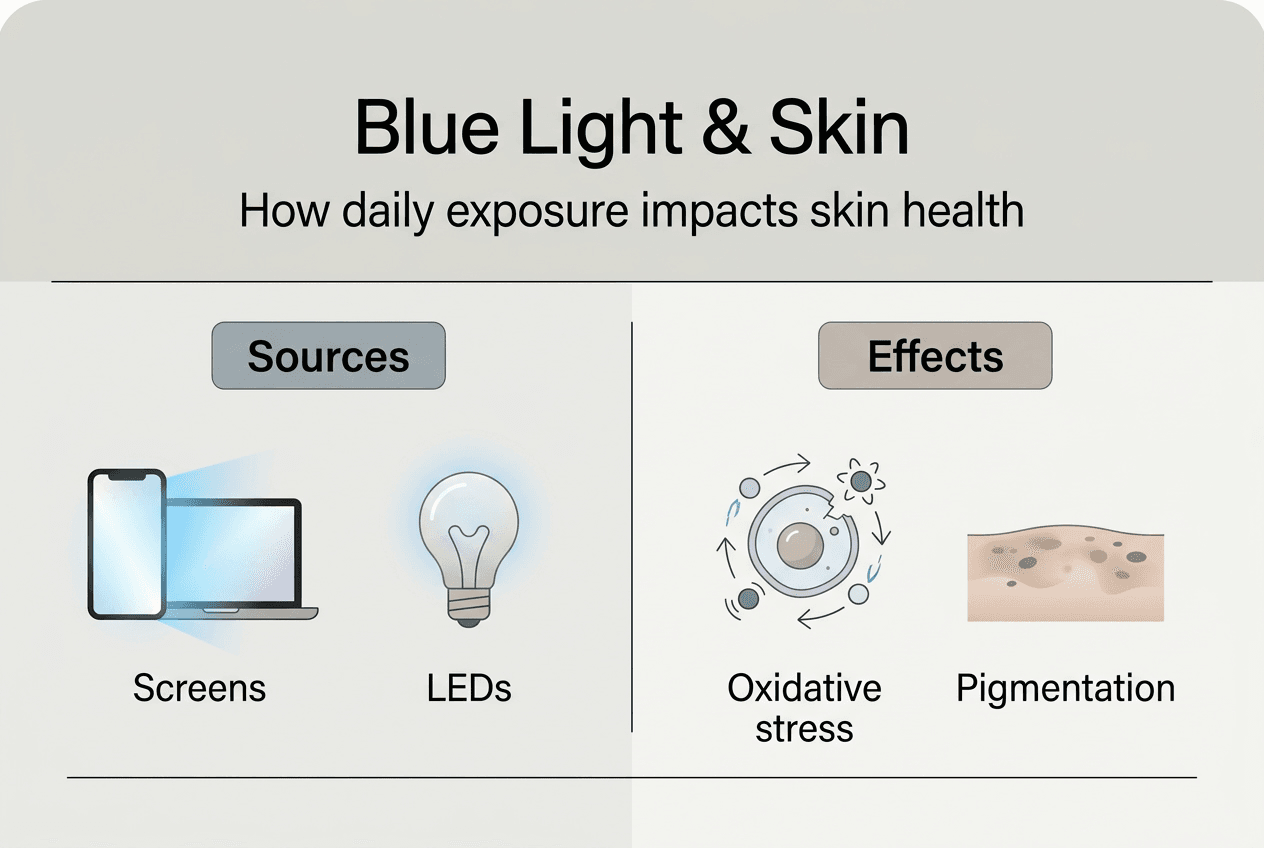
Unlike a sunburn that provides immediate feedback about UV damage, blue light effects accumulate silently over months and years. You won’t feel your skin burning or see redness after a long day at your computer, but the oxidative damage is occurring beneath the surface. This invisible threat makes proactive protection through specialized skincare essential for anyone concerned about maintaining youthful, healthy skin in our digital age.
Blue light protection skincare: what it is and how it works
Blue light protection skincare encompasses formulations specifically designed to reduce oxidative damage and inflammation caused by high energy visible light exposure. These products work through multiple mechanisms, combining antioxidants that neutralize free radicals, physical barriers that reflect light away from skin, and ingredients that strengthen your skin’s natural defense systems. Unlike makeup or temporary shields, these skincare products provide cellular level protection that addresses the root causes of blue light damage.
The most effective blue light protection products contain carefully selected active ingredients that work synergistically:
- Antioxidants like vitamins C and E that neutralize free radicals before they damage cells
- Niacinamide (vitamin B3) that reduces inflammation and strengthens skin barrier function
- Zinc oxide and titanium dioxide that physically reflect both UV and visible light
- Iron oxides that absorb blue light wavelengths specifically
- Lutein and other carotenoids that act as natural light filters
- Resveratrol and other polyphenols with potent antioxidant properties
Antioxidants form the foundation of blue light protection by intercepting reactive oxygen species generated when light hits your skin. Vitamin C, for example, donates electrons to neutralize free radicals, preventing them from stealing electrons from healthy cellular structures. When combined with vitamin E, these antioxidants regenerate each other, creating a more robust defense system than either provides alone.
Physical blockers like zinc oxide work differently by creating a protective layer on your skin’s surface that reflects and scatters light particles before they penetrate. These mineral ingredients provide broad spectrum protection against UV, blue light, and other visible wavelengths. Ingredients like niacinamide, antioxidants, and physical blockers help protect skin from blue light damage while also addressing other skin concerns like hydration and texture.
Moisturizers play a crucial supporting role in blue light protection by enhancing your skin’s barrier function. A healthy barrier prevents environmental stressors from penetrating while maintaining optimal hydration levels that support cellular repair processes. Ceramides, hyaluronic acid, and other moisturizing ingredients create an environment where protective ingredients can work more effectively.
Pro Tip: Layer an antioxidant serum containing vitamins C and E under a physical sunscreen with zinc oxide for synergistic blue light defense. This combination provides both free radical neutralization and light reflection, offering more comprehensive protection than either product alone.
The key to effective blue light protection lies in consistent daily use rather than occasional application. Because blue light exposure happens continuously throughout your day, your skin needs constant antioxidant support to counteract ongoing oxidative stress. Products formulated for daily skincare routines make this protection convenient and sustainable.
Comparing blue light protection with traditional sun protection
Traditional UV sun protection and blue light protection serve related but distinct purposes in comprehensive skin defense. Understanding their differences helps you choose products that address your complete light exposure profile rather than leaving gaps in your protection strategy.
UV protection primarily prevents sunburn, skin cancer, and photoaging caused by ultraviolet radiation. SPF ratings measure how well a product blocks UVB rays that cause burning, while broad spectrum labels indicate UVA protection against deeper penetrating rays that cause aging. However, conventional sunscreens block UV rays but many do not fully protect against blue light, creating a protection gap for people who spend significant time indoors with artificial lighting and screens.
Blue light protection focuses specifically on reducing oxidative stress and pigmentation from visible light wavelengths. While some UV damage occurs mainly outdoors, blue light exposure happens constantly indoors and out, making it a year round, all day concern. The mechanisms of damage also differ, with blue light primarily causing oxidative stress and inflammation rather than direct DNA damage like UV radiation.
| Protection Type | Primary Ingredients | Key Benefits | Limitations | | — | — | — | | UV Protection | Chemical filters (avobenzone, octinoxate) or minerals (zinc, titanium) | Prevents sunburn, reduces skin cancer risk, blocks UVA/UVB aging | May not block blue light spectrum, requires reapplication every 2 hours outdoors | | Blue Light Protection | Antioxidants (vitamins C, E), niacinamide, iron oxides, lutein | Neutralizes oxidative stress, reduces hyperpigmentation, protects during screen time | Does not replace need for UV protection, effectiveness varies by formulation | | Combined Protection | Mineral sunscreens with antioxidants and iron oxides | Comprehensive defense against UV and visible light, multifunctional benefits | May have cosmetic drawbacks like white cast, typically higher price point |
When choosing products for comprehensive skin defense, consider these factors:
- Your daily light exposure patterns (indoor vs. outdoor time, screen hours)
- Skin type and concerns (sensitivity, pigmentation tendency, aging signs)
- Product texture and wearability for consistent daily use
- Ingredient quality and concentration of active protectants
- Compatibility with your existing skincare routine and makeup
The most effective approach combines both protection types. A mineral sunscreen containing zinc oxide or titanium dioxide provides baseline UV and some blue light protection, while antioxidant serums underneath offer additional free radical defense. Products formulated with iron oxides enhance visible light protection significantly, making them ideal for people concerned about both sun exposure and screen time.
You need UV protection primarily when outdoors or near windows where sunlight enters, but blue light protection benefits you throughout your entire day, including evenings under LED lighting. This makes blue light defense arguably more important for maintaining skin health in modern indoor lifestyles where sun protection alone leaves you vulnerable.
How to incorporate blue light protection into your daily skincare routine
Adding blue light protection to your existing skincare routine requires minimal effort but delivers significant long term benefits for skin health and aging prevention. The key is strategic layering of products that work together to create comprehensive defense against digital and environmental stressors.
Follow this step by step routine to maximize blue light protection:
- Cleanse your face thoroughly with a gentle cleanser to remove overnight buildup and create a clean canvas for protective products.
- Apply an antioxidant serum containing vitamins C and E to damp skin, allowing it to absorb for 60 seconds before the next step.
- Layer a niacinamide treatment or moisturizer to strengthen barrier function and enhance antioxidant effectiveness.
- Apply a broad spectrum mineral sunscreen with at least SPF 30 containing zinc oxide or titanium dioxide as your final protective layer.
- Reapply physical blocker throughout the day if you have extended screen exposure, especially during peak work hours.
This sequence works because antioxidants penetrate best on clean skin and need time to absorb before you add occlusive layers. The moisturizer seals in serums while providing its own protective benefits, and sunscreen creates the outermost shield against all forms of light. Incorporating blue light protection into daily routine enhances skin defense against digital aging without requiring you to completely overhaul your existing habits.
Beyond topical products, lifestyle adjustments amplify your blue light protection efforts. Enable blue light filters or night mode on your devices to reduce emission intensity, especially during evening hours when your skin’s repair processes are most active. Position yourself at least arm’s length from screens when possible, as blue light intensity decreases with distance. Take regular breaks from screens using the 20 20 20 rule: every 20 minutes, look at something 20 feet away for 20 seconds.
Consider your environment when planning protection strategies. LED lighting in offices and homes emits significant blue light, so your exposure continues even when you’re not actively using devices. If you work in a brightly lit office with fluorescent or LED overhead lighting, morning application of antioxidants and physical blockers becomes even more critical.
Pro Tip: Keep a small container of mineral sunscreen at your desk and reapply to your face, neck, and hands around midday if you have more than 4 hours of continuous screen time. This simple habit provides ongoing protection during peak exposure periods.
Product selection matters as much as application timing. Choose lightweight, cosmetically elegant formulations you’ll actually want to wear daily. Heavy, greasy products often get skipped, undermining even the best protection strategy. Look for multitasking products that combine blue light protection with hydration, anti aging benefits, or makeup primer functions to streamline your routine.
Your evening routine should focus on repair and antioxidant replenishment. After cleansing away the day’s environmental exposure, apply retinol or peptide treatments that support collagen production and cellular renewal. Follow with a nourishing night cream containing additional antioxidants to support overnight repair processes. This basic skincare workflow creates a protective and reparative cycle that keeps your skin resilient against daily blue light exposure.
Consistency trumps perfection in skincare protection. Even if you occasionally skip reapplication or forget your morning antioxidants, maintaining the routine most days provides cumulative benefits that protect against long term damage. Think of blue light protection as an investment in your skin’s future health rather than a quick fix for immediate concerns. Building these habits now, especially if you’re in your 20s or 30s, prevents the accelerated aging that becomes harder to reverse later. For comprehensive environmental defense, combine your blue light routine with proper sun protection practices when outdoors.
Explore blue light protection skincare products at Skin Styles
Now that you understand how blue light affects your skin and the importance of targeted protection, finding the right products becomes your next step. Skin Styles offers a curated selection of facial creams and gels formulated with ingredients proven to defend against blue light damage while addressing your other skincare concerns.

Our collection includes trusted Cosrx products known for their effective antioxidant formulations that neutralize free radicals from screen exposure. Whether you need lightweight daily moisturizers with niacinamide or intensive serums packed with vitamins C and E, you’ll find options that fit seamlessly into your routine. We also carry facial cleansers that prepare your skin for optimal product absorption, ensuring your protective ingredients work as effectively as possible. Browse our selection to build a complete blue light defense routine tailored to your skin type and lifestyle needs.
FAQ
Is blue light from screens really harmful to the skin?
Yes, blue light can cause oxidative stress and pigmentation changes that contribute to premature skin aging, especially with prolonged daily exposure. Studies show that several hours of screen time generates free radicals similar to UV exposure. While the damage accumulates gradually rather than causing immediate visible harm like sunburn, consistent protection through specialized skincare reduces these long term effects significantly.
Can regular sunscreen protect against blue light?
Most conventional sunscreens primarily block UV rays but offer limited protection against blue light wavelengths. Chemical sunscreen filters absorb UV radiation but allow visible light to pass through largely unimpeded. Mineral sunscreens containing zinc oxide or titanium dioxide provide some blue light protection through physical reflection, but adding antioxidant serums and products with iron oxides creates more comprehensive defense against the full light spectrum.
What ingredients should I look for in blue light protection skincare?
Look for niacinamide, vitamins C and E, zinc oxide, iron oxides, and botanical antioxidants like lutein or resveratrol in your blue light protection products. These ingredients work through different mechanisms, with antioxidants neutralizing free radicals and physical blockers reflecting light away from skin. Products combining multiple protective ingredients typically offer superior defense compared to single ingredient formulations.
How often should I apply blue light protection products?
Apply blue light protection products every morning as part of your regular skincare routine, before screen exposure begins. If you spend more than 4 hours continuously in front of screens or under LED lighting, reapply physical blocker sunscreens around midday for ongoing protection. Consistent daily use matters more than occasional intensive application, as blue light damage accumulates gradually from continuous low level exposure throughout your day and evening.