
You’ve seen them everywhere, from beauty stores to social media posts, but what exactly is a sheet mask and why does it matter for your skincare routine? Sheet masks are one of the most accessible ways to deliver concentrated hydration and nutrients directly to your skin, yet many people skip them because they don’t understand how they work or what benefits they provide. Unlike traditional creams that sit on the surface, sheet masks create a barrier that forces active ingredients deeper into your skin for maximum absorption. This guide breaks down everything you need to know about sheet masks, from their construction and benefits to choosing the right one for your skin type and applying it correctly for glowing results.
Table of Contents
- Key takeaways
- What is a sheet mask? Understanding the basics
- Benefits of sheet masks for your skin health
- Choosing the right sheet mask for your skin type
- How to use sheet masks effectively: step-by-step guide
- Discover quality skincare products at Skin Styles
- What is a sheet mask FAQ
Key Takeaways
| Point | Details |
|---|---|
| Occlusive delivery | Sheet masks seal active ingredients against the skin to maximize absorption and prevent evaporation. |
| Hydration boost 30% | When used correctly, sheet masks can raise skin hydration by about 30 percent, leaving skin plump and dewier. |
| Mask materials options | Cotton, bio cellulose, and hydrogel masks offer different absorption, adherence, and cooling effects for various skin needs. |
| No rinsing required | Because they are sealed with serum, sheet masks require no rinsing and leave actives on the skin for continued benefit. |
| Choose mask by skin type | Selecting the right mask based on your skin type enhances results and comfort. |
What is a sheet mask? Understanding the basics
A sheet mask is a fabric or gel sheet soaked in concentrated serums that deliver active ingredients directly to your skin. Unlike wash-off masks that you rinse away, sheet masks work by creating a physical barrier between your skin and the air, which prevents the serum from evaporating and forces ingredients to penetrate deeper into your pores. This occlusive effect is what makes them so effective at delivering hydration and nutrients compared to simply applying a serum or cream.
Sheet masks come in three primary materials, each offering different benefits. Cotton masks are the most common and affordable option, providing good ingredient absorption and a comfortable fit. Bio-cellulose masks are made from fermented coconut water fibers, creating an ultra-thin second skin that adheres perfectly to facial contours and delivers superior ingredient penetration. Hydrogel masks contain a higher water content and feel cooling on the skin, making them ideal for soothing inflammation or calming irritated complexions.
The key difference between sheet masks and other mask types lies in their delivery method. Clay masks draw out impurities but can be drying. Peel-off masks remove dead skin cells but don’t deliver much hydration. Cream masks moisturize but much of the product sits on the surface. Sheet masks solve these limitations by:
- Sealing ingredients against your skin for maximum absorption
- Preventing evaporation so active ingredients stay potent
- Requiring no rinsing, which means you keep all the beneficial serum
- Providing a spa-like experience that encourages you to relax for the full treatment time
This sealed delivery system is why sheet masks have become a cornerstone of effective skincare routines, particularly for anyone seeking intense hydration or targeted treatment for specific skin concerns.
Benefits of sheet masks for your skin health
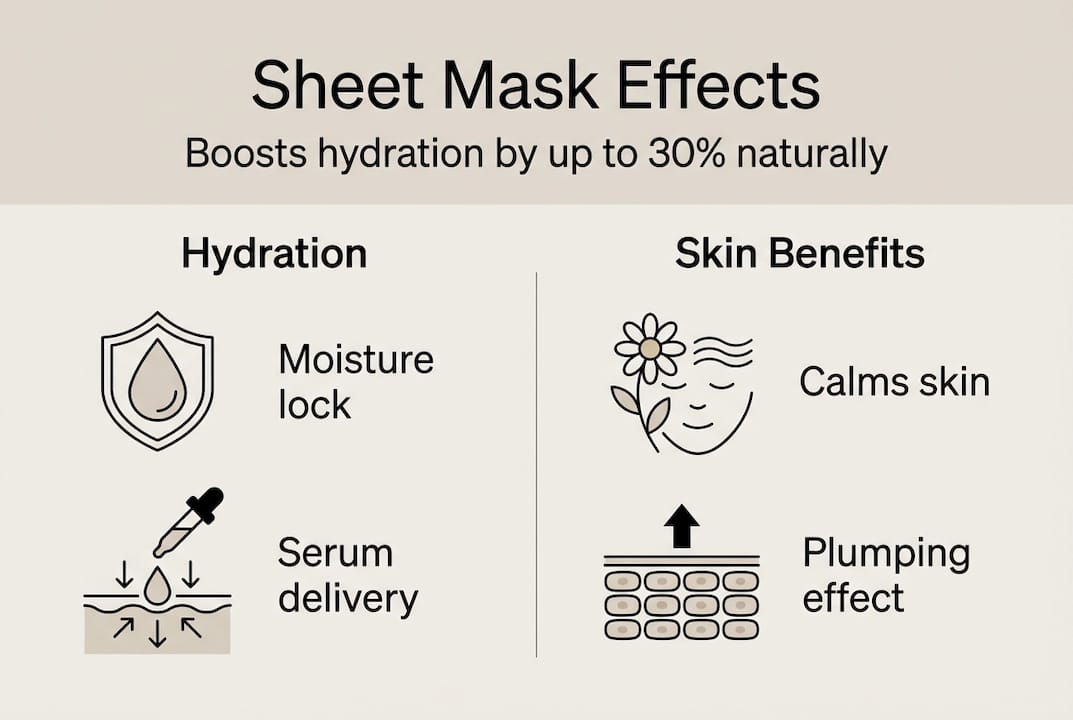
The most significant advantage of using sheet masks regularly is their ability to boost skin hydration by 30% when applied correctly. This dramatic increase happens because the sheet creates a microclimate on your face that prevents transepidermal water loss, allowing your skin to absorb significantly more moisture than it would from a standard moisturizer. The result is plumper, more supple skin that looks refreshed and feels softer immediately after use.

Beyond hydration, sheet masks offer multiple benefits that address various skin concerns. They calm inflammation and soothe sensitive skin through cooling contact and anti-inflammatory ingredients like centella asiatica or aloe vera. The occlusive barrier created by the sheet enhances ingredient absorption, meaning active compounds like vitamin C, niacinamide, or hyaluronic acid penetrate deeper into your skin layers where they can work most effectively. This enhanced delivery system makes sheet masks more efficient than applying the same ingredients in serum form alone.
Sheet masks also provide temporary plumping effects that give your skin a youthful glow. The intense hydration fills in fine lines and makes your complexion look smoother and more radiant. This makes them perfect for pre-event skincare when you want your skin to look its absolute best. Many users report that makeup applies more smoothly after using a sheet mask because the skin surface is properly hydrated and primed.
Pro Tip: Apply your sheet mask after cleansing and toning but before serums and moisturizers. This sequence maximizes ingredient absorption because toner balances your skin’s pH and removes any remaining impurities, creating the ideal canvas for the mask’s concentrated serum to penetrate deeply.
The cumulative benefits of regular sheet mask use include:
- Improved skin texture and smoothness from consistent hydration
- Reduced appearance of fine lines through moisture retention
- Brighter, more even skin tone from targeted brightening ingredients
- Calmer, less reactive skin due to soothing and anti-inflammatory compounds
- Enhanced effectiveness of your other skincare products through better absorption
Choosing the right sheet mask for your skin type
Selecting the appropriate sheet mask requires understanding your skin type and matching it with compatible active ingredients. Choosing ingredients that match your skin type improves results significantly because different skin concerns respond to different compounds. Using the wrong mask won’t necessarily harm your skin, but it won’t deliver the targeted benefits you’re seeking either.
Dry skin needs intense hydration and barrier repair, so look for masks containing hyaluronic acid, glycerin, ceramides, or squalane. These ingredients attract and lock in moisture while strengthening your skin’s protective barrier. Oily and acne-prone skin benefits from masks with tea tree oil, salicylic acid, niacinamide, or charcoal, which control excess sebum production, unclog pores, and reduce inflammation. Sensitive skin requires gentle, fragrance-free formulas with soothing ingredients like centella asiatica, chamomile, or colloidal oatmeal that calm irritation without triggering reactions.
| Skin Type | Recommended Ingredients | Primary Benefits | Avoid |
|---|---|---|---|
| Dry | Hyaluronic acid, ceramides, squalane | Deep hydration, barrier repair | Alcohol, strong acids |
| Oily/Acne-prone | Tea tree, niacinamide, salicylic acid | Oil control, pore refinement | Heavy oils, thick occlusives |
| Sensitive | Centella asiatica, chamomile, aloe vera | Soothing, anti-inflammatory | Fragrance, essential oils |
| Combination | Hyaluronic acid, green tea, peptides | Balanced hydration, antioxidants | Overly rich or drying formulas |
| Mature | Retinol, peptides, vitamin C | Anti-aging, firming, brightening | Harsh exfoliants |
When shopping for sheet masks, always read the ingredient list carefully to avoid common irritants. Synthetic fragrances, essential oils, and alcohol can trigger sensitivity even in people without typically reactive skin. Parabens and sulfates are also worth avoiding if you prefer cleaner skincare formulations. Look for masks that list their active ingredients prominently and avoid those with long lists of unrecognizable chemicals.
Patch testing new masks is essential, especially if you have sensitive skin or a history of reactions. Apply a small amount of the serum from the packet to your inner forearm or behind your ear, wait 24 hours, and check for any redness, itching, or irritation before using the full mask on your face. This simple step prevents the disappointment and discomfort of a full-face reaction to an incompatible product.
How to use sheet masks effectively: step-by-step guide
Proper application transforms a good sheet mask into an exceptional skincare treatment. Layering skincare products correctly greatly enhances sheet mask performance, so following the right sequence matters as much as choosing the right mask. Start with completely clean skin, as any makeup, oil, or dirt will create a barrier that prevents the mask’s serum from penetrating effectively.
Follow these steps for optimal sheet mask application:
- Cleanse your face thoroughly with your regular cleanser to remove all makeup, sunscreen, and impurities. Pat your skin dry with a clean towel.
- Apply toner to balance your skin’s pH and prep it for better ingredient absorption. This step is often skipped but makes a noticeable difference in how well the mask works.
- Open the sheet mask packet and unfold the mask carefully. Most masks have a protective layer on one or both sides that you need to peel off before application.
- Align the mask with your eyes first, then smooth it over your nose, mouth, and chin. Press gently to ensure good contact with all areas of your face, smoothing out any air bubbles or wrinkles in the fabric.
- Adjust the mask for the best fit, tucking edges around your jawline and forehead. A well-fitted mask prevents serum from dripping and ensures even ingredient distribution.
- Leave the mask on for 15 to 20 minutes. Set a timer so you don’t forget and let it dry out, which can actually pull moisture from your skin.
- Remove the mask and gently massage the remaining serum into your skin using upward motions. Most masks leave a significant amount of serum on your face, which contains all the beneficial ingredients.
- Follow with your regular moisturizer to seal in the hydration and active ingredients. This final step locks everything in and prevents transepidermal water loss.
Pro Tip: Never rinse your face after removing a sheet mask. The serum left on your skin contains concentrated active ingredients that continue working after you remove the mask. Rinsing washes away these benefits and defeats the purpose of the treatment.
Timing matters more than you might think. Leaving a sheet mask on too long allows it to dry out, which can actually reverse the hydration benefits by pulling moisture from your skin back into the drying fabric. If you notice the mask starting to feel dry or tight before the 20-minute mark, remove it immediately. Conversely, removing it too early means you’re not getting the full benefit of the occlusive barrier effect that makes sheet masks so effective.
Discover quality skincare products at Skin Styles
Now that you understand how to maximize sheet mask benefits, you’ll want reliable sources for quality skincare products that complement your routine. Skin Styles offers a carefully curated selection of skincare essentials designed to work together for optimal skin health. Whether you’re looking for sheet masks, cleansers, toners, or moisturizers, their product range includes options for every skin type and concern.

Exploring the Skin Styles homepage gives you access to trusted beauty and personal care items that enhance your self-care routine naturally. Their platform makes it easy to find products matched to your specific needs, with detailed descriptions and ingredient lists that help you make informed choices. Building a complete skincare routine with compatible products amplifies the benefits of each individual step, turning your daily regimen into a comprehensive system for healthier, more radiant skin.
What is a sheet mask FAQ
How often should you use a sheet mask?
Use sheet masks 2 to 3 times per week for best results without oversaturating your skin. Daily use can actually overhydrate and disrupt your skin’s natural moisture balance, leading to sensitivity or breakouts. Space your mask sessions evenly throughout the week to maintain consistent hydration levels.
Can sheet masks help with acne?
Sheet masks with targeted ingredients like tea tree oil, salicylic acid, or niacinamide can reduce acne by controlling oil production and calming inflammation. However, they work best as part of a complete acne treatment plan rather than as a standalone solution. Choose non-comedogenic formulas that won’t clog pores or worsen breakouts.
Are sheet masks safe for sensitive skin?
Sheet masks are safe for sensitive skin when you choose fragrance-free, hypoallergenic formulas with soothing ingredients like centella asiatica or chamomile. Always patch test new products first and avoid masks containing alcohol, essential oils, or synthetic fragrances that commonly trigger reactions. Look for masks specifically labeled for sensitive skin types.
Do sheet masks expire?
Yes, sheet masks expire and should be used before the date printed on the packaging. Expired masks can harbor bacteria or lose ingredient potency, making them less effective or potentially irritating. Store unused masks in a cool, dry place away from direct sunlight to maximize their shelf life, typically 2 to 3 years from manufacture.
Can you reuse a sheet mask?
No, you should never reuse a sheet mask as it becomes a breeding ground for bacteria after the first use. Once exposed to air and your skin’s natural oils, the mask can no longer deliver clean, effective ingredients. Each mask is designed for single use, though you can apply leftover serum from the packet to your neck, chest, or hands.