

Choosing the right night cream can feel overwhelming when faced with countless options promising different results. Night creams vary significantly by skin type, ingredients, and the specific concerns they address, from dryness and aging to acne and sensitivity. This guide will help you navigate the selection process effectively, teaching you how to identify your skin’s unique needs and match them with the perfect night cream formula. You’ll learn which ingredients work best for your skin type, how to evaluate products systematically, and common mistakes to avoid for optimal nighttime skincare results.
Table of Contents
- Understanding Your Skin Type And Concerns
- Key Ingredients To Look For In Night Creams By Skin Type
- Step-By-Step Process To Evaluate And Select A Night Cream
- Common Mistakes To Avoid And Tips For Best Results
- Discover Quality Night Creams Tailored To Your Skin
- FAQ
Key takeaways
| Point | Details |
|---|---|
| Match cream to skin type | Selecting a night cream suited for your specific skin type prevents irritation and maximizes benefits. |
| Ingredient knowledge matters | Understanding which active ingredients target your concerns helps you choose effective formulas. |
| Follow a selection process | A step-by-step evaluation approach ensures you find products that truly work for your skin. |
| Avoid common mistakes | Knowing what errors to skip saves time and prevents skin problems from incorrect product use. |
| Consistency brings results | Regular application and patience are essential for seeing visible improvements in skin health. |
Understanding your skin type and concerns
Before selecting any night cream, you need to accurately identify your skin type and primary concerns. Common skin types include dry, oily, combination, sensitive, and normal, each responding differently to various ingredients and textures. Dry skin often feels tight and flaky, requiring rich, hydrating formulas. Oily skin produces excess sebum and benefits from lightweight, non-comedogenic options. Combination skin shows both dry and oily areas, typically needing balanced formulations.
Sensitive skin reacts easily to harsh ingredients, demanding gentle, fragrance-free products. Normal skin maintains balanced moisture levels but still benefits from targeted treatments. Knowing your skin type is essential for choosing the right night cream that works with your skin rather than against it.
Beyond basic skin type, identify your primary concerns such as fine lines, wrinkles, acne, hyperpigmentation, redness, or dullness. The role of moisture levels and sensitivity significantly impacts how your skin tolerates different formulations. Someone with dry, mature skin needs different active ingredients than someone with oily, acne-prone skin.
Pro Tip: Conduct a simple skin test at home by washing your face and waiting 30 minutes without applying products. If your skin feels tight, you likely have dry skin. If shine appears on your T-zone, you have oily or combination skin. This baseline understanding guides better product matches.
Key factors to assess include:
- Current moisture barrier health and hydration levels
- Presence of active breakouts or acne scarring
- Visible signs of aging like wrinkles or loss of firmness
- Sensitivity triggers such as redness or stinging reactions
- Texture issues including rough patches or enlarged pores
Key ingredients to look for in night creams by skin type
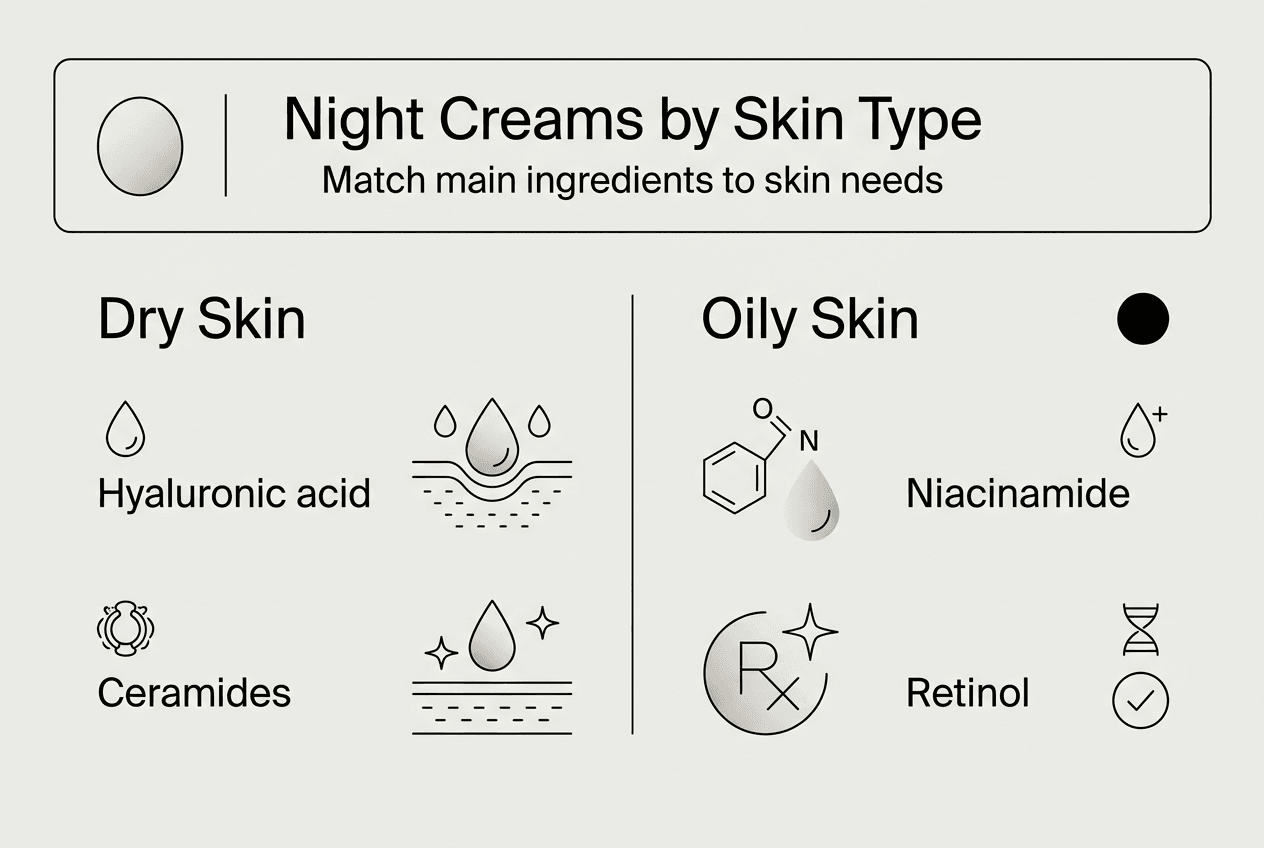
Once you understand your skin type, focus on ingredients that specifically address your needs. For dry skin, look for hyaluronic acid, which holds up to 1000 times its weight in water, ceramides that repair the moisture barrier, and nourishing oils like squalane or jojoba. These ingredients work overnight to restore hydration and prevent moisture loss.
Oily and acne-prone skin benefits from retinol, which increases cell turnover and unclogs pores, niacinamide that regulates sebum production, and salicylic acid for gentle exfoliation. These actives help control breakouts without over-drying. Selecting night cream ingredients depends on your skin concerns and type, making ingredient knowledge crucial for success.

Mature skin seeking anti-aging benefits should prioritize peptides that stimulate collagen production, antioxidants like vitamin C and E that fight free radical damage, and retinoids for wrinkle reduction. These powerful ingredients work during skin’s natural repair cycle at night. Sensitive skin requires soothing agents such as oat extract, aloe vera, chamomile, and centella asiatica that calm inflammation and reduce reactivity.
| Skin Type | Primary Ingredients | Benefits |
|---|---|---|
| Dry | Hyaluronic acid, ceramides, shea butter | Deep hydration and barrier repair |
| Oily/Acne-prone | Retinol, niacinamide, salicylic acid | Oil control and pore refinement |
| Mature/Aging | Peptides, retinoids, antioxidants | Collagen boost and wrinkle reduction |
| Sensitive | Oat extract, aloe vera, centella | Calming and anti-inflammatory effects |
| Combination | Lightweight hyaluronic acid, niacinamide | Balanced hydration without heaviness |
Pro Tip: Avoid harsh fragrances or alcohol in formulations if you have sensitive or dry skin, as these ingredients strip natural oils and trigger irritation. Always check ingredient lists for potential allergens or known irritants before purchasing.
Additional beneficial ingredients include:
- Alpha hydroxy acids for gentle exfoliation and brightness
- Bakuchiol as a natural retinol alternative for sensitive skin
- Vitamin E for antioxidant protection and healing
- Glycerin for moisture retention and skin softening
Step-by-step process to evaluate and select a night cream
Following a structured approach improves your chances of finding the perfect night cream. Start by assessing your skin type and primary concerns using the methods described earlier. This foundation guides all subsequent decisions and prevents wasting money on unsuitable products.
Next, research product ingredients and benefits by reading labels carefully and understanding what each active component does. Following a structured approach improves night cream selection success and ensures compatibility with your existing routine. Compare formulations from multiple brands, looking for concentrations of key actives and avoiding filler ingredients that provide no real benefit.
- Assess your skin type and identify top three concerns requiring treatment
- Research products containing ingredients proven effective for your specific needs
- Compare textures and absorption rates based on your preferences and climate
- Perform a patch test on your inner forearm or behind your ear for 24-48 hours
- Start with a small amount applied to clean skin and observe responses over two weeks
- Track changes in hydration, texture, breakouts, or irritation in a skincare journal
- Adjust usage frequency or switch products if negative reactions occur
When comparing textures, consider how different formulations suit various needs:
| Texture Type | Best For | Absorption Speed | Ideal Climate |
|---|---|---|---|
| Lightweight gel | Oily, combination skin | Fast, 2-5 minutes | Hot, humid weather |
| Cream lotion | Normal, slightly dry skin | Moderate, 5-10 minutes | Temperate conditions |
| Rich cream | Dry, mature skin | Slow, 10-15 minutes | Cold, dry weather |
| Balm | Very dry, compromised barrier | Very slow, 15+ minutes | Extreme dryness |
Patch testing prevents full-face reactions to new products. Apply a small amount to a discreet area and wait at least 24 hours, watching for redness, itching, or bumps. If no reaction occurs, proceed with facial application. Start with every other night for the first week, allowing your skin to adjust to new active ingredients.
Common pitfalls include ignoring expiration dates, which reduce ingredient effectiveness and increase contamination risk, and mixing incompatible products like retinol with certain acids. Store night creams in cool, dark places and replace them within 6-12 months of opening.
Common mistakes to avoid and tips for best results
Many people choose night creams not suited to their skin type or primary concern, leading to disappointing results or worsening conditions. Using a heavy cream on oily skin can clog pores and trigger breakouts, while lightweight gels on dry skin provide insufficient moisture. Avoiding common mistakes enhances the effectiveness of your night skincare routine and accelerates visible improvements.
Another frequent error involves using too much product, which can cause clogged pores, milia formation, or irritation. A pea-sized amount typically suffices for the entire face. Applying night cream immediately before bed without allowing absorption time means product transfers to your pillow rather than penetrating skin. Wait at least 10-15 minutes after application before lying down.
Consistent application timing matters because skin follows circadian rhythms, with peak repair occurring between 11 PM and 4 AM. Apply your night cream around the same time each evening, ideally between 9-10 PM, to align with this natural cycle. Use gentle upward massage techniques to boost circulation and lymphatic drainage while spreading the product.
Key mistakes to avoid:
- Skipping cleansing before application, which prevents ingredient penetration
- Applying night cream to damp skin unless specifically formulated for wet application
- Mixing retinol with vitamin C or AHAs without proper knowledge
- Expecting overnight miracles instead of allowing 4-6 weeks for results
- Using day cream at night, missing out on targeted repair ingredients
Pro Tip: Combine your night cream with other nighttime treatments for synergistic effects. Layer a hydrating serum underneath for extra moisture, or apply a facial oil on top if you have very dry skin. Just ensure products are compatible and introduce new combinations gradually.
Patience and consistency are your greatest allies in skincare. Skin cells renew every 28 days on average, meaning visible improvements require sustained effort over weeks, not days. Trust the process and give products adequate time to work.
Additional tips for maximizing results include drinking adequate water throughout the day to support skin hydration from within, using a silk pillowcase to reduce friction and product absorption, and maintaining a balanced diet rich in skin-supporting nutrients. Avoid touching your face excessively and ensure your hands are clean when applying products.
Discover quality night creams tailored to your skin
Now that you understand how to choose the perfect night cream, explore curated collections designed to meet diverse skincare needs. Skin Styles offers an extensive range of facial creams and gels formulated for every skin type, from lightweight options for oily complexions to rich treatments for dry, mature skin.

Our Cosrx products collection features Korean skincare innovations known for effective, gentle formulations that deliver visible results. For those targeting signs of aging, browse our specialized anti-wrinkle collection with peptides, retinoids, and antioxidants proven to reduce fine lines. Each product includes detailed ingredient lists and usage instructions to help you make informed decisions aligned with your skin’s unique requirements.
FAQ
How long does it take to see results from a night cream?
Results vary but typically take 4-6 weeks with consistent nightly use. Skin improvements happen gradually as cells renew overnight and active ingredients build up in your skin over time. Some benefits like hydration may appear within days, while anti-aging effects require several weeks to become noticeable.
Can I use the same night cream year-round?
Some skin types require lighter creams in summer and richer formulas in winter due to climate changes affecting moisture needs. Adjust based on how your skin feels and seasonal variations in humidity and temperature. Your skin’s requirements shift with environmental conditions, so flexibility in product choice optimizes results.
Is it necessary to use a separate night cream if I already have a moisturizer?
Night creams often contain higher concentrations of active ingredients specifically formulated for skin’s repair cycle during sleep. They typically have richer textures to support overnight regeneration and prevent transepidermal water loss. While day moisturizers focus on protection and hydration, night creams prioritize renewal and treatment, making them complementary rather than redundant.
Should I consult a dermatologist before choosing a night cream?
Consult a dermatologist if you have chronic skin conditions like eczema, rosacea, or severe acne, or if you have known allergies to skincare ingredients. Professional advice ensures safe and effective product selection tailored to medical-grade needs. For generally healthy skin, self-selection using the guidelines in this article typically works well, but expert input never hurts.