

TL;DR:
- Skin pilling involves small rubbery product balls forming during application, not dry flakes.
- Proper layering techniques, minimal product use, and waiting between steps prevent pilling.
- Simplifying routines and ensuring product compatibility reduce the risk of pilling and improve results.
You’re halfway through your morning routine when you notice tiny, rubbery balls rolling off your face. Your first thought? Dry skin. But you moisturized last night. You exfoliated two days ago. So what’s going on? Skin pilling is one of the most misunderstood problems in skincare, and it trips up even experienced enthusiasts. It looks like flaking, feels frustrating, and often gets blamed on the wrong thing entirely. This article breaks down exactly what skin pilling is, why it happens, and how to stop it for good, with practical fixes you can start using today.
Table of Contents
- What is skin pilling?
- Why does skin pilling happen? Main causes explained
- Skin pilling vs. dry/flaky skin: How to tell the difference
- How to prevent and fix skin pilling: Strategies that work
- Our perspective: Why simple beats trendy for lasting results
- Find your perfect products to prevent skin pilling
- Frequently asked questions
Key Takeaways
| Point | Details |
|---|---|
| Skin pilling basics | Skin pilling happens when skincare products ball up due to technique, not skin issues. |
| Main causes | Overlapping products, rushing layers, or incorrect order are top pilling culprits. |
| Prevention method | Apply in thin layers, wait between steps, and exfoliate gently to avoid pilling. |
| Distinguish issues | Rubbery balls mean pilling; flaky patches suggest dryness or barrier problems. |
What is skin pilling?
Skin pilling sounds like a fabric problem, but it’s very much a skincare one. Skin pilling is the formation of small balls or clumps of skincare product on the skin’s surface, rather than dead skin cells. Those little gray or skin-colored pellets you see rolling off your cheeks or forehead? That’s product, not your skin, balling up and refusing to absorb.
Visually, pilling looks like eraser shavings. You press your serum in, start applying sunscreen on top, and suddenly you’re rolling off residue instead of building a smooth layer. It can happen within seconds of applying a new product over a previous one. The texture feels rubbery or gummy, which is the key clue that separates it from dry skin.
Pilling is often confused with dead skin flakes or dry skin shedding. True pilling is rubbery product balls, while flakes are from barrier issues or natural desquamation (the skin’s natural shedding process). Flakes are thin, papery, and often white or translucent. Pilling is thicker, more cohesive, and tends to clump together as you rub.
Knowing this distinction matters more than most people realize. If you treat pilling like dryness, you’ll pile on more moisturizer and make the problem worse. If you treat actual dryness like a product issue, you’ll strip your routine down and leave your skin unprotected.
Signs to distinguish pilling from other issues:
- Rubbery or gummy texture when you rub your skin: pilling
- Thin, papery flakes that brush off easily: dry skin or barrier damage
- Balls appear immediately after applying a new layer: product incompatibility
- Flaking worsens in cold or dry weather: moisture loss, not pilling
- Residue appears in patches where you applied the most product: overload pilling
- Skin feels tight and rough, not coated: likely dryness, not pilling
“The moment you can tell the difference between a rubbery ball and a dry flake, your entire approach to troubleshooting your routine changes.”
Understanding why layering matters is the first step toward a routine that actually works without frustrating buildup.
Why does skin pilling happen? Main causes explained
Skin pilling rarely has one single cause. Most of the time, it’s a combination of factors that stack up until your products refuse to cooperate. Primary causes include incompatible product formulations, applying too much product, rushing layers, incorrect order, and dead skin buildup.
Let’s break each one down.
Formulation clash happens when you mix water-based and silicone-based products without thinking about compatibility. Silicones create a film on the skin that water-based formulas can’t penetrate. The result? Product sits on top and balls up instead of absorbing.
Product overload is exactly what it sounds like. Using more than a pea-sized amount of serum or moisturizer doesn’t mean better results. It means more product sitting on the surface with nowhere to go.
Rushing application is a huge one. Most people apply their next product within seconds of the previous one. Your skin needs time to absorb each layer before you add another. Skipping that window creates a wet, slippery surface that causes the next product to slide and ball up.
Incorrect layering order is another common mistake. Applying a thick cream before a lightweight serum traps the serum on top, and it pills immediately. The rule is thinnest to thickest, always.
Dead skin buildup creates a rough, uneven surface that products can’t grip. Instead of sinking in, they catch on the texture and roll off.
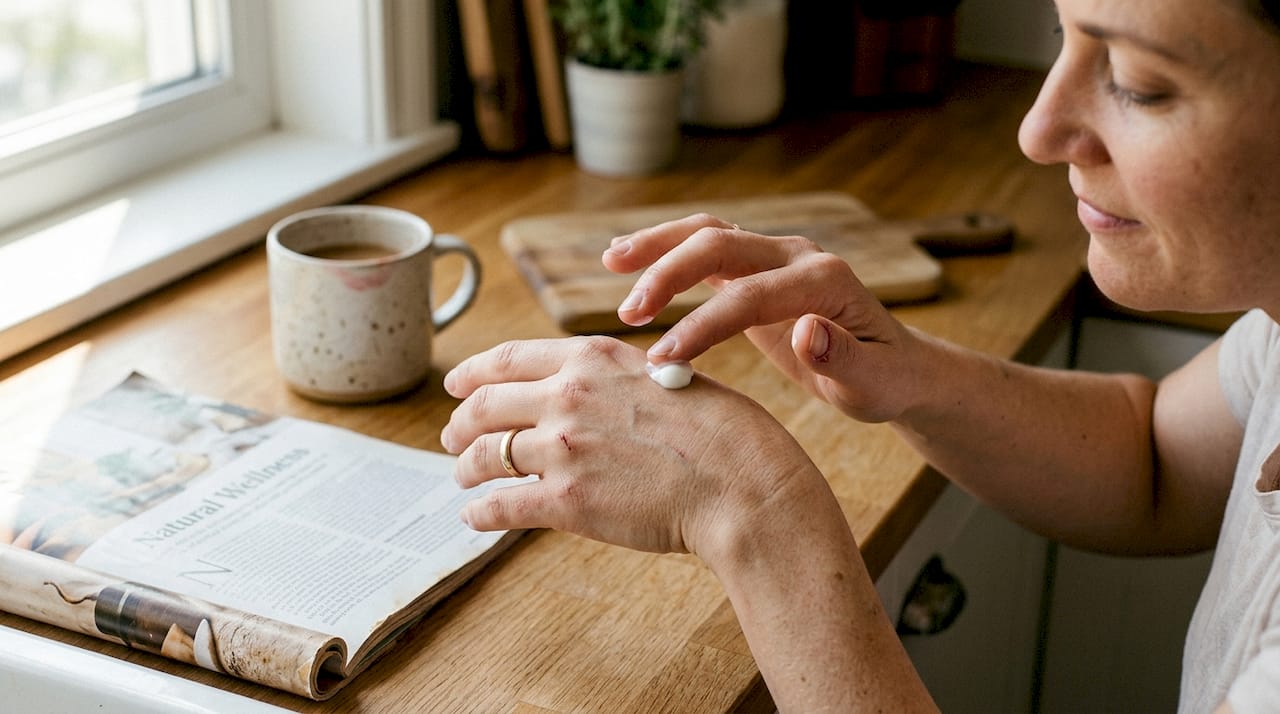
Wait 30 to 60 seconds between each layer and use pea-sized amounts. That one habit change alone eliminates pilling for many people.
Questions to ask yourself to self-diagnose:
- Am I applying more than a pea-sized amount of each product?
- Am I waiting at least 30 seconds between layers?
- Do I mix silicone-based primers with water-based serums?
- Have I exfoliated recently to remove dead skin buildup?
- Am I applying products thinnest to thickest?
Pro Tip: If you’re unsure which product is causing the pilling, remove one product at a time for three days and observe. This simple elimination method pinpoints the culprit faster than any ingredient chart. Learning how to layer products correctly makes this process much easier.
Skin pilling vs. dry/flaky skin: How to tell the difference
Misdiagnosing pilling as dryness, or vice versa, leads to routines that actively work against your skin. True pilling is rubbery product balls, while flakes are from barrier issues or natural desquamation. The fix for one is almost the opposite of the fix for the other.
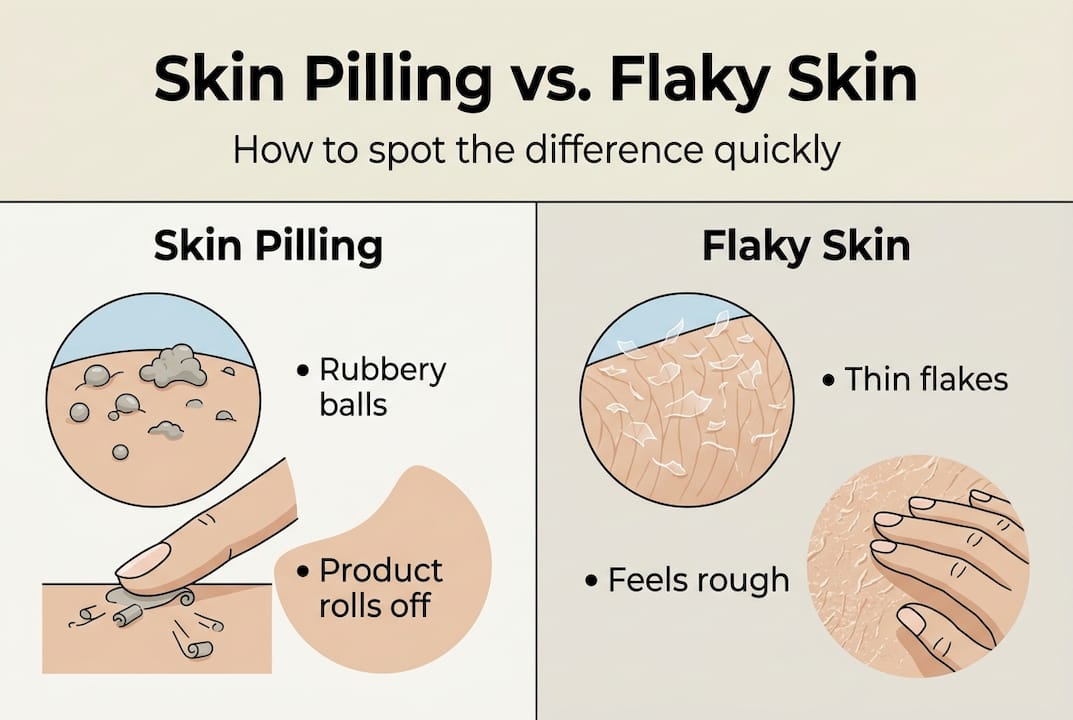
Here’s a side-by-side comparison to make it crystal clear:
| Feature | Skin pilling | Dry/flaky skin |
|---|---|---|
| Texture | Rubbery, gummy balls | Thin, papery flakes |
| Color | Skin-toned or gray | White or translucent |
| When it appears | During product application | Throughout the day |
| Cause | Product incompatibility or overload | Barrier damage or moisture loss |
| Gets worse with | More product layering | Cold, dry weather or harsh cleansers |
| Fix | Adjust routine technique | Repair barrier, add hydration |
The timing is your biggest clue. Pilling shows up during your routine, right as you’re applying products. Dryness and flaking show up after your routine, often hours later or when you look in the mirror mid-afternoon.
When to adjust your technique vs. when to look at skin health:
- Balls appear while applying: fix your layering technique
- Flakes appear after your routine: look at your cleanser strength or moisturizer quality
- Both happen together: you may have a barrier issue AND a routine problem
- Redness or stinging alongside flaking: see a dermatologist, not just a new product
Misdiagnosis leads to frustration because you keep buying new products when the real issue is method. Someone who thinks they have dry skin might add three more moisturizing layers, which makes pilling dramatically worse. Someone who thinks they have pilling might strip their routine down, leaving a compromised barrier completely unprotected.
Start building your routine with this distinction in mind, and you’ll troubleshoot problems much faster.
How to prevent and fix skin pilling: Strategies that work
Prevention is always easier than fixing an established problem. Apply thinnest to thickest consistency, use minimal amounts (pea-sized), wait 30 to 60 seconds per layer, exfoliate regularly, simplify your routine, avoid multiple silicones, and use compatible bases.
Here’s how to put that into action:
- Start with a clean, exfoliated surface. Dead skin creates an uneven texture that causes products to ball up. Exfoliate one to two times per week to keep absorption smooth.
- Apply products thinnest to thickest. Toner first, then essence, then serum, then moisturizer, then SPF. Never reverse this order.
- Use pea-sized amounts. More product does not mean more benefit. A thin, even layer absorbs far better than a thick glob.
- Wait 30 to 60 seconds between each step. Set a timer if you need to. This one habit prevents the majority of pilling.
- Check for silicone conflicts. Avoid layering multiple silicone-heavy products. Look for ingredients ending in “-cone” or “-siloxane” on labels.
- Simplify your routine. Fewer products mean fewer chances for incompatibility.
| Routine step | Recommended amount | Wait time before next step |
|---|---|---|
| Toner | Cotton pad or 2-3 drops | 30 seconds |
| Serum | Pea-sized (about 0.5ml) | 45-60 seconds |
| Moisturizer | Pea to dime-sized | 60 seconds |
| Sunscreen | 1/4 teaspoon for full face | Last step, no wait |
Dermatologists emphasize exfoliation for smooth absorption but warn against over-exfoliation, especially for sensitive or darker skin tones, where it can trigger irritation or uneven pigmentation. Stick to safe exfoliation tips and never exfoliate more than twice a week unless directed by a professional.
Pro Tip: Start with just three products (cleanser, moisturizer, SPF) for one week. Then add one product at a time every few days. This way, if pilling starts, you know exactly which product triggered it. Following a solid basic skincare workflow makes this rebuild process much less overwhelming.
Our perspective: Why simple beats trendy for lasting results
Here’s something most skincare content won’t say directly: the more products you add, the more problems you create. Skin pilling is almost always a symptom of routine complexity, not a skin flaw. We’ve seen it repeatedly. Someone builds a ten-step routine chasing every trending ingredient, and then spends months troubleshooting why nothing works.
Consistent expert advice across sources prioritizes technique over ingredients. A complex routine increases risk. That’s not an opinion. That’s the pattern.
What most people get wrong is focusing entirely on what they’re applying rather than how they’re applying it. A single well-chosen serum applied correctly will outperform five premium serums layered carelessly every single time. Technique is the variable that most product marketing completely ignores, because it doesn’t sell anything.
The brands that make the biggest promises often have the most silicones, the heaviest textures, and the most incompatible formulas. Simplicity isn’t a compromise. It’s actually the most sophisticated approach you can take. Understanding why layering matters at a deeper level shifts the focus from product collecting to genuine skin improvement.
Find your perfect products to prevent skin pilling
Once you understand the technique, choosing the right products becomes much easier. Compatible formulas with lightweight textures make layering effortless and dramatically reduce the chance of pilling.

At Skin Styles, you’ll find products curated to work together, not against each other. Browse our facial creams and gels for lightweight, layerable options that absorb cleanly without the gummy residue. If you love ingredient-focused skincare, our Cosrx collection features formulas specifically designed for compatibility and minimal pilling risk. Building a routine that actually works starts with products that are made to cooperate.
Frequently asked questions
What are the most common causes of skin pilling?
Skin pilling is usually caused by incompatible products, too much product, rushing application, incorrect layering order, or buildup of dead skin cells on the surface.
How can I prevent skin pilling from happening?
Apply thin layers from thinnest to thickest, wait 30 to 60 seconds between each step, use pea-sized amounts, exfoliate one to two times weekly, and keep your routine as simple as possible.
Is skin pilling a sign my skin is unhealthy?
Not necessarily. Skin pilling is mostly product-related, but if you notice persistent flaking, redness, or irritation alongside it, that may point to a skin barrier issue worth addressing.
How often should I exfoliate to avoid pilling?
Gentle exfoliation one to two times per week is enough for most skin types. Over-exfoliation risks include irritation and pigmentation issues, especially for sensitive or darker skin tones.