

K-beauty is often dismissed as just another passing trend, but this perception couldn’t be further from the truth. It represents a comprehensive, scientifically backed skincare philosophy with roots stretching back centuries. Scientific studies show K-beauty routines improve skin moisture retention by up to 25% in 4 weeks, proving its efficacy goes far beyond marketing hype. This guide will clarify K-beauty’s origins, core principles, and exactly how you can adopt this transformative approach to achieve healthier, more radiant skin.
Table of Contents
- Introduction To K-beauty: Origins And Philosophy
- Core Principles And The 10-Step K-beauty Routine Explained
- Unique Ingredients And Their Scientific Benefits
- How K-beauty Differs From Western Skincare Practices
- Common Misconceptions About K-beauty
- Scientific Evidence And Real-World Benefits Of K-beauty
- How To Start Your Own K-beauty Routine With Confidence
- Explore Curated K-beauty Skincare Solutions At Skin Styles
- Frequently Asked Questions About K-beauty
Key takeaways
| Point | Details |
|---|---|
| Philosophy over quick fixes | K-beauty prioritizes prevention, hydration, and long-term skin health rather than aggressive treatments. |
| Multi-step layering works | The traditional 10-step routine uses product layering from lightest to heaviest for maximum absorption. |
| Innovative ingredients matter | Fermented extracts, snail mucin, and propolis offer unique biochemical benefits unseen in typical Western products. |
| Customization is essential | Despite structured routines, K-beauty requires personalizing product choices based on individual skin needs and reactions. |
| Scientific validation exists | Clinical research confirms improved hydration, barrier function, and skin texture from consistent K-beauty practices. |
Introduction to K-beauty: origins and philosophy
K-beauty’s foundations extend deep into South Korean cultural history. K-beauty originated from South Korea’s cultural emphasis on skin health and aesthetic ideals dating back to the Joseon Dynasty, when aristocrats developed elaborate skincare rituals using natural ingredients. This heritage shaped a philosophy fundamentally different from Western approaches.
The core K-beauty philosophy centers on achieving naturally luminous skin through consistent care rather than masking imperfections with heavy makeup. Prevention takes priority over correction. You invest time in maintaining skin health today to avoid damage tomorrow. This mindset reflects broader Korean cultural values around discipline, patience, and long-term thinking.

Hydration forms the cornerstone of K-beauty thinking. While Western skincare often emphasizes active ingredients like retinoids and acids for targeted treatment, K-beauty focuses on maintaining optimal moisture levels to support the skin’s natural barrier function. This approach recognizes that well-hydrated skin better resists environmental stressors and ages more gracefully.
The aesthetic ideal in K-beauty celebrates what Koreans call “glass skin,” a translucent, dewy complexion that appears healthy from within. This differs markedly from Western preferences for matte finishes or dramatic contouring. Understanding K-beauty origins and philosophy explained helps you appreciate why product formulations and routines differ so significantly from what you might already know. The historical and cultural perspectives on K-beauty reveal how centuries of tradition inform modern innovations.
Core principles and the 10-step K-beauty routine explained
The iconic 10-step K-beauty routine might seem overwhelming at first, but each step serves a specific purpose in building and maintaining skin health. Understanding the logic behind the sequence makes the routine feel less daunting and more intuitive.
Here’s the traditional order:
- Oil-based cleanser removes makeup, sunscreen, and oil-based impurities
- Water-based cleanser eliminates sweat, dirt, and water-based debris (double cleansing)
- Exfoliator sloughs away dead skin cells 2-3 times weekly, not daily
- Toner balances pH and preps skin for better absorption
- Essence delivers concentrated hydrating and anti-aging ingredients
- Serum or ampoule targets specific concerns like dark spots or fine lines
- Sheet mask provides intensive hydration boost 1-3 times weekly
- Eye cream addresses delicate under-eye area with specialized formula
- Moisturizer seals in all previous layers and reinforces barrier
- Sunscreen protects against UV damage during daytime routine (SPF 30 minimum)
The key principle behind this sequence involves layering skincare products effectively by applying products from thinnest to thickest consistency. Watery essences penetrate first, while heavier creams lock everything in. This maximizes ingredient absorption at each stage.
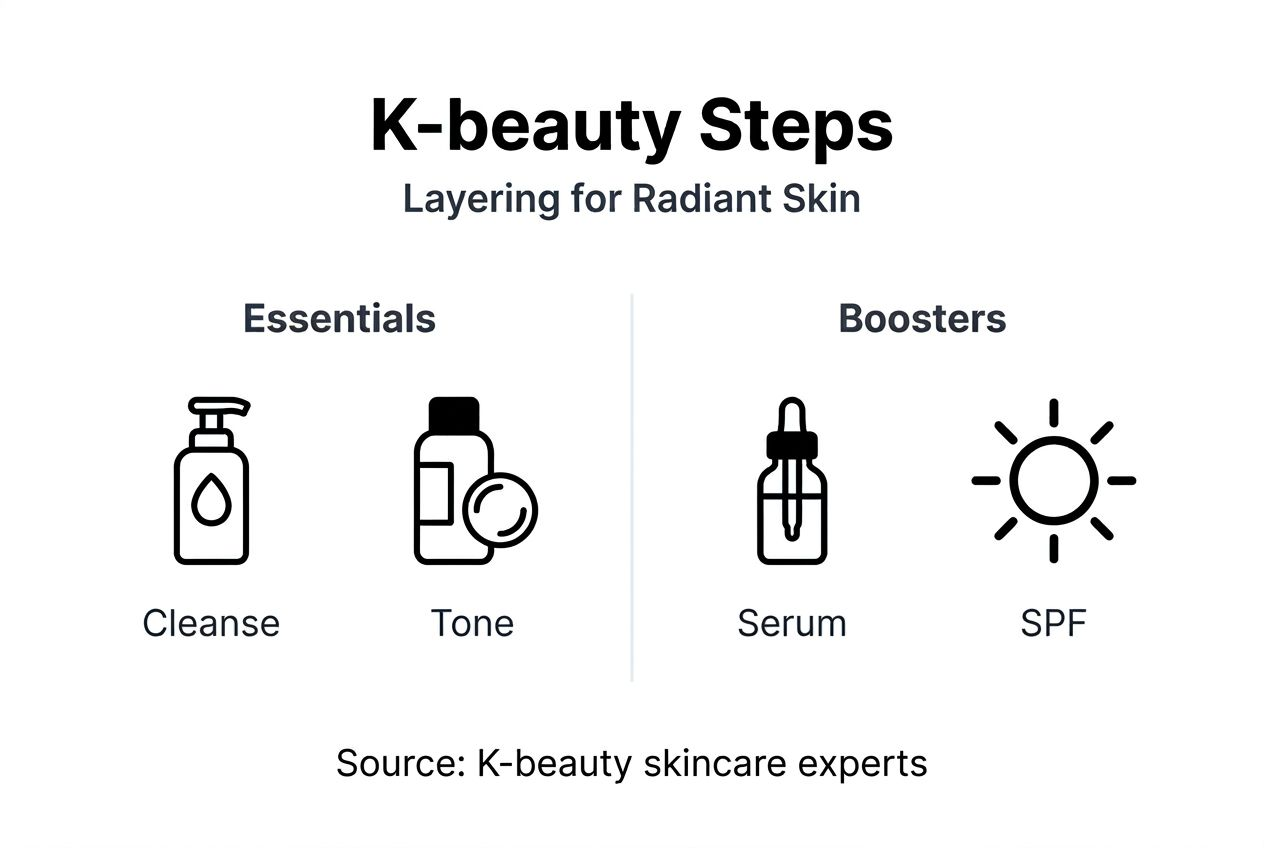
You don’t need to follow all 10 steps religiously every day. Many Korean skincare enthusiasts customize based on their schedule, skin condition, and personal needs. Morning routines often simplify to 5-6 steps, while evening routines might include the full sequence. The flexibility allows you to maintain consistency without feeling burdened.
Unique ingredients and their scientific benefits
K-beauty’s innovation reputation stems largely from its pioneering use of unconventional ingredients backed by scientific research. These components offer mechanisms of action that differ significantly from typical Western actives.
Fermented ingredients undergo bacterial or yeast fermentation that breaks down molecules into smaller particles your skin absorbs more easily. This process also creates beneficial byproducts like vitamins, amino acids, and organic acids. Fermented rice water, soy, and yeast extracts appear frequently in K-beauty formulas, delivering enhanced antioxidant protection and deep moisturization.
Snail mucin (snail secretion filtrate) might sound unusual, but research demonstrates its powerful skin-repairing properties. It contains glycoproteins, hyaluronic acid, and antimicrobial peptides that reduce inflammation, stimulate collagen production, and accelerate wound healing. Many users report visible improvements in acne scars and texture after consistent snail mucin use.
Propolis is a resinous mixture honey bees create from tree sap and botanical sources. In skincare, it functions as a potent antimicrobial and anti-inflammatory agent. Propolis helps defend against environmental stressors while supporting skin healing and barrier repair. Innovative K-beauty ingredients like snail mucin, propolis, and fermented extracts provide anti-inflammatory and moisturizing effects through unique biochemical pathways.
Other standout K-beauty ingredients include:
- Centella asiatica (cica) for soothing irritation and strengthening capillaries
- Ginseng extract for improving circulation and brightening
- Green tea for antioxidant protection and oil control
- Niacinamide for pore refinement and hyperpigmentation treatment
These ingredients showcase K-beauty’s willingness to explore traditional Asian remedies and validate them through modern science. The biochemical benefits of K-beauty ingredients continue attracting global attention as research expands.
How K-beauty differs from Western skincare practices
Understanding the distinctions between K-beauty and Western skincare helps you make informed choices about which approach suits your needs and preferences.
| Aspect | K-beauty | Western Skincare |
|---|---|---|
| Routine complexity | Multi-step layering (5-10 products) | Streamlined (3-5 products typically) |
| Primary focus | Prevention and hydration | Treatment and correction |
| Active ingredients | Gentle, natural extracts, ferments | Stronger acids, retinoids, prescription options |
| Texture preferences | Lightweight, watery, layerable | Richer, all-in-one formulations |
| Aesthetic goal | Dewy, translucent “glass skin” | Varied: matte, natural, glowing |
| Cultural influence | Collective beauty rituals, detailed regimens | Individual efficiency, quick results |
Philosophically, K-beauty emphasizes nurturing skin health through gentle, consistent care over months and years. You invest time in prevention to avoid needing aggressive treatments later. Western approaches often favor more immediate visible results through stronger active ingredients that target specific concerns like wrinkles or acne.
Product formulation reflects these different priorities:
- K-beauty products typically feature multiple hydrating ingredients at moderate concentrations
- Western products often contain higher percentages of proven actives like retinol (0.5-1%) or glycolic acid (10%+)
- K-beauty emphasizes soothing and barrier-supporting components alongside actives
- Western dermatology frequently prescribes medical-grade treatments for stubborn issues
Neither approach is inherently superior. Many skincare enthusiasts now blend both philosophies, using K-beauty’s hydrating layers as a foundation while incorporating Western actives for targeted treatment. This hybrid strategy lets you benefit from both systems’ strengths.
Common misconceptions about K-beauty
Several myths about K-beauty persist despite growing mainstream awareness. Clearing these misunderstandings helps you approach K-beauty with realistic expectations and safer practices.
Myth: K-beauty products suit all skin types universally
Reality: While K-beauty emphasizes gentleness, individual products vary widely in formulation. Some contain essential oils, fragrances, or plant extracts that trigger reactions in sensitive skin. Always patch test new products on your inner arm for 24-48 hours before applying to your face. Your skin type, concerns, and sensitivities require personalized product selection regardless of whether you choose K-beauty or Western options.
Myth: More routine steps automatically deliver better results
Reality: Product quality and appropriate selection matter far more than quantity. Using 10 products that don’t suit your skin or layering incompatible ingredients can cause irritation, clogged pores, or compromised barrier function. Start with core essentials (cleanser, moisturizer, sunscreen) and add steps only when you understand what your skin needs and can commit to consistent application.
Myth: K-beauty products are always fragrance-free and hypoallergenic
Reality: Many K-beauty products contain fragrances, essential oils, or preservatives that can irritate sensitive skin. Korean cosmetic regulations differ from those in the US or EU. Some ingredients permitted in Korean formulations face restrictions elsewhere. Always check ingredient lists, especially if you have known allergies or sensitivities.
Pro Tip: Introduce only one new product at a time, waiting at least a week before adding another. This approach lets you identify exactly which product causes problems if irritation occurs, rather than guessing among multiple new additions.
Scientific evidence and real-world benefits of K-beauty
K-beauty’s growing popularity isn’t just marketing hype. Clinical research increasingly validates the benefits of multi-step routines and signature K-beauty ingredients.
Regular use of K-beauty hydrating products improves skin moisture retention by up to 25% within 4 weeks. This improvement in hydration correlates with enhanced barrier function, meaning your skin better protects itself against environmental aggressors, pollution, and allergens. Stronger barriers also reduce transepidermal water loss, keeping skin plumper and more resilient.
Studies examining fermented ingredients demonstrate increased bioavailability of beneficial compounds. The fermentation process breaks down molecules into smaller sizes that penetrate the stratum corneum more effectively. This enhanced absorption means your skin actually uses more of the active ingredients you apply, rather than sitting on the surface.
Clinical observations of participants following complete K-beauty routines for 8-12 weeks show measurable improvements in skin texture, reduced pore appearance, and increased luminosity. Dermatologists attribute these results to consistent hydration, gentle exfoliation, and cumulative antioxidant protection from layered products.
The layering technique itself contributes to efficacy. Applying multiple thin layers of hydrating ingredients creates a moisture gradient that draws water into the skin more effectively than a single thick application. Each layer also helps the next penetrate better by optimizing skin pH and removing surface barriers.
Real-world user experiences align with laboratory findings. Many people report that their skin feels softer, looks more even-toned, and responds better to makeup application after adopting K-beauty methods. The scientific proof of K-beauty benefits continues mounting as researchers investigate traditional Korean ingredients using modern analytical techniques.
How to start your own K-beauty routine with confidence
Beginning a K-beauty routine doesn’t require buying 10 products immediately. Start simple and build gradually based on what your skin tells you it needs.
-
Begin with the essentials: Choose a gentle cleanser, a hydrating toner or essence, a basic moisturizer, and broad-spectrum sunscreen (SPF 30+). These four products form the foundation of any effective routine.
-
Learn proper cleansing: Start your evening routine with an oil-based cleanser if you wear makeup or sunscreen, followed by a gentle water-based cleanser. Morning routines may only need the water-based cleanser unless your skin feels very oily.
-
Master the layering order: Apply products from thinnest to thickest consistency. Toners and essences go first, followed by serums, then moisturizers, with sunscreen last in morning routines. Understanding layer skincare products for better results ensures maximum effectiveness.
-
Introduce actives cautiously: Once your basic routine feels comfortable, add targeted treatments like vitamin C serums, niacinamide, or gentle exfoliants. Start with lower concentrations and use them 2-3 times weekly before increasing frequency.
-
Observe and adjust: Pay attention to how your skin responds. Tightness after cleansing means your cleanser is too harsh. Persistent redness might indicate an ingredient sensitivity. Increased oiliness could mean you’re over-moisturizing.
-
Patch test everything: Apply new products to a small area like your jawline or behind your ear for 24-48 hours before full-face application. This simple step prevents widespread reactions.
Pro Tip: Build your routine gradually over 2-3 months rather than all at once. This patience prevents overwhelming your skin and your budget while helping you identify which products actually make a difference.
For comprehensive guidance on establishing effective skincare habits, explore the daily skincare guide to build your routine and learn about the importance of layering in skincare to maximize your results.
Explore curated K-beauty skincare solutions at Skin Styles
Ready to transform your skincare routine with K-beauty principles? Skin Styles offers carefully curated products that align with the hydration-focused, gentle approach you’ve learned about. Our selection includes essences, serums, and moisturizers formulated with innovative ingredients designed to support your skin’s natural barrier and long-term health.

Whether you’re building your first multi-step routine or refining an existing regimen, explore our must-have skincare products to find options suited to your specific skin type and concerns. Our daily skincare guide provides additional expert tips for maintaining consistency and achieving radiant results. Discover why layer skincare products work so effectively and start your journey toward healthier, glowing skin today.
Frequently asked questions about K-beauty
How do I select K-beauty products for sensitive skin?
Look for products labeled as hypoallergenic or formulated for sensitive skin types. Avoid fragrances, essential oils, and high concentrations of acids initially. Start with single-ingredient products like pure hyaluronic acid or centella asiatica serums, which tend to cause fewer reactions.
Is K-beauty suitable for all ages and skin types?
Yes, K-beauty’s flexibility allows customization for any age or skin type. Teenagers might focus on gentle cleansing and lightweight hydration, while mature skin benefits from essences and serums targeting fine lines. Adjust product choices and routine complexity based on your specific needs rather than following a universal template.
How long until I see visible results from a K-beauty routine?
Most people notice improved hydration and smoother texture within 2-3 weeks of consistent use. More significant changes like reduced hyperpigmentation or refined pores typically require 8-12 weeks. Consistency matters more than perfection, so maintain your routine even when immediate results aren’t obvious.
Do I need sunscreen every day in K-beauty?
Absolutely. Daily broad-spectrum sunscreen (SPF 30 minimum) forms a non-negotiable part of K-beauty philosophy. UV exposure causes up to 80% of visible facial aging, and sunscreen protects all the improvements you’re making with your other products. Apply it every morning, even on cloudy days or when staying mostly indoors.
What if I want to skip some steps in the routine?
Customize freely based on your schedule and skin needs. At minimum, maintain double cleansing (evening), toner, moisturizer, and sunscreen (morning). Add essences, serums, and treatments as time and interest allow. Many Korean skincare enthusiasts simplify to 5-6 steps daily while doing the full routine only 2-3 times weekly.