

TL;DR:
- Antimicrobial silicone is specially engineered to resist microbial growth, offering hygiene benefits over standard silicone.
- However, its effectiveness depends on the integration method, product design, and proper maintenance, not just marketing claims.
Not every “antimicrobial” beauty tool delivers the same results, and that gap between marketing language and real-world performance is where most consumers get confused. Antimicrobial silicone is a genuinely different material from standard silicone, engineered at the manufacturing level to reduce microbial growth on surfaces you press against your skin daily. As antimicrobial silicone is defined as silicone rubber that has antimicrobial activity intended to inhibit microbial growth or reduce contamination, understanding what that actually means in practice can change how you shop, use, and care for your skincare tools.
Table of Contents
- What is antimicrobial silicone?
- How does antimicrobial silicone work?
- Why antimicrobial silicone matters in personal care
- What to watch for: Claims, durability, and cleaning
- The limits: What research says and how to set your expectations
- Our perspective: What most guides miss about antimicrobial silicone
- Explore innovative skincare solutions with Skin Styles
- Frequently asked questions
Key Takeaways
| Point | Details |
|---|---|
| Defined antimicrobial silicone | Antimicrobial silicone is engineered to resist or reduce microbial growth in personal care products. |
| Science-backed benefits | Additives like silver or copper give silicone hygienic properties, but durability and use matter. |
| Smart shopping and care | Look for specifics in labeling and keep up with regular cleaning to maximize hygiene. |
| Lab results vs. real life | While lab tests show promise, actual results depend on how you use and maintain your products. |
What is antimicrobial silicone?
Antimicrobial silicone is not simply regular silicone with a label upgrade. It is a material that has been intentionally engineered to resist or reduce microbial growth, either through additives mixed into the silicone during manufacturing or through specialized coatings applied to the surface afterward.
The distinction matters more than you might think. A material with antimicrobial agents blended throughout its structure will behave very differently over time compared to one that has only a surface coating. The surface-coated version can lose its effectiveness faster, especially after repeated washing or heavy use.
Here is a quick breakdown of what the key terms mean in practice:
- Antimicrobial: Broad term covering activity against bacteria, fungi, mold, and sometimes viruses
- Antibacterial: Specific to bacteria only; does not guarantee antifungal action
- Antifungal: Targets fungi and mold, which matter a lot for tools stored in humid bathrooms
- Antifouling: Reduces buildup of biological material on a surface, often used in medical or marine contexts
“For consumers, the most practical way to interpret ‘antimicrobial silicone’ is as a hygiene-oriented material feature, reducing microbial load or odor on a product surface, whose real-world benefits depend on product design, the specific antimicrobial system used, and ongoing cleaning and maintenance.”
Understanding these distinctions helps you ask smarter questions when comparing beauty tools. A facial cleansing brush that is labeled “antibacterial” may not protect against the mold that tends to grow in damp storage conditions, for example.
How does antimicrobial silicone work?
Now that you know what antimicrobial silicone is, let’s look at how it actually stops microbes from taking hold on your beauty tools.
The most common approach involves incorporating antimicrobial agents directly into the silicone during the manufacturing process. Silver ions, copper nanoparticles, and other biocides are among the most widely used, with performance depending heavily on how the agent is incorporated and how well durability is maintained over repeated use cycles.
Here is how the lifecycle of an antimicrobial silicone product typically works, from production to your bathroom shelf:
- Formulation: The manufacturer selects an antimicrobial agent and blends it into the base silicone compound before curing.
- Curing: The silicone is cured (hardened) using heat or UV light, locking the antimicrobial agent into the material matrix.
- Surface interaction: Once cured, the antimicrobial agent gradually migrates to or remains active at the material surface, where it interacts with microbes on contact.
- Microbial reduction: Contact with the surface disrupts microbial cell walls or metabolic processes, reducing growth and odor.
- Durability over time: The agent’s effectiveness depends on how deeply it is integrated and whether it is replenished or depleted through use and cleaning.
| Antimicrobial agent | Mechanism | Common uses | Benefits | Limitations |
|---|---|---|---|---|
| Silver ions | Disrupts microbial cell metabolism | Skincare tools, medical devices | Broad spectrum, well studied | Can deplete over time; cost |
| Copper nanoparticles | Destroys cell membranes on contact | Applicators, surface coatings | Effective against bacteria and fungi | Potential skin sensitivity concerns |
| Zinc oxide | Disrupts microbial membranes | Cosmetic tools, coatings | Generally considered skin safe | Less potent than silver in lab settings |
| Quaternary ammonium | Breaks down microbial membranes | Coatings and surface treatments | Fast acting | Mainly surface coatings; durability varies |
| Organic biocides | Varied disruption mechanisms | Specialty silicone products | Customizable | Regulatory variability by region |
Pro Tip: When reviewing a product’s antimicrobial claims, look specifically for information about how many wash cycles or years the antimicrobial activity is rated to last. A product that says “antimicrobial” without specifying duration may be making claims that don’t survive your first three months of daily use.
Why antimicrobial silicone matters in personal care
Understanding the science is helpful, but now let’s connect it to products you might already use and love.
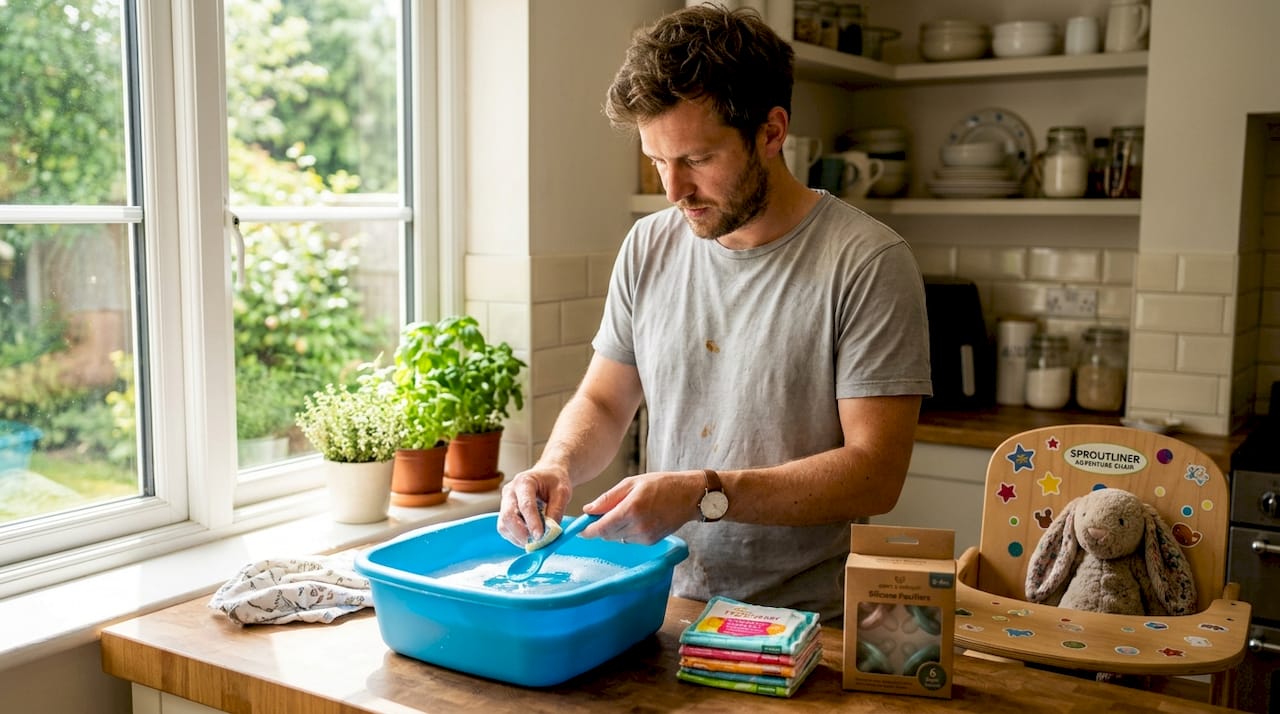
Facial cleansing brushes, exfoliating pads, silicone applicators, and even baby feeding tools all share one thing: they regularly contact skin and sit in environments where microbes thrive. A standard silicone tool is already a better choice than many alternatives because silicone is nonporous and easy to clean. Antimicrobial silicone takes that advantage further.
The real-world consumer benefit is most clearly seen in hygiene-oriented scenarios where product design, the antimicrobial system used, and regular cleaning work together to reduce microbial load and odor on a product’s surface. It is not a standalone fix, but a meaningful upgrade over untreated silicone.
Here are the key benefits you can realistically expect from antimicrobial silicone personal care products:
- Reduced odor: Microbial growth is a leading cause of that musty or stale smell on beauty tools stored in humid bathrooms. Antimicrobial materials resist this at the source.
- Lower contamination risk: Tools that touch your face carry bacteria from your skin. Antimicrobial surfaces reduce the chance of reintroducing those bacteria with every use.
- Longer product life: Less microbial buildup means your tools stay cleaner longer between washes, which also reduces wear from over-cleaning.
- Possible skin health improvement: Fewer bacteria on your tool means fewer opportunities for breakout-causing microbes to be rubbed into pores or across compromised skin.
- Better performance in humid environments: Bathrooms are perfect breeding grounds for mold and bacteria. Antimicrobial silicone resists this environment more effectively than untreated alternatives.
| Feature | Standard silicone | Antimicrobial silicone |
|---|---|---|
| Microbial resistance | Passive (nonporous surface only) | Active (antimicrobial agents integrated) |
| Odor resistance | Moderate; depends on cleaning frequency | Higher; microbes that cause odor are inhibited |
| Cleaning frequency needed | Regular, frequent | Still needed, but material provides added protection |
| Performance longevity | Stable material; no antimicrobial degradation | Antimicrobial action may reduce over time |
| Skin hygiene benefit | Basic | Enhanced |
| Ideal for | General use | Frequent contact with skin, humid storage |
The hygienic advantages of silicone are well documented in family and personal care contexts alike. And when choosing silicone for hygiene, the antimicrobial upgrade is worth considering for any tool you use directly on your face or body.
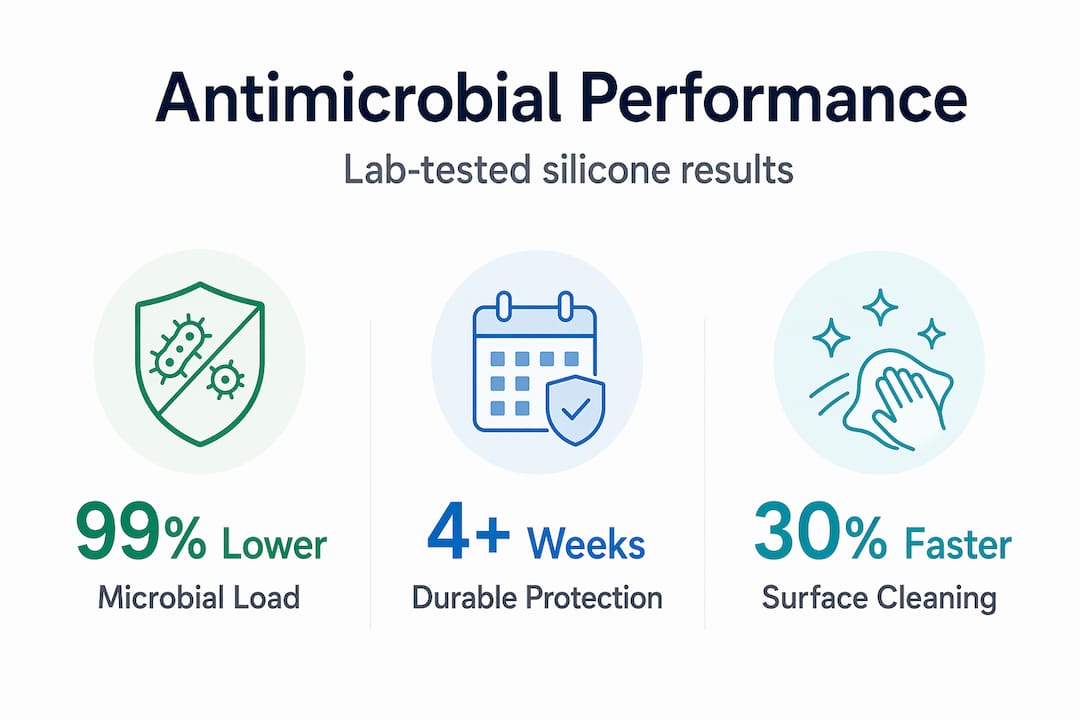
Research suggests meaningful microbial load reductions from antimicrobial silicone surfaces tested in lab settings. Silver-based systems, for instance, have been shown to reduce specific bacterial colonies by over 99% in controlled assays, though real-world results in personal care contexts will vary based on use patterns and cleaning habits.
What to watch for: Claims, durability, and cleaning
Armed with knowledge of benefits, it is important to be a savvy shopper and user when it comes to antimicrobial silicone products.
The first thing to look for on a product label is specificity. Vague claims like “antimicrobial protection” or “hygiene enhanced” without details on the active agent, how it is integrated into the material, or how long that protection lasts are warning signs. Credible antimicrobial claims specify the active agent (such as silver, copper, or quaternary ammonium), whether it is integrated into the silicone or just a surface coating, and whether durability claims are time-bounded or tied to repeated cleaning cycles.
Here are the red flags and must-have label details to look for when shopping:
Red flags:
- No mention of the specific antimicrobial agent used
- “Antimicrobial” claim without any testing reference or certification
- Products described as “treated” without explaining whether it is a coating or integrated
- No guidance on how long the antimicrobial protection is expected to last
Must-have label details:
- Named active ingredient (silver ions, copper, zinc oxide, etc.)
- Integration method clearly stated (blended into material vs. surface coating)
- Duration or testing standard cited (e.g., number of wash cycles tested)
- Cleaning instructions that support the material’s antimicrobial properties
Pro Tip: Antimicrobial silicone is not self-cleaning. Even the most robustly tested antimicrobial tool still needs regular washing to remove product buildup, dead skin cells, and residue that can interfere with the antimicrobial surface’s contact with microbes. Think of the material as your backup, not your primary hygiene strategy. Pairing the material with consistent cleaning routines, as described in guides on safe product cleaning and skincare workflows, gives you the best outcome.
Durability is a critical and often overlooked factor. An antimicrobial agent that is blended throughout the silicone matrix will generally outlast one that exists only as a surface treatment. Ask how the product was tested: lab testing under controlled conditions may not fully replicate daily exposure to soap, hot water, and physical abrasion.
The limits: What research says and how to set your expectations
Now, let us balance the benefits by understanding what antimicrobial claims do and do not guarantee.
Lab studies on antimicrobial silicone are valuable, but they test controlled conditions: specific microbes, specific concentrations, specific contact times, and controlled environments. Scientific evaluations of antimicrobial silicone typically use assays against specific microbes and conditions, and results like percentage reductions and biofilm changes are not automatically transferable to cosmetics or everyday personal care use.
What this means practically: a study showing 99% reduction of Staphylococcus aureus on a silicone surface in a lab does not mean your facial cleansing brush will eliminate 99% of all bacteria on your face during a cleanse. The variables are simply too different. The research tells us what mechanisms and benchmarks are being used to support the claims, and that is genuinely useful, but it requires realistic interpretation.
Skin type, frequency of use, how you store your tools, whether you share them, and how well you clean them all have a meaningful impact on how much real-world benefit you experience. Someone who uses a tool daily and stores it in a closed container in a humid bathroom will see very different outcomes than someone who uses it twice a week and air-dries it in an open space.
“Scientific literature evaluating antimicrobial and antifouling silicone designs provides important benchmarks, but the mechanisms and percentage reductions documented in controlled assays should be understood as indicators of potential, not guarantees of specific outcomes in everyday cosmetic or personal care use.”
Setting realistic expectations does not mean dismissing antimicrobial silicone. It means getting the most out of what the material genuinely offers: a meaningful, measurable hygiene advantage that works best as part of a complete, consistent routine.
Our perspective: What most guides miss about antimicrobial silicone
Most coverage of antimicrobial silicone falls into one of two traps. It either oversells the material as a near-magical hygiene solution, or it dismisses antimicrobial claims entirely because lab results do not perfectly predict real-world outcomes. Both extremes miss the point.
The real value of antimicrobial silicone in personal care is cumulative and context-dependent. A beauty tool that resists microbial growth is genuinely better than one that does not, but only when it is used thoughtfully. Consumers who invest in higher-quality, well-documented antimicrobial tools and then neglect basic cleaning routines will not see the benefits they paid for. On the other hand, consumers who clean standard silicone tools diligently may get results that rival a poorly maintained antimicrobial product.
The material matters. So does behavior. Neither replaces the other.
Here are real-world tips for maximizing your beauty product hygiene, whether or not your tool uses antimicrobial silicone:
- Rinse tools immediately after use to prevent product and skin cell buildup from drying on the surface
- Use a dedicated brush cleaner or mild soap rather than harsh chemicals that may degrade silicone surfaces or active agents
- Air dry completely before storing, since trapped moisture creates the exact conditions antimicrobial agents are designed to fight
- Replace tools on schedule, because even the most durable antimicrobial agent has a performance ceiling
- Do not share tools that contact your skin, regardless of antimicrobial properties
Pro Tip: Pairing thoughtful material choices with a consistent gentle cleansing routine is where the real skin health benefit shows up. The tool is one part of your routine ecosystem, not a replacement for it.
The uncomfortable truth is that “antimicrobial” on a label requires your critical attention, not blind trust. Brands that specify their agent, integration method, and testing standards deserve your confidence. Those that offer vague marketing language deserve your skepticism.
Explore innovative skincare solutions with Skin Styles
Ready to apply what you have learned? Here is where you can discover products that put these principles into practice.

At Skin Styles, we curate skincare and personal care products with a focus on materials, hygiene, and performance that match the standards you now know to look for. Whether you are browsing advanced facial creams formulated with innovative active ingredients, exploring trusted brands in our Cosrx skincare collection, or looking for anti-wrinkle solutions that support your skin’s long-term health, our platform helps you shop with the context and confidence to make informed decisions. The science of skincare materials is evolving fast. We are here to help you keep pace with products that deliver real results.
Frequently asked questions
Is antimicrobial silicone safe for sensitive skin?
Yes, antimicrobial silicone is generally safe for sensitive skin, but always review the specific antimicrobial agent used, since some additives like certain metals or biocides can cause reactions in individuals with known sensitivities.
Do I still need to clean products made with antimicrobial silicone?
Yes, regular cleaning is still essential because ongoing maintenance is what allows antimicrobial features to function properly, and cleaning removes buildup that could otherwise shield microbes from the active surface.
How can I tell if a product’s antimicrobial claims are credible?
Look for labels that disclose the specific active agent and method, whether it is integrated into the silicone or a surface coating, and whether the durability claim is backed by referenced testing cycles or standards.
Does antimicrobial silicone prevent all bacteria and viruses?
No. Scientific assays document reductions, not full elimination, and no material can guarantee complete protection against all microbial exposure in real-world conditions. It reduces risk meaningfully when used and maintained properly.