

TL;DR:
- Many common myths about acne are scientifically proven false, such as its contagiousness and the benefits of sun exposure. Acne develops internally due to hormonal changes, clogged follicles, and bacterial overgrowth, not poor hygiene or greasy foods. Consistent, gentle skincare routines and patience are key to long-term improvement, while avoiding harmful habits like over-washing, scrubbing, and picking.
Acne is one of the most misunderstood skin conditions on the planet, and bad advice makes it worse. A study presented at the American Academy of Dermatology found that widely believed myths, including the idea that poor hygiene causes acne or that it’s contagious, are still shaping how millions of people approach their skin. If you’ve ever scrubbed your face raw, avoided someone with a breakout, or spent the afternoon in the sun hoping it would dry your pimples out, you’re not alone. But those approaches often backfire. This guide cuts through the noise and gives you the real science behind acne so you can stop wasting time on myths and start making actual progress.
Table of Contents
- Top acne myths: What science says
- What really causes acne?
- What NOT to do: Mistakes that make acne worse
- Effective routines and when to seek help
- What most acne guides miss: The real long game
- Upgrade your skincare routine with proven products
- Frequently asked questions
Key Takeaways
| Point | Details |
|---|---|
| Myths can worsen acne | Believing common misconceptions often leads to bad habits that make breakouts harder to control. |
| True causes are internal | Hormones, clogged follicles, and inflammation—not poor hygiene—drive most acne. |
| Gentle routines work best | Consistent, simple skincare is better than harsh cleansers or ‘quick fixes.’ |
| Don’t delay getting help | See a dermatologist if acne is severe, scarring, or not improving with routine care. |
Top acne myths: What science says
Now that you’ve seen how widespread misinformation can be, let’s break down the most persistent myths with what scientists and doctors actually know.
Myth 1: Acne is caused by dirt or poor hygiene
This is probably the most harmful myth in skincare. The logic seems obvious on the surface: your face has pimples, so you must not be cleaning it properly. But that’s not how acne works. Acne develops beneath the skin in the hair follicles, not on the surface. Dirt on your face doesn’t cause the oil glands to overproduce sebum or trigger the inflammation that creates a pimple.
In fact, over-cleaning is a real problem. Washing more than twice a day can strip your skin of its natural protective barrier, which causes your oil glands to produce even more sebum in response. The result? More breakouts, not fewer. Gentle, consistent cleansing is what your skin actually needs, not aggressive scrubbing or multiple daily washes.
Myth 2: Acne is contagious
You might have heard someone say they caught acne from sharing a towel or touching someone’s face. This is completely false. Acne cannot be passed to other people through skin contact. It’s not caused by a virus or bacteria you can transfer the way you’d spread a cold. The bacteria involved in acne, called Cutibacterium acnes, lives naturally on almost everyone’s skin. The issue isn’t exposure to the bacteria; it’s about the internal conditions in your follicles that let it overgrow and cause inflammation.
Avoiding people with acne or refusing to share gym equipment out of fear of “catching” it isn’t just unnecessary. It also adds to the stigma that people with acne already face daily.
Myth 3: Tanning clears acne
This one is especially dangerous because it feels like it might be working, at least temporarily. A suntan can darken the skin around pimples and make blemishes look less visible for a few days. But that’s a cosmetic illusion, not healing. There’s no conclusive evidence that sunlight or sunbeds actually improve acne. Worse, many common acne treatments make your skin significantly more sensitive to UV rays, meaning a day at the beach could cause serious burning, inflammation, or long-term pigmentation issues.

Tanning damages skin cells over time, speeds up aging, and raises your risk of skin cancer. It’s one of the most counterproductive things you can do while treating acne. You can find more on beauty myths about acne and ingredients to avoid that make things worse.
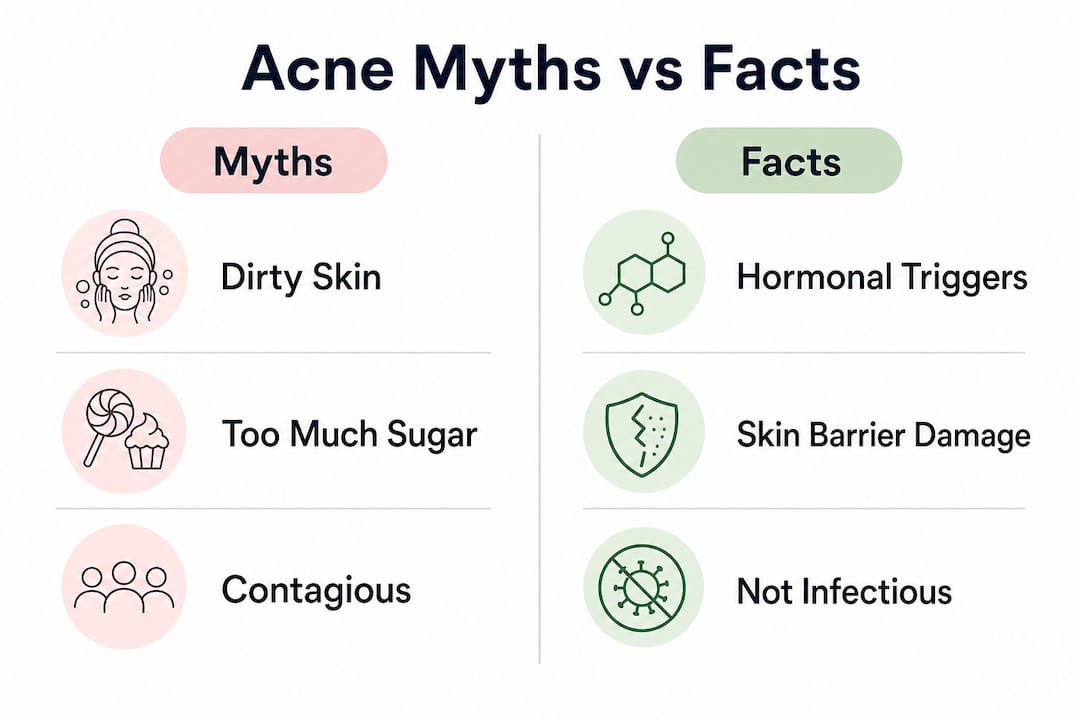
Myths vs. facts at a glance
| Common myth | Scientific fact |
|---|---|
| Dirty skin causes acne | Acne starts beneath the skin surface, not on it |
| Acne is contagious | Acne cannot be spread through contact |
| Sun exposure clears acne | No proven benefit; UV rays can worsen inflammation |
| Only teenagers get acne | Acne affects people of all ages, including adults |
| Popping pimples speeds healing | Squeezing increases scarring and can spread bacteria |
What really causes acne?
Once you see through the myths, it becomes easier to focus on what actually causes and worsens acne. The biology behind a pimple is more complex and more internal than most people realize.
Here’s what’s actually happening under your skin:
- Excess sebum production. Your skin produces an oily substance called sebum to stay moisturized. During puberty and hormonal shifts, your body produces more of it than your follicles can handle.
- Clogged follicles. When sebum mixes with dead skin cells, it can plug the opening of a hair follicle. This creates the blocked pore where acne starts.
- Bacterial overgrowth. Cutibacterium acnes thrives in the clogged, oily environment inside a blocked follicle. As it multiplies, it triggers an immune response.
- Inflammation. Your immune system attacks the bacteria, causing the redness, swelling, and tenderness we associate with pimples.
Hormones play a huge role, especially in your teens. Testosterone increases during puberty and signals the skin’s oil glands to produce more sebum. This is why almost 85% of teenagers experience some form of acne. It’s not because they’re not washing their face. It’s because their body chemistry is changing rapidly in ways that their skin has to adapt to.
Here’s a side-by-side comparison of real causes versus popular misconceptions:
| What people think causes it | What actually causes it |
|---|---|
| Not washing enough | Hormonal changes (especially testosterone) |
| Eating greasy food | Clogged follicles filled with sebum and dead skin cells |
| Stress (entirely) | Bacterial overgrowth leading to inflammation |
| Being unhygienic | Genetics and skin type |
Pro Tip: Focus your energy on a gentle, consistent daily routine rather than intense or reactive treatments. A step-by-step skincare routine built around non-irritating products is more effective than any aggressive cleansing approach. Following an acne-care workflow designed for real skin biology makes a measurable difference over time.
What NOT to do: Mistakes that make acne worse
Knowing the causes is only half the story. You also need to avoid the everyday mistakes that can sabotage your skin, even when you’re trying your best.
Here are the most common acne-worsening habits and exactly why they backfire:
- Over-washing your face. It feels like the right move, but washing more than twice daily aggravates skin by stripping its natural oils and prompting the oil glands to overcompensate. Stick to a morning and evening cleanse with a gentle, non-foaming or mild cleanser.
- Scrubbing with rough tools. Exfoliating gloves, rough washcloths, and gritty scrubs might feel satisfying, but they irritate the outer skin layer, trigger inflammation, and can spread bacteria from one area of your face to another.
- Picking or popping pimples. This is probably the hardest habit to break, but it’s critical. Squeezing spots can make symptoms worse and significantly increases your risk of permanent scarring. When you pop a pimple, you push bacteria and debris deeper into the follicle and potentially into surrounding tissue.
- Using too many harsh spot treatments at once. Layering benzoyl peroxide, salicylic acid, retinol, and alcohol-based toners all in one routine sounds thorough, but it overwhelms and damages your skin barrier, which leads to dryness, redness, and more breakouts.
- Skipping moisturizer because your skin is oily. This is a very common mistake. When you deprive oily skin of moisture, it overproduces oil to compensate. A lightweight, non-comedogenic (meaning it won’t clog pores) moisturizer is essential for every skin type.
Dermatologist consensus: Touching, picking, or squeezing acne spots is one of the fastest routes to long-term skin damage. What looks like a shortcut almost always adds weeks to your healing time and risks marks that can last for years.
Pro Tip: Gentle is always the winning strategy. Think of your skin as something that needs support, not punishment. A basic skincare workflow using calm, simple products will outperform aggressive routines almost every time because it keeps your skin barrier intact and lets your body’s healing process do its job.
Effective routines and when to seek help
With a grasp on the right and wrong practices, you’re ready to build a routine that actually supports healthy skin and know when professional help is needed.
Here’s what an effective daily routine looks like, based on what dermatologists actually recommend:
- Gentle cleanse. Use a mild, fragrance-free cleanser in the morning and before bed. No scrubbing, no hot water, no foaming formulas that leave your skin feeling tight.
- Targeted treatment. Apply a single active ingredient like salicylic acid or benzoyl peroxide to affected areas after cleansing. Don’t pile on multiple actives. Give one ingredient time to work.
- Moisturizer. Always. Use something light and labeled non-comedogenic so it hydrates without clogging follicles.
- Sun protection. A broad-spectrum SPF 30 or higher every single morning. This is especially important if you’re using any acne treatments, since many make your skin more sensitive to UV damage.
- Hands-off policy. Stop touching your face throughout the day. Your hands carry oil and bacteria that transfer directly to your pores.
One of the most important points that most guides skip: results take time. Real, visible improvement from a new acne routine often takes six to twelve weeks of consistent use before you see significant changes. Switching products every two weeks because you’re not seeing instant results is one of the top reasons routines fail. Acne affects people of all ages, and treatment often needs to be tailored and tried across several options before finding what works.
When should you see a dermatologist? If your acne is moderate to severe, leaves marks on your skin, or hasn’t improved after consistently following a gentle routine for eight to twelve weeks, book an appointment. Prescription options like topical retinoids, antibiotics, or in some cases oral medications can make a real difference when over-the-counter products haven’t. Waiting too long increases the risk of permanent scarring.
Pro Tip: Keep a simple log or use your phone’s notes app to track what products you’re using, when you started them, and how your skin responds. This makes it so much easier to identify what’s helping, what’s irritating, and what you should drop. You can use a clearer skin workflow to structure your tracking more effectively. And if you want a broader approach, a solid skincare routine guide will show you how everything fits together.
What most acne guides miss: The real long game
Bringing it all together, let’s look at why most people struggle with acne even after learning the facts, and what actually makes the biggest difference long-term.
Here’s the uncomfortable truth: most people know the basics. They’ve heard that picking is bad, that gentle cleansing is better, and that SPF matters. But knowing something and applying it consistently are entirely different challenges. Social media doesn’t help. Every week brings a new viral “miracle” product, a trending ingredient, or a celebrity routine that supposedly cleared someone’s skin in five days. That constant noise makes it incredibly hard to stay the course with a routine that works slowly but reliably.
The pressure is real. When your face is breaking out before a big event, the instinct is to do something drastic, whether that means scrubbing harder, buying an entirely new skincare lineup, or trying a DIY hack you found online. But this reactive approach is exactly what dermatologists spend most of their time correcting. Every time you throw out your routine and start over, you reset your skin’s adjustment period. You never give any single approach enough time to prove itself.
What nobody tells you is that consistency in skincare feels boring because it’s working. The weeks where nothing dramatic happens are often the weeks your skin barrier is quietly rebuilding. Progress with acne is rarely linear. You’ll have good weeks and flare-ups, and that does not mean your routine is failing. It means skin is complex, and so is the body attached to it.
Being patient with yourself also matters more than most guides acknowledge. Acne already carries enormous social stigma, and the frustration of trying something new without immediate results can feel defeating. But setbacks are part of every real skincare journey. Evidence-based habits, not the latest trend or the most expensive product, produce lasting results. An effective acne-care guide built on that foundation will take you further than any shortcut ever could.
Upgrade your skincare routine with proven products
If you’re ready to take action with what you’ve learned, here are easy next steps tailored for your journey to clearer skin. Choosing the right products doesn’t have to be overwhelming, but it does require matching what’s in the bottle to what your skin actually needs.

At Skin-Styles.com, we’ve pulled together a curated range of facial creams and gels that are gentle, non-comedogenic, and formulated for real-world skin concerns, not just marketing claims. If you’re looking for proven, dermatologist-friendly options, our Cosrx essentials collection is a great starting point. Cosrx is well-regarded for building effective routines without unnecessary irritants. Explore our full skincare range and find products designed to support the consistent, evidence-based routine you’ve just built.
Frequently asked questions
Does diet really affect acne?
Diet is not a main cause for most people. Research from the AAD found diet-acne beliefs are common misconceptions, though some individuals may personally notice certain food triggers.
Can washing my face more often prevent acne?
No. Washing more than twice a day can aggravate skin by disrupting its protective barrier. A gentle cleanse once or twice daily is the most effective approach.
Is acne only a teenage problem?
Acne is most common among teenagers, but it can persist into adulthood and affects people of all ages. Treatment varies widely depending on the individual.
Is it true that popping pimples makes them go away faster?
Not at all. Squeezing spots makes symptoms worse and significantly raises your risk of permanent scarring. Hands-off is always the better policy.
Can sunbathing or tanning clear up acne?
No. There is no conclusive evidence that sunlight improves acne, and UV exposure can make acne medications more harmful to your skin by increasing light sensitivity.