

Every parent faces the daily challenge of choosing the right skincare steps for both themselves and their children. Understanding your skin type is the foundation for routines that deliver real results and avoid unnecessary irritation. This guide covers practical methods for identifying skin types, creating a clean cleansing environment, finding gentle exfoliants, and selecting targeted moisturizers, ensuring you build a routine that fits busy lives and diverse needs. Personalized skincare begins with simple, thoughtful actions that benefit the whole family.
Table of Contents
- Step 1: Assess Your Skin Type And Needs
- Step 2: Prepare Your Cleansing Environment
- Step 3: Apply Gentle Cleansers And Exfoliators
- Step 4: Select And Use Targeted Moisturizers
- Step 5: Verify Skin Health And Adjust Routine
Quick Summary
| Key Point | Explanation |
|---|---|
| 1. Identify Your Skin Type | Knowing your skin type guides product selection and addresses specific needs effectively. Take time to evaluate your skin’s characteristics before choosing products. |
| 2. Maintain a Clean Cleansing Space | A clutter-free environment enhances your cleansing routine, preventing skin irritation and ensuring a smooth process for applying products. |
| 3. Use Gentle Cleansers and Exfoliators | Choose mild, suitable formulas for cleansing and exfoliation to avoid damaging your skin barrier while promoting a healthy glow. |
| 4. Select the Right Moisturizer | Match moisturizers to your skin’s needs, whether it’s hydration for dry skin or lightweight options for oily skin, for optimal results. |
| 5. Regularly Monitor Skin Health | Track your skin’s response to products over time to identify issues and make necessary adjustments to your skincare routine. |
Step 1: Assess your skin type and needs
Knowing your skin type is the foundation of any skincare routine that actually works. Without this knowledge, you’re basically guessing which products will help or harm your skin. This step takes maybe 10 minutes, but the clarity you gain lasts forever.
Start by observing your skin over 2-3 days without any special treatments. Look at how it feels and behaves throughout the day. Does it feel tight and uncomfortable? Does it shine by noon? Does it feel normal in some areas and different in others?
The five main skin types are:
- Oily skin: produces excess sebum, appears shiny, prone to acne and large pores
- Dry skin: feels tight, flaky, dull, and sometimes itchy
- Combination skin: oily in the T-zone (forehead, nose, chin), normal or dry elsewhere
- Normal skin: balanced moisture and oil, clear, minimal sensitivity
- Sensitive skin: reacts easily to products or environmental triggers
Understanding your skin type helps you identify which formulations will actually work for your specific needs.
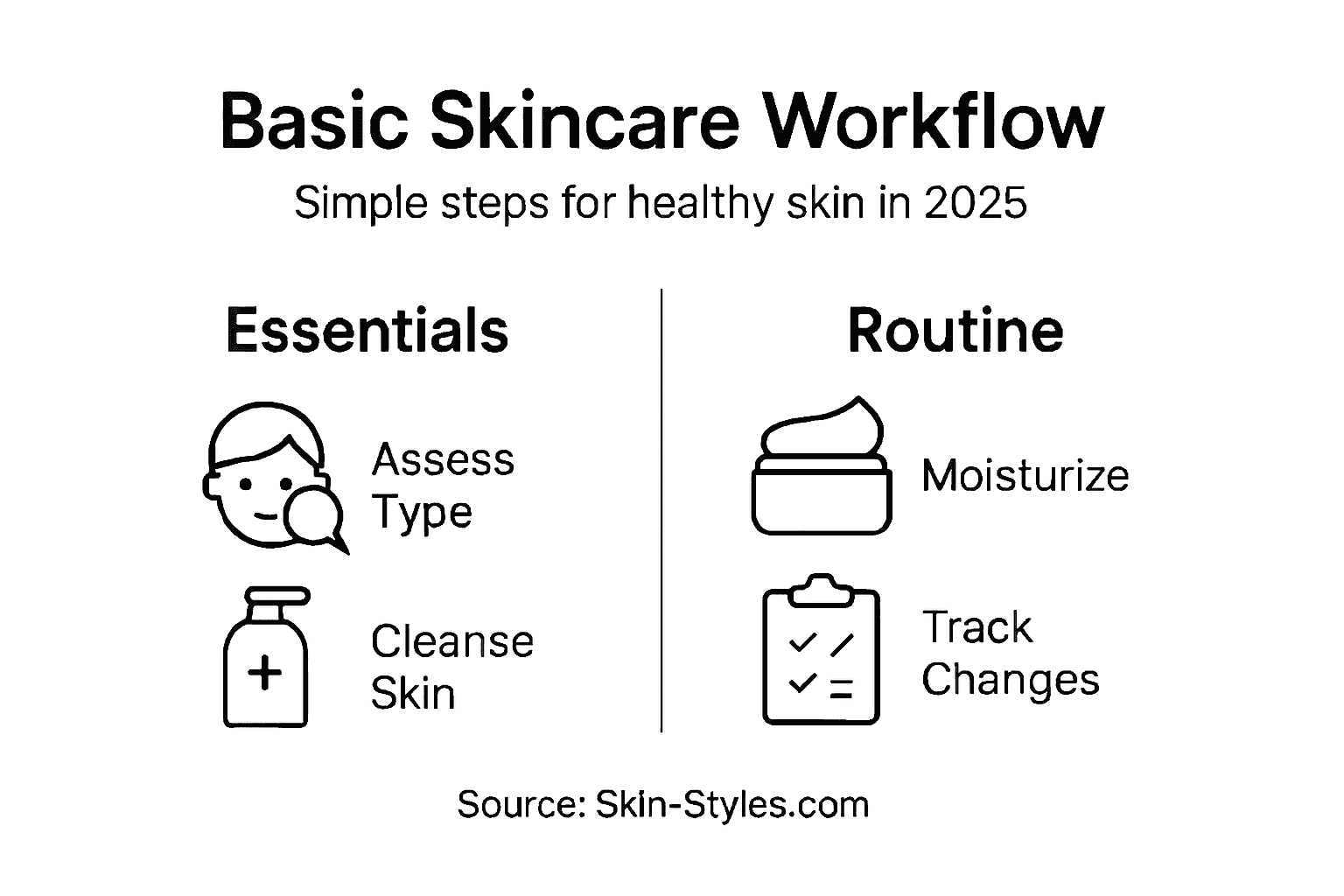
Next, consider your skin concerns beyond just type. Are you battling acne? Worried about premature aging? Dealing with dark spots or uneven tone? Your concerns shape which ingredients and products you prioritize. A parent with sensitive, reactive skin has different needs than someone with oily, acne-prone skin.
Write down what you notice. This becomes your skincare baseline. Refer back to it in 2-3 months to track whether your routine is actually improving things.
Here’s a summary comparing key skin types and their ideal products:
| Skin Type | Typical Concerns | Recommended Cleansers | Best Moisturizer |
|---|---|---|---|
| Oily | Shine, breakouts | Gel-based, non-comedogenic | Lightweight, oil-free lotion |
| Dry | Flaky, tightness | Creamy, hydrating | Rich cream with ceramides |
| Sensitive | Redness, irritation | Fragrance-free, gentle | Soothing, barrier-repair formulas |
| Combination | Mixed areas | Mild, balanced formula | Zone-specific choices |
| Normal | Few issues | Any gentle cleanser | Simple, hydrating lotion |
Assess your skin on a regular day, not after an intense workout or right after applying products, which skews your observations.
Pro tip: Take a close-up photo of your clean skin in natural morning light without makeup, then check it again in 3 months to see real progress from your routine.
Step 2: Prepare your cleansing environment
Your cleansing space matters more than you might think. A clean, organized environment sets you up for success and keeps your skin safe from irritation or infection. This doesn’t require a spa-like bathroom, just some intentional preparation.
Start by clearing your sink area of clutter and wiping down the surface with a clean cloth or disinfectant. You want a dedicated spot for your cleansing routine where you can easily access everything you need. This prevents you from touching your face multiple times while searching for products.

Water quality is essential for effective cleansing. Make sure your water is clean and at a comfortable temperature—lukewarm is ideal, as hot water can strip your skin and cold water won’t cleanse as effectively. If you have concerns about your water quality, consider using filtered water for your routine.
Set up your space with these basics:
- Clean towel (preferably a dedicated one just for your face)
- Your chosen cleanser
- Soft washcloth or cleansing brush if you use one
- Any additional tools like cotton pads or a facial steamer
- A small trash bin nearby for cotton pads or other single-use items
Wash your hands before you touch your face. This prevents bacteria from your hands from transferring to your skin during cleansing. It’s the single easiest way to avoid unnecessary breakouts or irritation, especially important when you’re helping children with their routines.
Gather everything within arm’s reach so you’re not dripping water across your bathroom. Organization reduces stress and makes your routine feel effortless rather than like a chore.
A clean environment isn’t just for appearance; it directly supports your skin health and prevents contamination during cleansing.
Pro tip: Keep a small timer on your bathroom counter set for 30 seconds to ensure you’re giving your cleanser enough time to work without over-scrubbing your skin.
Step 3: Apply gentle cleansers and exfoliators
Cleansing and exfoliating are two different actions that work together to keep your skin healthy. A good cleanser removes daily buildup, while exfoliation sloughs away dead skin cells that can make your complexion look dull. Done right, they enhance your skin’s natural glow without causing irritation.
Start with your cleanser. Use a non-medicated, gentle formula that won’t strip your skin’s natural moisture. Apply it with lukewarm water, not hot, which can damage your skin barrier. Massage gently for about 30 seconds, focusing on your T-zone where oil tends to accumulate.
Rinse thoroughly with cool water to close your pores and invigorate circulation. Pat your face dry with a clean towel rather than rubbing, which can irritate sensitive skin. This is especially important when helping children with their routines, as their skin is more delicate than yours.
Exfoliation should happen 1-3 times weekly, depending on your skin type:
- Sensitive or dry skin: once weekly with gentle chemical exfoliants
- Normal skin: 2-3 times weekly with either mechanical or chemical exfoliants
- Oily or acne-prone skin: 2-3 times weekly with salicylic acid or similar
Chemical exfoliants like alpha and beta hydroxy acids dissolve dead cells more gently than scrubs. If you prefer mechanical exfoliation, use soft brushes or cloths rather than harsh scrubs that can cause micro-tears.
Apply exfoliants in gentle circular motions and never over-scrub. Your skin will feel smoother and look brighter within days. Stop immediately if you notice redness, burning, or increased sensitivity.
Gentle exfoliation removes dead skin without compromising your skin barrier, which is crucial for long-term skin health.
Pro tip: Use your exfoliator at night, then apply sunscreen in the morning, since exfoliation makes skin slightly more sun-sensitive and requires extra UV protection.
Compare exfoliation approaches by skin type for best results:
| Skin Type | Frequency | Most Suitable Exfoliator | Key Precautions |
|---|---|---|---|
| Oily | 2-3 times/week | Salicylic acid, BHA | Avoid over-exfoliating |
| Dry | 1 time/week | Lactic acid, gentle AHA | Moisturize after exfoliating |
| Sensitive | 1 time/week | Mild enzyme, low-strength acid | Patch-test for reactions |
| Combination | 1-3 times/week | Alternating mechanical and chemical | Adjust for each facial zone |
Step 4: Select and use targeted moisturizers
Moisturizer is where your skincare routine truly comes together. It seals in hydration, protects your skin barrier, and addresses specific concerns like dryness, sensitivity, or aging. The right moisturizer transforms your skin from the inside out.
Start by identifying what your skin needs. Are you dealing with dryness and tightness? Look for rich creams with ceramides and hyaluronic acid. Oily skin? Choose lightweight lotions or gel-based formulas that hydrate without heaviness. Sensitive skin needs gentle, fragrance-free options that calm inflammation.
Ingredients like hyaluronic acid, ceramides, and glycerin restore hydration and strengthen your skin barrier. These work by attracting moisture to your skin and locking it in. Apply moisturizer to damp skin immediately after cleansing, when your skin can absorb it most effectively.
Match your moisturizer to your skin type:
- Dry skin: rich creams or oils for intensive hydration
- Oily skin: lightweight lotions or water-based gels
- Combination skin: use different products on different zones
- Sensitive skin: fragrance-free formulas with soothing ingredients
- Eczema-prone skin: emollients designed to repair barrier function
Use about a pea-sized amount for your face. Warm it between your fingers, then gently press it into your skin using upward motions. Avoid tugging or pulling, which stresses delicate facial skin.
If you have multiple skin concerns, layer strategically. Apply targeted serums or treatments first while skin is still damp, then seal everything with your moisturizer. This technique works especially well for parents managing both their own skincare and their children’s routines.
The right moisturizer creates a protective barrier that prevents irritants from entering and water from escaping your skin.
Pro tip: Keep your moisturizer in a cool place and introduce new products one at a time, waiting 1-2 weeks between additions to identify any sensitivities.
Step 5: Verify skin health and adjust routine
Your skin is always changing, and your routine should evolve with it. Monitoring your skin’s response to products and lifestyle helps you catch problems early and optimize results. This step transforms skincare from a static checklist into a dynamic process that actually works for you.
Start tracking your skin weekly. Note any changes in texture, sensitivity, breakouts, or hydration levels. Take photos in consistent lighting so you can compare objectively over time. Many parents find that what works in winter differs from summer routines, especially when caring for children’s sensitive skin too.
Pay attention to these key indicators:
- Increased redness or irritation after using a product
- Breakout frequency and location patterns
- Overall hydration and how tight or oily your skin feels
- Any signs of sensitivity or allergic reactions
- Changes in skin tone or texture clarity
Monitoring changes like redness and breakout frequency helps you identify which products and practices actually benefit your skin. If something isn’t working after 4-6 weeks, it’s time to adjust. This might mean switching products, changing how often you exfoliate, or adding a targeted treatment.
Make adjustments one at a time so you know exactly what’s causing improvements or problems. Swap out one product, wait two weeks, then assess results before changing anything else. This methodical approach prevents confusion and helps you build a truly personalized routine.
If persistent issues like severe acne, eczema flare-ups, or unexplained sensitivity develop, consult a dermatologist. Professional guidance ensures you’re not missing underlying conditions that topical products alone won’t fix.
Regular skin assessment prevents problems from escalating and ensures your routine remains effective as your skin’s needs change.
Pro tip: Create a simple spreadsheet or phone notes document tracking what products you use each week, any skin changes you notice, and how your skin looks in your weekly photos for easy reference.
Unlock Your Best Skin with a Tailored Routine
Struggling to master the basics of skincare can leave you feeling overwhelmed and frustrated. This article breaks down key steps like assessing your skin type, preparing your cleansing environment, and selecting the perfect moisturizer. If you want to transform your daily routine into a powerful ritual for healthy, radiant skin, start with the right products designed specifically for your needs.
Facial Cleansers – Skin Styles offer gentle formulas tailored to various skin types. Pair them with hydrating options from our Facial Creams & Gels – Skin Styles collection to seal in moisture and repair your skin barrier effectively. Our curated selection from SKIN 1004 – Skin Styles features ingredients renowned for soothing sensitive skin and enhancing skin health.

Take control of your skin’s future today. Visit Skin-Styles.com to explore expert-approved products that make mastering your skincare workflow simple and effective. Shop now and see the difference personalized care can make in just weeks.
Frequently Asked Questions
How do I determine my skin type for the Basic Skincare Workflow?
Knowing your skin type is essential for an effective skincare routine. Observe your skin for 2-3 days without treatments to identify whether it’s oily, dry, combination, normal, or sensitive, then tailor your product choices accordingly.
What is the importance of a clean cleansing environment in my skincare routine?
A clean environment helps prevent irritations and infections during your skincare process. Begin by decluttering your sink area and ensuring that all your tools, like towels and cleansers, are in a hygienic setting before starting your routine.
How often should I exfoliate my skin according to the Basic Skincare Workflow?
Exfoliation frequency depends on your skin type; oily or acne-prone skin can exfoliate 2-3 times a week, while dry or sensitive skin should limit to once a week. Choose gentle exfoliants to avoid damaging your skin barrier and incorporate them into your routine for smoother texture within weeks.
What key ingredients should I look for in a moisturizer based on my skin type?
Identify your specific skin concerns and choose moisturizers accordingly; for example, rich creams with ceramides for dry skin and lightweight gels for oily skin. Apply a pea-sized amount to damp skin to lock in moisture effectively and maximize hydration.
How can I effectively track changes in my skin after adjusting my skincare routine?
Monitor your skin at least weekly to note changes in texture, sensitivity, or hydration levels. Take consistent photos in natural light for objective comparisons over one to three months, allowing you to assess the effectiveness of your adjustments.
When should I consult a dermatologist during my skincare journey?
If you experience persistent issues like severe acne or allergic reactions despite following your skincare routine, it’s time to consult a dermatologist. Seek professional advice to address underlying conditions and refine your routine effectively.