

Finding skincare that delivers visible radiance and tackles fine lines can feel confusing amid endless product claims. Many women worldwide want real solutions, not hype, and vitamin C keeps coming up in conversations about brighter, firmer skin. The truth is that your body cannot make vitamin C on its own, making it vital to get this powerful antioxidant from either nutrition or topical application. This article sorts through the real benefits and common myths, helping you discover how vitamin C can support youthful, healthy skin.
Table of Contents
- Vitamin C Explained: Benefits And Myths
- Types Of Vitamin C In Skincare Products
- How Vitamin C Works For Your Skin
- Comparing Vitamin C To Other Ingredients
- Risks, Irritation, And Mistakes To Avoid
Key Takeaways
| Point | Details |
|---|---|
| Vitamin C is essential for skin health. | It acts as a powerful antioxidant and supports collagen synthesis, addressing signs of aging. |
| Different forms of Vitamin C vary in effectiveness. | Pure Ascorbic Acid is potent but unstable; derivatives may offer more stability with slightly reduced efficacy. |
| Consistent use is crucial for visible results. | Significant improvements typically require 8 to 12 weeks of regular application. |
| Avoid common mistakes for optimal results. | Proper storage, gradual introduction, and avoiding incompatible ingredients are essential to prevent irritation. |
Vitamin C Explained: Benefits And Myths
Vitamin C, also known as L-ascorbic acid, is one of the most talked-about ingredients in skincare today. Your body cannot produce this nutrient on its own, which means you need to get it from external sources like food, supplements, or topical products applied directly to your skin. This fundamental fact often gets overlooked when people discuss vitamin C, leading to confusion about how much they actually need and how to use it effectively. The truth is straightforward: understanding what vitamin C actually does versus what marketing claims promise is the key to making smart decisions about whether it belongs in your skincare routine.
At its core, vitamin C functions as a powerful antioxidant that works on multiple levels to support healthy, radiant skin. It neutralizes unstable molecules called free radicals that accumulate from sun exposure, pollution, and everyday stress, preventing them from damaging your skin cells. Beyond this protective role, vitamin C plays a crucial part in collagen synthesis, the protein that gives your skin structure, firmness, and that coveted plump appearance. As you age, your body naturally produces less collagen, and free radical damage accelerates this decline. By supporting collagen formation at the cellular level, vitamin C addresses one of the primary mechanisms behind visible aging. Additionally, it strengthens your immune response and helps with iron absorption, though these benefits are more relevant when you consume vitamin C through diet or supplements rather than topical application.
Now let’s tackle the myths that have created confusion around vitamin C:
-
Myth: More vitamin C equals better results. The reality is that there’s a limit to how much your body can actually use. When you exceed approximately 2,000 mg daily through supplements, you risk experiencing side effects like digestive upset. For topical products, more vitamin C doesn’t automatically translate to faster or better results; what matters is the formulation’s stability and how well it penetrates your skin.
-
Myth: All vitamin C products work the same way. Different forms of vitamin C have different effectiveness levels. L-ascorbic acid is the most researched and potent form, but it’s also the most unstable and requires careful storage. Other derivatives like magnesium ascorbyl phosphate or ascorbyl glucoside are more stable but may be less effective. When shopping for vitamin C serum benefits, pay attention to both the type and the concentration.
-
Myth: Vitamin C works instantly. This is where patience matters. Your skin operates on a cellular renewal cycle that typically takes 28 days or longer. While you might notice subtle improvements in radiance after a few weeks, more significant changes to fine lines, dark spots, or overall firmness require consistent use over 8 to 12 weeks.
-
Myth: Everyone should use vitamin C. While vitamin C is generally safe and beneficial, individual skin types respond differently. People with sensitive skin might experience irritation from certain formulations, particularly if they’re also using other active ingredients like retinol or acids. The key is starting slowly and paying attention to how your specific skin responds.
Scientific research continues to evolve around vitamin C’s therapeutic potential, with conflicting studies highlighting the importance of choosing products backed by solid formulation science rather than just brand promises. What matters most is understanding that vitamin C isn’t a magic ingredient, but rather a well-researched component that genuinely supports skin health when used correctly and consistently.
Pro tip: Store your vitamin C products in a cool, dark place or the refrigerator to preserve stability, and look for opaque or amber-colored packaging that protects the ingredient from light degradation.
Types Of Vitamin C In Skincare Products
Not all vitamin C is created equal. When you shop for skincare products containing this ingredient, you’ll notice different names on ingredient lists, and these differences matter significantly. The type of vitamin C used determines how effectively the product will work, how stable it remains on your shelf, and whether your skin will tolerate it well. Understanding these variations helps you choose products tailored to your specific skin needs rather than simply grabbing whatever sounds impressive.
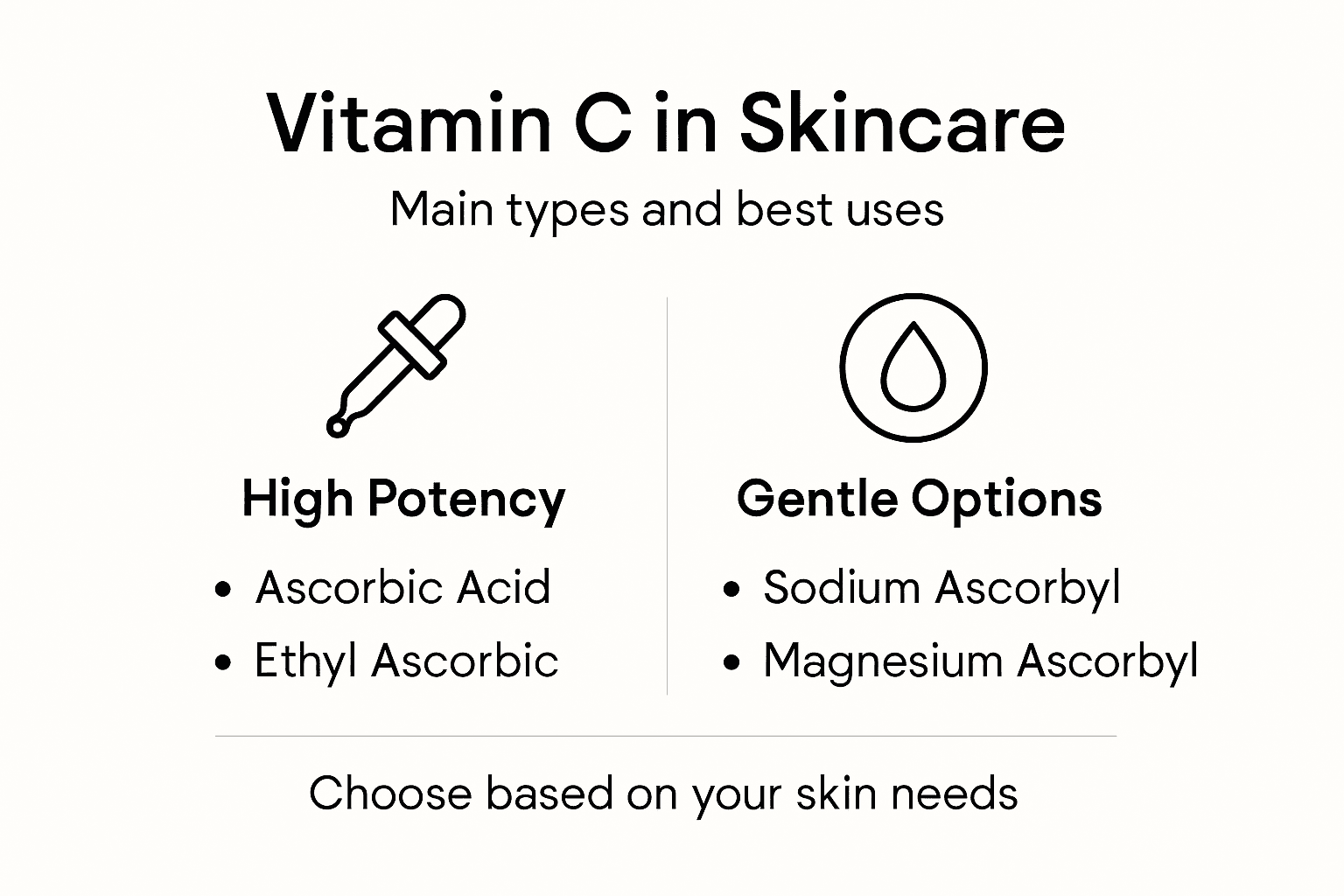
Pure ascorbic acid is the gold standard when it comes to vitamin C potency. This is the form most extensively studied and proven to deliver measurable results for brightening, collagen stimulation, and antioxidant protection. However, pure ascorbic acid has a major weakness: it’s notoriously unstable. Once exposed to air, light, or heat, it oxidizes quickly and loses its effectiveness. This instability is why products containing pure ascorbic acid typically come in opaque packaging, cost more, and require careful storage in cool environments. When you see a product claiming to contain pure ascorbic acid at a low price point, skepticism is warranted because maintaining stability requires investment in proper formulation and packaging.
Because pure ascorbic acid presents stability challenges, skincare chemists developed vitamin C derivatives that address these limitations. These prodrugs release active vitamin C within your skin after application, offering a practical middle ground between effectiveness and shelf stability. The most common derivatives include:
- Ethyl ascorbic acid delivers strong results while remaining significantly more stable than pure ascorbic acid. It penetrates skin effectively and converts to active vitamin C upon contact with skin.
- Sodium ascorbyl phosphate offers excellent stability and works well for sensitive skin types, though it’s generally considered less potent than ethyl ascorbic acid.
- Ascorbyl glucoside provides the most stability of all options, making it ideal for products you want to keep long-term. The trade-off is reduced potency compared to other forms.
- Magnesium ascorbyl phosphate balances stability with effectiveness and tends to be gentler on irritation-prone skin.
When comparing these options, understand that stability, solubility, and irritation potential vary across each derivative type, which is why formulators choose specific versions based on the product’s intended benefits and target user. A serum designed for sensitive skin might use ascorbyl glucoside or sodium ascorbyl phosphate, while a treatment targeting aggressive anti-aging might lean toward ethyl ascorbic acid or pure ascorbic acid at higher concentrations.
Here’s a concise comparison of popular vitamin C types used in skincare products:
| Vitamin C Type | Potency | Stability | Suitability |
|---|---|---|---|
| Pure Ascorbic Acid | Highest | Least stable | Resilient skin |
| Ethyl Ascorbic Acid | High | Moderately stable | All skin types |
| Sodium Ascorbyl Phosphate | Moderate | Highly stable | Sensitive skin |
| Ascorbyl Glucoside | Lower | Most stable | Long-term storage |
| Magnesium Ascorbyl Phosphate | Moderate | Stable | Irritation-prone skin |
Your choice between these types depends on several factors. If you have resilient skin and want maximum effectiveness, pure ascorbic acid or ethyl ascorbic acid delivers noticeable results. If you have sensitive skin, frequent irritation, or want a product you won’t need to replace frequently, the more stable derivatives offer a smarter approach. Consider also whether you’ll use the product quickly or let it sit in your bathroom for months, as shelf life varies dramatically across formulations. One often-overlooked factor is pH level. Vitamin C products work best at lower pH ranges, typically between 3.5 and 4.0, which means they can feel slightly acidic on your skin. If you’re already using other active ingredients like retinol, glycolic acid, or niacinamide in your routine, you may want to opt for a gentler derivative to avoid over-sensitizing your skin.
Another consideration involves concentration. The research-backed effective concentration for vitamin C ranges from 8 to 20 percent, with anything below 5 percent offering minimal benefit. Products claiming to contain vitamin C but listing it far down the ingredient list likely contain amounts too small to produce meaningful results. Don’t assume that finding vitamin C on the label means the product will deliver the benefits you’re seeking.
Pro tip: Choose your vitamin C type based on skin sensitivity and commitment level: pure ascorbic acid or ethyl ascorbic acid if you have resilient skin and will use the product consistently, or stable derivatives like ascorbyl glucoside if you prefer longer shelf life and have sensitive skin.
How Vitamin C Works For Your Skin
Vitamin C doesn’t work like a magic wand that instantly erases wrinkles or dark spots. Instead, it operates through specific biochemical processes that unfold over time within your skin’s layers. Understanding these mechanisms helps you set realistic expectations and appreciate why consistency matters more than occasional use. Your skin responds to vitamin C through multiple pathways, each contributing to that radiant, youthful appearance you’re after.

When you apply vitamin C topically, it functions as a potent antioxidant that acts as your skin’s defense system against damage. Every day, your skin faces assault from ultraviolet radiation, pollution, and free radicals created by normal metabolism. Free radicals are unstable molecules that damage healthy cells, accelerate collagen breakdown, and trigger inflammation that shows up as dark spots, dullness, and premature wrinkles. Vitamin C neutralizes these free radicals before they can cause harm, essentially stopping the damage before it starts. This antioxidant protection is particularly important if you spend time outdoors or live in polluted urban environments. The effect isn’t dramatic day to day, but over weeks and months, this continuous protection prevents the cumulative damage that leads to visible aging.
Beyond antioxidant protection, vitamin C promotes collagen synthesis at the cellular level, which is where the real anti-aging magic happens. Collagen is the protein responsible for skin’s structure, firmness, and that youthful plumpness. As you age, your collagen production naturally declines by roughly 1 percent per year after age 30. Sun damage and free radical exposure accelerate this loss. Vitamin C signals your fibroblasts (the cells that produce collagen) to work harder and create more of this essential protein. This increased collagen production leads to firmer, more resilient skin, fewer visible wrinkles, and improved skin texture. Results typically take 8 to 12 weeks of consistent use to become noticeable, but studies show that continued application delivers progressive improvements in skin firmness and wrinkle reduction.
Another significant benefit involves melanin inhibition, which addresses hyperpigmentation and uneven skin tone. Melanin is the pigment that creates dark spots, freckles, and uneven coloration. Vitamin C suppresses the enzyme tyrosinase, which is responsible for melanin production. This action helps fade existing dark spots and prevents new pigmentation from forming. For people dealing with post-inflammatory hyperpigmentation from acne or sun damage, this benefit can be transformative, though again, patience is required. Most people see meaningful fading of dark spots after 12 to 16 weeks of regular use.
It’s worth noting that dietary vitamin C intake significantly impacts skin health from the inside out. When you consume vitamin C through food or supplements, it travels via your bloodstream into skin layers where it continues boosting collagen production and accelerating skin renewal. The concentration of vitamin C in your blood directly correlates with the concentration in your skin, which means eating vitamin C-rich foods like citrus, berries, and leafy greens complements your topical routine. This dual approach, combining topical application with dietary intake, delivers better results than either method alone. You’re essentially working on skin health from both directions simultaneously.
The application method matters significantly. Topical vitamin C works best when applied to clean, dry skin before other products, allowing it to penetrate fully. Because ascorbic acid is sensitive to oxidation, requiring stable formulations to maintain efficacy, buying from reputable sources that prioritize proper packaging and storage ensures the product you’re using actually contains active vitamin C. A well-formulated vitamin C serum will show visible results within weeks, while a degraded product sitting in clear packaging under bright bathroom lights will do very little.
Pro tip: Combine topical vitamin C application with dietary sources like oranges, kiwi, or bell peppers to amplify results, and apply your vitamin C serum immediately after cleansing on damp skin for better absorption and penetration.
Comparing Vitamin C To Other Ingredients
Vitamin C doesn’t exist in isolation in the skincare world. You’ll encounter countless other ingredients all claiming to address aging, brighten skin, or improve texture. Understanding how vitamin C compares to these alternatives helps you make informed choices about what actually belongs in your routine and whether vitamin C deserves a permanent spot. The truth is more nuanced than ingredient marketing would suggest: different actives excel at different things, and the best approach often involves strategic combinations rather than picking just one hero ingredient.
Vitamin C versus niacinamide is a comparison you’ll encounter frequently. Both are powerhouse ingredients, but they work through different mechanisms. Vitamin C excels at robust collagen synthesis stimulation and provides strong antioxidant protection against UV damage and free radicals. Niacinamide, also called vitamin B3, is gentler, reduces inflammation, minimizes pore appearance, and strengthens your skin barrier. If you have sensitive skin prone to irritation, niacinamide might feel more comfortable initially, but vitamin C delivers faster visible results for wrinkles and firmness. The key insight: they’re not competitors. Many skincare routines benefit from using both, as they address different aging mechanisms without interfering with each other.
Vitamin C versus kojic acid or other brightening agents presents another common choice. Kojic acid inhibits melanin production effectively and costs significantly less than quality vitamin C products. However, kojic acid doesn’t provide collagen-boosting benefits or strong UV protection. It’s excellent for hyperpigmentation but doesn’t address other signs of aging as comprehensively. Similarly, hydroquinone is the gold standard for treating severe melasma, but it’s a medical-grade ingredient with more potential side effects and isn’t designed for general anti-aging. Vitamin C offers a more complete package: brightening results plus collagen stimulation plus antioxidant defense. You’re not just addressing discoloration but tackling multiple aging mechanisms simultaneously.
Comparing vitamin C to retinol reveals important differences in approach and timeline. Retinol is arguably the most scientifically proven anti-aging ingredient available, accelerating cell turnover and building collagen over months. Retinol requires a gradual introduction period because it causes irritation, flaking, and increased sun sensitivity initially. Vitamin C works differently: it provides immediate antioxidant benefits and begins collagen stimulation without the adjustment period. Many dermatologists recommend using both, just not simultaneously at first. A common approach involves using vitamin C in the morning for daily protection and retinol at night once your skin has adjusted, creating a comprehensive anti-aging strategy.
The power of combination formulations deserves special attention. Vitamin C is often combined with ingredients like vitamin E and ferulic acid for synergistic effects, meaning the ingredients work better together than separately. This combination is called the “C E Ferulic” formulation, and research confirms it delivers superior antioxidant protection and skin benefits compared to vitamin C alone. Similarly, vitamins A, B3, C, D, and E play complementary roles that enhance skin protection and repair when integrated together. The takeaway: vitamin C’s strength isn’t just the ingredient itself but how it works in well-formulated combinations with complementary actives.
When choosing between vitamin C and alternatives, consider your primary skin concern. Fighting wrinkles and loss of firmness? Vitamin C or retinol deliver the strongest evidence. Dealing with rosacea or severe sensitivity? Niacinamide might feel more appropriate initially. Targeting stubborn dark spots? Kojic acid or hydroquinone for severe cases. Building a comprehensive anti-aging routine? Combining vitamin C with other ingredients creates more robust results than relying on any single ingredient. Most effective skincare routines layer multiple actives strategically: a vitamin C serum for morning protection, perhaps a niacinamide treatment for barrier support, and a retinol product at night for cellular renewal.
The table below summarizes how vitamin C compares to other common skincare ingredients for different goals:
| Primary Benefit | Vitamin C | Niacinamide | Retinol | Kojic Acid |
|---|---|---|---|---|
| Collagen Boost | Strong stimulation | Minor effect | Strong stimulation | Minimal impact |
| Brightening | Fades dark spots | Reduces redness | Mild improvement | Inhibits melanin |
| UV Protection | Antioxidant defense | Barrier support | No direct effect | No effect |
| Skin Sensitivity | Possible irritation | Best for sensitive | Initial irritation | May cause irritation |
Pro tip: Start with vitamin C in your morning routine for daily antioxidant protection, then add a complementary ingredient like niacinamide or retinol in the evening rather than mixing multiple new actives simultaneously, which helps you identify what your skin responds to best.
Risks, Irritation, And Mistakes To Avoid
Vitamin C is generally safe when used correctly, but it’s not risk-free. The acidity and potency that make vitamin C effective also create potential for irritation, particularly when people ignore crucial application guidelines or use degraded products. Understanding these risks and knowing how to avoid common mistakes transforms you from someone who might abandon vitamin C due to negative reactions into someone who uses it successfully long-term.
The most common issue stems from improper storage and product degradation. Vitamin C, particularly pure ascorbic acid, oxidizes when exposed to air, light, or heat. An oxidized product loses effectiveness and becomes more irritating to skin. You might not realize this is happening because the product looks fine in a clear bottle on your bathroom shelf. That exposed vitamin C serum sitting in sunlight for weeks? It’s degraded. By the time you use it, you’re applying an irritating compound that won’t deliver benefits. This is why vitamin C’s acidity can irritate skin especially when formulations oxidize or degrade. The solution involves buying from reputable sources, storing products in cool dark places or the refrigerator, and using them within recommended timeframes.
Layering vitamin C incorrectly with other actives creates another common problem. Because vitamin C works best at low pH levels (around 3.5 to 4.0), combining it carelessly with other acid-based actives like glycolic acid, lactic acid, or even benzoyl peroxide can over-acidify your skin. The result: significant redness, burning sensation, and compromised skin barrier. Similarly, some ingredients are chemically incompatible with vitamin C or reduce its effectiveness. For example, niacinamide and vitamin C can create benzoic acid when combined in certain formulations, though modern products are formulated to avoid this. The key is spacing: if you use vitamin C in your morning routine, save other acid actives for evening or alternate days. If you’re already using multiple actives, introduce vitamin C slowly and observe how your skin responds before adding additional products.
Overuse is a mistake many people make. More product doesn’t equal better results. Using vitamin C twice daily or applying excessive amounts won’t speed up benefits. Instead, you risk irritation, redness, peeling, and a compromised barrier that becomes sensitive to everything else you apply. Start with three times weekly, gradually increasing to daily use as your skin acclimates. This gradual introduction prevents your skin from rebelling.
Sensitive skin requires extra caution. Vitamin C serum can cause redness, burning, and peeling particularly in sensitive skin types. If you have conditions like rosacea, eczema, or naturally reactive skin, you have three options: start with lower concentrations (8 to 10 percent rather than 15 to 20 percent), choose gentler vitamin C derivatives like ascorbyl glucoside instead of pure ascorbic acid, or introduce it even more gradually. You might use it once weekly for a month before increasing frequency. Alternatively, use a stabilized serum formulation that feels less irritating than pure ascorbic acid.
Failing to patch test before full application causes preventable reactions. Even if a product’s ingredients list looks ideal, your unique skin chemistry might react unpredictably. Apply a small amount to your inner arm or behind your ear and wait 24 to 48 hours before using it on your face. This simple step reveals potential sensitivities before they affect your entire face. Given vitamin C’s potency, patch testing new products protects your skin’s health and allows you to use vitamin C effectively without nasty surprises.
Another frequent mistake involves ignoring sun protection after applying vitamin C. While vitamin C provides antioxidant defense against UV damage, it doesn’t replace sunscreen. In fact, using vitamin C without sun protection means you’re protecting skin from free radical damage while leaving it vulnerable to UV rays. A complete morning routine requires vitamin C serum followed by a sunscreen with adequate SPF. Without this final step, you’re only half protecting your skin.
Finally, unrealistic expectations lead to abandonment. Vitamin C doesn’t erase wrinkles overnight or eliminate dark spots in days. Results emerge gradually over 8 to 16 weeks with consistent use. If you expect dramatic overnight transformation and give up after three weeks, you’ll never experience vitamin C’s actual benefits. Set realistic timelines and commit to the process.
Pro tip: Before starting vitamin C, patch test for 48 hours, store your product in a dark cool location, and use it no more than once daily initially, gradually increasing frequency only after confirming your skin tolerates it without irritation.
Unlock Your Skin’s True Potential with Vitamin C
If you have struggled with dullness, fine lines, or uneven skin tone, understanding the power of vitamin C is your first step toward radiant, youthful skin. This powerful antioxidant not only protects your skin from environmental damage but also supports collagen production and brightens your complexion over time. However, choosing the right formulation and applying it consistently can be challenging, especially with concerns about irritation and product stability. That is where the right skincare solutions from Skin-Styles.com make all the difference.

Explore our collection of high-quality vitamin C serums and skincare products designed to fit every skin type and sensitivity level. Whether you want pure ascorbic acid products for potent effects or gentler derivatives for sensitive skin, Skin-Styles.com offers carefully curated options with trustworthy formulations and protective packaging to ensure maximum stability. Start your journey toward brighter, firmer skin today by discovering the best vitamin C solutions at Skin-Styles.com and enjoy a seamless shopping experience tailored to your beauty needs.
Frequently Asked Questions
What are the main benefits of using vitamin C in skincare?
Vitamin C is a powerful antioxidant that protects skin from free radical damage, supports collagen synthesis for firmer skin, and helps fade dark spots and uneven skin tone.
How should I incorporate vitamin C into my skincare routine?
Apply vitamin C serum to clean, dry skin before other products, ideally in the morning to maximize antioxidant protection against UV exposure. Start with a few times a week and gradually increase to daily use as your skin acclimates.
Can everyone use vitamin C, or is it only for certain skin types?
While vitamin C is generally safe for most skin types, individuals with sensitive skin may experience irritation. It’s advisable to start with lower concentrations or gentler derivatives and to patch test before full application.
What are the different forms of vitamin C available in skincare products?
Vitamin C comes in various forms, with pure ascorbic acid being the most potent but least stable. Other derivatives such as ethyl ascorbic acid and sodium ascorbyl phosphate offer varying stability and effectiveness, making them suitable for different skin needs.