

Finding the right nighttime skincare routine can feel overwhelming when signs of aging and dehydration keep resurfacing despite your best efforts. While your skin works hardest after dark, body rhythms driven by the brain’s master clock directly fuel DNA repair, collagen production, and barrier renewal. Aligning your regimen with these natural cycles and targeting critical hydration needs promises noticeably improved results for anyone seeking a radiant complexion.
Table of Contents
- Nighttime Skin Repair And Body Rhythms
- How Hydration And Barrier Function Change Overnight
- Active Ingredients For Evening Use Explained
- Nighttime Routines Vs Daytime Habits
- Common Mistakes That Sabotage Overnight Results
Key Takeaways
| Point | Details |
|---|---|
| Circadian Rhythms Matter | Skin repairs and regenerates most effectively at night, making alignment with natural rhythms crucial for skin health. |
| Hydration is Critical | Increased moisture loss occurs overnight; using hydrating products can mitigate this natural decline. |
| Active Ingredients are Key | Ingredients like Retinoids and Hyaluronic Acid are most effective at night due to skin’s restorative state. |
| Avoid Common Mistakes | Incomplete cleansing and over-application of products can hinder overnight skin recovery and should be avoided. |
Nighttime skin repair and body rhythms
Every night, your skin undergoes a remarkable transformation guided by its intricate circadian rhythms. These internal biological clocks control critical repair and regeneration processes that are essential for maintaining youthful, healthy skin. Skin’s circadian mechanisms reveal a complex system of cellular repair that peaks during nighttime hours.
The human body operates on a sophisticated 24-hour cycle where skin cells possess their own internal timekeeping mechanism synchronized with environmental light signals. During nighttime, several key regenerative processes occur simultaneously:
- DNA repair mechanisms become highly active
- Collagen production increases
- Skin barrier function becomes more permeable
- Cellular metabolism shifts toward restoration
Disrupting these natural rhythms through poor sleep or irregular schedules can significantly accelerate skin aging. Artificial light exposure and inconsistent sleep patterns interfere with the skin’s ability to repair and regenerate effectively. Circadian rhythm disruptions can compromise barrier function and reduce collagen synthesis, leading to premature signs of aging.
Aligning your skincare routine with your body’s natural nighttime repair cycle can optimize skin health. This means selecting products that support and enhance the skin’s inherent regenerative processes, focusing on hydration, cellular repair, and protective ingredients that work synergistically with your skin’s nocturnal rhythms.
Pro tip: Create a consistent nighttime skincare routine that supports your skin’s natural repair cycle by applying regenerative products 30-45 minutes before sleep.
How hydration and barrier function change overnight
Understanding the intricate changes in your skin’s hydration dynamics during nighttime is crucial for effective skincare. Skin barrier permeability undergoes significant transformations that directly impact skin health and appearance, revealing a complex nocturnal metabolic process.
During the night, several critical hydration and barrier function changes occur:
- Transepidermal water loss (TEWL) increases
- Systemic hydration levels naturally decline
- Stratum corneum lipid matrix becomes more dynamic
- Skin cells intensify collagen and elastin production
The skin’s barrier function experiences remarkable shifts during sleep. As fluid intake stops and cellular repair mechanisms activate, the skin becomes more vulnerable to moisture loss. This increased permeability means your skin is simultaneously more receptive to beneficial treatments and more susceptible to dehydration.
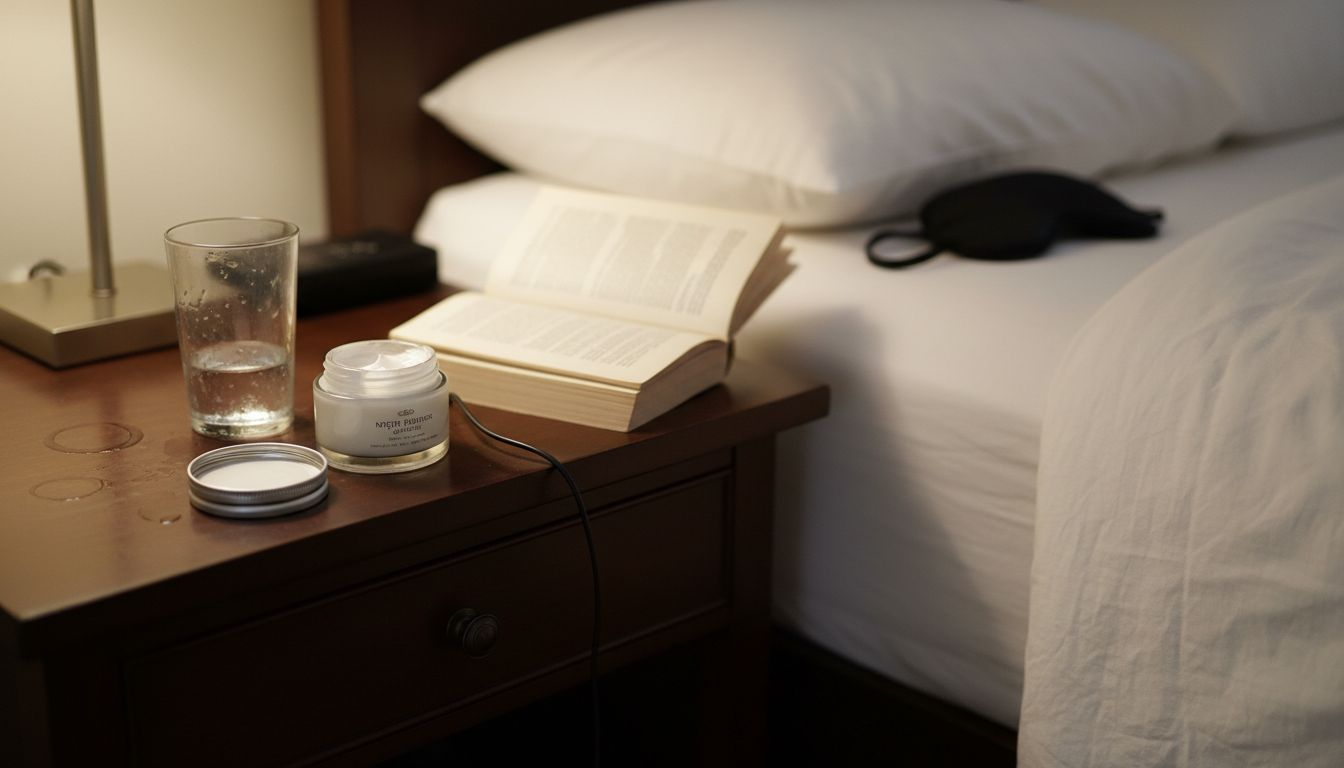
To counteract these natural nocturnal changes, targeted nighttime skincare becomes essential. Selecting products with intensive hydrating ingredients and barrier-strengthening compounds can help mitigate moisture loss and support the skin’s natural regenerative processes. Ingredients like hyaluronic acid, ceramides, and peptides can provide critical support during these vulnerable nighttime hours.
Pro tip: Apply a rich, moisture-sealing night cream immediately after your nighttime skincare routine to create a protective barrier and lock in hydration.
Active ingredients for evening use explained
Nighttime skincare is a strategic process of selecting potent active ingredients that work synergistically with your skin’s natural repair mechanisms. Plant-based phytochemicals represent a powerful approach to combating skin aging during the crucial nighttime restoration phase.
Key active ingredients for evening skincare include:
- Retinoids: Stimulate cellular renewal
- Peptides: Support collagen production
- Hyaluronic acid: Enhances deep hydration
- Ceramides: Strengthen skin barrier
- Antioxidants: Neutralize free radical damage
The effectiveness of these ingredients lies in their ability to support the skin’s nocturnal regeneration process. Unlike daytime skincare, which focuses on protection, evening skincare prioritizes repair and renewal. Ingredients like retinoids work most effectively at night because they can cause increased photosensitivity and are best applied when not exposed to direct sunlight.
Understanding the mechanism of each active ingredient is crucial. Some compounds, such as antioxidants and peptides, help scavenge free radicals accumulated during the day, reduce inflammation, and modulate enzymatic activity that contributes to skin aging. The strategic application of these ingredients during the skin’s most receptive hours maximizes their potential to restore and rejuvenate.
Pro tip: Layer your nighttime active ingredients from thinnest to thickest consistency to ensure maximum absorption and effectiveness.
Selecting the right active ingredients for evening skincare is critical. Here is a summary of how key actives work during the night:
| Ingredient | Nighttime Benefit | Caution/Best Practice |
|---|---|---|
| Retinoids | Boost cell renewal, smooth lines | Use only at night to avoid sun sensitivity |
| Peptides | Increase collagen, firm skin | Combine with hydrating ingredients for comfort |
| Hyaluronic Acid | Deep, lasting hydration | Apply after lighter serums for best absorption |
| Ceramides | Restore barrier, prevent dryness | Seal with moisturizer to lock in benefits |
| Antioxidants | Neutralize daily free radicals | Layer under treatment products for protection |
Nighttime routines vs daytime habits
Skincare is not a one-size-fits-all approach but a dynamic process that adapts to distinct skin rhythms throughout the day. Your skin’s biological functions dramatically shift between morning and evening, demanding tailored strategies for optimal health and aging prevention.
Key differences in daytime and nighttime skincare include:
-
Daytime Focus:
- Environmental protection
- Antioxidant defense
- Barrier reinforcement
- Sunscreen application
-
Nighttime Focus:
- Cell regeneration
- Deep repair mechanisms
- Collagen synthesis
- Active treatment absorption
Morning routines prioritize defense against external stressors. Your skin’s barrier function and sebum production are at their peak, making it ideal for lightweight, protective products. Vitamin C serums, hydrating moisturizers, and broad-spectrum sunscreens become your primary arsenal against environmental damage and UV radiation.
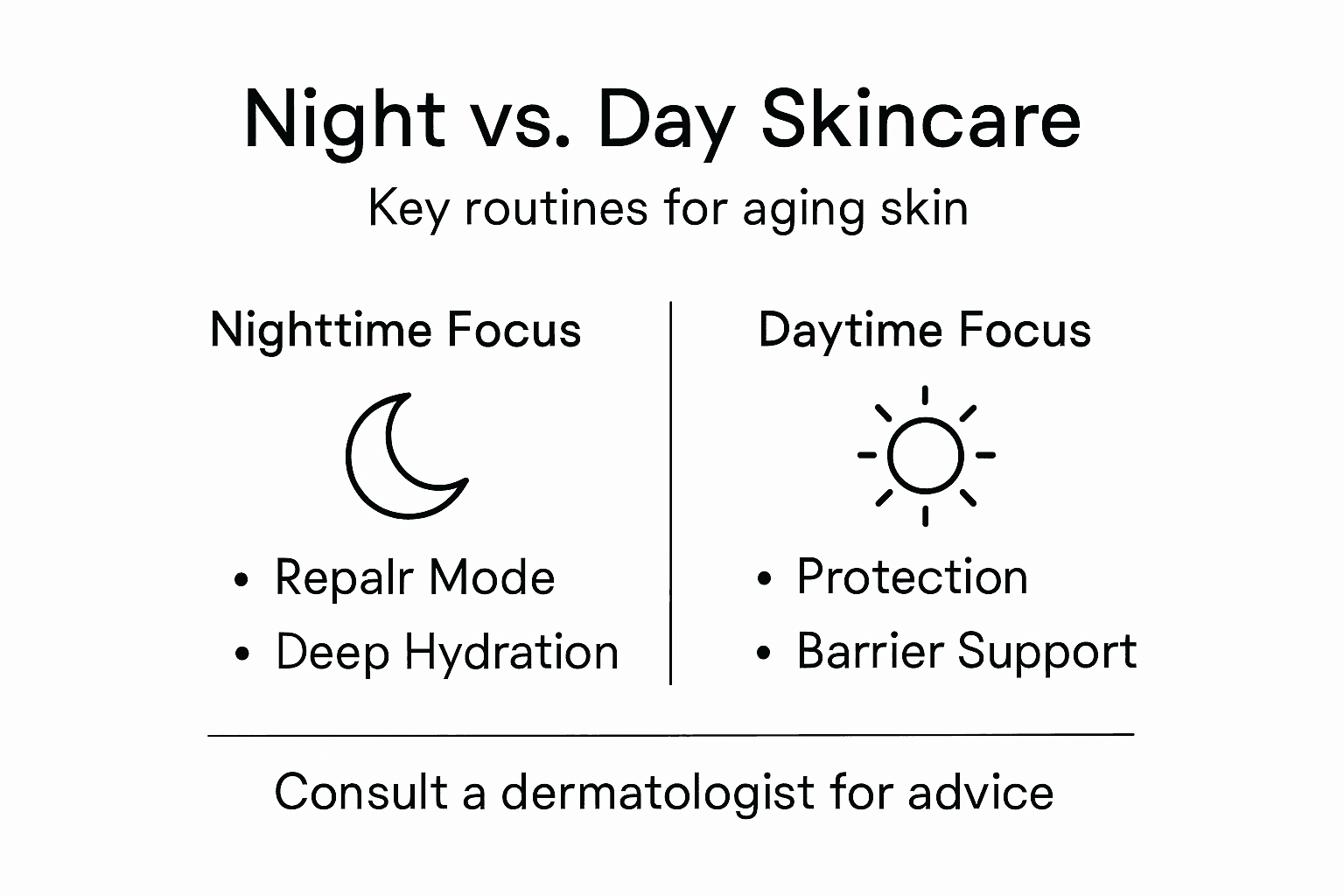
Nighttime is when your skin transitions into restoration mode. The reduced metabolic activity during sleep allows for deeper penetration of active ingredients like retinoids, peptides, and intensive hydrating compounds. These ingredients work most effectively when the skin is in its repair phase, supporting cellular renewal and combating signs of aging.
Here’s how skin functions and priorities differ between day and night:
| Timing | Main Biological Activity | Skincare Priority | Recommended Ingredient Example |
|---|---|---|---|
| Morning/Day | Defensive, protective | Shield against environment | Vitamin C, sunscreen |
| Night/Evening | Restorative, regenerative | Repair and deep hydration | Retinoids, hyaluronic acid, peptides |
Pro tip: Transition your skincare routine by using lightweight, protective products in the morning and switching to regenerative, treatment-focused products at night.
Common mistakes that sabotage overnight results
Nighttime skincare requires precision and careful strategy to maximize skin repair and regeneration. Common skincare mistakes can significantly undermine your overnight skin recovery efforts, potentially causing more harm than good.
The most critical nighttime skincare mistakes include:
-
Cleansing Errors:
- Incomplete makeup removal
- Skipping double cleansing
- Using harsh cleansers
-
Product Application Mistakes:
- Incorrect product layering
- Overusing active ingredients
- Applying too many products simultaneously
Over-exfoliation represents a particularly dangerous pitfall in nighttime skincare. Aggressive exfoliation damages the skin’s protective barrier, leading to increased sensitivity, inflammation, and compromised overnight repair processes. Many individuals mistakenly believe that more aggressive treatments yield better results, when in fact, they disrupt the delicate skin regeneration cycle.
Another significant error is neglecting proper moisturization. During the night, your skin’s barrier becomes more permeable, making it crucial to use hydrating products that support cellular repair. Skipping moisturizer or using inappropriate formulations can prevent your skin from effectively recovering and regenerating during those critical overnight hours.
Pro tip: Introduce new active ingredients gradually and always patch test to prevent potential barrier damage and skin irritation.
Maximize Your Nighttime Skincare for Youthful Radiance
If you want to fully harness the skin’s natural regenerative rhythm and fight the signs of aging, it is essential to align your routine with the nighttime repair cycle. The article highlights common challenges like disrupted circadian rhythms, moisture loss, and improper product layering that can sabotage skin renewal. Achieving hydrated, firm, and radiant skin requires targeted use of powerful ingredients such as retinoids, peptides, and ceramides.
Discover specially formulated solutions on Facial Serums – Skin Styles and Facial Creams & Gels – Skin Styles that deliver intensive hydration and barrier support when your skin needs it most.

Don’t let your skin miss its chance to repair overnight. Act now and build a nighttime routine tailored for deep renewal at Skin-Styles.com. Experience the difference consistent care makes in reducing wrinkles and restoring youthful vibrance.
Frequently Asked Questions
Why is nighttime skincare important for aging skin?
Nighttime skincare is essential for aging skin because it aligns with the skin’s natural repair processes, which peak during the night. This is when cellular repair and collagen production are heightened, making it the ideal time to apply regenerative products that support skin rejuvenation.
What active ingredients should be included in a nighttime skincare routine?
Key active ingredients for nighttime skincare include retinoids, peptides, hyaluronic acid, ceramides, and antioxidants. These ingredients work best at night to enhance cellular renewal, firm the skin, provide deep hydration, strengthen the skin barrier, and neutralize free radicals accumulated during the day.
How can I optimize my nighttime skincare routine for maximum effectiveness?
To optimize your nighttime skincare routine, apply products in layers from the thinnest to the thickest consistency. Also, aim to apply your regenerative products 30-45 minutes before sleep to allow your skin to absorb the beneficial ingredients effectively.
What mistakes should I avoid in my nighttime skincare routine?
Common mistakes to avoid include skipping double cleansing, neglecting moisturizer, over-exfoliating, and incorrectly layering products. These errors can compromise the skin’s barrier and hinder its natural repair process, reducing the effectiveness of your nighttime regimen.