
TL;DR:
- “BPA-free” labels only confirm the absence of Bisphenol A, not substitutes like BPS or BPF.
- BPS and BPF can disrupt hormones similarly to BPA, often unregulated and less studied.
- Using non-plastic materials like glass or stainless steel reduces chemical leaching risks.
You’ve picked up a baby bottle or a moisturizer, spotted the “BPA-free” label, and felt reassured. But here’s the uncomfortable truth: that label doesn’t guarantee the product is free from all harmful chemicals. BPA-free products may include substitutes like BPS or BPF, which carry their own health concerns. For anyone shopping with a health-first mindset, especially parents and skincare enthusiasts, understanding what that label actually promises, and what it leaves out, is essential. This guide breaks down the science, the regulations, and the practical steps you can take to shop smarter.
Table of Contents
- What does BPA free mean?
- Are BPA-free products safer? Substitutes and hidden risks
- Global BPA regulations: FDA vs. Europe and impact on consumers
- Is BPA a real problem in skincare and baby products?
- How to shop smarter: What to look for on BPA-free labels
- A fresh perspective: What most people miss about BPA-free products
- Explore BPA-free and safe product options with Skin Styles
- Frequently asked questions
Key Takeaways
| Point | Details |
|---|---|
| BPA-free labels are limited | BPA-free does not guarantee products are free from all harmful plastics or bisphenol substitutes. |
| Look for hidden risks | Substitute chemicals like BPS and BPF can pose similar endocrine-disrupting dangers as BPA. |
| Regulations vary worldwide | FDA and EU policies differ, with Europe taking a stricter approach to bisphenols in everyday products. |
| Best packaging is not always plastic | For maximum safety, choose glass, stainless steel, or verified non-plastic packaging especially for babies and sensitive skincare. |
What does BPA free mean?
BPA stands for Bisphenol A, a synthetic chemical that has been used since the 1960s to harden plastics and line metal food cans. It belongs to a class of chemicals that can mimic estrogen in the body, which is why researchers categorize it as an endocrine disruptor. Prolonged or repeated exposure has been linked to hormonal imbalances, developmental concerns in infants, and other health effects. That’s why so many consumers actively seek out products labeled “BPA-free.”
So what BPA-free actually means is straightforward on the surface: the product does not contain Bisphenol A. That sounds like a win. But the label says nothing about other bisphenol compounds, and that’s where the confusion starts. Manufacturers often replace BPA with structurally similar chemicals like BPS (Bisphenol S) or BPF (Bisphenol F) to maintain the same plastic properties. These substitutes aren’t always disclosed on the label.
Here’s a quick breakdown of the key terms you’ll encounter:
- BPA (Bisphenol A): The original chemical of concern, now restricted or banned in many baby products worldwide.
- BPS (Bisphenol S): A common BPA replacement, often marketed as safer but increasingly scrutinized by researchers.
- BPF (Bisphenol F): Another substitute with a similar molecular structure and comparable concerns.
- BPA-free: Confirms the absence of BPA only. Does not address BPS, BPF, or other bisphenols.
For skincare and beauty products, the concern is primarily about packaging rather than formulation. Lotions, serums, and cleansers don’t typically contain BPA as an ingredient. However, the plastic bottles, tubes, and dispensers that hold these products can leach chemicals into the formula over time, especially when exposed to heat or UV light. This is the same concern that applies to parabens risk in skincare, where the chemical isn’t always in the formula itself but still finds a way to reach your skin.
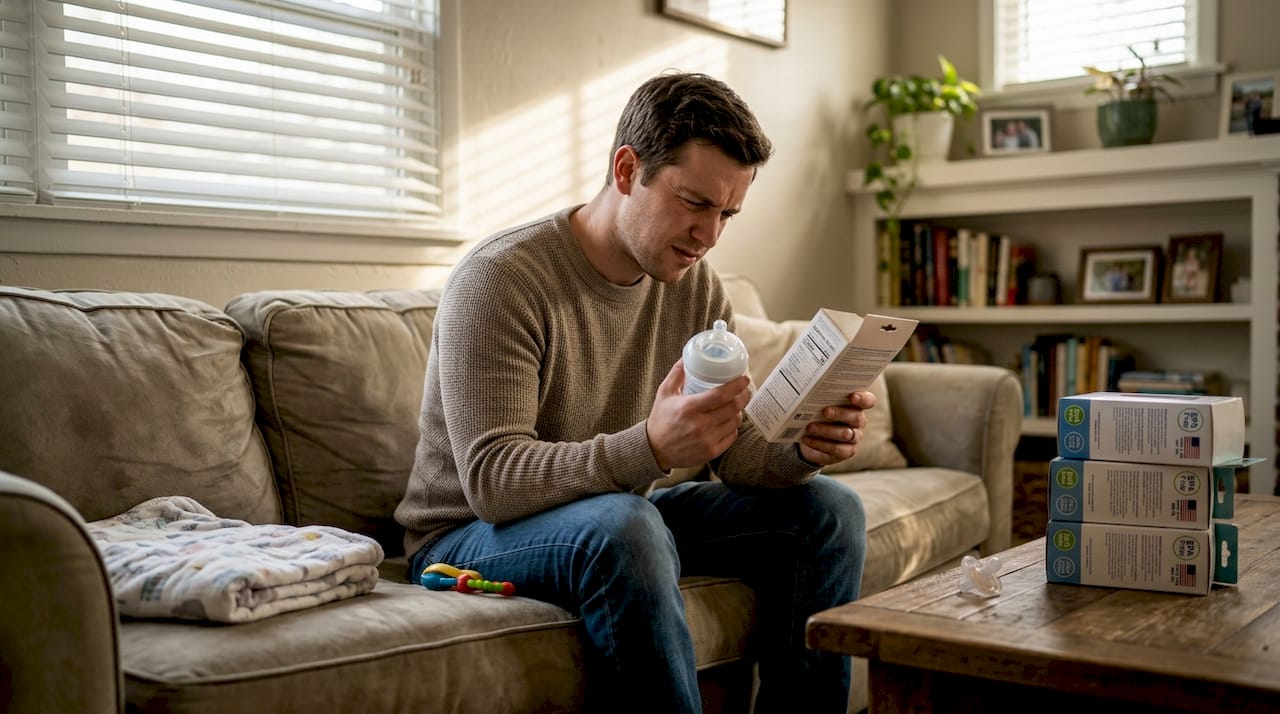
For baby products, the stakes are even higher. Infants are more vulnerable to chemical exposure because their bodies are still developing, and they tend to have more direct contact with bottles, pacifiers, and feeding tools throughout the day.
Are BPA-free products safer? Substitutes and hidden risks
Understanding what “BPA-free” means raises an important question: Does it actually make products safer, or is there more to the story?
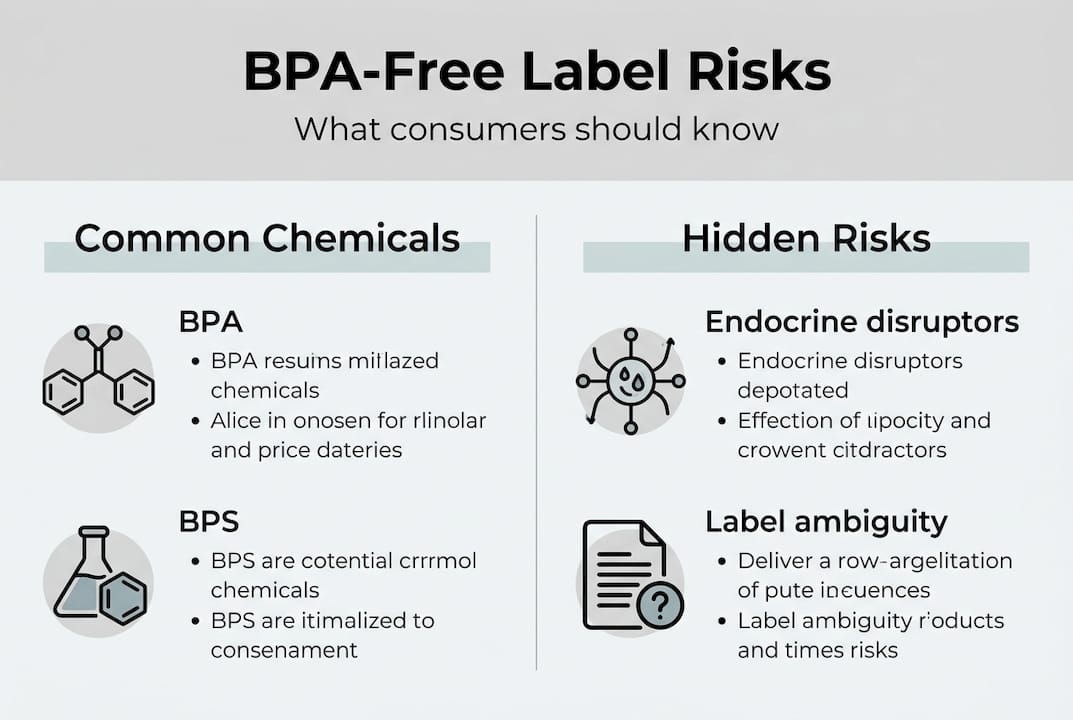
The honest answer is: not always. BPA substitutes may have similar endocrine-disrupting effects to BPA itself. Studies show that BPS and BPF can disrupt ovarian cell function and promote fat accumulation in ways that closely mirror BPA’s effects. Swapping one bisphenol for another doesn’t automatically reduce risk; it may just shift it.
Here’s a side-by-side look at how these three chemicals compare:
| Chemical | Common use | Endocrine disruption risk | Regulatory status (US) |
|---|---|---|---|
| BPA | Hard plastics, can linings | High, well-documented | Banned in baby bottles/sippy cups |
| BPS | BPA replacement in receipts, plastics | Moderate to high, growing evidence | No federal restriction |
| BPF | BPA replacement in resins, coatings | Moderate, less studied | No federal restriction |
The pattern here is telling. BPS and BPF haven’t been studied as extensively as BPA, which means the absence of a ban doesn’t mean they’re safe. It often just means they haven’t been regulated yet. This is sometimes called the “regrettable substitution” problem in toxicology: replacing a known risk with an unknown one.
For consumers, this creates a real gap between marketing and reality. A product can be truthfully labeled “BPA-free” while still containing chemicals that behave in similar ways inside the body. Learning more about non-toxic skincare benefits can help you see why material choice matters just as much as ingredient lists.
The EU’s strict bisphenol regulations are beginning to address this gap more aggressively than US rules, but the burden still falls heavily on the consumer to ask the right questions.
Pro Tip: When shopping for baby bottles or skincare packaging, look for products made from borosilicate glass, food-grade stainless steel, or certified plastic-free materials. These options sidestep the entire bisphenol family rather than trading one for another.
Global BPA regulations: FDA vs. Europe and impact on consumers
Given these risks from substitutes and label ambiguity, it’s vital to understand how regulations differ worldwide and what they mean for the products you buy.
In the United States, the FDA deems BPA safe at low exposure levels in most food packaging, based largely on the CLARITY study. The FDA did ban BPA in baby bottles and sippy cups in 2012, but that action was driven more by market pressure than a formal safety finding. BPA remains permitted in most other food contact materials in the US.
Europe takes a dramatically different stance. The EFSA reduced its tolerable daily intake to 0.2 ng/kg body weight per day in 2023, a reduction that is roughly 20,000 times stricter than the previous limit. This led to a sweeping EU ban on BPA in all food contact materials, effective 2025 with transition periods.
“The EU’s revised BPA limit is 20,000 times stricter than its previous standard, reflecting a fundamental shift in how regulators view safe chemical exposure.”
Here’s how the two regulatory frameworks compare:
| Category | US (FDA) | EU (EFSA) |
|---|---|---|
| BPA in food packaging | Permitted at low levels | Banned (effective 2025) |
| Baby bottles/sippy cups | Banned since 2012 | Banned |
| Cosmetics/beauty packaging | No specific BPA rule | BPA restrictions apply |
| BPS/BPF regulation | No federal rules | Under review |
What this means for you as a consumer depends largely on where the product was manufactured and sold. Products made for the EU market are held to stricter standards. US-made products may still legally contain BPA in packaging unless specifically restricted.
Key takeaways for shoppers:
- Products imported from the EU are more likely to be free from BPA in all packaging layers.
- US-bought baby products should be verified individually, not assumed safe based on country of origin alone.
- Cosmetics packaging in the US has no specific BPA restriction, making label scrutiny even more important.
For parents especially, reviewing safe baby skincare guidelines can help you navigate these regulatory gaps with confidence.
Is BPA a real problem in skincare and baby products?
With regulations and label challenges in mind, how big a concern is BPA for the daily routine of skincare and baby product use?
The good news for skincare users is that BPA is rarely used as a skincare ingredient. One common point of confusion is BPO, or benzoyl peroxide, which sounds similar but is a completely different compound used to treat acne. BPO and BPA are unrelated. If you see benzoyl peroxide on a label, that’s not a BPA concern.
The real risk in skincare comes from packaging. Plastic containers, especially those exposed to sunlight or stored in warm bathrooms, can leach trace chemicals into the product inside. Over time, daily application of a lotion stored in a leaching container adds up. Proper skincare product storage in cool, dark spaces significantly reduces this risk.
For baby products, the concern is more acute. A published study found that pacifiers released between 33 and 26,536 nanograms of BPA, exceeding the safe daily intake for infants by up to 11,600 times. That’s not a rounding error. That’s a significant exposure from a single everyday item.
Here are practical steps to reduce BPA and bisphenol exposure in your daily routine:
- Store skincare products away from direct sunlight and heat sources.
- Replace old or scratched plastic containers, which leach more than intact ones.
- Choose glass or stainless steel bottles for infants whenever possible.
- Check for third-party certifications, not just brand claims, on baby products.
- Review allergy-friendly product tips if you notice unexplained skin reactions.
Pro Tip: Scratched or cloudy plastic is a red flag. Degraded plastic leaches chemicals at a much higher rate than new, intact containers. When in doubt, replace it.
How to shop smarter: What to look for on BPA-free labels
Knowing that packaging can sometimes mislead or disappoint, here’s how to make better choices next time you shop.
Health-conscious consumers should check for bisphenol substitutes and prefer non-plastic containers when possible. That’s the core principle. Here’s how to put it into practice:
- Read beyond the front label. “BPA-free” on the front tells you one thing. Check the back for material type, resin codes, and any third-party certifications.
- Know your resin codes. Plastics labeled with recycling codes 3 (PVC) and 7 (other) are more likely to contain bisphenols. Codes 1, 2, 4, and 5 are generally considered lower risk.
- Ask brands directly. If a product doesn’t disclose its full material composition, contact the brand. A trustworthy company will answer clearly.
- Look for third-party certifications. Labels from organizations like NSF International or certifications like “plastic-free” from recognized bodies carry more weight than brand-only claims.
- Prioritize glass and stainless steel for baby feeding products and high-contact skincare tools like facial rollers or spatulas.
- Avoid heating food or formula in plastic containers, even BPA-free ones. Heat accelerates chemical leaching regardless of the plastic type.
- Check safe skincare storage practices to protect both your products and your skin from unnecessary chemical exposure.
The goal isn’t to panic every time you see a plastic bottle. It’s to build a habit of asking one more question before you buy.
A fresh perspective: What most people miss about BPA-free products
With all the science and guidance in mind, it’s worth pausing for a candid look at what label marketing truly means for your health.
Most people treat “BPA-free” as a finish line. It isn’t. It’s a starting point. The label tells you one chemical was removed. It says nothing about what replaced it, how the packaging was made, or whether cumulative exposure from multiple products adds up to a meaningful risk. And that cumulative piece is what almost every consumer overlooks.
You might use a BPA-free moisturizer, a BPA-free water bottle, and a BPA-free baby bottle in the same day. Each product passes individual scrutiny. But together, they represent repeated low-level exposure to bisphenol substitutes that haven’t been studied over decades the way BPA has. The science on non-toxic skincare makes this point clearly: the safest choice isn’t the one with the best label. It’s the one made from materials with a long, proven safety record. Glass has been used safely for centuries. Stainless steel doesn’t leach. These aren’t trendy alternatives. They’re the baseline we moved away from in favor of cheap, convenient plastic.
Explore BPA-free and safe product options with Skin Styles
Ready to put your knowledge to use? Here’s where you can find safe, thoughtfully selected products.
At Skin Styles, we’ve curated options for shoppers who want more than a marketing claim. Whether you’re looking for a reliable BPA-free baby feeding set built from food-grade silicone or clean, carefully formulated options from our facial cleansers collection, you’ll find products designed with ingredient-conscious families in mind.

We believe that safer choices shouldn’t require a chemistry degree to find. Browse our full range of non-toxic, thoughtfully packaged skincare and baby essentials, and shop with the confidence that comes from actually knowing what’s in, and around, your products.
Frequently asked questions
What does BPA-free mean on skincare or baby product packaging?
BPA-free means the product doesn’t contain Bisphenol A, a chemical used in some plastics and resins, but it may still contain similar substitutes like BPS or BPF that carry their own risks.
Are BPA substitutes like BPS and BPF safe?
BPS and BPF are commonly used as BPA alternatives, but research shows they can disrupt ovarian cells and hormone function in ways similar to BPA, making them far from a guaranteed safe swap.
Is BPA still found in skincare or baby lotions?
BPA is rarely used in skincare formulas, but pacifiers and plastic baby products can leach significant amounts of BPA and its substitutes through packaging contact, not the formula itself.
How do US and EU BPA rules differ for consumer products?
The FDA allows BPA in most food packaging except baby bottles, while the EU bans BPA from all food contact materials including cosmetics packaging, applying a standard 20,000 times stricter than before.
What’s the best material to avoid BPA and its substitutes?
Prefer non-plastic containers such as borosilicate glass, food-grade stainless steel, or certified plastic-free packaging to sidestep the entire bisphenol family rather than trading one chemical for another.