

Choosing the right feeding set for your child isn’t just about convenience. It’s about safety, development, and long-term value. Many parents assume all feeding sets meet the same standards, but materials vary dramatically in durability, hygiene, and safety. Investing in quality feeding sets reduces replacement costs by up to 80%, supports developmental milestones, and ensures your child’s daily meals remain safe and stress-free. This guide reveals what truly separates high-quality feeding sets from budget alternatives.
Table of Contents
- Material Matters: Comparing Silicone, Plastic, And Bamboo
- Common Misconceptions About Feeding Sets
- Developmental And Practical Benefits Of Quality Feeding Sets
- Economic Value: Long-Term Savings And Market Insights
- Choosing The Right Feeding Set For Your Child
- Care And Maintenance For Longevity
- Conclusion: Transforming Mealtimes With Quality Feeding Sets
- Explore High-Quality Feeding Sets At Skin Styles
- Frequently Asked Questions
Key takeaways
| Point | Details |
|---|---|
| Safety first | Quality feeding sets use BPA-free materials like silicone, eliminating toxin exposure risks common in cheap plastics. |
| Durability saves money | Silicone sets last 2 to 5 years compared to 3 to 6 months for plastic, reducing replacements by over 80%. |
| Developmental support | Appropriate feeding tools by 6 months foster motor skills and cut parental feeding time by 30%. |
| Market growth reflects demand | The global baby feeding products market is growing at 3.5% CAGR driven by safety and sustainability priorities. |
| Smart selection matters | Certifications, age-appropriate design, and material quality determine true value, not price alone. |
Material matters: comparing silicone, plastic, and bamboo
Understanding feeding set materials is essential for making informed choices. Each material offers distinct advantages and drawbacks that affect safety, durability, hygiene, and environmental impact.
Food-grade silicone stands out as the premium choice for feeding sets. It’s BPA-free, hypoallergenic, and stain-resistant. Silicone feeding sets last 2 to 5 years without degrading, maintaining structural integrity through countless dishwasher cycles and microwave uses. Parents appreciate that silicone won’t harbor bacteria in cracks or scratches, making it exceptionally hygienic. The material’s flexibility prevents breakage when dropped, a common occurrence during self-feeding practice.
Plastic feeding sets present significant concerns despite their low upfront cost. Plastic sets typically last 3 to 6 months and can leach BPA if not certified BPA-free. They develop scratches quickly, creating spaces for bacterial growth. Heat exposure from dishwashers or microwaves accelerates degradation, potentially releasing harmful chemicals into food. Plastic’s shorter lifespan means frequent replacements, negating any initial savings.
Bamboo feeding sets appeal to eco-conscious families, but they require careful maintenance. While biodegradable and renewable, bamboo can develop mold if not dried thoroughly after washing. The material may splinter over time, posing choking hazards. Some bamboo sets use adhesives that may contain formaldehyde, so verification of certifications becomes critical.
Pro Tip: Check for food-grade silicone certification stamps on packaging. Genuine food-grade silicone will state compliance with FDA or EU standards explicitly.
The baby feeding products market growth at 3.5% CAGR reflects increasing parental awareness. More families recognize that sustainable, durable materials offer better long-term value. This shift drives innovation in silicone designs, expanding options for multifunctional sets that grow with children.
| Material | Lifespan | Safety | Maintenance | Cost over 5 years |
|---|---|---|---|---|
| Silicone | 2 to 5 years | Excellent (BPA-free, no toxins) | Dishwasher safe, stain-resistant | $40 to $80 (1 to 2 sets) |
| Plastic | 3 to 6 months | Poor (BPA risk, degradation) | Scratches easily, harbors bacteria | $100 to $200 (10+ sets) |
| Bamboo | 1 to 2 years | Moderate (mold risk, adhesives) | Hand wash required, must dry thoroughly | $60 to $120 (3 to 5 sets) |
Key material considerations:
- Silicone withstands temperature extremes from freezer to microwave without releasing chemicals
- Plastic degrades faster under heat, UV exposure, and repeated washing
- Bamboo requires immediate drying to prevent mold growth in natural fibers
- Silicone’s non-porous surface prevents bacteria colonization better than other materials
- Environmental impact favors silicone and bamboo over petroleum-based plastics
Common misconceptions about feeding sets
Myths about feeding sets lead parents toward poor purchasing decisions. Clearing these misconceptions helps you invest wisely.
Many believe all plastic feeding sets are equally safe if labeled BPA-free. Plastic feeding sets often contain BPA and degrade rapidly, making them less safe than silicone. Even BPA-free plastics may contain other harmful chemicals like phthalates or PVC. The degradation process itself creates microplastics that can contaminate food. Third-party testing reveals inconsistencies in plastic safety claims, with some budget brands failing to meet advertised standards.
Another widespread myth suggests bamboo feeding sets are maintenance-free due to their natural origin. Reality contradicts this assumption. Bamboo requires hand washing and thorough drying after each use to prevent mold. Dishwasher heat can crack bamboo, shortening its lifespan. The natural material absorbs liquids, creating ideal conditions for bacterial growth if not properly maintained. Parents who expect bamboo to be as low-maintenance as silicone often experience disappointment.
Price confusion creates false economy traps. Higher prices don’t automatically guarantee quality, but extremely cheap sets almost always compromise safety. The key indicators are material certifications, manufacturing standards, and brand reputation. A $15 plastic set requiring replacement every few months costs more long-term than a $40 silicone set lasting years.
Pro Tip: Request lab test certificates from manufacturers before purchasing. Reputable brands provide documentation proving their products meet FDA and EU safety standards.
Common feeding set myths:
- All BPA-free plastics are safe (false: other harmful chemicals may be present)
- Bamboo sets are naturally antibacterial (false: they require careful maintenance to prevent mold)
- Expensive always means better quality (false: certifications and materials matter more than price)
- Feeding sets are interchangeable across all ages (false: developmental stages require different designs)
- Dishwasher-safe claims apply to all temperatures (false: some materials degrade at high heat settings)
Ignoring these misconceptions puts your child at risk and wastes money. Material science and safety certifications provide objective measures of quality that price alone cannot indicate.
Developmental and practical benefits of quality feeding sets
Quality feeding sets do more than hold food. They actively support your child’s development while simplifying your daily routine.

Well-designed feeding tools foster independence and motor skill development. Introducing appropriate feeding tools by 6 months supports motor skill development and reduces parental feeding time by 30%. Textured grips help tiny hands learn to hold utensils. Suction bases prevent plates from sliding, allowing children to practice scooping without frustration. These features transform mealtimes from battles into learning opportunities. Your child gains confidence with each successful bite, building skills that extend beyond eating.
Multifunctional designs adapt as your child grows, eliminating the need for multiple product purchases. A quality set includes pieces suitable for purees, soft foods, and eventually solid meals. Divided plates help with portion control and food separation. 68% of millennial caregivers prefer multifunctional sets that support various developmental milestones. This versatility means one investment serves your family for years rather than months.
Hygiene advantages reduce parental stress significantly. Non-porous materials like silicone don’t trap food particles or odors. Quick cleaning means less time scrubbing and more time with your child. Microwave-safe materials allow easy reheating without transferring food between containers. Dishwasher compatibility ensures thorough sanitization without extra effort.
Pro Tip: Choose sets with removable components that can be separated for thorough cleaning. Hidden crevices in poorly designed sets become bacterial breeding grounds.
Practical benefits of quality feeding sets:
- Ergonomic handles sized for small hands promote successful self-feeding attempts
- Non-slip surfaces keep bowls stable during enthusiastic scooping and stirring
- Compartmentalized plates introduce variety without foods touching, appealing to picky eaters
- Temperature-safe materials allow serving appropriate food temperatures without waiting
- Lightweight construction prevents fatigue during extended mealtimes
Durability prevents the disruption of constantly replacing familiar items. Children develop attachments to their feeding tools. Consistent availability of the same bowl or spoon provides comfort and routine. When cheap sets break frequently, you’re forced to introduce new items that may trigger resistance. Quality sets maintain their appearance and function, preserving the familiar environment that helps children feel secure during meals.
For more guidance on selecting appropriate utensils, explore tips on choosing baby utensils for safe feeding.
Economic value: long-term savings and market insights
The mathematics of feeding set investment clearly favors quality over bargain shopping. Short-term savings evaporate when you calculate total replacement costs.
Silicone feeding sets last up to 5 years compared to 3 to 6 months for plastic, reducing replacement frequency by over 80%. A quality silicone set costing $40 serves your family for years. Contrast this with plastic sets at $10 that need replacing every four months. Over five years, you’ll purchase at least 15 plastic sets totaling $150. The silicone investment saves $110 while delivering superior safety and performance.
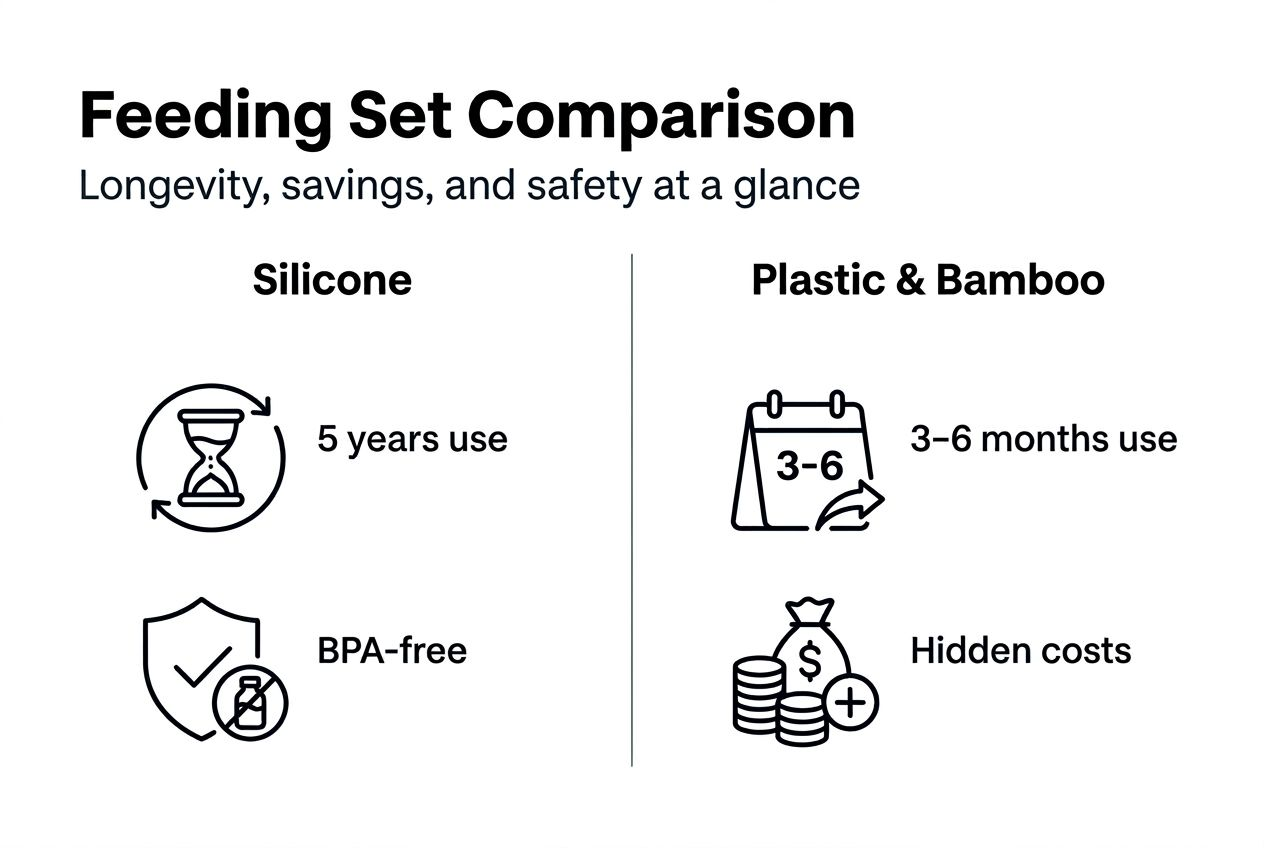
Plastic and bamboo sets create hidden costs beyond purchase price. Plastic degradation means you’re constantly shopping for replacements. Bamboo’s maintenance requirements consume time and specialized cleaning products. Both materials risk contamination if not replaced promptly when damage appears. These factors add stress and expense that quality silicone eliminates.
Market data confirms the shift toward quality. The global baby feeding sets market reached $2.15 billion in 2024, driven by demand for quality and safety. Parents worldwide recognize that initial investment in durable, safe materials protects both children and budgets. This trend accelerates as information about material safety becomes more accessible.
| Investment scenario | Initial cost | Replacements needed (5 years) | Total 5-year cost | Annual cost |
|---|---|---|---|---|
| Quality silicone set | $40 to $60 | 0 to 1 | $40 to $120 | $8 to $24 |
| Budget plastic set | $10 to $15 | 12 to 20 | $120 to $300 | $24 to $60 |
| Bamboo set | $20 to $30 | 2 to 5 | $60 to $150 | $12 to $30 |
Economic advantages of quality feeding sets:
- Reduced shopping frequency saves time and transportation costs
- Lower lifetime cost per meal served makes quality sets the budget-friendly choice
- Resale value remains high for premium silicone sets in good condition
- Fewer replacements reduce packaging waste and environmental impact
- Consistent performance eliminates costs associated with failed products
The environmental benefit aligns perfectly with economic advantage. Choosing durable materials reduces landfill waste while saving money. Each plastic set avoided prevents petroleum-based pollution. This win-win scenario appeals to values-driven parents who want sustainability without financial sacrifice.
Choosing the right feeding set for your child
Selecting appropriate feeding sets requires matching products to your child’s developmental stage and safety requirements. Strategic choices maximize both value and effectiveness.
Follow this systematic approach:
-
Assess your child’s current motor skills and feeding abilities. Infants starting solids need shallow bowls with high sides. Toddlers developing pincer grasp benefit from compartmentalized plates. Children practicing utensil use require ergonomic handles sized for small hands.
-
Verify safety certifications before purchasing. FDA and EU standards require feeding set materials to be free from BPA, phthalates, and lead. Look for stamps or documentation proving compliance. Avoid products making vague safety claims without certification details.
-
Select multifunctional sets that adapt to growing needs. Quality sets include pieces suitable for multiple developmental stages. Bowls with suction bases work for purees and later for cereal. Plates with divided sections serve soft foods initially and complex meals later. This versatility extends your investment’s useful life.
-
Prioritize features promoting independence. Look for textured grips on utensils that prevent slipping. Choose bowls with angled sides that make scooping easier. Select plates with visual food separation that appeals to children learning to eat varied diets.
-
Consider hygiene and maintenance requirements. Opt for dishwasher-safe, non-porous materials that simplify cleaning. Avoid products with difficult-to-clean crevices or components that can’t be fully disassembled. Microwave-safe options add convenience for reheating meals.
For detailed guidance on safe utensil selection, review strategies for choosing baby utensils for safe feeding. Understanding proper hygiene practices enhances safety, which you can explore in our feeding set hygiene guide. If your child has allergies, learn about specialized options in our article on allergy-safe feeding sets.
Care and maintenance for longevity
Proper care extends feeding set lifespan while maintaining safety and hygiene. Simple practices protect your investment and your child’s health.
Proper cleaning protocols and maintenance extend the safe use of silicone feeding sets and prevent contamination. Rinse feeding items immediately after use to prevent food from drying and adhering. Use warm soapy water for hand washing or place in the dishwasher’s top rack. Avoid abrasive scrubbers that can create scratches where bacteria colonize. For stubborn stains on silicone, create a paste with baking soda and water, apply gently, then rinse thoroughly.
Regular inspection catches potential safety issues before they become hazards. Check silicone for tears or permanent deformation indicating material fatigue. Examine plastic components for cracks or discoloration suggesting degradation. Look for loose parts that could detach and pose choking risks. Replace any items showing these warning signs immediately.
Pro Tip: Mark purchase dates on feeding sets with permanent marker on the bottom. This tracking helps you retire items before they exceed safe usage periods.
Storage affects feeding set hygiene and durability. Allow items to dry completely before storing to prevent mold growth. Store in clean, dry cabinets away from cleaning chemicals or strong odors that some materials absorb. Keep feeding sets separate from adult dishes to avoid cross-contamination. Use dedicated storage containers with ventilation to maintain air circulation.
Care practices for optimal longevity:
- Wash feeding sets immediately after meals rather than letting food residue harden
- Use gentle, food-safe dish soap without harsh chemicals that degrade materials
- Air dry thoroughly before storage, especially bamboo items prone to moisture damage
- Rotate multiple sets to reduce wear on any single piece
- Sterilize periodically using approved methods for your specific material type
Avoid common mistakes that shorten feeding set lifespan. Never use bleach on silicone as it can break down the material structure. Don’t expose plastic to direct sunlight, which accelerates degradation. Avoid extreme temperature changes that cause expansion and contraction stress. Skip the dishwasher’s sanitize cycle for bamboo products.
For comprehensive hygiene protocols, consult our feeding set hygiene guide. Learn natural sterilization methods in our article on sterilizing feeding sets naturally.
Conclusion: transforming mealtimes with quality feeding sets
Quality feeding sets deliver safety, developmental support, and economic value that budget alternatives cannot match. Materials matter profoundly, with silicone offering superior durability, hygiene, and non-toxic performance compared to plastic or bamboo. The 80% reduction in replacement frequency translates to hundreds of dollars saved over your child’s early years. Beyond finances, appropriate feeding tools foster motor skills and independence, reducing parental feeding time while building confidence. Proper selection based on developmental stage, certifications, and material quality ensures your investment serves your family well. Combined with simple maintenance practices, quality feeding sets transform daily mealtimes from stressful obligations into positive developmental opportunities.
Explore high-quality feeding sets at Skin Styles
Ready to invest in feeding sets that prioritize safety, durability, and developmental support? Skin Styles offers premium silicone feeding sets designed for real family life. Our collections feature BPA-free materials, multifunctional designs, and certifications that meet the highest safety standards.

Discover our 8-piece silicone baby feeding set featuring suction plates, bowls, and utensils that grow with your child. Each piece combines practical functionality with proven safety. Browse our complete selection to find sets matching your child’s developmental stage and your family’s needs. Access expert guidance through our resources on choosing baby utensils for safe feeding. Transform your family’s mealtime experience with products built to last and perform.
Frequently asked questions
Are silicone feeding sets really safer than plastic ones?
Yes, food-grade silicone is non-toxic, BPA-free, and doesn’t degrade or leach chemicals like plastic can. Plastic feeding sets often develop scratches that harbor bacteria and may release harmful substances when exposed to heat. Silicone maintains its integrity through years of use, dishwasher cycles, and microwave heating without compromising safety.
How often should I replace my child’s feeding sets?
Quality silicone sets can last 2 to 5 years with proper care, while plastic sets typically need replacement every 3 to 6 months. Inspect items regularly for cracks, tears, or discoloration indicating degradation. Replace immediately if you notice damage, regardless of age. Bamboo sets generally last 1 to 2 years with careful maintenance.
What’s the best way to clean and maintain feeding sets?
Rinse immediately after use, then wash with warm soapy water or place in the dishwasher’s top rack. Allow items to dry completely before storing in clean, dry cabinets. For silicone, use baking soda paste on stubborn stains. Avoid abrasive scrubbers, bleach, and extreme temperature changes. Bamboo requires hand washing and thorough drying to prevent mold.
How do I know if a feeding set is worth the higher price?
Check for safety certifications from FDA or EU regulatory bodies confirming BPA-free, phthalate-free materials. Verify the material type, with food-grade silicone offering the best durability and safety. Read reviews focusing on longevity and performance. Calculate lifetime cost by dividing price by expected years of use. A $40 silicone set lasting 4 years costs $10 annually, beating a $15 plastic set replaced quarterly at $60 annually.
Which feeding set material is most environmentally friendly?
Silicone and bamboo both offer environmental advantages over plastic. Silicone’s extreme durability means fewer replacements and less waste, though it’s not biodegradable. Bamboo is renewable and biodegradable but requires more frequent replacement. From a total lifecycle perspective, silicone’s longevity typically results in the smallest environmental footprint. Choose based on your priorities: immediate biodegradability favors bamboo, while minimal resource consumption over time favors silicone.
At what age should I transition to different feeding set designs?
Start with shallow bowls and soft-tipped spoons around 6 months when introducing solids. Transition to suction-base plates and training cups at 9 to 12 months as motor skills develop. Introduce compartmentalized plates and standard utensils with ergonomic grips at 18 to 24 months. By age 3, most children can use regular plates with slight modifications for easier handling. Match feeding tools to your child’s demonstrated abilities rather than age alone.