

Finding the right international skincare routine can feel confusing, especially when bold claims and product myths flood social media feeds daily. With over 80 percent of American consumers reporting that they question ingredient safety and ethical practices, it makes sense to seek products that truly align with your values and skin needs. This guide helps you cut through misinformation, explore global innovations, and discover which ethical skincare options fit your urban lifestyle.
Table of Contents
- Defining International Skincare and Common Myths
- Distinctive Ingredients and Regional Innovations
- How Global Skincare Brands Ensure Quality
- Ethical Sourcing and Sustainability Practices
- Weighing Costs, Risks, and Local Alternatives
Key Takeaways
| Point | Details |
|---|---|
| Global Skincare Integration | International skincare combines diverse cultural methods and scientifically backed ingredients for effective skin health solutions. |
| Sustainability and Ethics | Modern brands are prioritizing ethical sourcing and sustainable practices to ensure minimal environmental impact and fair labor. |
| Research and Innovation | The skincare industry is advancing through biotechnological innovations that enhance ingredient efficacy and formulation precision. |
| Local vs. International Choices | Consumers should weigh the benefits of local options against international products, considering factors such as sustainability, price stability, and skin compatibility. |
Defining International Skincare and Common Myths
International skincare represents a sophisticated global approach to personal beauty and wellness that transcends traditional geographical boundaries. Unlike localized beauty routines, this strategy integrates research, ingredients, and techniques from diverse cultural traditions to create comprehensive skin health solutions. Understanding this approach means recognizing that effective skincare is not about following a single rigid standard, but about adapting science-backed methods to individual skin needs.
The global skincare landscape is riddled with persistent myths that often mislead consumers about product effectiveness and skin health. Debunking common skincare misconceptions reveals that many widespread beliefs lack scientific foundation. For instance, the assumption that expensive products automatically guarantee superior results is fundamentally flawed. Research consistently demonstrates that product efficacy depends more on ingredient quality, formulation, and individual skin compatibility than on price point.
Moreover, international skincare challenges the notion that natural ingredients are universally superior. While botanicals can offer remarkable benefits, synthetic ingredients developed through advanced research often provide more targeted, stable, and predictable outcomes. Scientific understanding of skincare emphasizes that modern skin treatments blend natural and laboratory-developed components to maximize effectiveness and address specific skin concerns.
Pro tip: When exploring international skincare, prioritize understanding your unique skin type and research-backed ingredients rather than chasing trendy products or expensive brands.
Distinctive Ingredients and Regional Innovations
The global skincare landscape is experiencing a remarkable transformation driven by cutting-edge research and innovative ingredient sourcing. Beauty ingredient innovation reveals a profound shift towards more sustainable, scientifically advanced, and culturally diverse skincare solutions. Different regions are now contributing unique botanical extracts, biotechnological breakthroughs, and specialized formulations that challenge traditional skincare paradigms.
Each geographical region brings distinctive approaches to skincare ingredients. Asian markets, for instance, have long championed ingredients like green tea, rice extracts, and snail mucin, while South American traditions highlight ingredients such as açaí, passion fruit, and rare Amazonian botanicals. European approaches often emphasize precise scientific formulations, combining advanced synthetic compounds with carefully selected natural extracts. African skincare innovations showcase ingredients like marula oil, moringa, and shea butter, demonstrating how traditional knowledge can intersect with modern dermatological research.

Here’s a look at how regional innovations shape global skincare:
| Region | Key Ingredients | Formulation Approach |
|---|---|---|
| Asia | Green tea, rice, snail mucin | Gentle, multi-step routines |
| South America | Açaí, passion fruit, botanicals | Antioxidant-rich, vibrant |
| Europe | Synthetics, natural extracts | Precision, clinical focus |
| Africa | Marula, moringa, shea butter | Nourishing, tradition-based |
Emerging cosmetic technologies are revolutionizing ingredient development through sophisticated biotechnological processes and artificial intelligence. These innovations enable scientists to create more targeted, efficient, and sustainable skincare solutions. Techniques like green chemistry and upcycling are transforming how ingredients are sourced and processed, allowing manufacturers to develop high-performance products with minimal environmental impact. Biotechnology now permits the creation of lab-engineered ingredients that can mimic and enhance natural compounds, providing unprecedented precision in skincare formulation.
Pro tip: Research skincare ingredients specific to your skin type and geographical region, as local traditions often hold scientifically validated solutions for unique skin challenges.
How Global Skincare Brands Ensure Quality
Global skincare brands have developed sophisticated quality assurance processes that go far beyond traditional manufacturing standards. Beauty research and innovation demonstrate how leading companies invest tremendous resources into ensuring product safety, efficacy, and scientific validation. These comprehensive quality control mechanisms involve multiple layers of rigorous testing, research, and continuous improvement.
The quality assurance process typically involves several critical stages. First, ingredient sourcing undergoes extensive screening for purity, sustainability, and potential environmental impact. Brands conduct comprehensive chemical analyses to verify the molecular composition and potential interactions between different components. Dermatological testing follows, with clinical trials involving diverse skin types and conditions to validate product performance and safety. Advanced laboratories use cutting-edge technologies like spectroscopy, chromatography, and genetic analysis to assess ingredient stability, potential allergens, and long-term skin interaction.
Moreover, global skincare brands recognize that quality extends beyond laboratory testing. Ethical sourcing, sustainable production, and transparent supply chains have become fundamental quality indicators. Companies now implement stringent environmental and social responsibility standards, ensuring that product quality encompasses not just scientific efficacy but also broader ethical considerations. This holistic approach means consumers can trust that high-quality international skincare products reflect rigorous scientific standards, environmental consciousness, and a commitment to advanced research.
Pro tip: Always check product certifications, research team credentials, and clinical testing data when evaluating the quality of international skincare brands.
Ethical Sourcing and Sustainability Practices
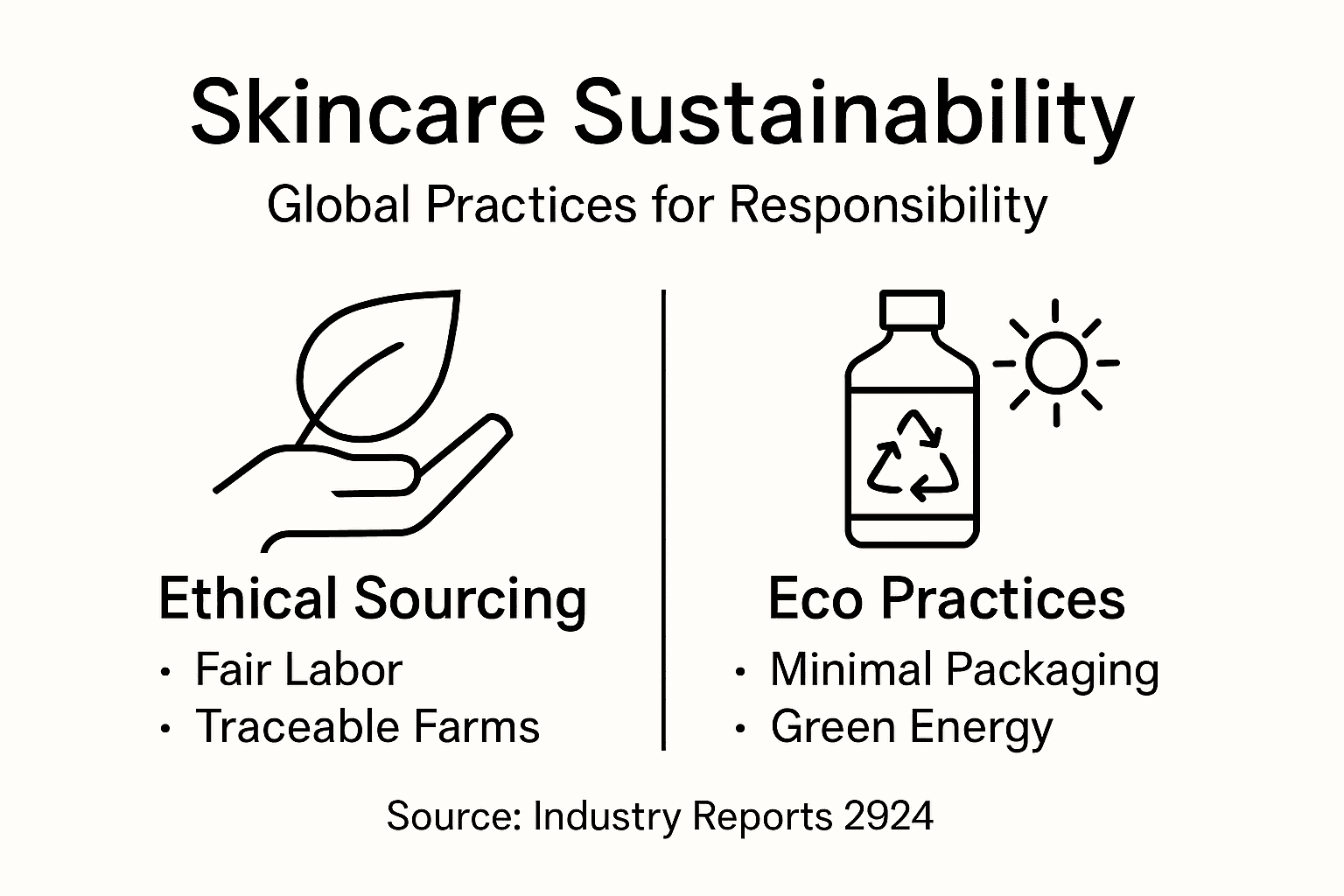
The global skincare industry is experiencing a transformative shift towards more responsible and environmentally conscious production methods. Sustainable life cycle strategies are revolutionizing how companies approach ingredient sourcing, manufacturing, and product development. This holistic approach goes beyond mere marketing rhetoric, representing a fundamental reimagining of how beauty products are conceived, created, and delivered to consumers.
Ethical sourcing involves a comprehensive examination of every stage in the product development process. Brands are now implementing rigorous protocols to ensure fair labor practices, support local communities, and minimize environmental impact. This means carefully auditing supply chains, prioritizing suppliers who demonstrate commitment to worker welfare, and selecting ingredients that can be harvested sustainably without depleting natural resources. Some companies have begun partnering directly with indigenous communities, ensuring fair compensation and preserving traditional knowledge about botanical ingredients.
Ecological responsibility in cosmetic dermatology has become a critical benchmark for modern skincare brands. This approach encompasses more than just ingredient selection – it involves comprehensive strategies like reducing carbon footprints, implementing circular economy principles, and developing biodegradable packaging solutions. Advanced brands are investing in technologies that allow for more efficient production processes, minimize waste, and create products that have minimal long-term environmental consequences. The goal is to create a symbiotic relationship between skincare innovation and ecological preservation.
Pro tip: Research brands that publish transparent sustainability reports and provide detailed information about their ethical sourcing practices.
Weighing Costs, Risks, and Local Alternatives
Navigating the complex landscape of international skincare requires a nuanced understanding of potential costs, risks, and alternative options. Beauty industry supply chain challenges have become increasingly complex, with geopolitical instability, inflation, and global logistics creating significant considerations for consumers and brands alike. These dynamics mean that choosing skincare products is no longer simply about finding the most attractive packaging or compelling marketing claims.
The financial implications of international skincare extend beyond the immediate purchase price. Imported products often incur additional expenses through shipping costs, customs duties, and potential currency exchange fluctuations. Regional variations in product formulation, regulatory standards, and ingredient sourcing can create unexpected complications. Some consumers might find that locally produced alternatives offer more predictable pricing structures and potentially lower overall expenses. Additionally, local brands might provide more transparent supply chains and direct community economic benefits.
International versus local skincare comparisons reveal nuanced trade-offs between global and regional products. While international brands frequently boast advanced research and sophisticated formulations, local alternatives can offer unique advantages such as reduced carbon footprint, immediate availability, and potential cost savings. Consumers must carefully evaluate factors like ingredient quality, regulatory compliance, innovation potential, and alignment with personal sustainability values when making purchasing decisions.
Consider these factors when deciding between international and local skincare options:
| Factor | International Products | Local Alternatives |
|---|---|---|
| Price Stability | Prone to currency changes | More consistent locally |
| Supply Chain | Complex, longer transit | Shorter, often transparent |
| Sustainability | Varies, carbon footprint can be high | Usually lower emissions |
| Skin Compatibility | Advanced formulations, universal claims | Formulated for local needs |
Pro tip: Create a personal scorecard comparing international and local skincare options, evaluating factors like price, ingredient quality, sustainability, and personal skin compatibility.
Discover Global Skincare Solutions Tailored to Your Needs
Choosing the right skincare products can be overwhelming given the vast options and myths surrounding international skincare. This article highlights the importance of understanding your unique skin type and selecting research-backed ingredients rather than relying on expensive or trendy products. If you want to experience the benefits of scientifically advanced skincare combined with trusted global ingredients, Skin-Styles.com offers a curated collection designed to meet diverse skin needs with transparency and quality.

Explore our Facial Creams & Gels and Facial Serums to find products that blend natural extracts and cutting-edge formulations inspired by international beauty traditions. Visit Skin-Styles.com now to shop with confidence. Act today to align your skincare routine with proven global innovations and ethical sourcing practices for healthier, radiant skin.
Frequently Asked Questions
What are the benefits of using international skincare products?
International skincare products offer access to diverse ingredients and techniques derived from various cultural traditions, addressing unique skin needs and providing comprehensive skincare solutions.
How do I determine if an international skincare product is suitable for my skin type?
To determine suitability, research the specific ingredients in the product, compare them with your skin type’s needs, and consider conducting patch tests before fully incorporating new products into your routine.
Are expensive international skincare products always better than cheaper options?
No, expensive products do not guarantee better results. The efficacy of skincare products depends on ingredient quality and formulation, rather than price alone.
How can I assess the quality of an international skincare brand?
To assess quality, look for transparency in ingredient sourcing, certifications, research and testing data, and ethical production practices. Brands that emphasize scientific validation and sustainability typically reflect higher quality standards.