

TL;DR:
- Dry skin and dehydrated skin are distinct conditions; the former is a skin type, while the latter is a temporary state affecting anyone.
- Hydration involves increasing water content within skin cells using humectants, whereas moisture restores and seals the skin’s lipid barrier with occlusives and emollients.
- For healthy skin, both hydration and moisture are essential and should be layered correctly, tailored to individual needs and environmental factors.
Most people reach for a moisturizer when their skin feels dry and assume the problem is solved. But here’s what the beauty industry doesn’t make obvious: dry skin and dehydrated skin are two completely different conditions, and they call for completely different fixes. Using the wrong product not only wastes money but can leave your skin feeling just as uncomfortable as before. Understanding the real difference between hydration and moisture is one of the most practical things you can do for your skin, and this guide will give you a clear, science-backed breakdown so you can finally build a routine that actually works.
Table of Contents
- What does hydration mean for your skin?
- What does moisture mean for your skin barrier?
- Hydration vs moisture: the key differences explained
- How to choose the right products for your skin’s hydration and moisture needs
- The truth most beauty brands won’t tell you about hydration vs moisture
- Find your perfect skincare solutions at Skin Styles
- Frequently asked questions
Key Takeaways
| Point | Details |
|---|---|
| Hydration vs moisture explained | Hydration adds water to the skin while moisture locks it in with oils and lipids. |
| Identify your skin’s needs | Check for dehydration (tightness, dullness) versus dryness (flakiness, roughness) to choose products. |
| Ingredient choices matter | Use humectants for hydration and emollients or occlusives for moisture for best results. |
| Both are essential | Healthy skin needs both hydration and moisture to look its best and stay resilient. |
What does hydration mean for your skin?
Let’s start with the basics. When skincare experts talk about hydration’s role in skincare, they’re specifically referring to the water content inside your skin cells. Hydrated skin is plump, bouncy, and luminous because its cells are literally filled with water. When water levels drop, skin looks dull, feels tight, and fine lines become noticeably more visible, even if you’re in your twenties.
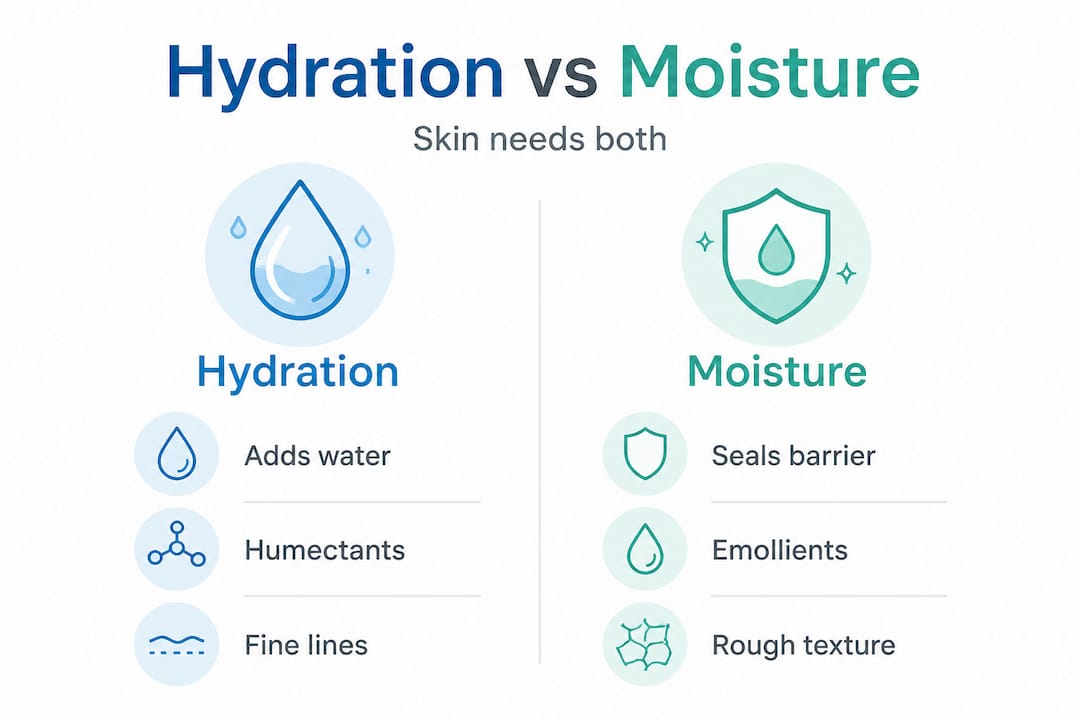
Here’s the part that surprises many people: dehydration is a skin condition, not a skin type. Dry skin is a type, meaning it’s a structural characteristic you’re often born with. Dehydrated skin, on the other hand, is something anyone can experience at any time, regardless of whether their skin naturally produces a lot of oil or very little. As oily skin can be dehydrated confirms, even skin that looks shiny and feels greasy can be desperately lacking in water content at the cellular level.
This is why the oily-yet-tight feeling so many people experience isn’t a contradiction. It’s a sign that the skin is producing excess oil to compensate for a lack of water. Oil and water are not the same thing, and the skin knows the difference even when we don’t.
Common signs your skin is dehydrated:
- Skin feels tight, especially after cleansing
- A dull, lackluster complexion that doesn’t respond to makeup
- Fine lines that appear suddenly and fade when you press the skin
- Occasional rough texture despite using oily or heavy products
- Sensitivity spikes even on skin that isn’t naturally sensitive
Ingredients that address dehydration are called humectants. These molecules work by attracting water from the environment and from deeper skin layers, pulling it toward the surface where it’s needed most. Hyaluronic acid is the most famous example, capable of holding up to 1,000 times its weight in water. Glycerin, aloe vera, panthenol (vitamin B5), and sodium PCA are equally effective but often overlooked. Knowing the best hydration ingredients helps you spot them on a label and choose products with purpose.
Pro Tip: Apply your hydrating serum or toner to slightly damp skin. Humectants work better when there’s ambient moisture to draw from, which means patting skin dry and immediately layering your serum gives them a head start.
What does moisture mean for your skin barrier?
While hydration deals with water inside the skin, moisture is about something different entirely: the protective barrier on the skin’s surface. Your skin barrier is made up of skin cells held together by a mix of fats, oils, and lipids that act like mortar between bricks. When this barrier is healthy, it keeps water in and irritants out. When it’s compromised, water escapes freely, skin becomes reactive, and all the hydrating products in the world won’t seem to help.
Moisture, in the skincare sense, refers to the oils, lipids, and sealing agents that repair and reinforce this barrier. As Hydration vs Moisture: What’s the Difference? explains, ingredients like ceramides, squalane, and petrolatum fall into this category because they physically seal water into the skin and prevent what’s called transepidermal water loss, or TEWL. TEWL simply means water evaporating off the skin’s surface, and a weak barrier means this happens constantly, even while you sleep.
Understanding the importance of the skin barrier helps explain why people with genuinely dry skin often feel like nothing works. They may apply hydrating serums faithfully, but without the lipid layer to hold everything in, that water just escapes. Moisture-focused products address this by filling in the gaps in the barrier with the lipids and fats the skin isn’t producing on its own.
Common moisturizing ingredients and what they do:
- Ceramides: Naturally occurring lipids that rebuild the skin barrier from within
- Squalane: A lightweight oil that mimics the skin’s own sebum without clogging pores
- Shea butter: A rich emollient that softens skin and provides a protective layer
- Petrolatum (petroleum jelly): One of the most effective occlusives for locking in moisture
- Fatty acids (linoleic, oleic): Support barrier repair and reduce inflammation
Pro Tip: If your skin is very dry, layer a few drops of a facial oil over your moisturizer, or mix it in, before bed. This amplifies the sealing effect and gives the barrier time to repair overnight.
There are three functional categories of moisture ingredients worth knowing: emollients soften and smooth skin by filling in the spaces between cells; occlusives create a physical seal to stop water from leaving; and humectants (from the hydration category) attract water. A well-rounded moisturizer often includes all three working together. Exploring the right moisturizing ingredients for your skin type makes a real difference in the results you see.
Hydration vs moisture: the key differences explained
Now that both concepts are clear on their own, let’s put them directly side by side. The comparison below makes the distinction straightforward.
| Feature | Hydration | Moisture |
|---|---|---|
| What it addresses | Water content in skin cells | Lipid layer and barrier integrity |
| Key ingredients | Humectants (hyaluronic acid, glycerin) | Emollients, occlusives (ceramides, squalane) |
| Skin feels… | Plump, bouncy, less lined | Soft, smooth, supple |
| Missing it causes | Dull, tight, temporarily lined skin | Rough, flaky, reactive, dry skin |
| Best product types | Serums, essences, hydrating toners | Creams, balms, facial oils, rich moisturizers |
| Works best | Applied to damp skin | Applied as a final step to seal in layers |
Both are essential, and most people need both in their routine, just in the right order and proportion for their specific skin type. Here’s how to think about their relationship in four clear steps:
- Hydration comes first. Apply water-based products like toners or hydrating serums before anything else. This loads the skin cells with water.
- Emollients fill in the texture. Lightweight lotions or serums with emollient ingredients smooth the surface and start reinforcing the barrier.
- Occlusives seal the deal. Heavier creams, oils, or balms go on last to lock everything in so it doesn’t evaporate.
- Adjust by season and environment. Cold, dry winters demand more moisture. Humid summers may need more hydration with lighter sealing.
Here’s a practical concern that doesn’t get talked about enough: using humectants alone in a very dry environment can actually make dryness worse. Because humectants pull water wherever they can find it, they can draw moisture from the deeper layers of your skin if there’s no humidity in the air and no occlusive on top to create a seal. As the strategist explains, both hydration and moisture are needed for real barrier health, and leaving humectants unsealed in low-humidity conditions can work against you.
This is especially relevant in heated indoor spaces during winter, where the air is extremely dry. Always follow a humectant-rich serum with at least a light moisturizing cream to prevent this backfire effect. Learning the difference between emollients vs humectants will help you layer products correctly and avoid this common mistake.
How to choose the right products for your skin’s hydration and moisture needs
With the science clear, the next question is practical: what does your skin actually need right now, and how do you build a routine around it? The answer starts with a simple skin check.
Look at your skin in natural light, about an hour after cleansing with no products applied. Here’s a guide to reading what you see.
| What you observe | What it likely means | What to prioritize |
|---|---|---|
| Tight, dull, fine lines visible | Dehydrated (any skin type) | Humectants first, then seal |
| Rough, flaky, feels itchy | Dry (lacks lipids) | Moisture and barrier repair |
| Shiny but tight at the same time | Oily and dehydrated | Lightweight humectants, non-comedogenic sealers |
| Comfortable, supple, no tightness | Balanced | Maintain with regular routine |
| Reactive, red, or sensitive | Compromised barrier | Ceramide-rich and calming products |
As research confirms, dehydrated skin lacks water, producing that classic tight, dull appearance with fine lines that look worse than usual, while truly dry skin lacks lipids and presents as rough or flaky. These are two different diagnoses with two different treatment paths.
Here’s a simple routine-building approach that works for most people:
- Start with a gentle cleanser that doesn’t strip the skin. Harsh cleansers disrupt both water content and barrier lipids in one step.
- Apply a hydrating toner or essence with glycerin or hyaluronic acid while skin is still slightly damp.
- Layer a targeted serum based on your primary concern: dehydration or barrier repair.
- Lock in with a moisturizer that suits your skin type, whether a gel for oily skin or a rich cream for dry skin.
- Add sunscreen in the morning because UV exposure damages the barrier and accelerates TEWL.
Pro Tip: If you’re unsure which concern is dominant, try using a hyaluronic acid serum for one week without a heavy moisturizer and note how your skin responds. If it still feels tight after a day, you need more moisture. If it feels plump and comfortable, hydration alone may be working for you.
Checking out targeted hydration and moisture ingredients before you shop helps you read labels more confidently and skip products that don’t match your actual skin concern.
The truth most beauty brands won’t tell you about hydration vs moisture
Here’s something worth saying plainly: the beauty industry profits from confusion. When brands label a rich, lipid-heavy cream as a “deep hydrating formula” or call a hyaluronic acid serum “intensely moisturizing,” they’re technically wrong but commercially convenient. Using these terms interchangeably creates a situation where you buy product after product hoping one will finally solve your problem, often without realizing you’ve been targeting the wrong concern all along.
We’ve seen this pattern repeat constantly. Someone with oily, dehydrated skin keeps buying oil-control products to manage shine, which makes the dehydration worse, which makes the skin produce more oil, which drives them to buy more oil-control products. It’s a cycle that benefits the store, not the skin.
The truth is that your skin’s needs are not static. They shift with the seasons, your diet, hormonal changes, stress levels, medication, and even how much coffee you drink. A routine that worked perfectly in summer may leave your skin parched in winter. Someone in their twenties needs a very different balance than someone in their forties, when the skin naturally produces fewer lipids and holds less water overall.
Looking for an inside look at real hydration grounded in ingredients that actually do what they claim is a better starting point than trusting marketing language on packaging. Learn what humectants, emollients, ceramides, and occlusives actually are, and you’ll immediately become a sharper, more informed buyer.
The most empowering thing you can do is treat your skin as a system that requires balance rather than a surface problem that needs to be fixed. Hydration and moisture are not interchangeable. They’re partners, and your skin needs both working together.
Find your perfect skincare solutions at Skin Styles
Now that you understand the real difference between hydration and moisture, you’re ready to shop with purpose instead of guessing.

At Skin Styles, you’ll find a carefully curated selection of products designed to address both your water needs and barrier repair. Whether you’re building a new routine from scratch or filling in the gaps in an existing one, our facial creams and gels collection makes it easy to match the right product to your actual skin condition. Looking for trusted formulas loved by skincare enthusiasts? Browse our Cosrx favorites for humectant-rich serums and barrier-supportive creams. And if aging skin is your concern, our anti-wrinkle picks combine hydration and moisture in formulas designed for long-term results.
Frequently asked questions
Can oily skin be dehydrated?
Yes, oily skin can be dehydrated because oil and water are entirely separate things, which is why balancing water content matters for every skin type, not just dry skin.
How can I tell if my skin needs hydration or moisture?
Dehydrated skin feels tight and looks dull with temporary fine lines, while skin that needs moisture tends to feel rough, flaky, or persistently uncomfortable regardless of how much water you drink.
What ingredients should I look for to hydrate my skin?
Look for humectants like hyaluronic acid, glycerin, panthenol, and aloe vera, which attract and hold water in the skin’s upper layers for a plumper, more luminous look.
Why should I use both hydration and moisture in my routine?
Because hydration brings water into the skin and moisture seals it in, using only one without the other leaves the job half done, and as barrier health research shows, both are genuinely needed for skin that stays healthy and comfortable long term.