

Finding the right skincare routine can feel overwhelming, especially if you have persistent acne or struggle with uneven skin tone. Many routines promise quick fixes but leave your skin irritated or even damaged. The concept of skin cycling stands out as a balanced approach backed by dermatologists, offering a four-night method that helps maximize results and minimize irritation. Discover how rotating exfoliants, retinoids, and recovery nights can transform your routine and promote healthier, more radiant skin.
Table of Contents
- Defining Skin Cycling And Common Myths
- Science Behind Skin Cycling Routines
- Essential Steps And Product Rotation
- Key Benefits For Acne-Prone Skin
- Risks, Mistakes, And Product Warnings
Key Takeaways
| Point | Details |
|---|---|
| Skin Cycling Promotes Balanced Skincare | This method emphasizes a structured rotation of active ingredients to optimize skin health and minimize irritation. |
| Recovery Nights Are Essential | Incorporating recovery periods allows the skin to repair, reducing the risk of damage from over-treatment. |
| Start Slow to Build Tolerance | Introduce active ingredients gradually and monitor skin response to prevent irritation and enhance effectiveness. |
| Consult a Dermatologist for Personalization | Tailoring the skin cycling routine to specific skin needs can enhance results and minimize risks associated with treatment. |
Defining Skin Cycling and Common Myths
Skin cycling is an innovative skincare technique developed by dermatologist Dr. Whitney Bowe that provides a strategic approach to applying active ingredients. Skin cycling methodology transforms traditional skincare routines by introducing a purposeful four-night cycle designed to optimize skin health while preventing irritation.
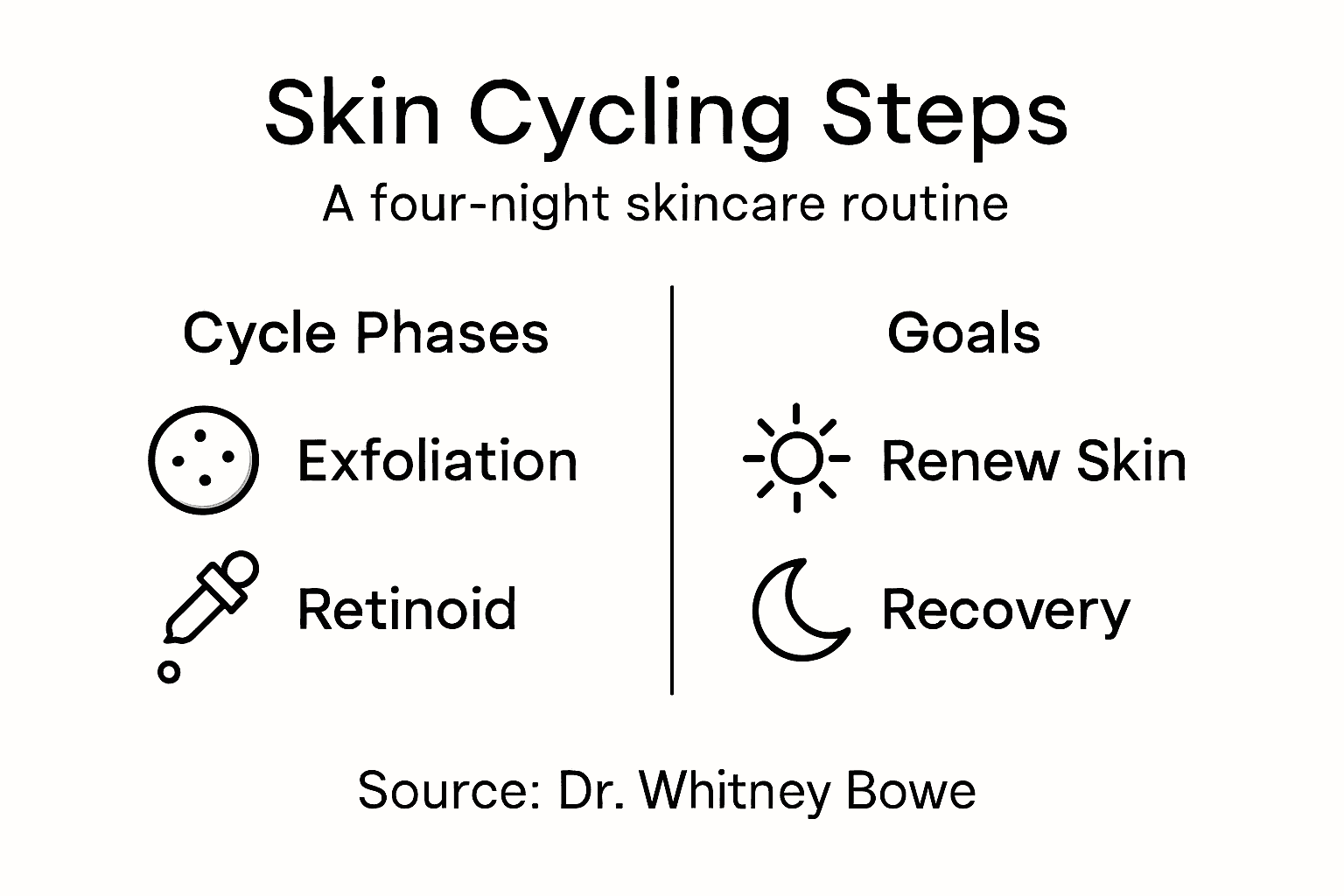
The core principle of skin cycling revolves around a carefully structured approach. Unlike traditional skincare methods that encourage daily use of multiple active ingredients, this technique emphasizes intentional product rotation. The standard four-night cycle typically includes one night of exfoliation, one night of retinoid application, and two recovery nights focused on gentle hydration and skin repair. This method allows your skin dedicated time to process and respond to potent ingredients without overwhelming its natural regenerative processes.
Numerous myths surround skin cycling that can misguide skincare enthusiasts. Many people incorrectly assume that more product equals better results. In reality, overloading skin with actives can cause inflammation, sensitivity, and long-term damage. Skin cycling challenges this misconception by promoting a balanced, thoughtful approach that respects your skin’s natural healing capabilities. The technique recognizes that our skin requires periods of intense treatment followed by dedicated recovery time.
Here’s a concise comparison of traditional skincare routines and skin cycling methods:
| Factor | Traditional Skincare | Skin Cycling Approach |
|---|---|---|
| Use of Actives | Daily, often simultaneous | Rotated, specific schedule |
| Skin Irritation Risk | High with overuse | Lower due to recovery nights |
| Barrier Protection | Sometimes compromised | Prioritized with recovery phase |
| Adaptability | Less customized | Adjusted for skin type easily |
Pro Tip: Start your skin cycling journey gradually by introducing one new active ingredient at a time and monitoring your skin’s response to prevent potential irritation.
Science Behind Skin Cycling Routines
At its core, skin cycling is grounded in scientific principles of skin physiology and cellular regeneration. Skin cell turnover mechanisms demonstrate how strategic ingredient application can dramatically improve skin health. By understanding the intricate processes of cell renewal and barrier repair, skincare enthusiasts can optimize their routines to support natural skin regeneration.
The scientific mechanism of skin cycling involves a carefully choreographed approach to active ingredient application. Exfoliants like Alpha Hydroxy Acids (AHAs) and Beta Hydroxy Acids (BHAs) work by chemically removing dead skin cells, while retinoids stimulate collagen production and accelerate cell renewal. Skin barrier protection becomes crucial in this process, as continuous exposure to potent actives can compromise the skin’s protective layer. The recovery nights integrated into the skin cycling routine allow the skin to rebuild and strengthen its natural defense mechanisms.

Dermatological research supports the effectiveness of this approach, particularly for individuals with sensitive skin or those new to advanced skincare routines. The alternating cycle of active treatment and recovery prevents the common pitfalls of over-exfoliation and ingredient fatigue. By spacing out powerful ingredients, the skin can better absorb and respond to each treatment, ultimately improving overall skin texture, reducing inflammation, and promoting a more balanced complexion. This methodical approach ensures that each active ingredient can work more effectively without overwhelming the skin’s natural regenerative processes.
Pro Tip: Invest in a digital skin journal to track your skin’s response during each phase of the skin cycling routine, helping you fine-tune the process for optimal results.
Essential Steps and Product Rotation
Skin cycling follows a precise four-night routine designed to maximize skincare effectiveness while minimizing potential irritation. Chemical exfoliation technique forms the cornerstone of this strategic approach, with each night serving a specific purpose in skin regeneration and recovery. The carefully structured rotation allows your skin to receive targeted treatments without overwhelming its natural healing processes.
The typical skin cycling routine breaks down into four distinct phases. Night one focuses on chemical exfoliation using Alpha Hydroxy Acids (AHAs) or Beta Hydroxy Acids (BHAs), which work to remove dead skin cells and unclog pores. Retinol application strategy takes center stage on night two, when a retinoid product stimulates cell turnover and promotes collagen production. Nights three and four are dedicated recovery periods, allowing the skin to rest, repair, and rebuild its protective barrier through intensive hydration and gentle moisturizing.
Successful product rotation requires careful selection of compatible skincare items tailored to your specific skin type and concerns. This means choosing gentle, non-irritating formulations that support the skin’s natural regeneration process. Individuals with sensitive skin should start with lower concentrations of active ingredients and gradually increase potency. Pay close attention to how your skin responds during each cycle, adjusting your routine as needed to maintain optimal skin health and prevent potential irritation or inflammation.
Below is a summary of each skin cycling phase and its primary focus:
| Night | Main Active/Step | Primary Goal | Suitable For |
|---|---|---|---|
| 1 | Chemical exfoliant (AHA/BHA) | Remove dead cells | Dull or clogged skin |
| 2 | Retinoid application | Stimulate cell turnover | Aging or acne-prone skin |
| 3 | Recovery (hydration) | Repair and moisturize | All skin types, sensitive skin |
| 4 | Recovery (hydration) | Reinforce barrier function | Redness-prone or dry skin |
Pro Tip: Create a detailed skin journal documenting your skin’s reaction during each phase of the skin cycling routine, which will help you personalize and refine your approach over time.
Key Benefits for Acne-Prone Skin
Acne-prone skin requires a delicate balance of treatment and recovery, making skin cycling an ideal approach for managing persistent breakouts. Acne treatment strategy offers a targeted method for controlling inflammation and preventing further skin irritation. By carefully rotating potent active ingredients like salicylic acid and retinoids, individuals can address acne at its root while minimizing the risk of overwhelming the skin’s natural healing processes.
The strategic rotation of skincare products provides multiple benefits for those struggling with acne. Chemical exfoliants work to unclog pores and remove dead skin cells that contribute to breakouts, while retinoids help regulate cell turnover and reduce inflammation. Critically, the recovery nights built into the skin cycling routine allow the skin’s protective barrier to heal and regenerate, preventing the over-drying and irritation commonly associated with aggressive acne treatments. This approach is particularly beneficial for those with sensitive or reactive skin that tends to become easily irritated by traditional acne treatment methods.
Successful management of acne through skin cycling requires a nuanced understanding of your skin’s unique needs. Start with lower concentrations of active ingredients and gradually increase potency as your skin builds tolerance. Pay close attention to how your skin responds, watching for signs of irritation or improved texture. The key is finding a balanced approach that addresses acne without compromising your skin’s overall health and protective mechanisms. Individuals with persistent acne can benefit from this method by reducing inflammation, preventing new breakouts, and promoting a clearer, more balanced complexion.
Pro Tip: Consult with a dermatologist to customize your skin cycling routine specifically for your acne type and skin sensitivity, ensuring the most effective and gentle approach.
Risks, Mistakes, and Product Warnings
Skin cycling, while innovative, carries potential risks that require careful navigation. Skin irritation prevention demands a nuanced approach, particularly for individuals with sensitive skin types. Understanding these risks is crucial to implementing a safe and effective skincare routine that doesn’t compromise your skin’s health or natural protective mechanisms.
Common mistakes in skin cycling can lead to significant skin damage if not addressed proactively. Overusing active ingredients without sufficient recovery time is a primary concern, potentially causing inflammation, redness, and barrier disruption. Product compatibility warnings highlight the importance of avoiding incompatible product combinations and high-concentration actives. Users should be especially cautious with retinoids and chemical exfoliants, introducing them gradually and always prioritizing skin barrier integrity over aggressive treatment.
Navigating skin cycling successfully requires a methodical and patient approach. Start with lower concentrations of active ingredients and perform patch tests before full application. Be vigilant about monitoring your skin’s response, looking for signs of irritation such as excessive dryness, redness, or increased sensitivity. Individuals with reactive or sensitive skin should consult a dermatologist before beginning a skin cycling routine. Remember that each person’s skin is unique, and what works for one individual may not be suitable for another. Flexibility and attentiveness are key to developing a personalized skincare strategy that supports your skin’s health and appearance.
Pro Tip: Create a detailed skin diary documenting product reactions, ingredient interactions, and skin responses to build a comprehensive understanding of your skin’s specific needs and tolerances.
Elevate Your Skin Cycling Routine with Targeted Skincare Solutions
Struggling with balancing powerful active ingredients and gentle recovery in your skincare routine This article highlights how skin cycling strikes the perfect balance by rotating actives like exfoliants and retinoids alongside recovery nights to prevent irritation and boost skin health. If your goal is to achieve clear vibrant skin while respecting your skin’s natural barrier then incorporating well-formulated products designed specifically for this method is essential. Explore the carefully curated SKIN 1004 – Skin Styles collection at Skin-Styles.com for gentle yet effective exfoliants moisturizers and retinoid-friendly options that align perfectly with your skin cycling phases.

Start experiencing smoother and healthier skin today by embracing a mindful skin cycling routine supported by premium products. Visit Skin-Styles.com now for expert-approved skincare that protects and nurtures your complexion. Take control of your skin’s journey and shop our selection designed to optimize every step of your skin cycling strategy.
Frequently Asked Questions
What is skin cycling?
Skin cycling is a structured skincare approach developed by dermatologist Dr. Whitney Bowe, which involves a four-night rotation that includes chemical exfoliation, retinoid application, and recovery nights to optimize skin health and minimize irritation.
How does skin cycling differ from traditional skincare routines?
Unlike traditional routines that often involve daily use of multiple active ingredients, skin cycling focuses on rotating specific actives on designated nights, allowing the skin to recover between treatments and avoid overloading with actives.
What are the main benefits of skin cycling for acne-prone skin?
Skin cycling helps manage acne by combining chemical exfoliants to unclog pores and retinoids to regulate cell turnover while incorporating recovery nights that support the skin’s natural barrier and reduce irritation associated with aggressive treatments.
What should I do if my skin becomes irritated during skin cycling?
If you experience irritation, reduce the frequency of active applications, use gentler formulations, and consider consulting a dermatologist to help tailor your skin cycling routine to your skin’s specific needs.